
Photo: Wikipedia
Personal Sovereignty in Payne County
Strong independent fundamentals that actively favor personal liberty and low regulation.
What does Personal Sovereignty tell us?
Personal Sovereignty measures your capacity for self-reliance and independence with minimal government friction. Higher scores mean fewer barriers between you and the way you want to live... but it assumes you have the space you need and good neighbors.
What does this tell us?
Personal Sovereignty measures your capacity for self-reliance and independence with minimal government friction. Higher scores mean fewer barriers between you and the way you want to live... but it assumes you have the space you need and good neighbors.
State Policy
Energy independence: Net exporter (180% of energy produced in-state)
Personal Liberty
Homesteading

Personal Liberty Analysis
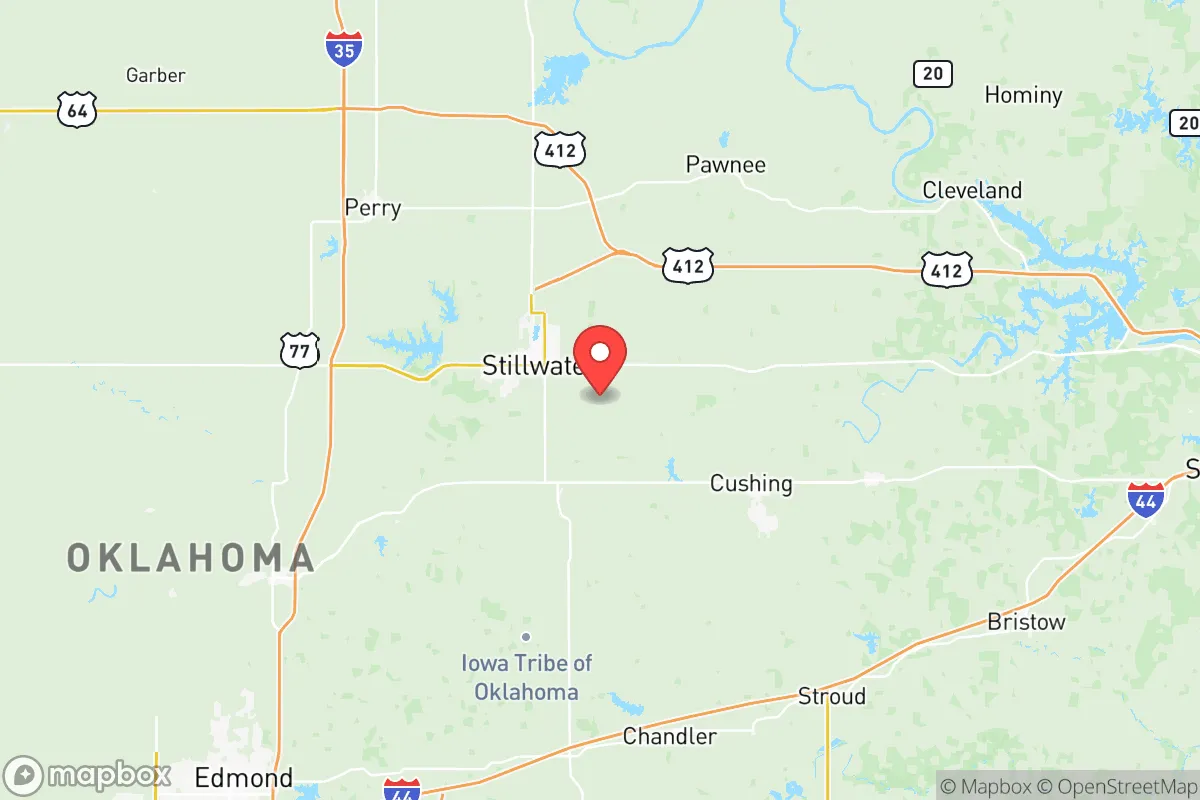
Payne County, Oklahoma offers a notably high degree of personal sovereignty compared to much of the country, grounded in a state-level legal framework that prioritizes individual autonomy over government overreach. For those concerned with preserving freedom of choice, self-defense, and the ability to live off the land, the county provides a practical balance of rural independence and small-city convenience. The surrounding communities—from the college town of Stillwater to the quieter enclaves of Perkins, Cushing, Yale, Glencoe, and Ripley—each present distinct trade-offs in regulatory posture, but the overriding culture across Payne County resists the kind of bureaucratic creep that erodes personal liberty.
Tax burden and regulatory posture: how Oklahoma’s low-tax environment fuels autonomy
Payne County benefits from Oklahoma’s consistently low state and local tax burden, which directly increases the disposable income and financial independence of residents. There is no state income tax on retirement income, and the state’s top marginal income tax rate is among the lowest in the nation. Property taxes in Payne County are also relatively light—typically under 1% of assessed value—meaning that owning land or a home does not invite the kind of annual financial drag seen in blue states. Regulatory posture mirrors this philosophy: the county has no redundant building codes or overly restrictive zoning that would prevent a landowner from building a workshop, a root cellar, or a standalone shelter on their own property. In the rural townships near Glencoe or Yale, the county planning department takes a hands-off approach, and permits for accessory structures are rarely required for private, non-commercial uses. The city of Stillwater does enforce municipal codes, but even there the emphasis is on safety rather than stifling personal projects. This light-touch regulatory environment is a deliberate state-level strategy to attract self-reliant individuals and families, and it shows in the day-to-day experience of residents.
Self-defense and gun law specifics: Oklahoma's constitutional carry and castle doctrine
Oklahoma is a constitutional carry state—meaning no permit is required to carry a concealed or openly displayed firearm for any law-abiding adult 21 or older. Payne County sheriff and local law enforcement in towns like Perkins and Cushing are known to be supportive of the Second Amendment, and there are no county-level restrictions beyond state law. The castle doctrine is strong: you have no duty to retreat before using deadly force in your home, vehicle, or place of business if you reasonably believe it’s necessary to prevent death or great bodily harm. Stand-your-ground protections extend to any place where you are lawfully present. For survivalist-minded individuals, this legal clarity is critical—you are never required to turn your back on a threat because of a legal technicality. Retail options for firearms, ammunition, and self-defense training are plentiful in Stillwater and Cushing, and the local gun culture is deeply embedded. If you prefer to keep a rifle by the back door or a handgun in your truck console, no one in Payne County bats an eye. That said, be aware that on Oklahoma State University’s campus in Stillwater, firearms are restricted in certain buildings per state law, but the county itself remains one of the most gun-friendly jurisdictions in the region.
Self-reliance and homesteading viability: lot sizes, zoning, and off-grid feasibility across the county
Payne County’s land use regulations make it exceptionally feasible to pursue a self-sufficient lifestyle—growing your own food, harvesting rainwater, and even living off-grid. In unincorporated areas, there are no minimum acreage requirements for keeping livestock or building a primary residence, though larger lots are obviously more practical. A ten-acre parcel near Ripley or Morrison typically costs well under $50,000 and can support a garden, a few goats or chickens, and a small orchard. Zoning in rural Payne County is minimal—the county primarily enforces setback and septic regulations, but does not mandate connection to municipal water or power. Off-grid solar setups are common, and the county does not penalize rainwater harvesting or composting toilets. In the towns, the picture shifts slightly: Stillwater’s city limits require sewer tie-in and have lot size minimums (typically 5,000–7,000 sq. ft.) that make serious homesteading impractical, though a backyard vegetable garden is still fine. Yale and Glencoe offer a middle ground—small towns with relatively loose ordinances where you can keep backyard chickens and a few raised beds. For the truly determined prepper, Payne County will not stand in your way; the only real constraints are practical (well water depth, soil quality, access to arable land). The county’s aggressive mosquito control program and floodplain management are about public health, not control, and they do not infringe on private land use.
Personal liberties: parental rights, medical autonomy, speech, and property protections
Oklahoma has enacted strong parental rights laws that give families significant authority over their children’s education, medical decisions, and upbringing without state interference. Payne County schools—both the Stillwater Public Schools and smaller rural districts like Yale or Perkins-Tryon—operate under state law that mandates parental notification for any health or counseling services and prohibits instruction on controversial topics without prior written consent. Medical autonomy is protected by the Oklahoma Medical Ethics Act, which prohibits state mandates for experimental treatments or forced vaccination as a condition for school attendance, though routine immunizations are standard. Speech freedoms are robust; the county has no local hate-speech or public-order ordinances that would chill political or religious expression. Property rights receive near-constitutional protection—eminent domain is rarely used for private economic development, and there are no rent-control or landlord-tenant laws that unfairly favor the state. The combination of these protections means that in Payne County, a family can homeschool, choose alternative medical care, build a fence without a permit, and speak their mind on public property without fear of fines or official harassment. This is not an accident—it reflects a statewide cultural commitment to “live and let live” that many residents cite as the primary reason they moved here from more restrictive states.
Overall, Payne County ranks among the top tiers of personal sovereignty in the central United States for prepper and conservative-leaning individuals. When compared to counties in states like Colorado, Washington, or even neighboring Texas metro areas, the level of government intrusion here is far lower. The combination of low taxes, permissive zoning, constitutional carry, and strong parental rights creates an environment where self-reliance is not just tolerated but expected. For anyone who views personal sovereignty as the foundation of security in an uncertain world, Payne County offers a rare alignment of law, culture, and cost-of-living that empowers rather than obstructs independent living. If you are evaluating relocation strategies, this is a jurisdiction where you can build the life you want without constantly looking over your shoulder at a regulator or an official.

* Values derived from national, state, county, city and local statistics and may differ in a specific area. Last updated: 2026-06-01T14:00:58.000Z
Narrative content on this page is AI-generated and may contain mistakes. Verify any details that matter before acting on them.
ReloMaps may earn a commission from affiliate links at no extra cost to you.

