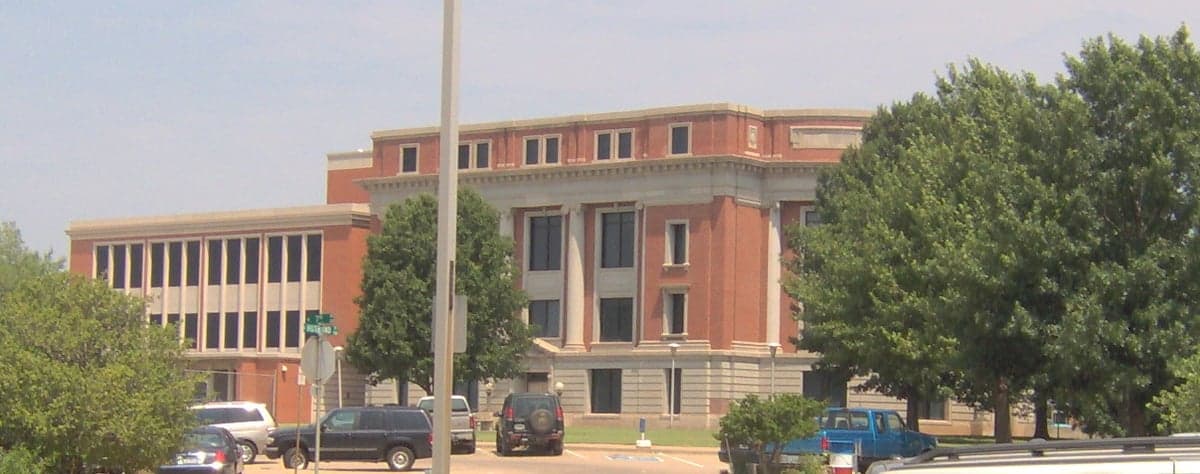
Photo: Wikipedia
Political ClimatePolitical Climate in Payne County
Showing district-level results — no local-only data available.
Local Political AnalysisPolitical Analysis of Payne County
Look, I’ve lived in Payne County long enough to remember when you could predict every precinct without even checking returns. Today, the political landscape here is still solid red—Cook PVI sits at R+23—but there’s a noticeable split between the college town of Stillwater and the rest of the county that gets glossed over in state averages. The surrounding state of Oklahoma itself clocks in at R+18, meaning our county votes about five points more conservative than the state as a whole. That’s driven almost entirely by the rural precincts in towns like Perkins, Yale, and Cushing, where folks still figure the government ought to stay out of their gun safes and their pocketbooks. The real story, though, is how Stillwater’s progressive tail is wagging the dog on some county-level races—and that’s got me watching closer than ever.
How it compares
Statewide, Oklahoma’s R+18 is already deep red, but Payne County’s R+23 means we’re practically the last place you’d expect a blue wave to land—yet here we are seeing blue-tinged city council and school board wins in Stillwater. The comparison matters because the university campus (Oklahoma State University) acts like a political island. In wards around campus, you’ll find precincts that lean as left as many in Norman or Oklahoma City, thanks to faculty, staff, and a student body increasingly influenced by national progressive messaging. Meanwhile, drive twenty minutes south to Cushing—the “Pipeline Crossroads of the World”—and you’ll find precincts that vote 80% Republican, year after year. So when someone says “Payne County is red,” they’re technically right, but it’s a red that’s getting chipped away at the edges. The swing precincts are actually in the unincorporated areas near Stillwater’s suburbs, where routine property tax votes and zoning decisions get tangled up in larger ideological fights.
What this means for residents
If you’re here because you value limited government and traditional Oklahoma values, the trend is something to keep an eye on. The most aggressive government overreach I’m seeing starts at the municipal level in Stillwater—proposals to restrict short-term rentals, add fees on homeowners with certain types of firewood storage, even a dust-up over mandating bike lanes that would shrink car lanes on Perkins Road. That’s small stuff alone, but it’s a pattern of telling people how to use their own property. The bigger red flag is how school board races are shifting. Two years ago, the local board in Stillwater went from a 5-0 conservative majority to a 3-2 split after a wave of “student safety” candidates ran on equity language. They’re not calling it progressive—nobody does out here—but the policies that follow tend to centralize authority in the district office rather than leaving decisions with parents. Out in Yale and Perkins, the schools have held the line, but you can feel the state-level pressure, too: mask mandates, curriculum debates, all funneling through the capitol in Oklahoma City.
At the county commission level, we’re still strong: Payne County hasn’t elected a Democrat to a county-wide office since the 1990s, and that’s not changing anytime soon. The sheriff, the county clerk, the commissioners from the three districts—all lean conservative, with most being solid Second Amendment and pro-life folks. The policy distinction that matters most to me is how our county handles land use. Unlike some of the more suburbanized counties near Tulsa, Payne County doesn’t do county-wide zoning. That means if you own a piece of dirt out by the lake or back in the woods, you can build a barn, put up a fence, or run a small business without asking permission from a board that doesn’t know you. That kind of freedom is what kept us from turning into a copy of Norman, and it’s what I hope we hold onto as the culture war tightens its grip on Oklahoma elections. Keep an eye on the 2028 primary cycles—that’s where the real fight over Payne County’s soul will happen.

State Political ClimatePolitical Climate in Oklahoma
State Political AnalysisPolitical Environment in the State
Oklahoma has been reliably Republican for decades, with a Cook PVI of R+18, but I've watched the state's politics shift in interesting ways over the last 20 years. The dominant coalition is a mix of rural evangelical conservatives, suburban professionals, and oil-and-gas independents, and that coalition has hardened rather than softened. You won't find much purple here outside a few small pockets, and the overall trajectory has been steadily redder since the early 2000s.
Urban vs. rural divide
The political map breaks down predictably: rural counties vote deep red, while urban cores and college towns provide the rare blue spots. Oklahoma City leans moderate-right overall, with the suburbs of Edmond and Moore voting heavily Republican—Edmond gave Trump about 68% in 2020. Tulsa is more traditionally conservative but has a libertarian streak; its suburbs like Broken Arrow and Bixby are bona fide GOP strongholds. The real blue outliers are Norman (home to the University of Oklahoma) and to a lesser extent Stillwater (Oklahoma State), where younger, more progressive voters occasionally flip precincts. Lawton, near Fort Sill, leans red but with a sizable military influence. Western towns like Elk City and Woodward are as red as they come—counties there often give the Republican nominee 80% plus. The divide is visceral: drive 30 minutes out of Oklahoma City and you'll hear talk radio blaring from every truck, not just a few.
Policy environment
Oklahoma's policy stack is built for limited government. Income tax rates have been cut repeatedly—the top rate stands at 4.5% as of 2025 after recent legislation signed by Governor Kevin Stitt. There's no estate tax, but sales taxes are high (state plus local can reach 10%+). Regulatorily, it's a friend to oil and gas, agriculture, and manufacturing. Education policy has seen explosive growth in school choice: the Oklahoma Parental Choice Tax Credit Act (2023) provides up to $7,500 per child for private school expenses, and vouchers for special-needs students have expanded. Healthcare is a patchwork: voters approved Medicaid expansion via SQ 802 in 2020 (over GOP legislative resistance), but the state didn't fully implement until 2021. Abortion is now banned with very narrow exceptions following the 2022 trigger law (SB 612). Election laws are secure: strict voter ID (SB 631, 2010), no same-day registration, and limited early voting—no widespread mail-in balloting. You won't see the kind of election chicanery that plagues other states.
Trajectory & freedom
I'd say Oklahoma is becoming more free in several key areas, though not without some nudges from the left. The biggest wins for personal liberty came in 2019 with permitless carry (constitutional carry)—you can carry a firearm openly or concealed without a license. Parental rights got a boost from HB 1775 (2021), which bans teaching critical race theory in public schools and forces school boards to be transparent about curriculum. On medical autonomy, the near-total abortion ban is a clear expansion of the right to life, though it limits the medical freedom of women—a trade-off that conservative residents generally support. Property rights are strong; eminent domain is seldom used for private projects. Income tax cuts have been steady: Stitt signed a reduction from 4.75% to 4.5% in 2024, with a further trigger to 4.0% if revenue targets are met. The only worry I've seen is some overreach in health mandates—vaccine requirements were firmly resisted, but the state government did impose some COVID-era restrictions that many of us felt were too heavy-handed.
Civil unrest & political movements
Oklahoma hasn't seen the kind of violent protests you see on the coasts. The 2020 BLM demonstrations in downtown Tulsa and Oklahoma City were relatively peaceful, with a few nights of property damage that quieted quickly. Counter-protests from groups like the Proud Boys and local Second Amendment activists kept a tense balance. Since then, the action has shifted to school board meetings—Moms for Liberty chapters have sprouted in Edmond and Broken Arrow, pushing back on sexually explicit library books and transgender policies. The left is active too: Freedom Oklahoma (an LGBTQ advocacy group) and Oklahomans for Criminal Justice Reform lobby constantly, but they rarely win legislative battles. Immigration politics are muted because there are no sanctuary cities—the state legislature passed HB 4156 in 2021 to penalize any that try, though none exist. Election integrity flashpoints are rare—Oklahoma's strict laws mean no one seriously claims fraud here. If you move in, you'll find a politically engaged but civil populace; the biggest flashpoint I've seen recently is a shouting match over a school board agenda in Norman.
Projection
Over the next 5–10 years, I expect Oklahoma to stay deep red, but with important caveats. In-migration from blue states—especially California, Colorado, and Illinois—is accelerating, particularly to the suburbs around Oklahoma City and Tulsa. These newcomers tend to be more libertarian than traditional conservative: they want low taxes and gun rights but are less attached to social conservatism. That could shift the GOP primary electorate toward fiscal over social issues, but it won't flip the state. The Hispanic population is growing fast, especially in southwestern towns like Altus, and that demographic leans right in Oklahoma—pragmatic, family-oriented, and religious. Meanwhile, urban cores like Norman will likely get bluer as OU grows, but they'll remain isolated islands. The real trend: the state will continue to cut taxes, expand school choice, and resist federal overreach. Within a decade, you'll probably see income tax down to 3.9% or lower, and maybe even a push for a flat tax. The culture wars will simmer but not explode—Oklahomans are too polite for that.
Bottom line for a new resident: Oklahoma offers a low-tax, low-regulation environment with a strong conservative culture and minimal government overreach in your daily life. You'll have your pick of thriving red suburbs like Edmond or Broken Arrow, and you can avoid the few blue enclaves if you wish. The state is trending in the right direction on freedom and family policy, but stay aware that the legislature sometimes overcorrects on social
* Values derived from national, state, county, city and local statistics and may differ in a specific area. Last updated: 2026-06-01T14:00:58.000Z
Narrative content on this page is AI-generated and may contain mistakes. Verify any details that matter before acting on them.
ReloMaps may earn a commission from affiliate links at no extra cost to you.

