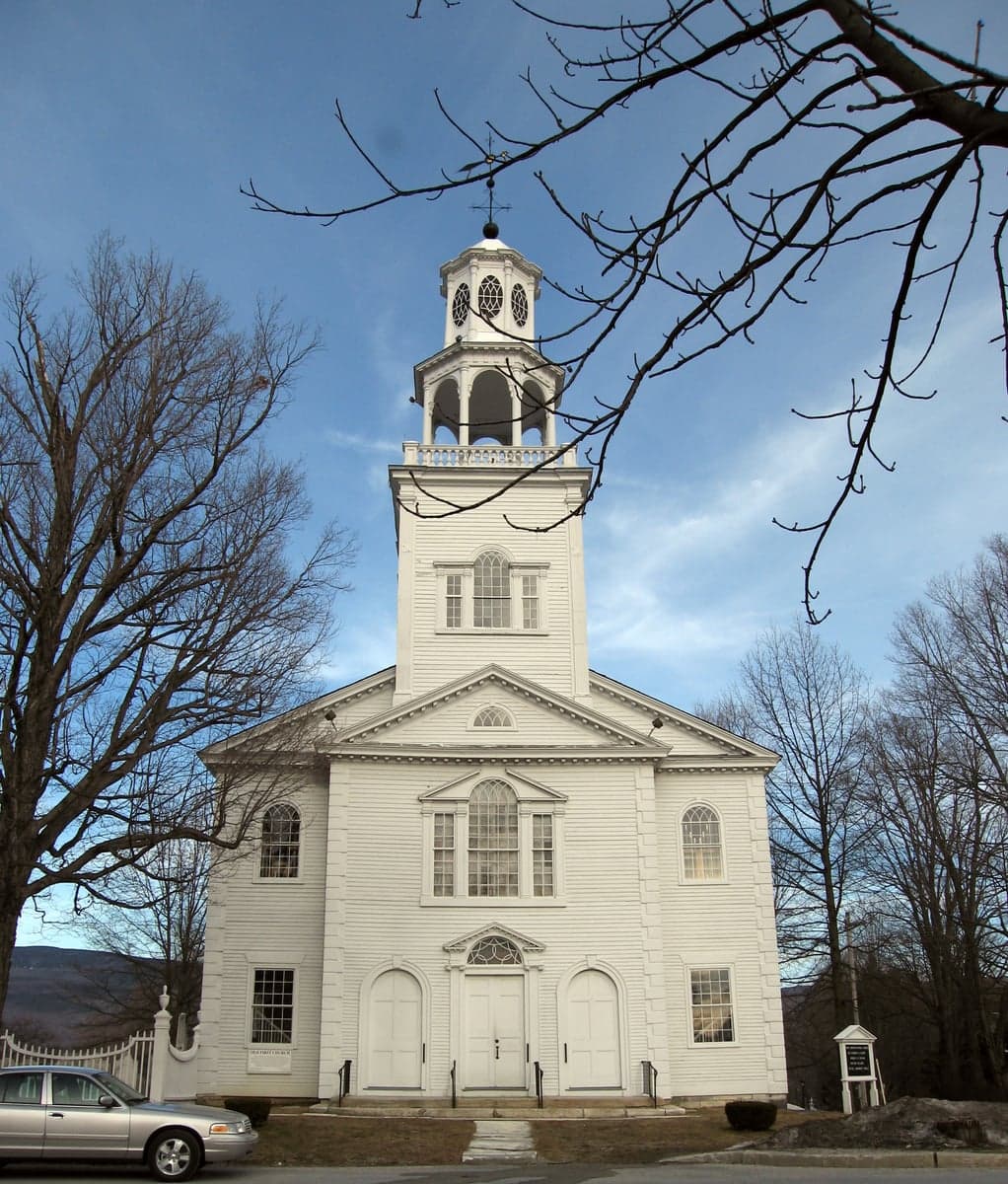
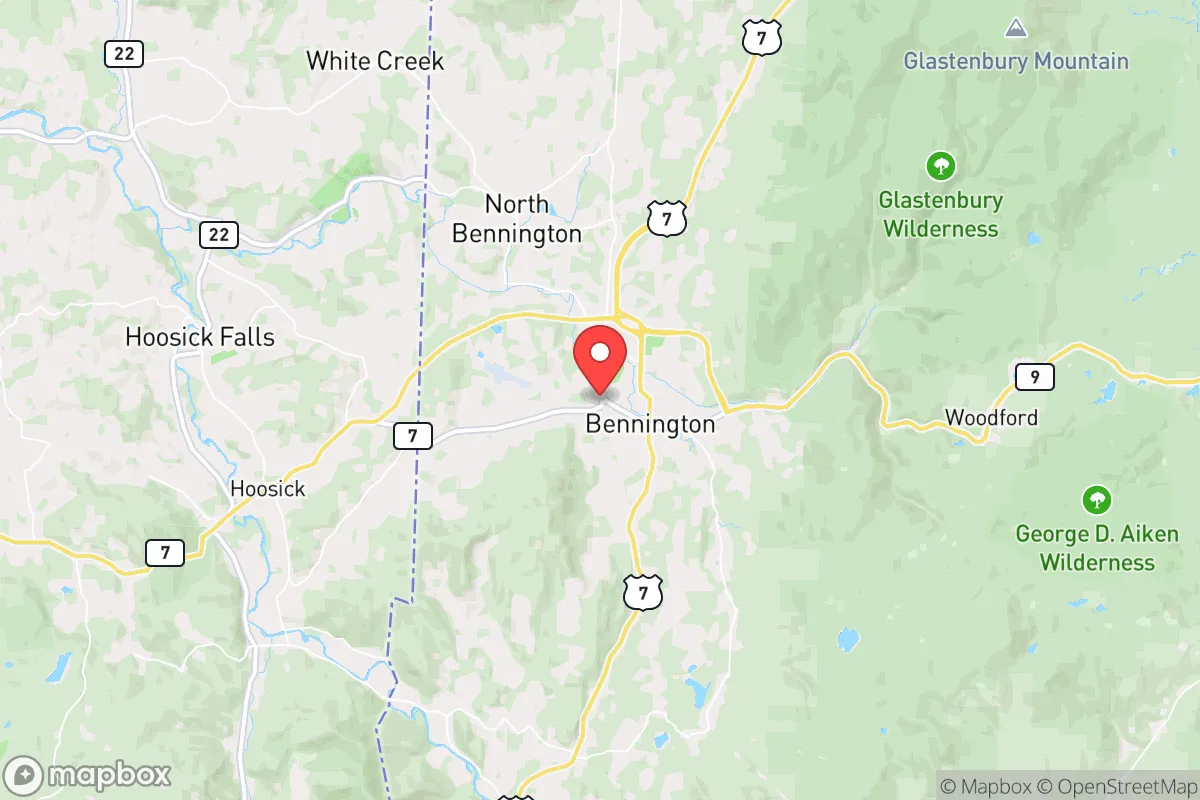
Photo: Wikipedia
Demographics of Old Bennington, VT
Affluence Level in Old Bennington, VT
A wealthy area with high-earning, well-educated households. Incomes, home values, and educational attainment meaningfully outpace national averages.
People of Old Bennington, VT
Old Bennington, Vermont, is a tiny, historically anchored village of 153 residents that is overwhelmingly white (97.4%) and highly educated (79.8% college-educated), with zero foreign-born population. It functions as a preserved historic district rather than a growing residential hub, defined by its 18th-century architecture, the Bennington Battle Monument, and a concentration of old New England families and second-home owners. The village feels more like a living museum than a typical neighborhood, with a density of 0.0% Hispanic, Black, East/Southeast Asian, or Indian-subcontinent residents reflecting its status as one of Vermont’s most demographically homogeneous enclaves.
How the city was settled and grew
Old Bennington was settled in the 1760s by English colonists from Connecticut and Massachusetts, drawn by the New Hampshire Grants and the promise of fertile land in the Walloomsac River valley. The village was the original settlement of Bennington, founded in 1761, and its first residents were farmers, millers, and tradesmen who built the iconic white clapboard houses along Monument Avenue and the surrounding streets. The Monument Avenue Historic District became the core of the village, where the earliest families—the Robinsons, the Deweys, and the Fays—erected homes that still stand today. The Battle of Bennington in 1777, a pivotal Revolutionary War engagement, cemented the area’s identity as a patriotic stronghold, and the village grew slowly through the 19th century as a quiet county seat and market center. By 1900, the population had stabilized around 200, with the Walloomsac Road corridor hosting a mix of farmers and merchants. No major immigrant waves arrived; the village remained a homogenous, English-descended community through the mid-20th century, with the Old Bennington Historic District (listed on the National Register in 1984) preserving its colonial character.
Modern era (post-1965)
After the 1965 Hart-Cellar Act, Old Bennington saw no significant demographic change—the village’s foreign-born population remained at 0.0%, and its racial composition stayed virtually all-white. The post-1965 era instead brought domestic in-migration of affluent professionals and retirees seeking a historic, quiet lifestyle, drawn by the village’s proximity to Bennington College and the cultural amenities of Bennington town. These newcomers settled into the Monument Avenue Historic District and the West Road area, often purchasing and restoring 18th-century homes. The Bennington Battle Monument area became a tourist magnet, but the village itself remained a residential enclave with no new subdivisions or apartment construction. The 79.8% college-educated rate reflects the influx of academics, artists, and professionals, while the 0.0% Hispanic, Black, East/Southeast Asian, and Indian-subcontinent shares underscore that the village did not absorb any of the broader immigration trends seen in Vermont’s larger towns like Burlington or Winooski. The Gage Street neighborhood, a small cluster of homes near the monument, remained a quiet pocket of old-stock families and seasonal residents.
The future
Old Bennington’s population is heading toward further homogenization and demographic stasis. With a population of 153 and no foreign-born residents, the village is unlikely to see any significant racial or ethnic diversification in the next 10–20 years. The housing stock—primarily historic homes with high price points and strict preservation rules—acts as a natural barrier to younger families or immigrant households. The village is not tribalizing into distinct enclaves; rather, it is consolidating as a single, affluent, white, and older demographic. The Monument Avenue Historic District and Walloomsac Road areas will likely see continued turnover among second-home buyers and retirees, but no new immigrant communities or ethnic neighborhoods are emerging. The 0.0% growth in all minority groups suggests that Old Bennington will remain a demographic outlier in Vermont—a preserved historic village with a static, homogenous population.
For someone moving in now, Old Bennington offers a deeply quiet, historically rich, and socially uniform environment. It is becoming a place for those who prioritize architectural preservation, solitude, and a connection to colonial New England over diversity or community growth. The village’s future is one of careful maintenance of the past, not demographic change.

* Values derived from national, state, county, city and local statistics and may differ in a specific area. Last updated: 2026-04-29T18:30:18.000Z
Narrative content on this page is AI-generated and may contain mistakes. Verify any details that matter before acting on them.
ReloMaps may earn a commission from affiliate links at no extra cost to you.

