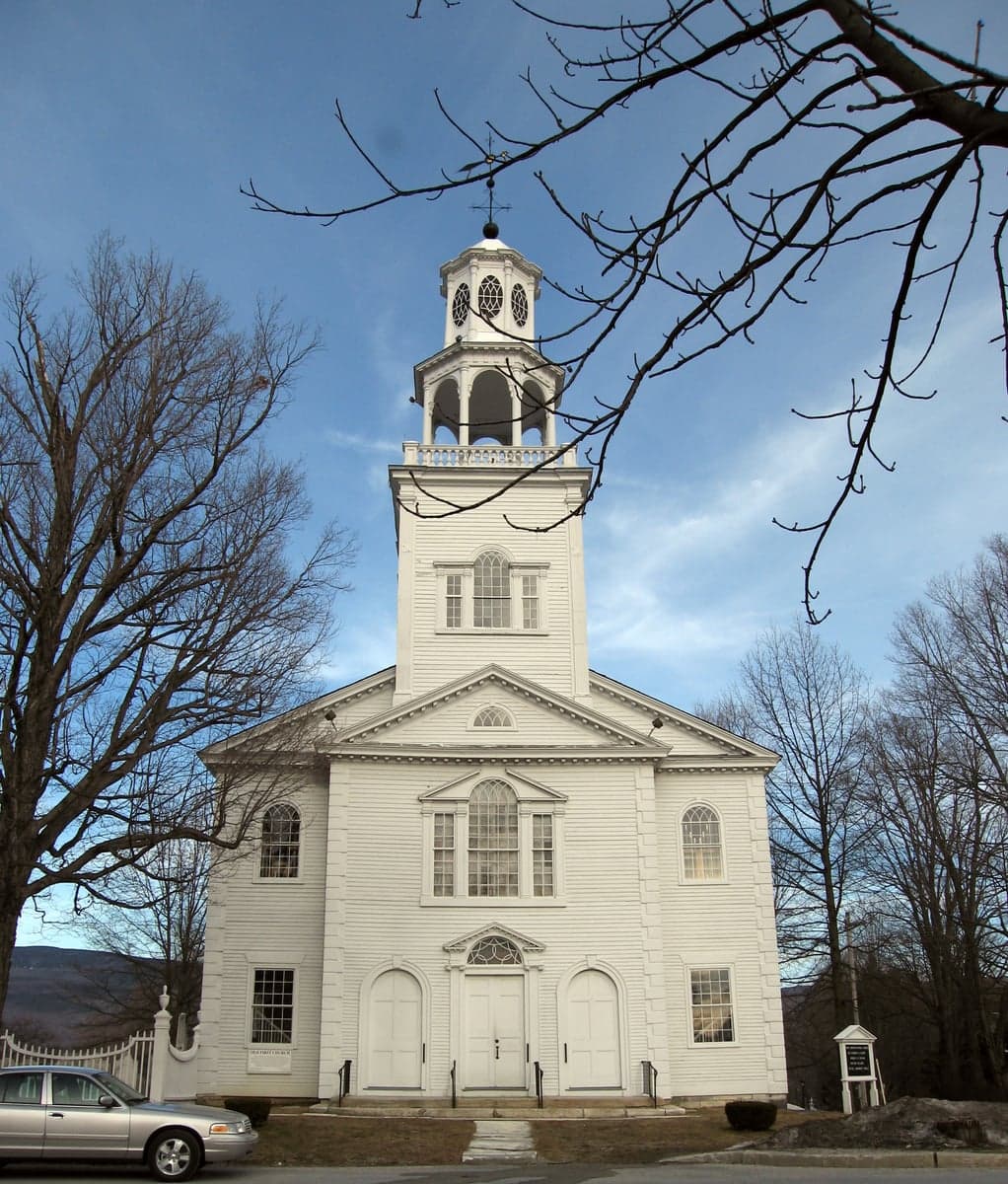
Photo: Wikipedia
Political ClimatePolitical Climate in Old Bennington, VT
District shown is the primary district for this city’s centroid. Cities may span multiple districts.
Inherited from parent state — no local data available.
Local Political AnalysisPolitical Analysis of Old Bennington, VT
Old Bennington, Vermont, leans heavily to the left, with a Cook PVI of D+17 that makes it one of the most reliably Democratic areas in the state. This wasn't always the case; I remember when this town was more about minding your own business and keeping government out of your backyard. Over the last decade or so, the political energy has shifted dramatically, and it's not hard to see the influence of newcomers from places like New York and Massachusetts who bring a very different set of priorities. The trajectory is clear: the old independent streak is being replaced by a more progressive, activist-minded electorate that seems comfortable with expanding government's role in daily life.
How it compares
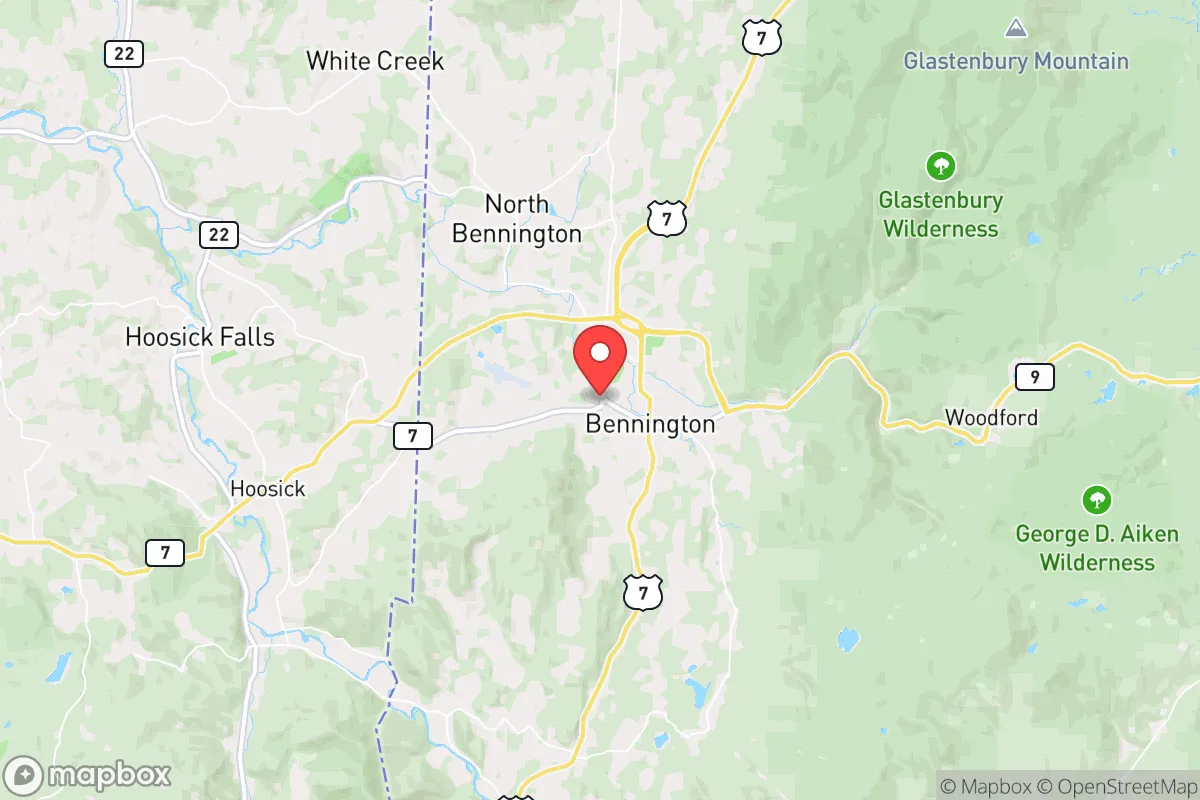
To understand Old Bennington's politics, you have to look at the surrounding towns. Drive ten minutes north to Shaftsbury, and you'll find a more mixed bag—still blue, but with a noticeable conservative minority that shows up at town meeting. Head west into New York State, and places like Hoosick Falls feel like a different country entirely, with a much more skeptical view of state-level mandates. The real contrast is with the rest of Bennington County itself. While the town of Bennington proper is also solidly Democratic, the rural parts of the county—like Woodford or Pownal—still have folks who vote their conscience on taxes and property rights, even if they're outnumbered. Old Bennington, with its historic district and high property values, has become a sort of progressive enclave where the local conversation tends to start from a place of "what more can the government do?" rather than "what should the government stay out of?"
What this means for residents
For a long-time resident, the practical effect of this political climate is a steady creep of regulations and policies that can feel suffocating. You see it in the push for stricter land-use rules that make it harder to do anything with your own property without a permit. You see it in the school board meetings, where the focus has shifted from teaching the basics to pushing social agendas that many parents find intrusive. The tax burden is another sore spot—Vermont already has some of the highest property taxes in the country, and the appetite for new spending programs here shows no sign of slowing down. If you value personal freedom, especially the freedom to live your life without a government official telling you how to heat your home or what you can build on your land, this area is becoming a tougher place to call home. The local culture of neighborly self-reliance is being slowly replaced by a culture of compliance.
The most telling cultural distinction is the attitude toward the Second Amendment. Old Bennington was once a place where gun ownership was just a normal part of life, not a political statement. Now, you'll find local officials who are openly hostile to that tradition, and the state legislature in Montpelier keeps churning out new restrictions that make it harder for law-abiding citizens to exercise their rights. The town's historic charm is undeniable, but beneath the surface, there's a growing sense that the people in charge don't trust you to make your own decisions. If you're considering a move here, just know that the political winds are blowing hard in one direction, and they're not likely to shift back anytime soon. It's a beautiful place to visit, but living here means accepting a level of government involvement that many of us find deeply concerning.

State Political ClimatePolitical Climate in Vermont
State Political AnalysisPolitical Environment in the State
Vermont has a reputation as one of the most progressive states in the nation, and for good reason: it’s been reliably blue in presidential elections since 1992, with Democrats and Progressives holding supermajorities in the legislature for most of the last decade. But that top-line number hides a deeper story. The state’s political climate is actually a tale of two Vermonts: the urbanized, college-town corridor along Interstate 89, and the more independent, rural, and historically Republican areas that still exist in the Northeast Kingdom and parts of the southern counties. Over the last 20 years, the state has shifted hard left on social and economic policy, but that shift is driven almost entirely by the growth of Chittenden County and the influence of Burlington, while many small towns feel increasingly left behind and politically alienated.
Urban vs. rural divide
The political map of Vermont is stark. Chittenden County, home to Burlington, South Burlington, and the University of Vermont, is the engine of the state’s progressive politics. In 2024, Chittenden County gave Joe Biden over 75% of the vote, and Burlington itself has been under Progressive Party mayors for years. This area is dense, young, and heavily influenced by the university and the tech/healthcare sectors. Drive 30 minutes east or south, and the landscape changes completely. Rutland County and the Northeast Kingdom (Orleans, Essex, and Caledonia counties) are more conservative, with many towns voting Republican by double digits. In 2020, Donald Trump actually won Orleans County by 12 points, and in 2024, he carried it by a wider margin. The town of Newport in the Northeast Kingdom is a good example: a struggling former mill town where frustration with Montpelier’s one-party rule is palpable. Even in the more moderate Washington County (home to Montpelier), the rural towns like Cabot and Marshfield often split tickets, voting for local Republicans while supporting statewide Democrats. The divide isn’t just about party—it’s about culture, economics, and a sense of being heard.
Policy environment
Vermont’s policy environment is a case study in progressive governance, and for a conservative-leaning newcomer, it’s a mixed bag. On the plus side, the state has no sales tax and relatively low property taxes for primary residences (though second homes and commercial properties get hit hard). But the trade-offs are significant. Income taxes are steep, with a top marginal rate of 8.75% kicking in at around $213,000 for single filers. The state also has a mandatory paid family leave program funded by a payroll tax, and a single-payer healthcare system that’s been debated for years but hasn’t fully materialized—though the state does run a public option called the Vermont Health Connect exchange. Education policy is heavily centralized: the state’s Act 46 forced school district consolidation, which rural communities fought bitterly, arguing it stripped local control. Gun laws are among the strictest in the nation: universal background checks, a 10-round magazine limit, a ban on assault weapons, and a red-flag law that allows temporary confiscation of firearms without a criminal conviction. For a conservative, the regulatory posture feels like a slow squeeze on personal autonomy, especially around property rights and land use. The state’s Act 250 development review process can delay or kill any construction project, and recent updates have made it even more restrictive.
Trajectory & freedom
Over the last five years, Vermont has become less free by any objective measure, especially for those who value individual liberty in the traditional sense. The 2023 passage of Act 47, which codified abortion rights and removed parental notification requirements for minors, was a flashpoint. More recently, the legislature passed Act 18, a sweeping housing bill that preempts local zoning in an attempt to force density, but also includes provisions that critics say undermine property rights by allowing the state to override town bylaws. On the education front, Act 1 (2024) removed the requirement for schools to notify parents if a child changes their gender identity or pronouns, sparking massive backlash from parental rights groups. The state also passed a clean heat standard that effectively mandates a transition away from fossil fuels for home heating, which will raise costs in a state where winter heating is a necessity, not a luxury. On the positive side for liberty-minded folks, Vermont has no death penalty, no sales tax, and a strong tradition of town meeting democracy—though that tradition is being eroded by state preemption. The gun rights picture is grim: the 2018 gun control package was the most aggressive in the nation at the time, and efforts to repeal or soften it have gone nowhere.
Civil unrest & political movements
Vermont isn’t known for violent civil unrest, but there’s a simmering tension that’s visible to anyone paying attention. The Black Lives Matter protests in Burlington in 2020 were large and led to the removal of a statue of a Civil War general, but they also exposed a deep rift between the city’s progressive activists and the more moderate, working-class residents of surrounding towns. The Yellow Vest movement, a loose coalition of gun rights advocates and anti-lockdown protesters, held rallies at the Statehouse in 2020-2021, drawing hundreds. More recently, the parental rights movement has gained steam, with groups like Vermonters for Good Government organizing against Act 1 and school curriculum changes. The state is a sanctuary state for undocumented immigrants, with a 2017 law (Act 42) that limits local law enforcement cooperation with federal immigration authorities. This has been a flashpoint in towns like St. Albans, where a growing immigrant population has strained social services and schools. Election integrity hasn’t been a major controversy here—Vermont has universal mail-in voting and automatic voter registration, and the system is widely trusted—but the lack of voter ID laws is a concern for some conservatives. The most visible political movement right now is the secessionist fringe, with a small but vocal group pushing for a “Second Vermont Republic,” but it’s more of a cultural curiosity than a real political force.
Projection
Looking ahead 5-10 years, the trajectory is clear: Vermont will continue to get more progressive, more expensive, and more centralized. The demographic trends are working against conservatives. In-migration since 2020 has been dominated by remote workers from New York, Boston, and California, who bring progressive politics and high incomes, driving up housing prices in places like Burlington, Stowe, and Manchester. The rural, conservative towns are losing population and political clout. The state’s aging population (Vermont is the second-oldest state in the nation) means that younger, more liberal voters are gaining influence. The legislature is unlikely to reverse course on gun control, parental rights, or taxation. In fact, expect more: a wealth tax has been proposed, and a carbon tax is likely in the next decade. The one wild card is the housing crisis—if the state’s policies make it impossible for middle-class families to afford to live here, the progressive coalition could fracture. But for now, the political momentum is firmly with the left. A conservative moving to Vermont in 2026 should expect to be a political minority, especially if they live in Chittenden County or any of the ski towns.
For a conservative-leaning individual or family considering a move to Vermont, the bottom line is this: you’ll find beautiful landscapes, strong communities, and a slower pace of life, but you’ll also face a state government that is actively hostile to many of your core values—gun rights, parental authority, low taxes, and local control. The best bet for a conservative is to target the Northeast Kingdom or parts of Rutland County, where the culture is more independent and the politics are more balanced. But even there, you’ll be voting against the tide. Vermont is a place where you can live your life quietly and be left alone in many ways, but the state’s policy apparatus will increasingly reach into your home, your wallet, and your family. If you’re okay with being a political outlier and fighting for your rights at the local level, it can still be a great place to live. Just don’t expect the state to have your back.
* Values derived from national, state, county, city and local statistics and may differ in a specific area. Last updated: 2026-04-29T18:30:18.000Z
Narrative content on this page is AI-generated and may contain mistakes. Verify any details that matter before acting on them.
ReloMaps may earn a commission from affiliate links at no extra cost to you.

