Photo: Wikipedia
Strategic Assessment of Old Bennington, VT
Meaningful friction. Expect exposure to either population pressure, blast zones, or natural disaster risk. Consider buying a retreat property.
What does the Strategic Assessment tell us?
Our Strategic Assessment grades tactical survivability of an area. Major population centers, military targets, fallout zones, natural disasters, and border exposure all drive risk — lower exposure means a more defensible position in a crisis.
This is heavily inspired by Joel Skousen's Strategic Relocation book. Highly recommended you checkout the book ($)What does this tell us?
Our Strategic Assessment grades tactical survivability of an area. Major population centers, military targets, fallout zones, natural disasters, and border exposure all drive risk — lower exposure means a more defensible position in a crisis.
This is heavily inspired by Joel Skousen's Strategic Relocation book. Highly recommended you checkout the book ($)Strategic Pillars

Key Distances
Regional Safe Places
Below is our recommended "safe zones" in Vermont and the surrounding area based on our strategic heuristics. For most people, it's unrealistic to live in a “safe zone” full-time due to work, family or other personal reasons. They tend to be more rural. However, many of these areas are perfect for second homes and retreat properties that double as a vacation home or even a short-term rental.
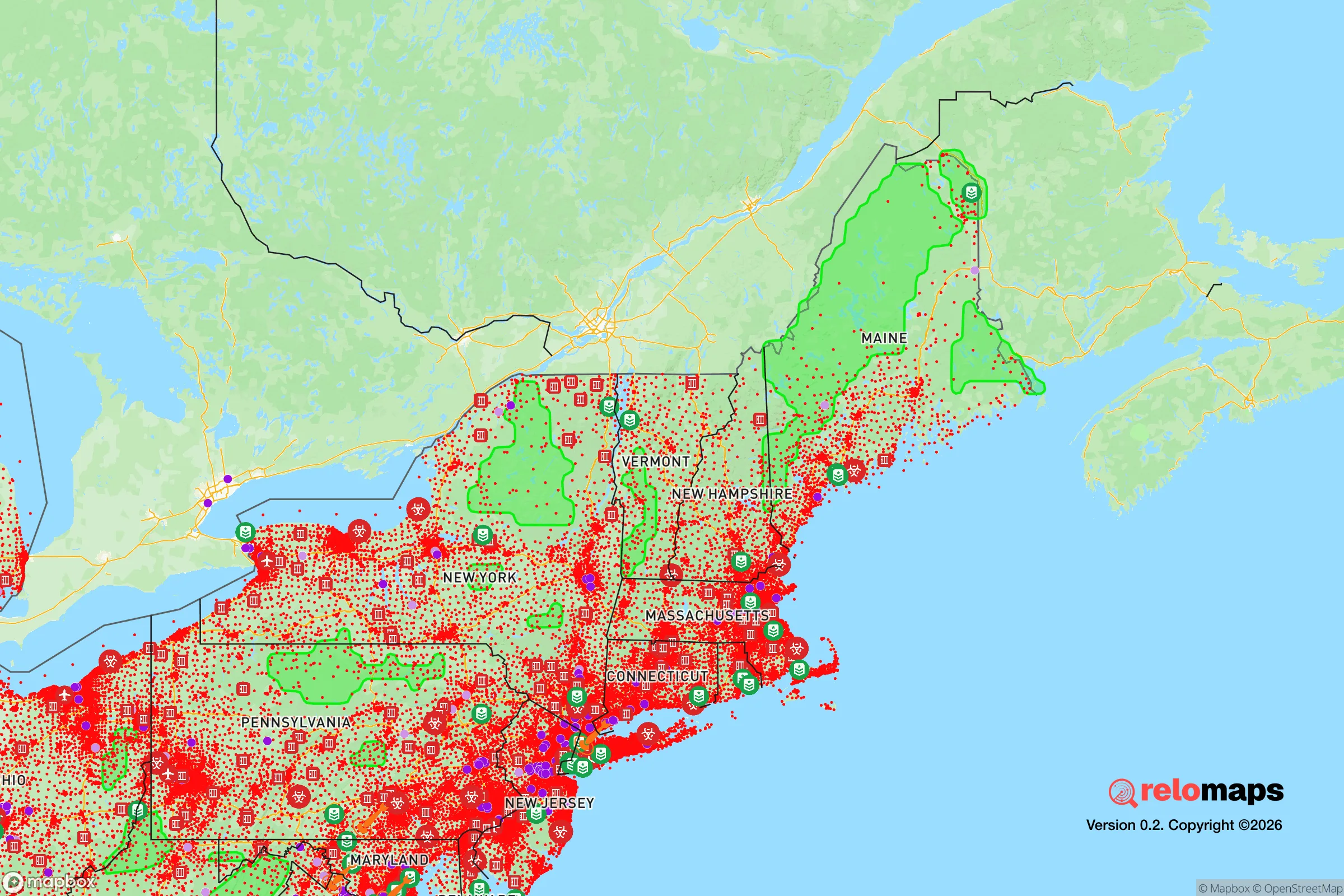
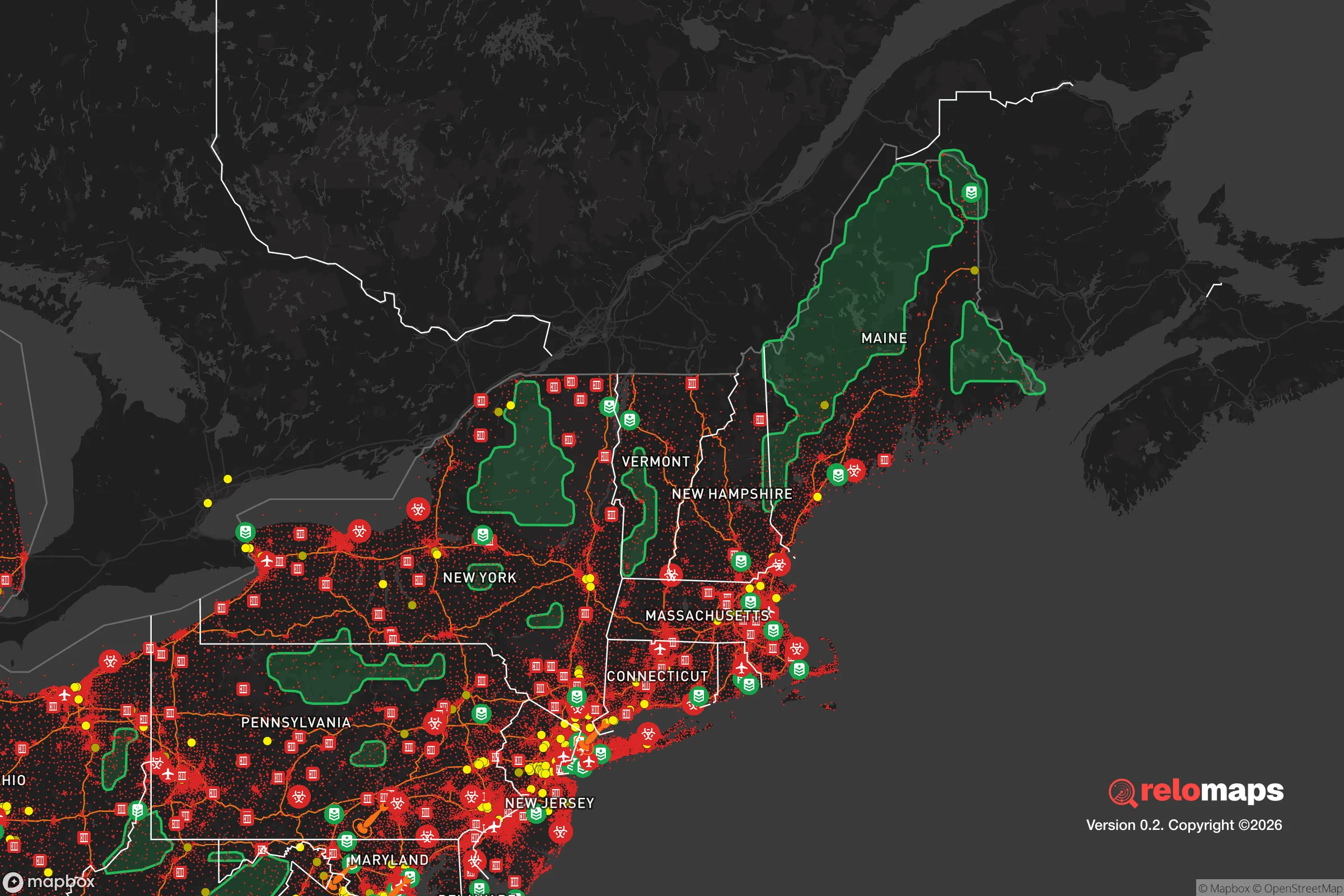


Important Note: For informational purposes only. This does not mean nothing bad ever happens in the green zones. Please use common sense. This is based on public data and modeled with AI. We tried to take a conservative approach but mistakes happen. We update this regularly as new information becomes available.
Solar Generator Recommendations
Backup power matters more here than in safer locations. We've picked three solar generators across budgets and capacity tiers — start with the budget unit if you only need a few essentials, or step up if you want to run a fridge and HVAC for days at a time.

Jackery Portable Power Station Explorer 300
Budget OptionPower on the Go: Weighing only 11 lbs, it's convenient to set up and store with book-sized foldable solar panels

BLUETTI Portable Power Station AC180
Designed for both indoor and outdoor scenarios, AC180 is highly capable as it has a robost capacity and continuous output power.

EF ECOFLOW DELTA Pro Ultra Power Station
Upgraded PickEcoFlow DELTA Pro Ultra is a whole-home energy system designed to grow with your family. Integrated with the Smart Home Panel 2, it scales to meet your evolving energy needs — keeping your home powered, intelligent, and secure through every stage of life.
We earn a commission, at no additional cost to you.
Strategic Assessment Analysis
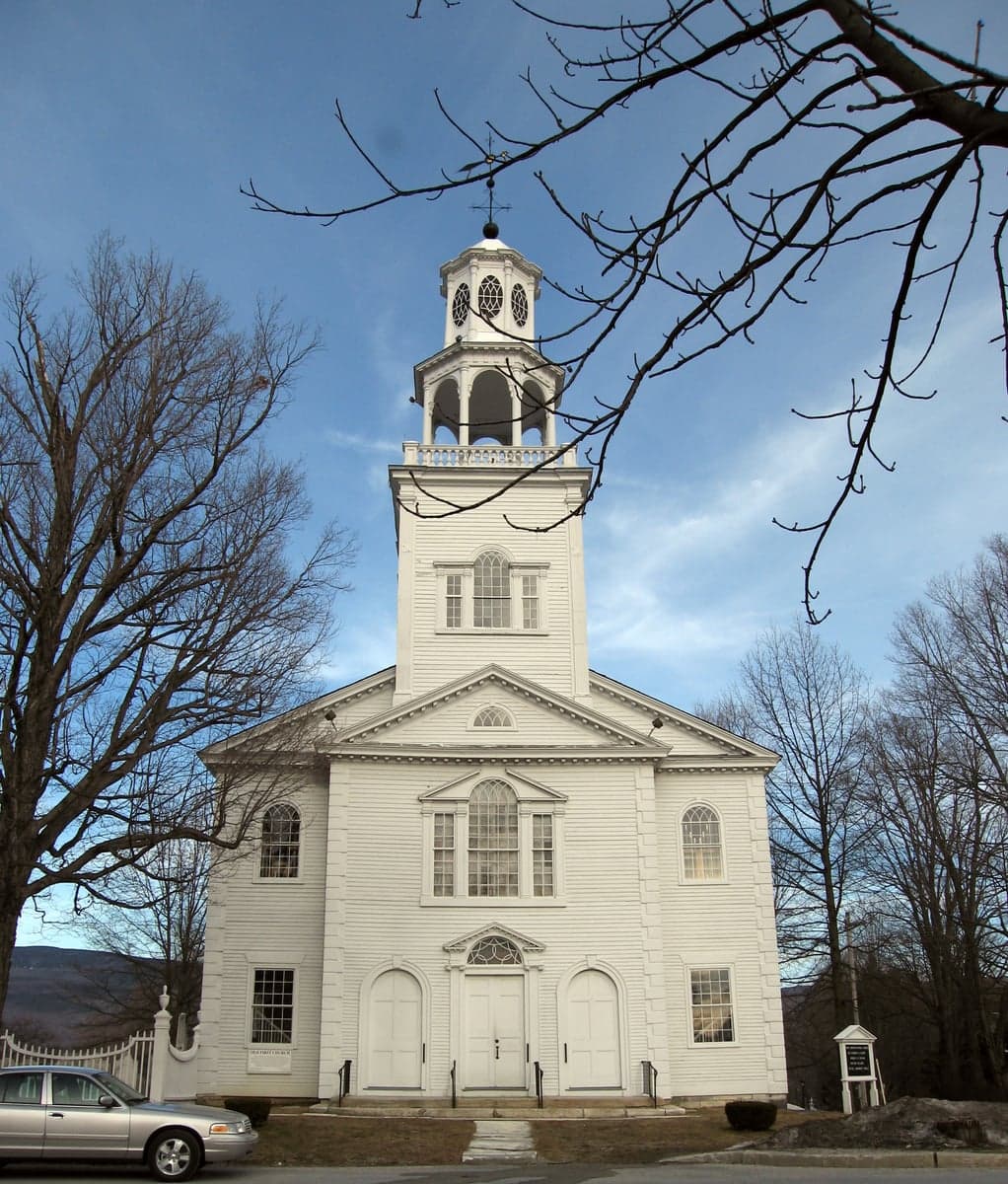
Old Bennington, Vermont, offers a strategic relocation option for those prioritizing resilience and self-sufficiency, largely due to its position in the southwestern corner of the state, away from major population centers and their associated risks. The area sits roughly 40 miles from Albany, New York, and over 100 miles from Boston, placing it outside the immediate blast and fallout zones of any major metropolitan target while still providing access to regional supply chains and medical facilities in a crisis. The town itself is perched on a hilltop at roughly 800 feet elevation, with the Green Mountains to the east and the Taconic Range to the west, creating a natural buffer that complicates any large-scale movement or surveillance. For a relocator concerned with civic unrest, mass casualty events, or long-term societal disruption, Old Bennington’s low population density—around 1,500 residents in the historic village—and its distance from interstate highways (I-91 is 20 miles east, I-87 is 30 miles west) mean you’re not on any obvious evacuation route or target list. The area’s history as a frontier settlement, complete with the Old First Church and the Bennington Battle Monument, underscores a legacy of self-reliance that still echoes in the local culture today.
Geographic position and natural advantages for long-term security
Old Bennington’s location in the Bennington County region provides several natural advantages that a prepper or survivalist would find valuable. The town sits at the confluence of the Walloomsac River and several smaller streams, offering reliable surface water sources that are less likely to be contaminated by industrial runoff compared to more developed areas. The surrounding terrain is a mix of hardwood forests and open farmland, with the Green Mountain National Forest beginning just 15 miles to the east—a vast, sparsely populated area that could serve as a retreat or resupply zone if needed. Elevation is a key factor here: at roughly 800 feet, Old Bennington is above the valley fog and flood zones that plague lower-lying communities, and the hilltop position provides natural defensibility against any ground-level approach. The local climate, with cold winters and moderate summers, means you’ll need to prepare for heating and food storage, but it also discourages casual transient traffic and limits the growing season for any large-scale agricultural disruption. The proximity to the New York border (about 5 miles west) gives you a potential escape corridor into the Adirondacks, a region with even lower population density and abundant natural resources, should you need to relocate further in a worst-case scenario.
Risks, exposures, and proximity to fallout-relevant landmarks
No location is without risk, and Old Bennington has several exposures that a strategic relocator must weigh carefully. The most immediate concern is the Vermont Yankee Nuclear Power Plant, located about 40 miles north in Vernon, which, while decommissioned, still contains spent fuel rods on site—a potential target for sabotage or a source of long-term contamination if a disaster occurs. The plant’s decommissioning process is ongoing, and any accident there could render large swaths of southern Vermont uninhabitable for decades, though prevailing winds typically carry fallout eastward toward New Hampshire, not directly over Old Bennington. Closer to home, the town is within 30 miles of the Albany International Airport and the Port of Albany, a major rail and industrial hub that could be a target for economic disruption or terrorist attack. The nearby Bennington College and Southern Vermont College, while not military targets, could become focal points for civil unrest or refugee flows if a national crisis triggers mass migration from urban areas. The area’s reliance on a single major road, Route 7, for north-south travel is a vulnerability—any blockage or destruction of that artery would isolate the town from the rest of Vermont, forcing residents to rely on secondary dirt roads that are impassable in winter. Additionally, the region’s aging infrastructure, including a power grid that has experienced outages during severe storms, means you’ll need backup energy and water systems to maintain independence.
Practical resilience for a relocator: food, water, energy, and defensibility
For a relocator focused on practical self-sufficiency, Old Bennington offers a mix of opportunities and challenges that require advance preparation. The local soil, while rocky in places, supports vegetable gardens and small-scale farming, and the growing season (roughly 120-140 days) is sufficient for cold-hardy crops like potatoes, kale, and root vegetables. The surrounding forests provide ample firewood for heating and cooking, but you’ll need a chainsaw and a wood splitter to process it—relying on a single supplier is a risk if supply chains break down. Water is plentiful from the Walloomsac River and local wells, but you should test for contaminants and have a high-quality filtration system, as agricultural runoff from nearby dairy farms can introduce pathogens. The town’s elevation and terrain make it defensible: the hilltop position gives you visibility of approaching threats, and the narrow, winding roads (like Monument Avenue and West Road) create natural chokepoints that would slow any vehicle-based incursion. However, the area’s low population density also means you’ll have few neighbors to rely on for mutual aid—building a local network of like-minded individuals is essential before a crisis hits. The Bennington County Sheriff’s Office and Vermont State Police have a presence, but response times in a widespread emergency could be hours or days, so you should plan for self-defense and medical care. The local economy, centered on tourism and small-scale manufacturing, is fragile and would collapse quickly in a prolonged disruption, meaning you’ll need to stockpile at least six months of supplies, including food, medicine, and ammunition.
The overall strategic picture for Old Bennington is one of cautious optimism for a relocator with a survivalist mindset. The area’s isolation, natural resources, and defensible terrain make it a strong candidate for a long-term retreat, provided you address the vulnerabilities around energy, transportation, and proximity to decommissioned nuclear infrastructure. The local culture, while leaning liberal in the village itself, has a strong undercurrent of Vermont’s independent spirit—people here value privacy and self-reliance, which aligns with a conservative perspective on preparedness. The key is to act now: secure a property with a reliable well, install solar panels or a generator, and establish relationships with local farmers and tradespeople before any crisis forces a rush on resources. Old Bennington won’t protect you from every threat, but it offers a solid foundation for weathering the storms ahead, whether they come from economic collapse, natural disaster, or societal breakdown.

* Values derived from national, state, county, city and local statistics and may differ in a specific area. Last updated: 2026-04-29T18:30:18.000Z
Narrative content on this page is AI-generated and may contain mistakes. Verify any details that matter before acting on them.
ReloMaps may earn a commission from affiliate links at no extra cost to you.

