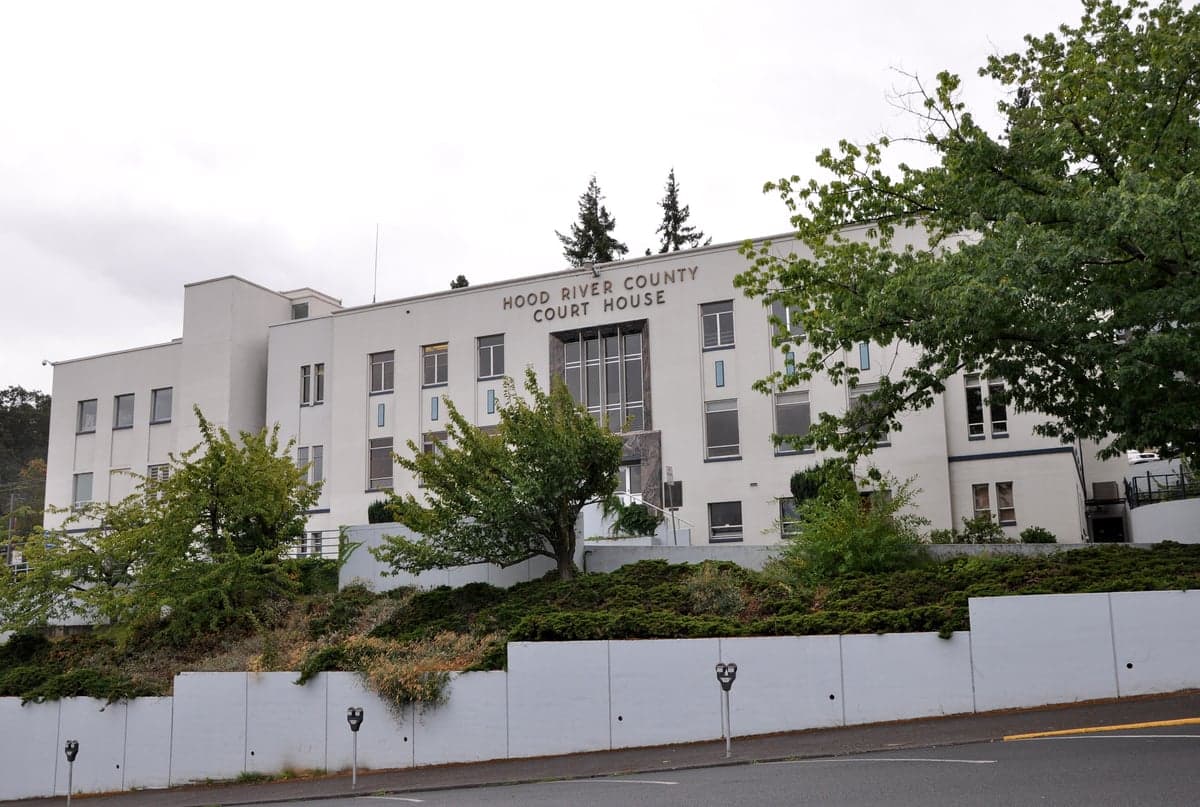
Photo: Wikipedia
Demographics of Hood River County
Affluence Level in Hood River County
A middle-class area roughly in line with national averages across income, home values, education, and employment.
People of Hood River County
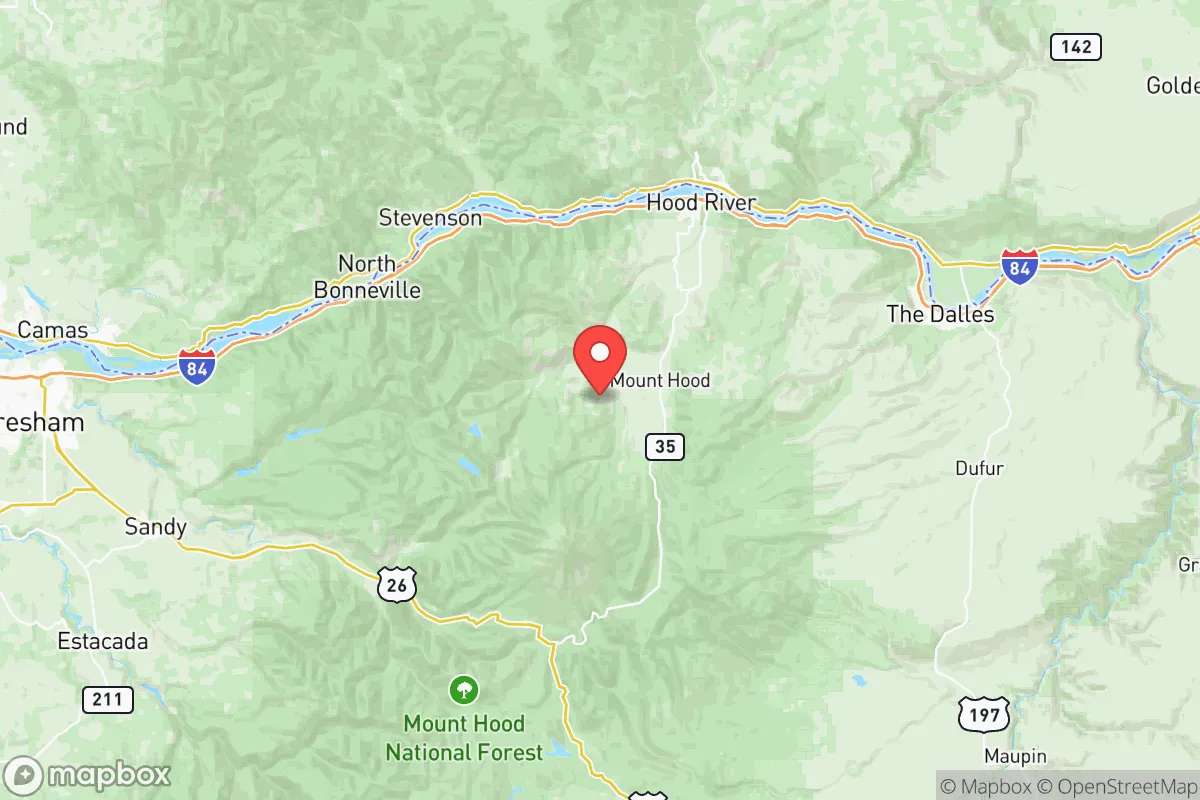
Hood River County’s 23,958 residents today form a distinctive blend of long-standing white families, a substantial and growing Hispanic community, and a small but influential cohort of East/Southeast Asian and Black residents. The county is defined by its dramatic geography—the Columbia River Gorge and the Cascade Range—which has shaped settlement patterns from the beginning. With a foreign-born population of 11.0% and a Hispanic share of 30.3%, Hood River County is notably more diverse than most of rural Oregon, yet it retains a strong agricultural and outdoor-recreation identity that sets it apart from the state’s urban centers.
Settlement & growth (pre-1960)
Long before European settlement, the Columbia River Gorge was home to the Wasco and Wishram peoples, who fished for salmon at Celilo Falls and maintained trade networks along the river. The Lewis and Clark Expedition passed through the area in 1805, and by the 1810s, fur traders and missionaries began arriving. The Oregon Trail brought the first major wave of American settlers in the 1840s and 1850s, predominantly white families from the Midwest and Upper South. These early homesteaders took up donation land claims in the fertile Hood River Valley, establishing farms and orchards that remain central to the county’s economy.
The arrival of the railroad in the 1880s transformed the county. The Oregon Railway and Navigation Company laid tracks along the Columbia River, linking Hood River to Portland and points east. This opened the valley to commercial fruit production, especially apples and pears. The town of Hood River, incorporated in 1895, became the county seat and commercial hub. Nearby settlements like Odell and Pine Grove grew as farming communities, with German and Scandinavian immigrants arriving to work the orchards. By 1900, the county’s population had reached roughly 7,000, almost entirely white and native-born.
The early 20th century saw the arrival of Japanese immigrants, who came to work in the orchards and railroad. By the 1920s, a small but vibrant Japanese American community had formed in Hood River and Parkdale. This community was devastated by World War II internment; many families lost their land and never returned. The post-war period brought a modest influx of white families from the Midwest and California, drawn by the region’s natural beauty and growing timber industry. The population remained overwhelmingly white through the 1950s, with the 1960 census recording a 98.5% white share.
Modern era (post-1965)
The 1965 Hart-Cellar Act had a delayed but profound effect on Hood River County. The primary driver of demographic change was not direct immigration from abroad, but rather the arrival of Hispanic migrant farmworkers—initially from Texas and California, and later directly from Mexico and Central America. These workers were drawn by the county’s expanding fruit and wine industries. By the 1980s, a permanent Hispanic community had established itself in Hood River and Odell, centered around the agricultural labor force. The 1990 census recorded a Hispanic share of 9.5%; by 2020, that figure had risen to 30.3%.
Domestic migration also reshaped the county. Beginning in the 1970s, the Columbia River Gorge’s reputation for windsurfing and kiteboarding attracted a wave of young, educated, and relatively affluent newcomers—many from Portland, Seattle, and California. This “lifestyle migration” concentrated in Hood River and the Hood River Valley, driving up housing costs and creating a cultural divide between long-time agricultural families and newer outdoor-recreation enthusiasts. The county’s college-educated share now stands at 39.4%, well above the national rural average.
The East/Southeast Asian population, at 1.1%, is small but notable. A portion traces back to the pre-war Japanese community, with some families returning after internment. More recent arrivals include Filipino and Vietnamese residents, many working in healthcare and hospitality. The Black population, at 0.8%, is similarly small and dispersed, with no single concentrated enclave. The Indian subcontinent population is effectively zero, reflecting the county’s lack of the tech-industry pull that draws Indian professionals to Oregon’s urban centers.
The future
Hood River County is becoming more diverse, but the pace of change is slowing. The Hispanic share is projected to continue rising, driven by higher birth rates and ongoing agricultural labor demand, but the county’s limited housing supply and high cost of living are likely to moderate future growth. The white population, while still the majority at 62.5%, is aging and declining in absolute numbers. The county’s total population grew by only 3.5% between 2010 and 2020, one of the slowest rates in the Portland metro region.
New residents are increasingly concentrated in Hood River itself, where the urban growth boundary constrains sprawl. Outlying communities like Parkdale and Mount Hood remain predominantly white and agricultural, while Odell has become the most Hispanic-majority census-designated place in the county. The cultural identity of the county is evolving from a simple “orchard town” to a more complex mix of agriculture, tourism, and remote work. The next 10-20 years will likely see continued Hispanic growth, a stable or slightly declining white population, and a small but steady influx of remote workers from Portland and California.
For someone moving in now, Hood River County offers a rare combination of rural beauty and demographic diversity—but also high housing costs and a cultural landscape that is still negotiating the tensions between its agricultural past and its recreation-driven future. The county is becoming a place where Hispanic families, white orchard owners, and outdoor enthusiasts must find common ground, and that process will define its character for the next generation.

* Values derived from national, state, county, city and local statistics and may differ in a specific area. Last updated: 2026-08-18T17:19:45.000Z
Narrative content on this page is AI-generated and may contain mistakes. Verify any details that matter before acting on them.
ReloMaps may earn a commission from affiliate links at no extra cost to you.

