 Popular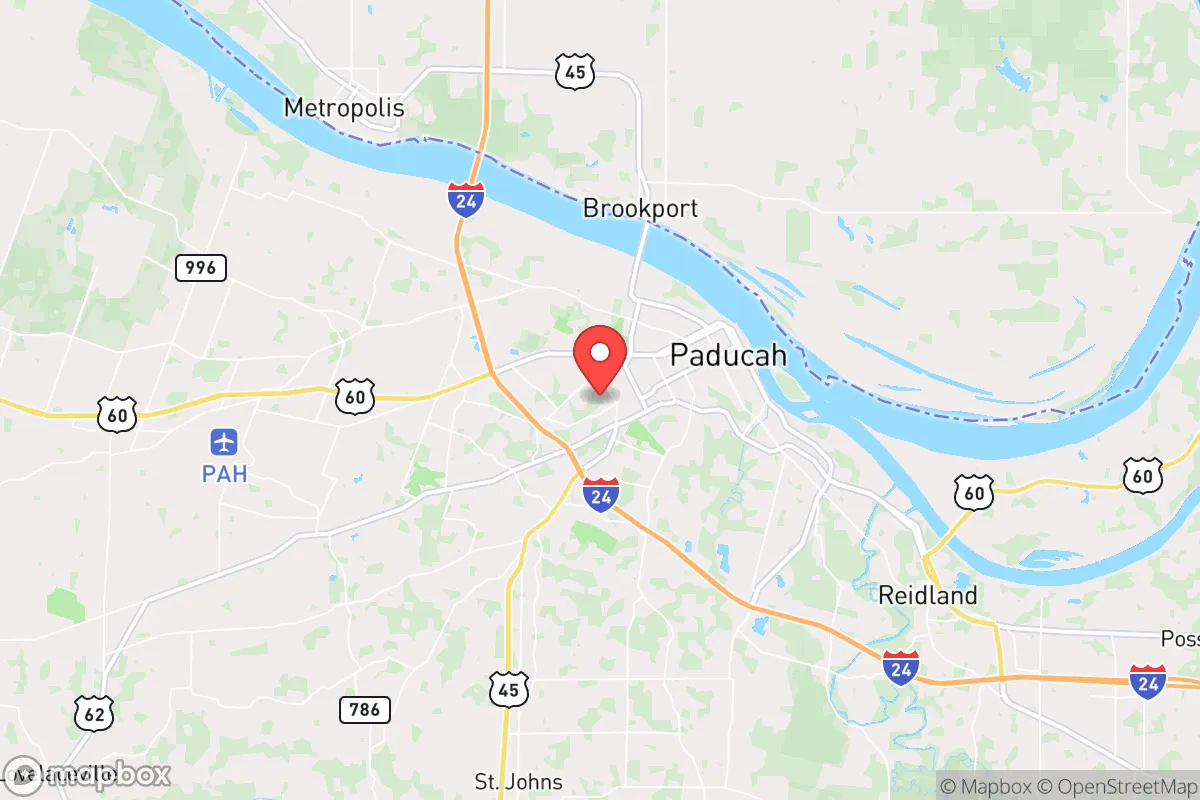
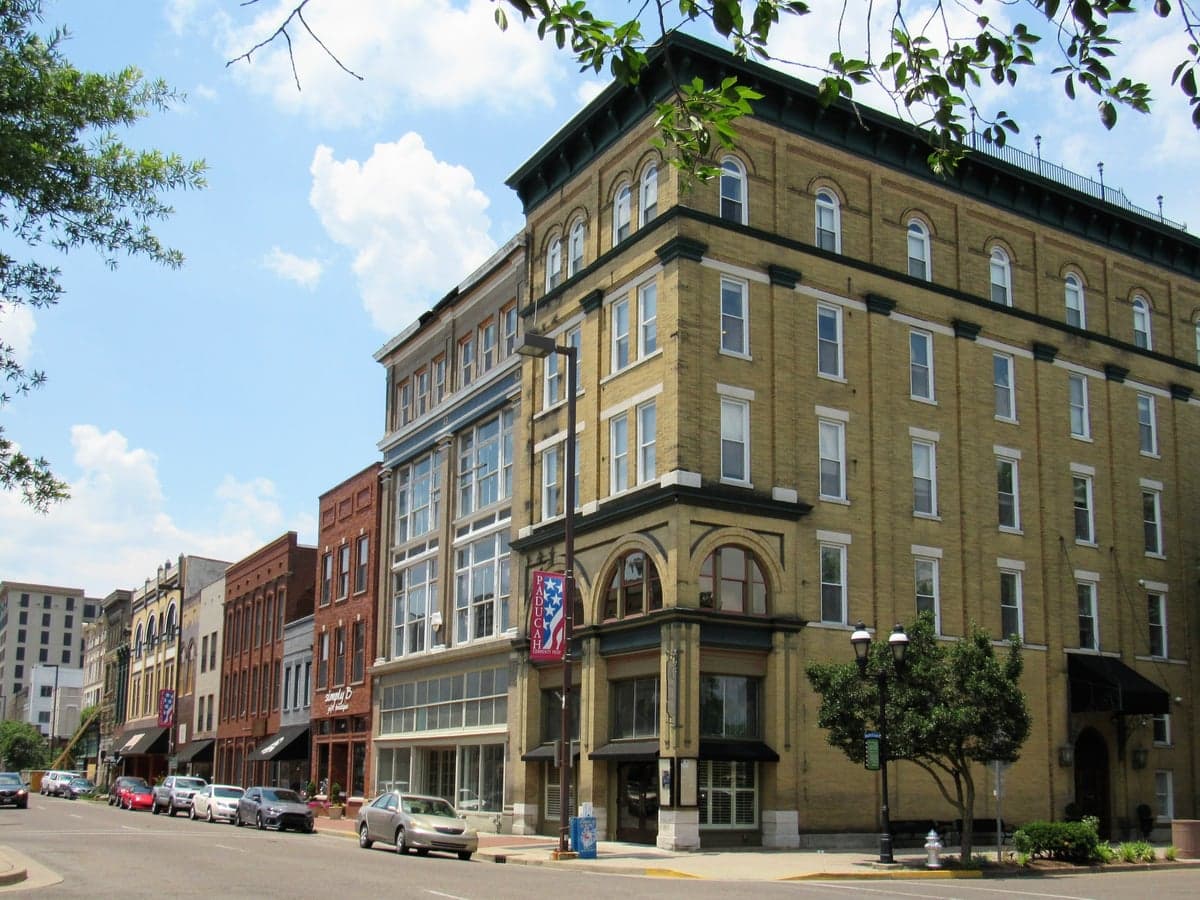
Photo: Wikipedia
Demographics of Paducah, KY
Affluence Level in Paducah, KY
A middle-class area roughly in line with national averages across income, home values, education, and employment.
People of Paducah, KY
The people of Paducah, Kentucky, today number 26,894, forming a community that is 70.5% White, 20.1% Black, 2.7% Hispanic, and 1.3% East/Southeast Asian, with a notably low foreign-born share of just 1.4%. The city’s identity is shaped by its Ohio River location, a legacy of river and rail commerce, and a population that is older and less transient than the national average. With 28.4% holding a college degree, Paducah’s character is rooted in its historic downtown and distinct neighborhoods, each bearing the imprint of the waves of people who built them.
How the city was settled and grew
Paducah was founded in 1827 by William Clark (of Lewis and Clark fame) on land purchased from the federal government at the confluence of the Ohio and Tennessee Rivers. The original population was drawn by river trade and the promise of fertile bottomland. The city’s first major wave of settlers were Anglo-American farmers and merchants from Virginia, North Carolina, and Tennessee, who established the grid of streets that became the Lower Town neighborhood. By the 1850s, the Illinois Central Railroad made Paducah a regional rail hub, attracting a second wave of German and Irish immigrants who settled in the Historic Midtown area, building the brick shotgun houses and churches that still define the district. The post-Civil War era saw a significant influx of freed African Americans, who established a thriving community in the Southside neighborhood around 13th and 14th Streets, centered on the historic Washington Street Baptist Church. The early 20th century brought a smaller wave of Italian and Lebanese immigrants, who opened grocery stores and dry goods shops along Broadway in the Downtown Commercial District. By 1950, Paducah’s population peaked at over 34,000, driven by the Tennessee Valley Authority’s river projects and the nearby Paducah Gaseous Diffusion Plant, which opened in 1952 and drew skilled workers from across the Midwest.
Modern era (post-1965)
After the 1965 Hart-Cellar Act, Paducah saw only a trickle of new foreign-born residents, with the foreign-born share remaining below 2% through 2024. The most significant demographic shift since 1965 has been domestic: the suburbanization of White families to areas like Lone Oak and West Paducah, leaving the city’s core neighborhoods—particularly Southside and parts of Midtown—with a higher concentration of Black residents. The Asian population (1.3%) is small but concentrated, with a cluster of East and Southeast Asian families—many connected to the Gaseous Diffusion Plant or local healthcare—living in the Forest Hills subdivision near the plant. The Indian subcontinent population (0.5%) is even smaller, with most families employed at Baptist Health Paducah or as faculty at West Kentucky Community and Technical College, and they are dispersed rather than forming a distinct enclave. The Hispanic population (2.7%) has grown modestly since 2000, with families settling in the Blandville area on the city’s western edge, drawn by work in construction and agriculture. The overall population has declined from its 1950 peak, dropping to 26,894 by 2024, as younger residents leave for larger job markets in Nashville or Louisville.
The future
Paducah’s population is likely to continue a slow decline, with the city’s older demographic profile (median age around 42) and limited job growth in tech or advanced manufacturing. The foreign-born share is expected to remain below 2%, as the city lacks the immigrant networks or entry-level job base that drive growth in larger metros. The Black population share is stable, while the White share is slowly decreasing as older residents pass away. The Hispanic and East/Southeast Asian communities are growing from a very small base but are unlikely to reach 5% combined by 2040. The city is not tribalizing into distinct ethnic enclaves; instead, it is homogenizing around a core of long-term residents, with new arrivals—mostly retirees and remote workers—drawn to the Lower Town Arts District for its historic homes and low cost of living. The next 10-20 years will likely see Paducah become a quieter, older, and more culturally uniform city, with the downtown area revitalizing around tourism and the arts rather than population growth.
For someone moving in now, Paducah offers a stable, low-cost community with a strong sense of place, but little demographic dynamism. The city is becoming a haven for those seeking affordability and a slower pace, not for those looking for diversity or rapid economic change. New residents will find a town where the past is still visible in its neighborhoods, and where the future is more about preservation than transformation.

* Values derived from national, state, county, city and local statistics and may differ in a specific area. Last updated: 2026-04-21T11:01:31.000Z
Narrative content on this page is AI-generated and may contain mistakes. Verify any details that matter before acting on them.
ReloMaps may earn a commission from affiliate links at no extra cost to you.

