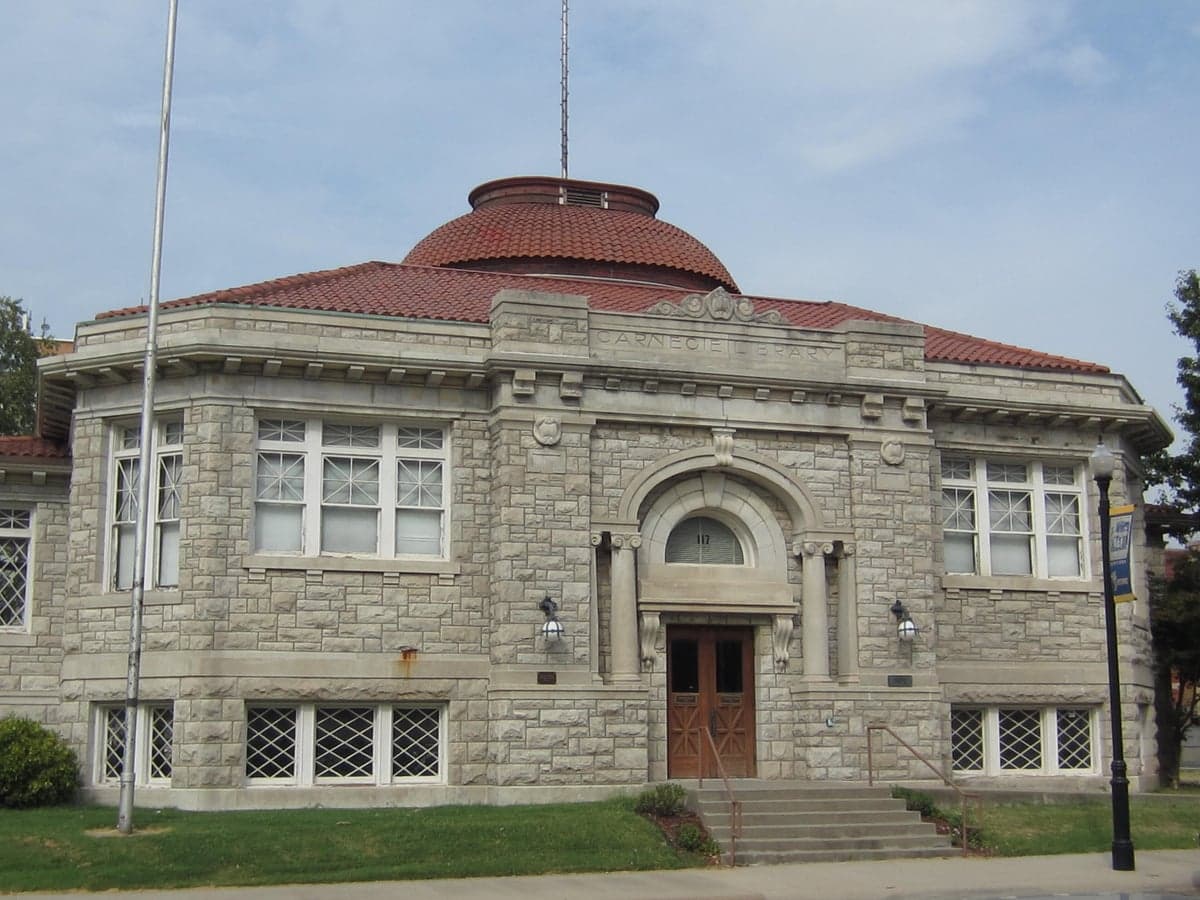
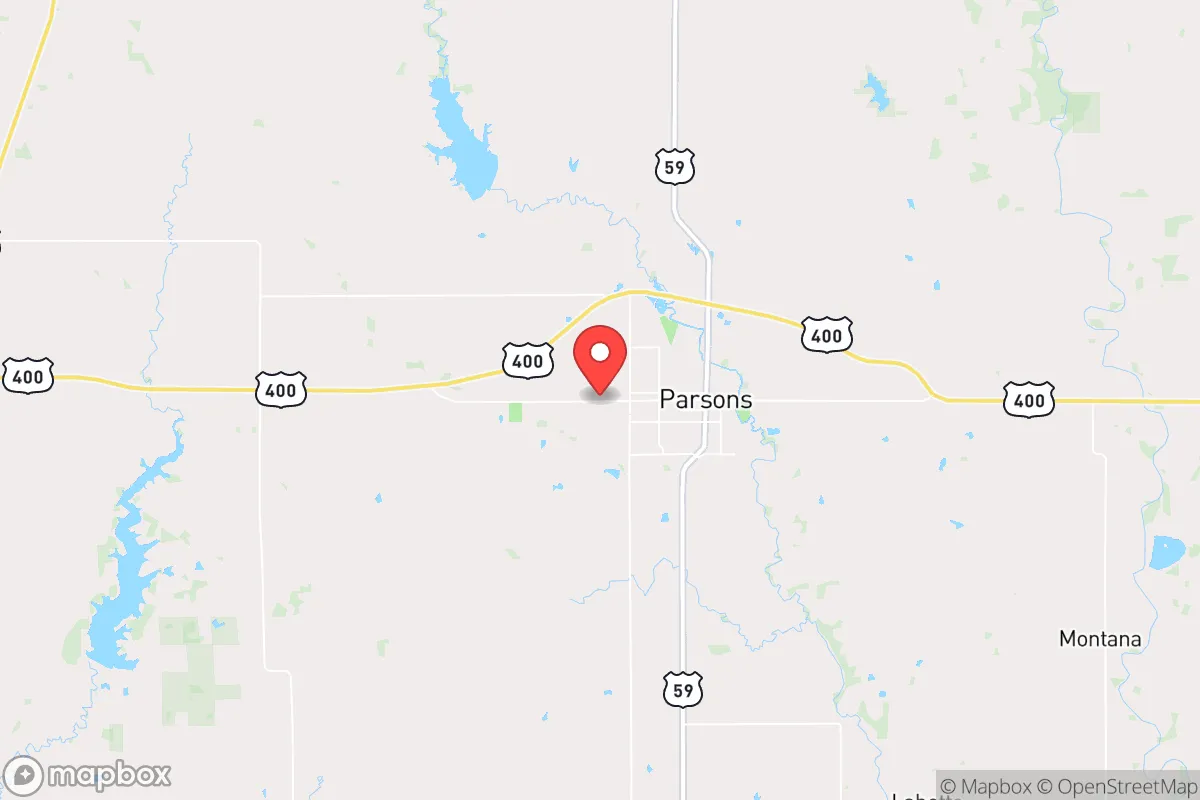
Photo: Wikipedia
Strategic Assessment of Parsons, KS
Workable tactical position. Some exposure to population density or targets, but generally defensible in a crisis.
What does the Strategic Assessment tell us?
Our Strategic Assessment grades tactical survivability of an area. Major population centers, military targets, fallout zones, natural disasters, and border exposure all drive risk — lower exposure means a more defensible position in a crisis.
This is heavily inspired by Joel Skousen's Strategic Relocation book. Highly recommended you checkout the book ($)What does this tell us?
Our Strategic Assessment grades tactical survivability of an area. Major population centers, military targets, fallout zones, natural disasters, and border exposure all drive risk — lower exposure means a more defensible position in a crisis.
This is heavily inspired by Joel Skousen's Strategic Relocation book. Highly recommended you checkout the book ($)Strategic Pillars

Key Distances
Regional Safe Places
Below is our recommended "safe zones" in Kansas and the surrounding area based on our strategic heuristics. For most people, it's unrealistic to live in a “safe zone” full-time due to work, family or other personal reasons. They tend to be more rural. However, many of these areas are perfect for second homes and retreat properties that double as a vacation home or even a short-term rental.
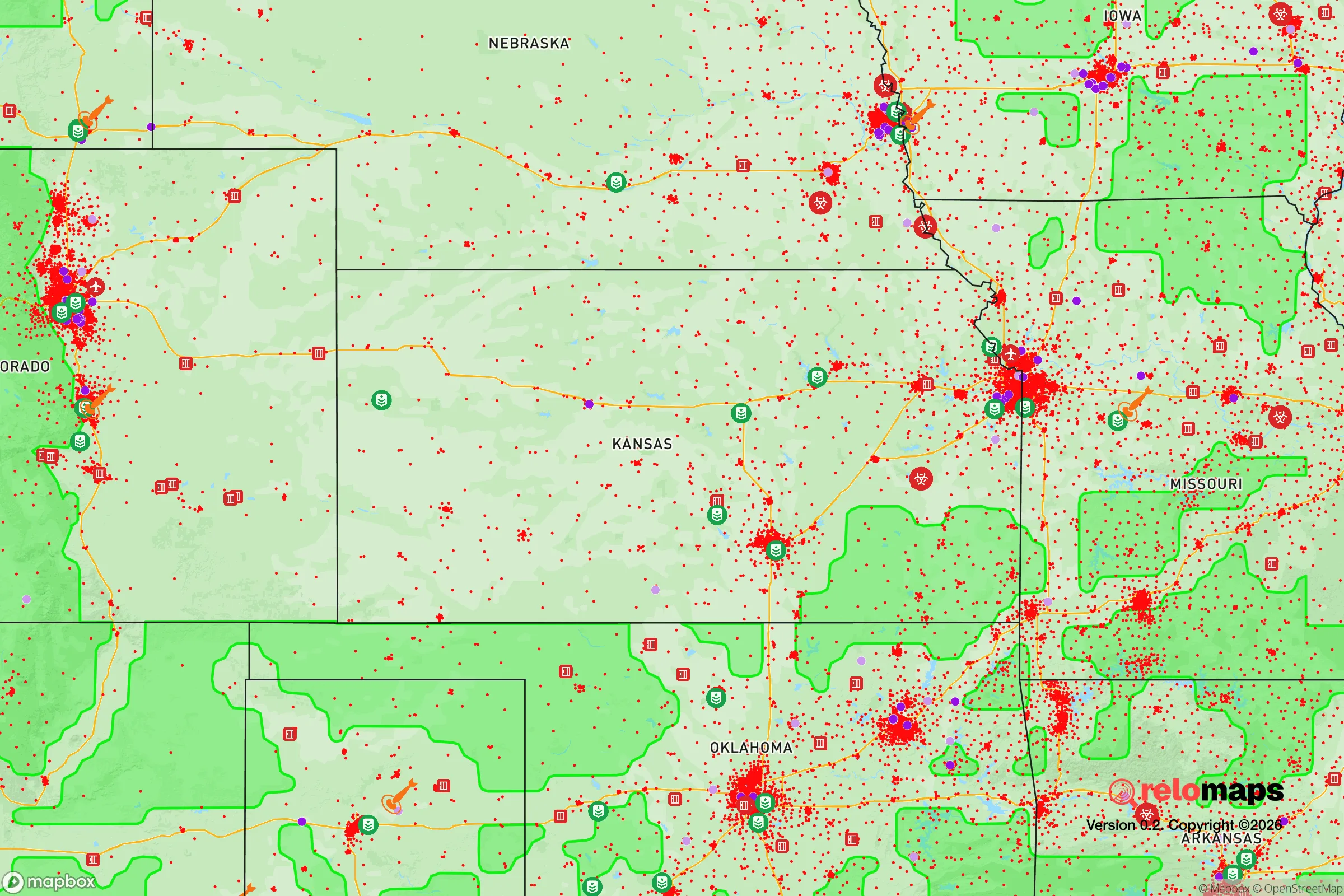
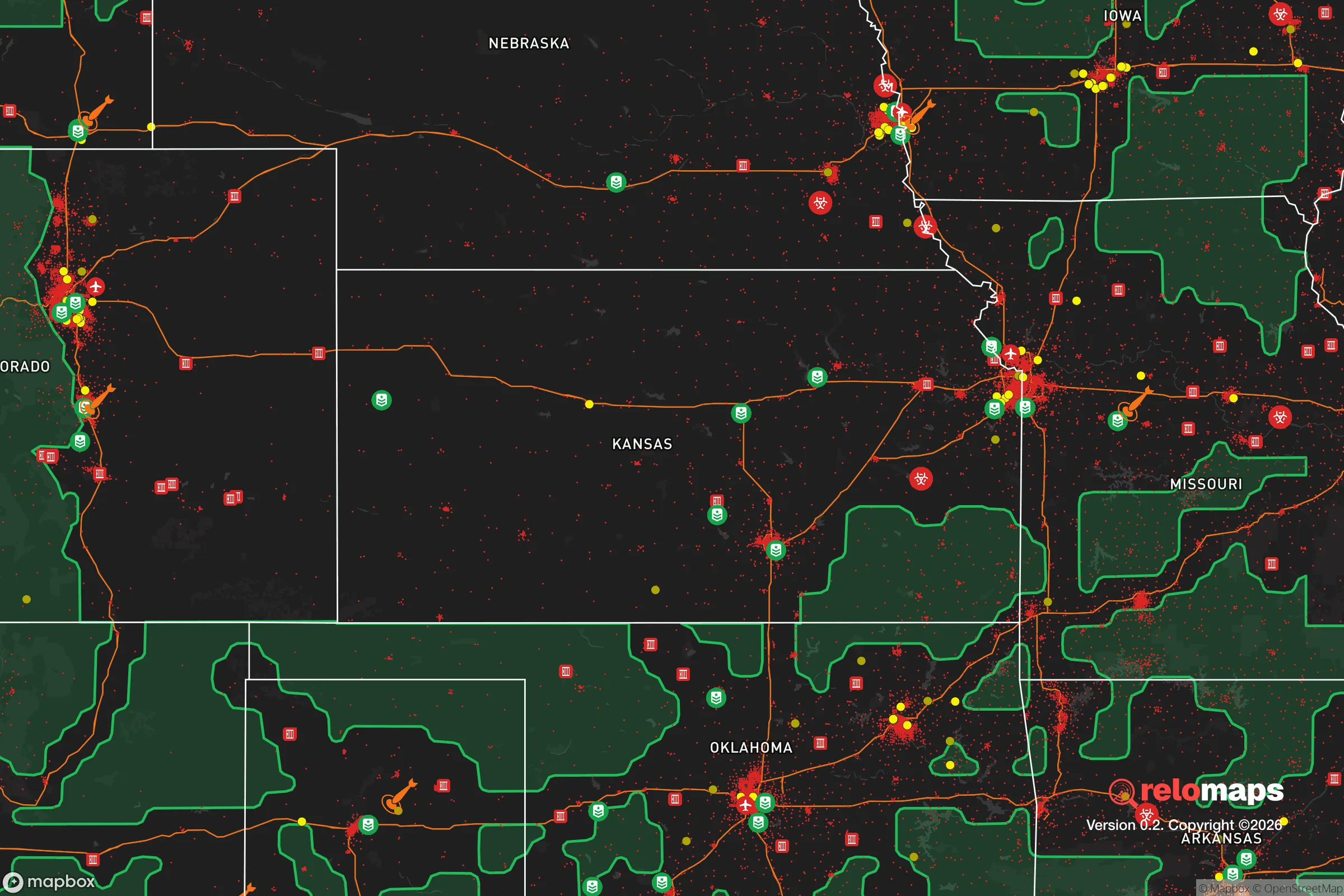


Important Note: For informational purposes only. This does not mean nothing bad ever happens in the green zones. Please use common sense. This is based on public data and modeled with AI. We tried to take a conservative approach but mistakes happen. We update this regularly as new information becomes available.
Solar Generator Recommendations
Backup power matters more here than in safer locations. We've picked three solar generators across budgets and capacity tiers — start with the budget unit if you only need a few essentials, or step up if you want to run a fridge and HVAC for days at a time.

Jackery Portable Power Station Explorer 300
Budget OptionPower on the Go: Weighing only 11 lbs, it's convenient to set up and store with book-sized foldable solar panels

BLUETTI Portable Power Station AC180
Designed for both indoor and outdoor scenarios, AC180 is highly capable as it has a robost capacity and continuous output power.

EF ECOFLOW DELTA Pro Ultra Power Station
Upgraded PickEcoFlow DELTA Pro Ultra is a whole-home energy system designed to grow with your family. Integrated with the Smart Home Panel 2, it scales to meet your evolving energy needs — keeping your home powered, intelligent, and secure through every stage of life.
We earn a commission, at no additional cost to you.
Strategic Assessment Analysis
Parsons, Kansas, offers a surprisingly resilient strategic position for those prioritizing long-term preparedness, combining small-town isolation with critical infrastructure access. Located in Labette County in the southeastern corner of the state, this city of roughly 10,000 sits far enough from major metropolitan targets—about 120 miles from both Kansas City and Tulsa—to avoid the immediate fallout zones of a major event, yet close enough to supply chains and secondary transport routes to maintain a functional existence. For the conservative prepper or survivalist, Parsons represents a middle-ground option: not a remote bunker in the wilderness, but a defensible, resource-rich community with a working-class ethos and a history of weathering economic shifts.
Geographic position and natural advantages for long-term survival
Parsons sits in the Neosho River Valley, a region defined by rolling plains, hardwood forests, and fertile bottomland that has supported agriculture for generations. The area's natural advantages are significant for anyone thinking about food security and water access. The Neosho River runs just west of town, providing a reliable surface water source, while the underlying Ozark Plateau aquifer offers groundwater potential for those willing to drill a well. The surrounding countryside is a patchwork of small farms, pastureland, and timber—meaning a relocator with a few acres could realistically achieve a degree of self-sufficiency in produce, poultry, and small livestock within a year or two. The climate is temperate, with hot summers and cold winters, but the growing season runs roughly 180 days, long enough for corn, beans, squash, and hardy greens. Unlike the arid West or the hurricane-prone Gulf Coast, this region's primary natural threat is the occasional tornado, which is manageable with a proper storm shelter and situational awareness. For a survivalist, the land itself is a strategic asset: it's not so rugged that it's unusable, but it's not so flat and exposed that you can't find cover or defensible terrain.
Risks, exposures, and proximity to fallout-relevant landmarks
The most significant risk for Parsons is its proximity to the Neosho River and the potential for flooding in low-lying areas—a concern that can be mitigated by choosing property on higher ground east or north of town. Beyond natural hazards, the strategic calculus for a prepper must account for man-made threats. Parsons is roughly 50 miles from the Wolf Creek Generating Station, a single-unit nuclear power plant near Burlington, Kansas. In the event of a catastrophic failure or a targeted attack, a 50-mile radius places Parsons outside the most severe immediate fallout zone but within the range of potential long-term contamination depending on wind patterns. This is a real consideration, but it's worth noting that Wolf Creek is a pressurized water reactor with a robust containment structure, and the plant has a solid safety record. More concerning for the survivalist mindset is the town's location relative to potential civil unrest vectors. Parsons is about 30 miles from the Oklahoma border and 45 miles from the Joplin, Missouri metro area (population 50,000+), which could become a source of refugee flow or supply chain disruption during a crisis. The town itself is not a primary target—no major military bases, no critical infrastructure hubs, no high-value government facilities—which is precisely the point. The risk profile is moderate: you're not in a blast zone, but you're not so remote that you can ignore the outside world. A well-stocked retreat with a good water filtration system, a year's supply of food, and a plan for community defense would cover the major exposures.
Practical resilience for a relocator: food, water, energy, and defensibility
For a single individual or a family looking to establish a resilient base, Parsons offers several practical advantages that align with a prepper's checklist. Water is the first priority, and the city's municipal supply comes from the Neosho River, treated at the Parsons Water Treatment Plant. In a grid-down scenario, the river is accessible, but you'll need a means to pump, filter, and boil—a hand-pump well on your own property is the gold standard here, and many rural parcels outside city limits have existing wells. Food production is viable: Labette County has a strong agricultural tradition, with local farmers markets, feed stores, and a USDA-inspected meat processing facility in nearby Altamont. You can buy bulk grains, seeds, and livestock feed locally, and the soil is workable without heavy machinery for a determined individual. Energy resilience is a mixed bag. The region is served by Evergy, which has a reasonably stable grid, but winter ice storms can knock out power for days. Solar is feasible—the area gets about 4.5 peak sun hours per day—and a modest off-grid setup with battery storage would cover basic needs. Propane is widely available for heating and cooking. Defensibility is where Parsons shines for the survivalist. The town itself is laid out on a grid with wide streets and a compact downtown, but the surrounding countryside offers numerous options for a rural homestead with good sightlines, natural barriers (creeks, timber lines), and limited road access. The local culture is heavily gun-friendly, with a strong hunting tradition and multiple gun shops and ranges in the county. Law enforcement presence is minimal in the outlying areas, which cuts both ways—you're largely responsible for your own security, but you also won't face interference in your preparations. The community is tight-knit and suspicious of outsiders, which can be a barrier to integration but also means that a newcomer who demonstrates competence and neighborly values will be accepted over time. For a single person, a well-chosen rural property with a garden, a well, solar panels, and a root cellar is entirely achievable within a moderate budget.
The overall strategic picture for Parsons, Kansas, is that of a viable fallback position for the conservative prepper who wants to be prepared for civic unrest, supply chain collapse, or a major disaster without going completely off-grid. It's not a fortress, and it's not a zero-risk location—no place is. But it offers a realistic balance of isolation and access, natural resources and infrastructure, community and independence. The town has a history of resilience, having survived the decline of the railroad industry and the loss of major employers like the Parsons Army Ammunition Plant (which is now a Superfund site, by the way—another reason to avoid buying property too close to the old industrial zone). For a relocator with a survivalist mindset, the key is to buy land outside the city limits, establish your own water and power systems, and build relationships with like-minded locals. The Neosho Valley won't save you from every scenario, but it gives you a fighting chance—and in the current state of the country, that's more than most places can offer.

* Values derived from national, state, county, city and local statistics and may differ in a specific area. Last updated: 2026-04-30T03:12:16.000Z
Narrative content on this page is AI-generated and may contain mistakes. Verify any details that matter before acting on them.
ReloMaps may earn a commission from affiliate links at no extra cost to you.

