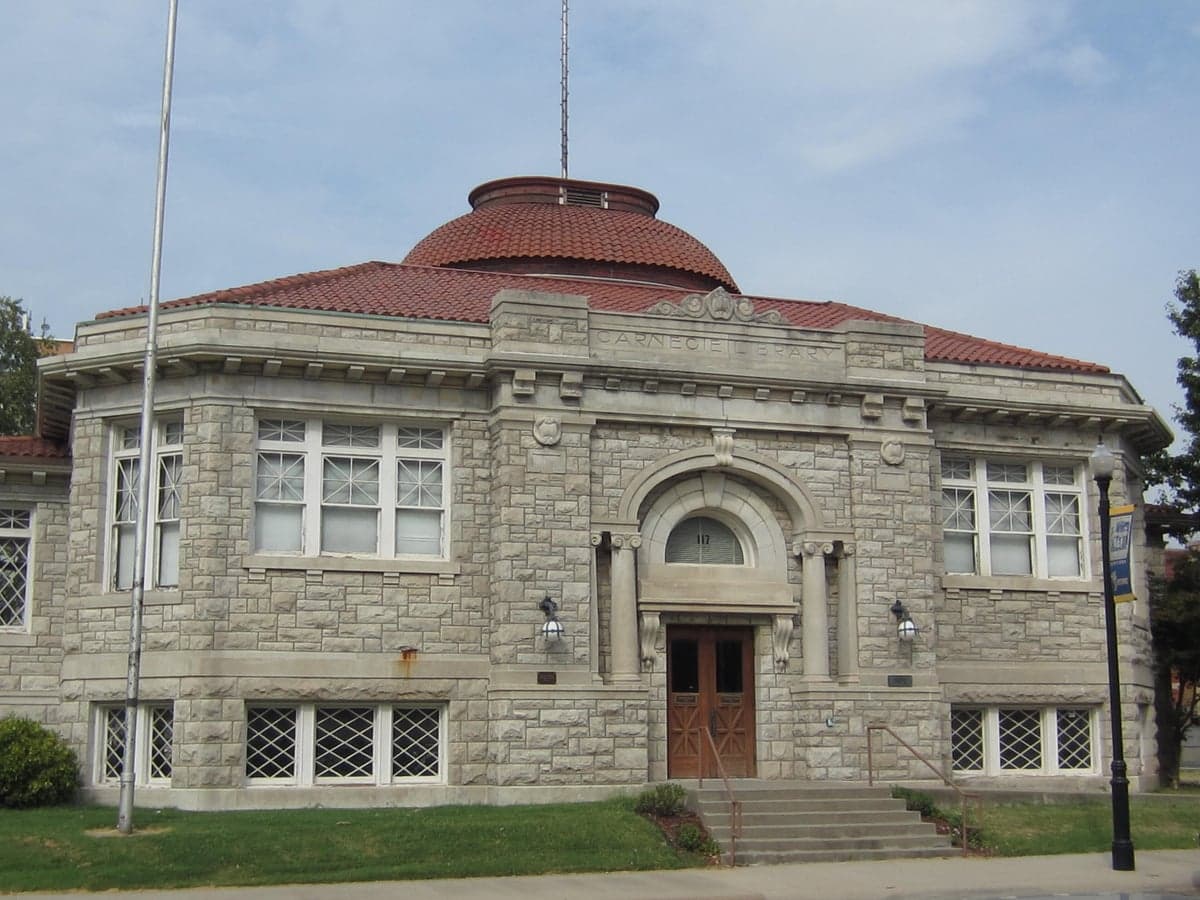
Photo: Wikipedia
Political ClimatePolitical Climate in Parsons, KS
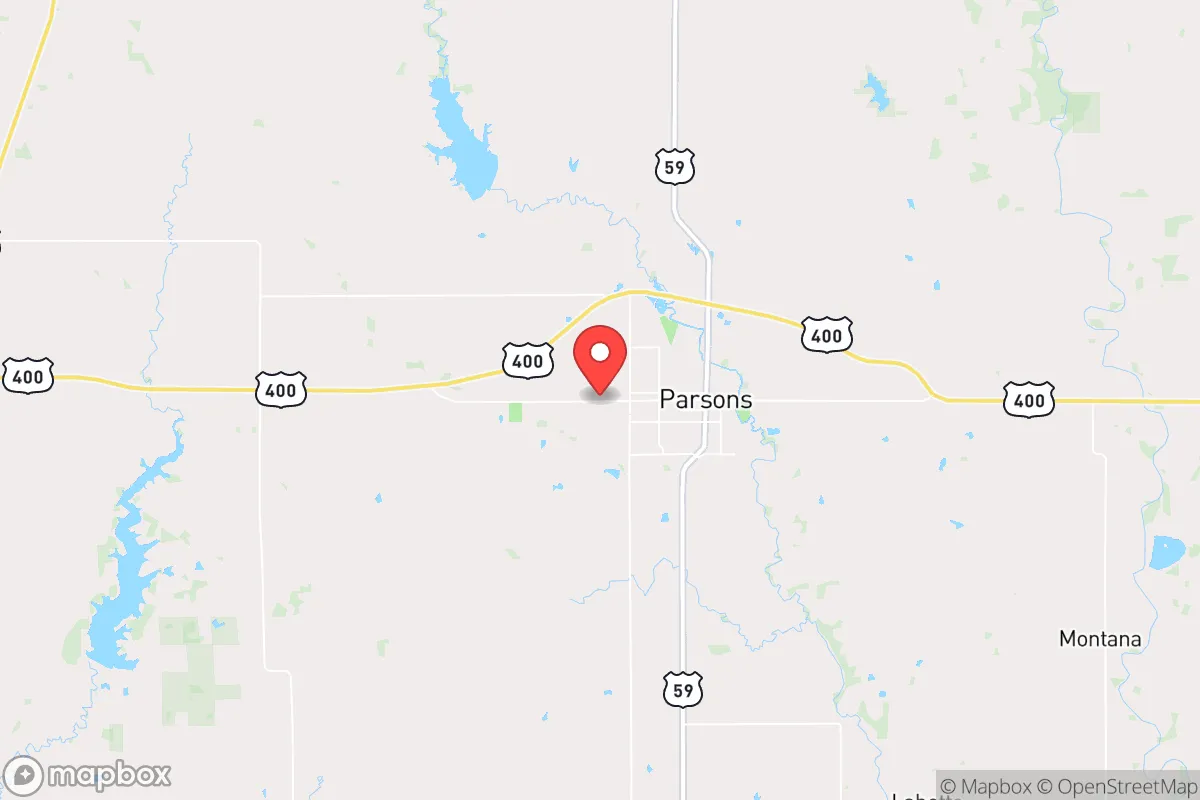
District shown is the primary district for this city’s centroid. Cities may span multiple districts.
Local Political AnalysisPolitical Analysis of Parsons, KS
Parsons, Kansas, sits in a reliably conservative corner of the state, anchored by a Cook PVI of R+10 that reflects the area’s long-standing preference for limited government and traditional values. For decades, this town of about 10,000 has voted solidly Republican in presidential and statewide races, with the surrounding Labette County often tipping the same way. But if you’ve lived here as long as I have, you’ve noticed a subtle shift—not in the overall political lean, but in the intensity of local debates. The old-school conservative consensus, where folks agreed to keep taxes low and government out of your business, is now bumping up against a louder, more progressive push from outside influences, especially in nearby Pittsburg and even down toward Coffeyville. That R+10 rating still holds, but the margin feels thinner than it did a decade ago, and that’s worth keeping an eye on.
How it compares
Compared to the rest of southeast Kansas, Parsons is actually a bit more moderate than its neighbors. Drive 20 miles north to Chanute, and you’ll find a similar R+10 vibe, but with a stronger libertarian streak—people there are even more skeptical of zoning laws and school mandates. Head west to Independence, and the politics get a shade redder, with a heavier focus on agriculture and energy. The real contrast, though, is with Pittsburg, about 30 miles east. Pittsburg’s growing university population has nudged it toward a more progressive tilt, with city council debates over diversity initiatives and climate resolutions that would never fly in Parsons. Here, the local school board and county commission still lean heavily conservative, but the cultural pull from Pittsburg—and from Kansas City’s influence trickling down—means you’ll hear more chatter about “equity” and “inclusion” than you did 20 years ago. That’s a red flag for anyone who values personal freedoms over government-engineered social engineering.
What this means for residents
For the average Parsons resident, the political climate translates into a few concrete realities. First, property taxes remain relatively low compared to the state average, and there’s little appetite for new bond measures that would hike them up. Second, the local government tends to take a hands-off approach to business regulations—you can start a small shop or run a home-based operation without drowning in red tape. But the creeping concern is overreach from Topeka and Washington. Recent pushes for statewide mask mandates and vaccine passports during the pandemic stirred real anger here, with many feeling those orders trampled on personal choice. The same goes for school curriculum battles: parents in Parsons are increasingly vocal about keeping critical race theory and gender ideology out of classrooms, and they’ve won some quiet victories by electing trustees who share that view. If you’re moving here, you’ll find a community that values neighborly help over government programs, but you’ll also need to stay engaged—because the progressive drift is real, and it’s not going away on its own.
One cultural distinction worth noting: Parsons has a strong sense of self-reliance that’s baked into its history as a railroad and manufacturing hub. You won’t see many “In This House We Believe” signs here; instead, it’s more “Don’t Tread on Me” flags and church potlucks where folks quietly support each other without a government handout. The local paper, the Parsons Sun, still runs editorials that champion fiscal conservatism and Second Amendment rights, and the annual Katy Days festival celebrates the town’s independent spirit. But there’s a growing unease—a sense that the old ways are under siege from a culture that wants to centralize power and dictate how you live. If you’re looking for a place where your freedoms are respected and your voice still matters in local decisions, Parsons is a solid bet. Just don’t expect it to stay that way without a fight.

State Political ClimatePolitical Climate in Kansas
State Political AnalysisPolitical Environment in the State
Kansas has long been a reliably Republican state, but the picture is more nuanced than a simple red-state label suggests. Over the past 20 years, the state has shifted from a solidly conservative stronghold to a more contested battleground, with the Kansas City suburbs and college towns pulling left while the vast rural and western counties remain deeply red. The overall partisan lean remains Republican, but the margin has narrowed: Donald Trump won Kansas by 15 points in 2020, down from 20 points in 2016, and the state’s two U.S. House seats have flipped between parties in recent cycles. The dominant coalition is a mix of rural conservatives, small-business owners, and evangelical voters, but a growing bloc of suburban moderates and younger voters is reshaping the political landscape.
Urban vs. rural divide
The political map of Kansas is a study in contrasts. The eastern third of the state, anchored by the Kansas City metro area, is where the real action happens. Johnson County, the state’s wealthiest and most populous county, has been trending blue for a decade. In 2020, Joe Biden won Johnson County by 8 points, a dramatic shift from 2012 when Mitt Romney carried it by 12 points. The county’s suburbs—places like Overland Park, Lenexa, and Olathe—are now home to a growing number of college-educated professionals who lean moderate to liberal on social issues. Meanwhile, Lawrence, home to the University of Kansas, is a deep-blue island in a sea of red, consistently voting Democratic by 30-point margins. On the other side, the rural and agricultural counties in western and central Kansas—like Garden City, Dodge City, and Hays—are overwhelmingly Republican, often voting 70-80% for GOP candidates. The divide is stark: the urban core of Wichita is a swing area, with its suburbs like Andover and Derby leaning conservative, while the city itself has become more competitive as younger voters move in. The state’s political future hinges on whether the rural vote can continue to outweigh the growing suburban and urban blocs.
Policy environment
Kansas’s policy environment is a mixed bag for conservatives. On the positive side, the state has a flat income tax rate of 5.7% (down from a top rate of 6.45% in 2020), and Governor Laura Kelly signed a bill in 2024 to accelerate income tax cuts, aiming for a 5.5% flat rate by 2026. Property taxes remain a sore spot, with no statewide cap, but local levies vary widely. The state’s regulatory posture is generally business-friendly, with right-to-work laws and a tort reform system that caps non-economic damages in medical malpractice cases. However, the education policy front is contentious. Kansas has a school choice program—the Tax Credit for Low-Income Students Scholarship Program—but it’s limited compared to states like Florida or Arizona. The state’s healthcare landscape is dominated by the expansion of Medicaid under the Affordable Care Act, which Governor Kelly pushed through in 2023 after years of Republican resistance. This expansion added roughly 150,000 low-income adults to the rolls, a move that many conservatives saw as a government overreach. Election laws are relatively secure: Kansas requires a photo ID to vote and has a voter registration deadline 21 days before an election, but it does not have a strict voter ID law for absentee ballots. The state also has a constitutional amendment defining marriage as between a man and a woman, though it’s unenforceable after Obergefell. Overall, the policy environment leans conservative on taxes and business, but progressive on healthcare and education spending.
Trajectory & freedom
Kansas is in a tug-of-war between expanding and contracting personal freedoms. On the liberty-positive side, the state has strong gun rights: it’s a constitutional carry state (no permit needed to carry a concealed firearm), and in 2023, the legislature passed a law prohibiting local governments from enforcing federal gun regulations that conflict with state law. Parental rights got a boost in 2024 with the Parental Bill of Rights, which requires schools to notify parents about curriculum changes and medical services. On the medical autonomy front, Kansas banned nearly all abortions in 2022 after the Dobbs decision, with a trigger law that took effect immediately, though a state Supreme Court ruling in 2024 upheld the ban. However, the state has seen concerning expansions of government power. In 2023, the legislature passed a law allowing the state to seize property for “economic development” purposes, a move that alarmed property rights advocates. The state also has a sales tax on groceries, though it was reduced from 6.5% to 4% in 2023, with a plan to phase it out entirely by 2027. The biggest red flag for conservatives is the growing influence of the Kansas City metro’s progressive policies, which have led to local mask mandates and vaccine requirements during the pandemic, though these were largely rescinded. The trajectory is mixed: the state is becoming more free on gun and parental rights, but less free on taxation and local government overreach.
Civil unrest & political movements
Kansas has seen its share of political flashpoints, though they’re less dramatic than in coastal states. The most visible unrest came in 2022 when the state’s abortion ban sparked protests in Topeka and Lawrence, with thousands gathering at the Statehouse. These protests were largely peaceful but signaled a growing activist movement on the left, particularly among younger women and college students. On the right, the Kansas Republican Party has been fractured between establishment conservatives and a more populist, Trump-aligned wing. In 2024, the state saw a push for “election integrity” measures after the 2020 election, with a group called the Kansas Election Integrity Coalition calling for hand-counting of ballots, though the legislature didn’t adopt it. Immigration politics are less heated than in border states, but Garden City and Dodge City have seen tensions over meatpacking plant workers, many of whom are immigrants. There’s no sanctuary city policy in Kansas, but local law enforcement in some counties has been criticized for not cooperating fully with ICE. The most notable political movement is the rise of the “Kansas Sunflower” faction, a moderate Republican group that has successfully primaried far-right incumbents in Johnson County. A new resident would notice the political divide most in the suburbs, where yard signs for both parties are common, and in rural areas, where Trump flags still fly high.
Projection
Over the next 5-10 years, Kansas is likely to become more competitive, but not necessarily more liberal. The key demographic shift is the continued growth of Johnson County, which is projected to add another 100,000 residents by 2030, many of them from out of state. These newcomers tend to be moderate Republicans or independents who prioritize low taxes and good schools over social issues. Meanwhile, rural counties are losing population, which will slowly erode the GOP’s base. The state’s political future will hinge on whether the Republican Party can hold onto suburban voters or whether they drift toward the Democrats. The 2026 governor’s race will be a bellwether: if a moderate Republican wins, the state will likely stay on its current trajectory of tax cuts and school choice expansion. If a Democrat wins, expect more Medicaid expansion and education spending. The biggest wildcard is the state Supreme Court, which has struck down several conservative laws, including the abortion ban. If the court flips to a more conservative majority in the next few years, expect a push for a constitutional amendment to ban abortion permanently. For a new resident, the state will remain a solidly red place in rural areas, but the suburbs will become a political battleground that could determine the state’s direction.
For a conservative moving to Kansas, the bottom line is this: you’ll find a state that respects gun rights, parental authority, and low taxes, but you’ll need to be strategic about where you settle. If you want a deep-red environment, look to Wichita’s suburbs or small towns like Hays or Garden City. If you want a more moderate, family-friendly area with good schools, Overland Park and Olathe are solid choices, but be prepared for a more diverse political landscape. The state is not trending toward California-style progressivism, but the culture war is real, and you’ll see it in school board meetings and local elections. Your personal freedoms are largely protected, but keep an eye on property taxes and local government overreach. Kansas is a good bet for conservatives who want a stable, affordable life without the chaos of coastal states, but it’s not immune to the national trends. Choose your county wisely, and you’ll be fine.
* Values derived from national, state, county, city and local statistics and may differ in a specific area. Last updated: 2026-04-30T03:12:16.000Z
Narrative content on this page is AI-generated and may contain mistakes. Verify any details that matter before acting on them.
ReloMaps may earn a commission from affiliate links at no extra cost to you.

