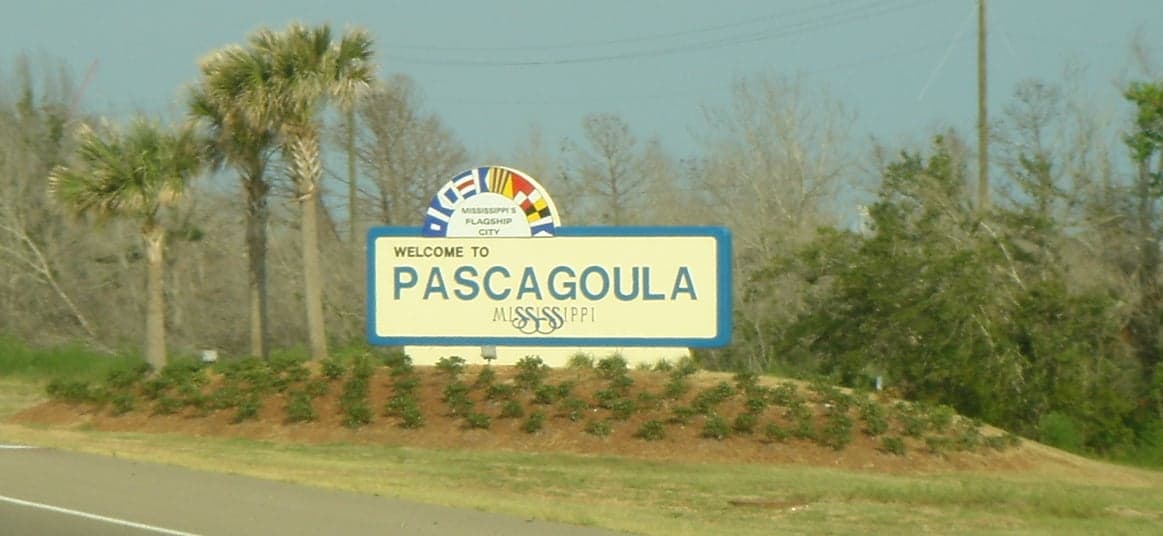
Photo: Wikipedia
Political ClimatePolitical Climate in Pascagoula, MS
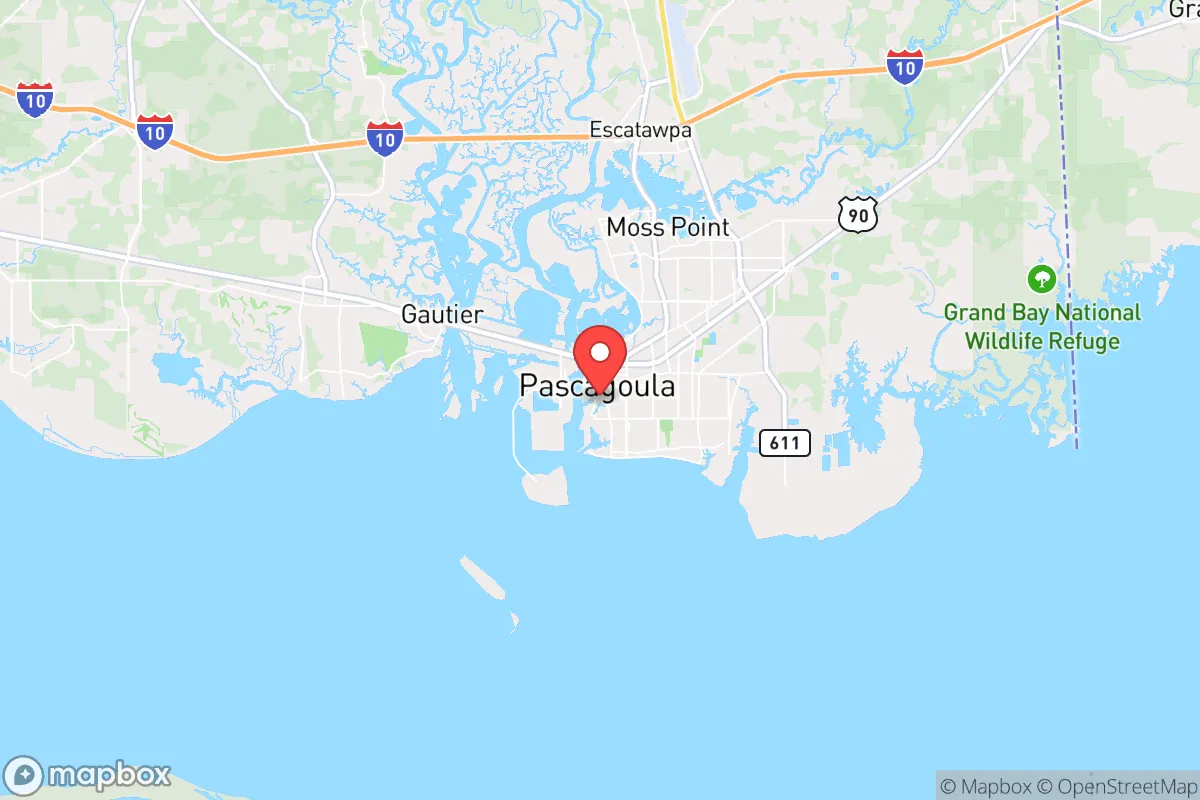
District shown is the primary district for this city’s centroid. Cities may span multiple districts.
Local Political AnalysisPolitical Analysis of Pascagoula, MS
Pascagoula leans heavily Republican, with a Cook PVI of R+21 that puts it among the most conservative cities on the Mississippi Gulf Coast. That number isn't just a statistic—it reflects a deep-rooted cultural and political identity that has held steady for decades, even as other parts of the state have seen slow shifts. If you've lived here long enough, you remember when the shipyards and the paper mill were the backbone of everything, and the politics followed suit: pro-business, pro-military, and fiercely protective of local control. The trajectory hasn't changed much, but there are whispers of change on the edges, especially as younger families move in from places like Biloxi or even Mobile, bringing different ideas about what "conservative" means.
How it compares
Drive 30 minutes west to Biloxi, and you'll find a more mixed political landscape—still red, but with a noticeable blue streak in the casino and tourism sectors. Gulfport leans slightly more moderate, especially in city council races, while Ocean Springs has a small but vocal progressive contingent that shows up in school board and zoning debates. Pascagoula, by contrast, remains reliably conservative across the board. The local GOP holds sway in county commission and school board elections, and you rarely see a contested primary that isn't about who is more committed to limited government and Second Amendment rights. The contrast is starkest when you look at Jackson County as a whole: the rural precincts north of town vote even redder than Pascagoula itself, while the coastal precincts near the beach show a slight moderation. But overall, this is a place where "conservative" still means what it used to—lower taxes, fewer regulations, and a general distrust of government overreach into personal lives.
What this means for residents
For the average person living here, the political climate translates into a few concrete realities. Property taxes are among the lowest in the state, and there's no city income tax. The local government tends to stay out of your business—no mask mandates that lasted longer than necessary, no heavy-handed zoning that tells you what you can do with your own land. Gun rights are taken seriously, and you won't find the kind of restrictive ordinances you see in places like Jackson or Hattiesburg. But there's a growing concern among longtime residents about the direction of the state as a whole. The push for more state-level oversight on local issues—like school curriculum or health mandates—feels like a slow creep of government into areas that used to be handled by neighbors and community boards. If you value personal freedom and local decision-making, Pascagoula is still a safe bet, but you have to keep an eye on the statehouse in Jackson.
Culturally, Pascagoula holds onto its working-class roots with a stubborn pride. The shipyard is still the biggest employer, and the military presence at nearby Keesler Air Force Base in Biloxi reinforces a sense of duty and self-reliance. You won't find many progressive policy experiments here—no sanctuary city talk, no push for defunding the police, no serious discussion of rent control or universal basic income. The local paper, the Mississippi Press, still runs letters to the editor complaining about federal overreach and the erosion of traditional values. If you're looking for a place where the government stays out of your wallet and your personal life, Pascagoula delivers. But if you're worried about the long-term trend—where the state and federal governments keep chipping away at local autonomy—you'll find plenty of folks here who share that concern. The future likely looks more of the same, but with a sharper edge: the older guard is dying off, and the younger generation, while still conservative, is more influenced by national media and less by local tradition. That could mean a shift toward a more ideological, less pragmatic conservatism in the next decade.

State Political ClimatePolitical Climate in Mississippi
State Political AnalysisPolitical Environment in the State
Mississippi is one of the most reliably conservative states in the country, with a Republican trifecta controlling the governorship and both legislative chambers since 2012, and a partisan lean of roughly +16 to +18 points in presidential elections over the last decade. The state has shifted rightward in a steady, deliberate arc since the mid-2000s, when Democrats still held a handful of statewide offices; today, no Democrat holds statewide elected office, and the GOP holds supermajorities in both the House and Senate. The dominant coalition is a mix of rural white evangelicals, suburban families in the Jackson metro exurbs, and Gulf Coast retirees, all of whom have consistently rejected progressive policy shifts seen in other Southern states.
Urban vs. rural divide
The political map breaks down along a clear urban-rural axis, but even the "blue" areas are modest by national standards. Jackson (Hinds County) is the only reliably Democratic stronghold, voting +40 to +50 points for Democrats, driven by a majority-Black population and a strong union and public-sector workforce. Gulfport and Biloxi on the Coast lean Republican but are more moderate, with a libertarian streak on gambling and tourism regulation. The real GOP engine is the Desoto County suburbs north of Memphis—places like Southaven and Olive Branch—which vote +30 to +40 points Republican and are among the fastest-growing areas in the state. Hattiesburg and Oxford (home to Ole Miss) are college towns that lean left of their surrounding counties but still vote Republican in statewide races. The rural Delta—Greenville, Clarksdale, Yazoo City—is heavily Democratic but shrinking fast, losing population every census cycle, which only deepens the state’s overall conservative tilt.
Policy environment
Mississippi’s policy environment is aggressively pro-business and culturally conservative. There is no state income tax on Social Security, and the state is phasing out its individual income tax entirely—the rate dropped from 5% to 4.7% in 2024, with a path to elimination by 2030. Property taxes are among the lowest in the nation, with no state-level property tax and local rates averaging around 0.8% of assessed value. The state is a right-to-work state with a 7.25% corporate income tax rate, but generous incentives for manufacturers and data centers. Education policy is dominated by school choice: Mississippi has a robust charter school law (passed 2013, expanded 2016) and a Education Scholarship Account (ESA) program for special-needs students, with a universal ESA bill introduced in 2025. Healthcare is a mixed bag—the state rejected Medicaid expansion under the ACA, and the uninsured rate hovers around 12%, but the Mississippi Trauma Care System is well-regarded. Election laws are strict: voter ID is required, no-excuse absentee voting is limited, and early voting was only introduced in 2023 (a two-week window). The state has no ballot initiative process, meaning policy changes come entirely through the legislature.
Trajectory & freedom
Mississippi is moving decisively toward more personal freedom in several key areas, though some restrictions remain. On gun rights, the state passed constitutional carry (permitless carry) in 2016, and in 2023 it preempted all local gun ordinances, meaning no city or county can pass its own gun laws stricter than state law. On parental rights, the Mississippi Parental Rights in Education Act (2022) requires schools to notify parents of any curriculum involving sexuality or gender identity, and the Mississippi Religious Freedom Restoration Act (2014) protects individuals and businesses from being compelled to participate in activities that violate their religious beliefs. On medical autonomy, the state has a 10-year-old law banning most abortions (triggered by Dobbs), and a 2023 law prohibits gender-transition procedures for minors. On taxation, the income tax phase-out is the biggest freedom-expanding move in a generation. However, the state still has a state-run alcohol control system (ABC stores) and some of the highest grocery taxes in the country (7% on food), which are regressive. The trend is toward less government interference in family and economic life, with the legislature consistently passing bills to reduce licensing requirements and expand school choice.
Civil unrest & political movements
Mississippi has seen relatively little civil unrest compared to other states, but there are flashpoints. The Jackson water crisis (2022-2023) sparked protests and a federal takeover of the city’s water system, with activists on the left blaming state disinvestment and the GOP-led legislature for not funding infrastructure. On the right, the Mississippi Freedom Caucus (formed 2023) has pushed for even stronger school choice, immigration enforcement, and election integrity measures, including a bill to ban ballot drop boxes (passed 2024). Immigration politics are muted—Mississippi has a small foreign-born population (about 2.5%)—but the state passed a sanctuary city ban in 2019, and local sheriffs in Harrison County and Rankin County have been vocal about cooperating with ICE. Election integrity controversies are minimal; the state’s 2020 election was smooth, but the legislature passed a voter roll cleanup bill in 2023 requiring annual list maintenance. The most visible political movement is the school choice coalition, which has held rallies at the Capitol every session since 2021, drawing thousands of parents from Madison and Ridgeland suburbs. Secession rhetoric is rare but pops up in rural county GOP meetings, especially in Itawamba County and Prentiss County, where nullification resolutions have been introduced (none passed).
Projection
Over the next 5-10 years, Mississippi will likely become even more conservative, driven by two demographic trends: the continued exodus of Black residents from the Delta to Atlanta and Memphis, and the influx of white retirees and remote workers to the Gulf Coast and Desoto County. The income tax phase-out will accelerate, likely reaching zero by 2030, which will attract more businesses from high-tax states like California and Illinois. School choice will expand to universal ESAs, and the state will likely pass a school voucher program modeled on Arizona’s. The biggest wild card is the Jackson metro area: if the city continues to decline (population down 10% since 2020), the surrounding suburbs—Madison, Ridgeland, Brandon—will absorb more residents and become even more politically dominant. The state’s medical marijuana program, passed by ballot initiative in 2020 but heavily restricted by the legislature in 2023, may expand slowly. Expect no movement on Medicaid expansion, no gun control, and continued preemption of local ordinances. The state will remain a solid red anchor in the Deep South, with a political culture that values low taxes, school choice, and minimal government interference in family life.
Bottom line for a new resident: If you’re moving to Mississippi for freedom from government overreach, you’re in the right place—just know that “freedom” here is defined conservatively: low taxes, gun rights, school choice, and religious liberty. You won’t find legal weed or expanded Medicaid, but you will find a state that respects your right to raise your kids, run your business, and keep your money. The political climate is stable and predictable, with no signs of a leftward shift. Pick a suburb like Madison or Ocean Springs for the best mix of conservative governance and quality of life.
* Values derived from national, state, county, city and local statistics and may differ in a specific area. Last updated: 2026-10-10T16:28:38.000Z
Narrative content on this page is AI-generated and may contain mistakes. Verify any details that matter before acting on them.
ReloMaps may earn a commission from affiliate links at no extra cost to you.

