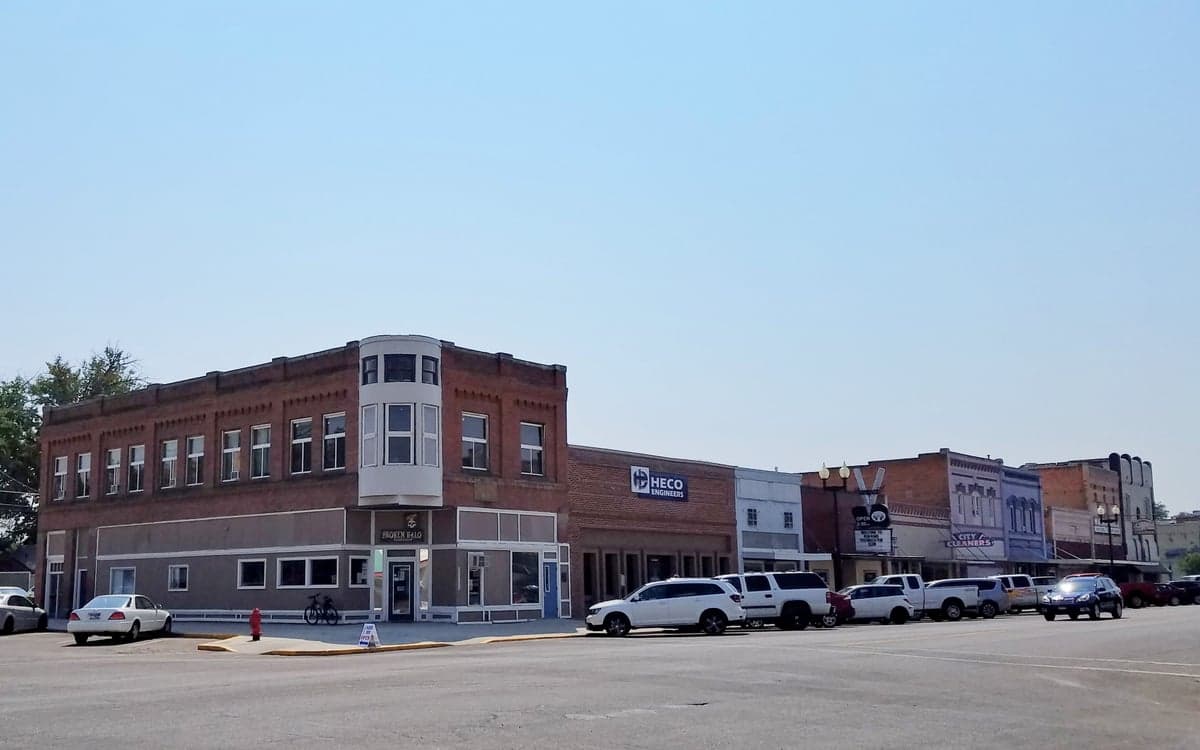
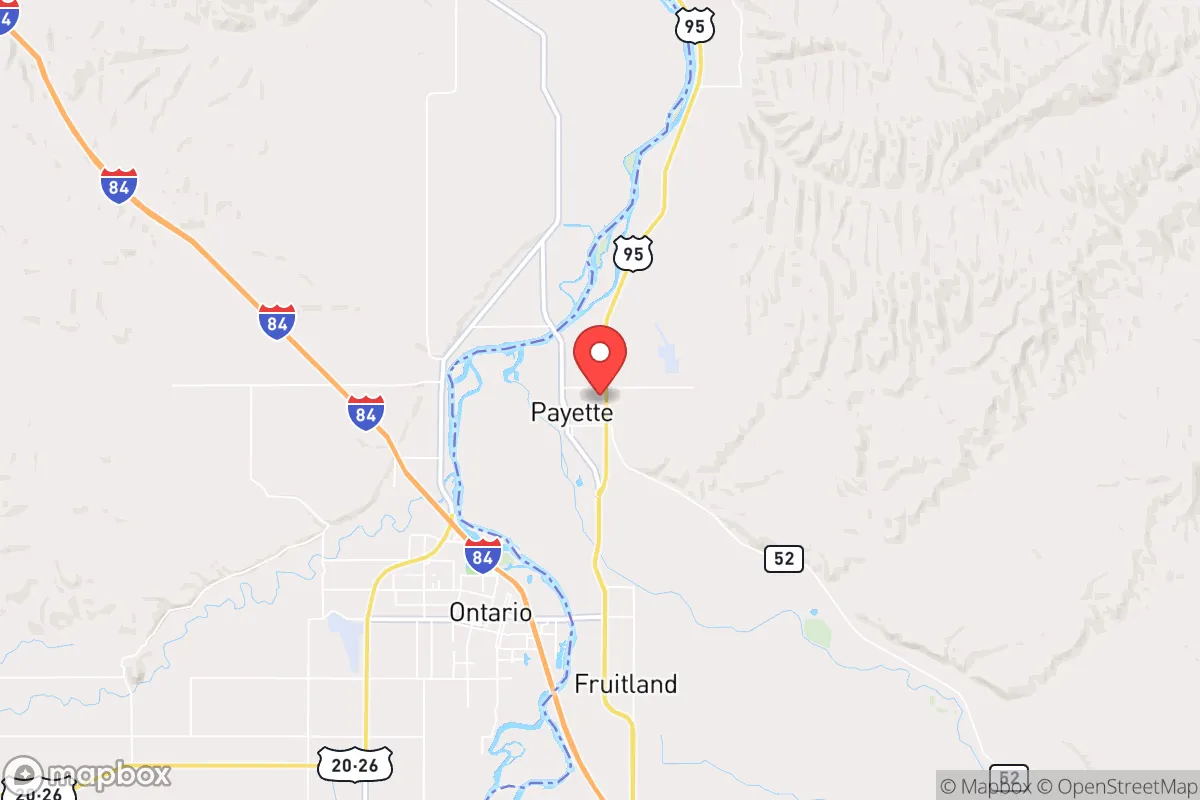
Photo: Wikipedia
Demographics of Payette, ID
Affluence Level in Payette, ID
A middle-class area roughly in line with national averages across income, home values, education, and employment.
People of Payette, ID
The people of Payette, Idaho today number 8,358, forming a predominantly white (67.2%) and Hispanic (24.0%) community with a very small foreign-born population of just 3.9%. The city retains a working-class, agricultural character, with only 14.3% of adults holding a college degree, and its population density is low, spread across a compact grid of historic streets and newer subdivisions. Distinctive identity markers include a strong sense of local independence, deep roots in farming and food processing, and a demographic profile that is slowly diversifying through Hispanic growth while remaining overwhelmingly native-born.
How the city was settled and grew
Payette was founded in the 1880s as a railroad and agricultural hub along the Payette River, drawing its first permanent settlers from the Midwest and Northern Europe—primarily farmers, railroad workers, and merchants. The city was platted in 1883 and grew steadily through the early 20th century as irrigation projects opened the surrounding Treasure Valley to fruit orchards, sugar beets, and later seed crops. The original population clustered in the Old Town Payette district, centered around Main Street and the railroad depot, where German, Swedish, and English families built wood-frame homes and storefronts. A second wave arrived during the 1910s and 1920s, when Basque sheepherders and Italian laborers came for railroad construction and agricultural work, settling in the South Payette area near the river and the rail yards. By 1950, Payette was a stable, nearly all-white community of about 4,500, with a small Hispanic population of migrant farmworkers who lived seasonally in labor camps on the outskirts, particularly in the West Payette corridor along Highway 95.
Modern era (post-1965)
After the 1965 Hart-Cellar Act, Payette saw no significant Asian or Indian immigration—the data shows 0.0% for both groups—but the Hispanic population grew substantially, rising from a small seasonal presence to a permanent, settled community. This shift was driven by year-round agricultural jobs at local food processors and seed companies, which drew Mexican-American families from Texas and California, as well as direct immigration from Mexico. These families concentrated in the West Payette neighborhood, where older farmworker housing was converted into permanent homes, and in the North Payette area near the Payette River, where newer subdivisions and mobile home parks absorbed the growing population. The white population, meanwhile, remained dominant but aged in place, with younger white families often moving to larger towns like Ontario, Oregon (just across the Snake River) or Boise for better job opportunities. The Black population has remained negligible at 0.3%, and the city has not attracted any significant East/Southeast Asian or Indian-subcontinent communities, making Payette one of the least ethnically diverse small cities in the region outside of its Hispanic-white binary.
The future
Payette's population is heading toward a slow but steady Hispanicization, with the Hispanic share likely to rise from 24% toward 30-35% over the next 10-20 years, driven by higher birth rates and continued in-migration of agricultural workers. The white population is projected to decline in absolute numbers as older residents pass away and younger whites leave for larger cities, though whites will remain the majority for the foreseeable future. The city is not tribalizing into distinct enclaves—Hispanic and white families live intermingled in West Payette and North Payette—but there is some spatial clustering, with newer Hispanic households concentrated in the Payette Heights subdivision and mobile home parks along Highway 95. The foreign-born share (3.9%) is low and likely to remain so, as most Hispanic growth comes from U.S.-born families rather than new immigrants. No significant Asian, Indian, or Black in-migration is expected, given the lack of economic pull factors beyond agriculture and the city's remote location.
For someone moving in now, Payette is becoming a more Hispanic-influenced but still culturally conservative, working-class community—a place where agricultural rhythms and family ties dominate, and where demographic change is gradual enough that it does not disrupt the existing social fabric. The city offers a low-cost, low-stress environment for those comfortable with a small-town, majority-white setting that is slowly diversifying, but it will not appeal to those seeking racial or ethnic diversity beyond the Hispanic-white dynamic.

* Values derived from national, state, county, city and local statistics and may differ in a specific area. Last updated: 2026-04-21T09:53:04.000Z
Narrative content on this page is AI-generated and may contain mistakes. Verify any details that matter before acting on them.
ReloMaps may earn a commission from affiliate links at no extra cost to you.

