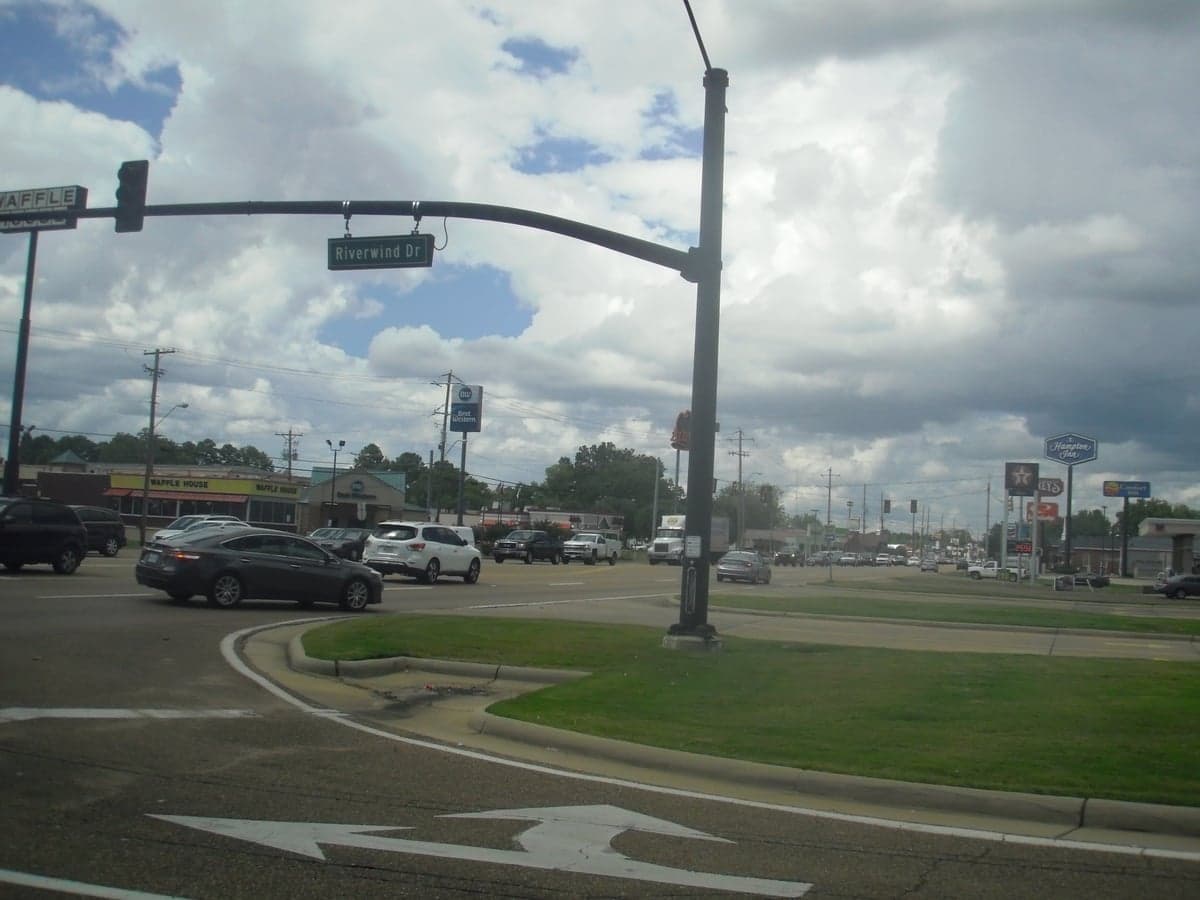
Photo: Wikipedia
Political ClimatePolitical Climate in Pearl, MS
District shown is the primary district for this city’s centroid. Cities may span multiple districts.
Local Political AnalysisPolitical Analysis of Pearl, MS
Pearl, Mississippi, sits deep in reliably conservative territory, with a Cook PVI of R+14 that reflects a community where traditional values and limited-government principles have long been the norm. Ranked-choice voting and progressive ballot initiatives have never gained traction here, and the area's political lean is as steady as the traffic on Highway 80. If you've been around a while, you remember when Pearl was a quiet bedroom community for Jackson state workers; now it's a growing suburb that's held its conservative line even as the capital city has drifted leftward. The trajectory here is one of cautious stability — folks are wary of any policy that smacks of government overreach, whether it's zoning restrictions that feel like a land grab or school mandates that bypass local control.
How it compares
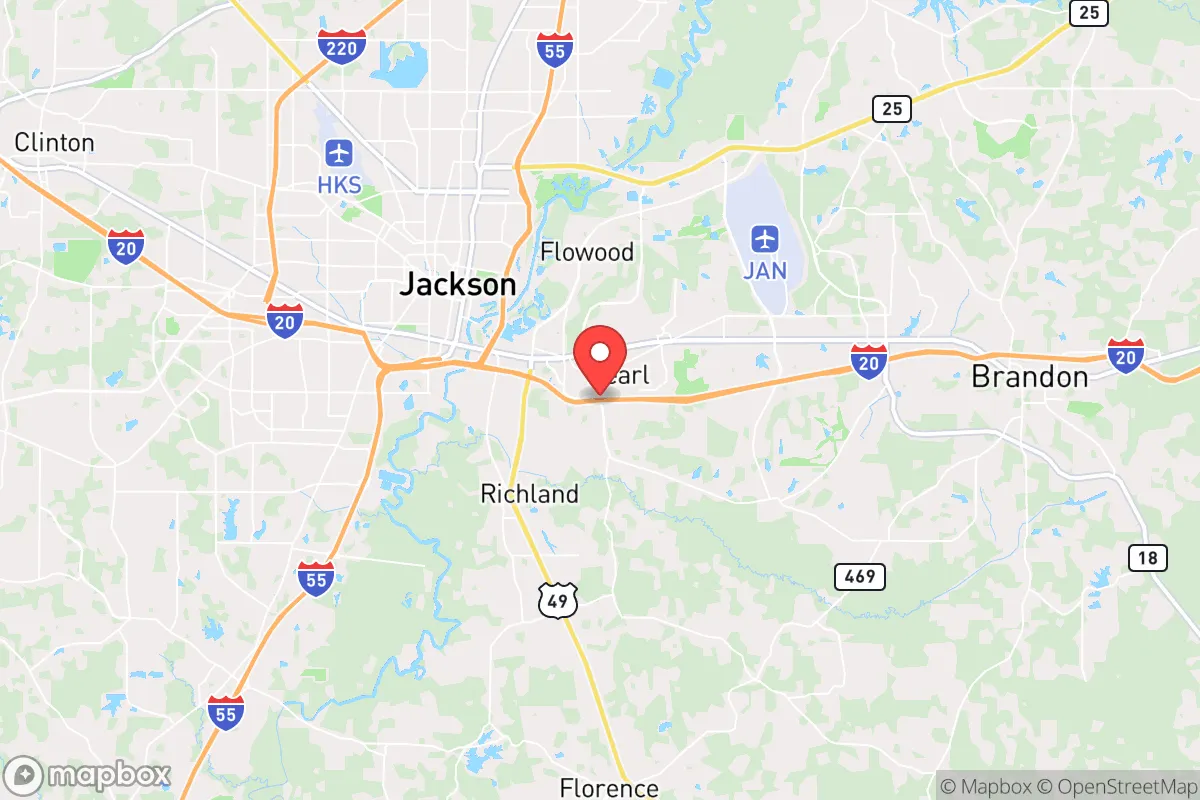
Drive ten miles west into Jackson, and you're in a different political universe — Hinds County votes reliably Democratic, and the city council there has pushed for things like sanctuary city policies and higher minimum wages that would never fly in Pearl. Head east to Brandon or Flowood, and you'll find a similar conservative vibe, though Pearl tends to be a bit more blue-collar and less country-club Republican than its neighbors. The real contrast is with the college towns like Oxford or Starkville, where you see more progressive activism and a younger electorate pushing for change. In Pearl, the county-level races are still decided in Republican primaries, and the biggest political fights are usually about property taxes or school board transparency, not social experiments from the coast or the capital.
What this means for residents
For the average family in Pearl, the political climate means fewer headaches from state-level overreach and more local control over day-to-day life. The city council and school board are dominated by folks who believe in keeping government small — you won't see mask mandates or vaccine passports being enforced here, and the local police focus on real crime rather than acting as social workers. Property taxes are reasonable compared to Rankin County's newer developments, and there's no city income tax to eat into your paycheck. The downside? If you're hoping for rapid transit or dense urban development, you'll be disappointed — the community values its single-family homes and car-dependent layout, and any talk of "smart growth" or "equity zoning" gets shut down fast at town hall meetings.
The cultural and policy distinctions in Pearl are subtle but real. This is a place where the Second Amendment is a given, not a debate topic, and where school choice is popular even if vouchers haven't fully arrived. The biggest shift I've seen in the last decade is a growing distrust of federal mandates — whether it's EPA water rules or Department of Education guidelines, locals are increasingly skeptical of anything that comes from Washington. The long-term outlook is solidly conservative, but there's a quiet worry that as Pearl grows and attracts more commuters from Jackson, the political center of gravity could shift. For now, though, it's still a place where you can raise a family without the government breathing down your neck, and that's worth holding onto.

State Political ClimatePolitical Climate in Mississippi
State Political AnalysisPolitical Environment in the State
Mississippi is one of the most reliably conservative states in the country, with a Republican trifecta that has tightened its grip over the last two decades. The state voted for Donald Trump by 17 points in 2024, and every statewide elected office is held by a Republican. But beneath that red veneer, the political climate is more complex than the raw numbers suggest — a deep rural-urban split, a legacy of Democratic control that only fully flipped in the 2010s, and a policy environment that is broadly pro-freedom but still carries some old-guard baggage. For a conservative looking to relocate, Mississippi offers low taxes, strong gun rights, and a culture that values local control, but you need to know where the fault lines are.
Urban vs. rural divide
The political map of Mississippi is a textbook case of the urban-rural chasm. The state’s two major metros — Jackson and the Gulf Coast — vote in opposite directions, while the rest of the state is deeply red. Jackson, the capital and largest city, is a Democratic stronghold, driven by a majority-Black population and a progressive city council that has clashed repeatedly with the state legislature over issues like police funding and Confederate monuments. Hinds County, which contains most of Jackson, voted for Joe Biden by 40 points in 2020. Meanwhile, the Gulf Coast cities of Biloxi, Gulfport, and Pascagoula lean Republican but are more moderate than the interior, thanks to a mix of military families, casino workers, and retirees. The real engine of conservative power is the rural and suburban expanse: counties like DeSoto (just south of Memphis), Rankin (east of Jackson), and Lamar (near Hattiesburg) are reliably red, often voting 70%+ Republican. The Mississippi Delta, once a Democratic bastion, has seen its white population shrink and its Black population remain solidly Democratic, but its political influence has waned as the region’s population declines. The key takeaway: if you move to a suburb like Madison (Rankin County) or Olive Branch (DeSoto County), you’re in deep-red territory. If you move inside Jackson city limits, you’re in a blue island.
Policy environment
Mississippi’s policy environment is broadly conservative, with a few notable exceptions that frustrate freedom-minded residents. On taxes, the state has been moving in the right direction: the flat income tax rate was cut from 5% to 4% in 2022, with a phase-down to 0% by 2032 if revenue targets are met. The state sales tax is 7%, one of the highest in the nation, but there’s no tax on groceries. Property taxes are low, with no state-level property tax and local rates averaging around 0.8% of assessed value. On regulation, Mississippi is a right-to-work state with minimal business licensing hurdles, making it attractive for entrepreneurs. Education policy is a mixed bag: the state has a school choice program (the Education Scholarship Account) for students with disabilities, but there’s no universal school voucher system yet — a fight that’s ongoing in the legislature. Healthcare is where things get sticky: Mississippi did not expand Medicaid under Obamacare, which keeps government out of healthcare but also leaves many rural hospitals struggling. The state has some of the strictest abortion laws in the country, with a near-total ban in effect since the Dobbs decision. Election laws are solid: voter ID is required, and the state has no widespread mail-in voting, which keeps election integrity high. Overall, the policy environment is friendly to conservatives, but the lack of universal school choice and the high sales tax are pain points.
Trajectory & freedom
Mississippi is on a trajectory of increasing freedom, especially in the last five years. The most significant recent legislation is the Mississippi Freedom Act (2023), which expanded gun rights by allowing permitless carry for anyone 18 or older who can legally possess a firearm. This was a major win for Second Amendment advocates. On parental rights, the state passed the Parents’ Bill of Rights in 2022, which requires schools to notify parents of any medical or mental health services offered to their children and prohibits instruction on sexual orientation or gender identity in K-3 classrooms. This law has been a model for other red states. On medical autonomy, Mississippi banned nearly all abortions in 2022 and has resisted any push to legalize medical marijuana (though a medical cannabis program was finally implemented in 2022 after a voter initiative was struck down by the state Supreme Court — a messy process that shows the limits of direct democracy here). Property rights are strong: there’s no statewide rent control, and zoning is mostly handled at the local level, which keeps housing costs low. The one area where freedom has contracted is in the realm of speech: the state has a law that prohibits “critical race theory” in public schools, which is popular with conservatives but has been challenged in court. Overall, the trajectory is toward more personal liberty, especially on guns and parental rights, but the state’s heavy reliance on sales tax and its resistance to tax cuts for the poorest residents are areas where improvement is needed.
Civil unrest & political movements
Mississippi has a relatively low level of visible civil unrest compared to states like Oregon or New York, but there are flashpoints. The most notable in recent years was the Jackson water crisis of 2022-2023, which sparked protests and political turmoil. The city’s aging water system collapsed under Democratic leadership, leading to a state takeover of the water system by the Republican-controlled legislature. This created a tense dynamic: local activists accused the state of a power grab, while state officials pointed to years of mismanagement. The crisis is a cautionary tale for anyone considering moving into Jackson proper — the city’s infrastructure is fragile, and the political infighting is real. On the right, the Mississippi Republican Party has been relatively stable, but there’s a growing populist wing that pushes back against establishment figures like Governor Tate Reeves. On immigration, Mississippi is not a border state, but there have been isolated incidents of ICE raids in places like Morton and Canton, which have stirred local debate. There’s no sanctuary city movement to speak of — the state passed a law in 2024 requiring local law enforcement to cooperate with federal immigration authorities. Election integrity has been a non-issue here: the 2020 and 2024 elections were smooth, with no major controversies. The overall vibe is that Mississippi is politically stable, but the Jackson situation is a reminder that local governance matters a lot.
Projection
Over the next 5-10 years, Mississippi is likely to stay red but get more conservative on cultural issues while slowly liberalizing on economic ones. The in-migration pattern is modest but real: people are moving to the Gulf Coast and the Memphis suburbs (DeSoto County) from higher-tax states like California and Illinois, drawn by low housing costs and a slower pace of life. These newcomers tend to be conservative-leaning, which reinforces the state’s political tilt. The biggest demographic shift is the continued decline of the Delta and the growth of the suburbs around Jackson and the Coast. The state’s population is aging and slowly shrinking overall, but the areas that are growing are solidly red. On policy, expect the income tax to be fully eliminated by 2032, which will make Mississippi even more attractive to freedom-minded people. School choice is the next big fight — I expect a universal voucher program to pass within the next five years, given the Republican supermajority. The wildcard is healthcare: if the state ever expands Medicaid, it would bring in federal dollars but also increase government dependency — a trade-off that conservatives will debate fiercely. The bottom line: Mississippi is becoming a freer state, but it’s doing so slowly and deliberately, which is probably a good thing.
For a new resident, the practical takeaway is this: Mississippi offers a low-cost, low-regulation environment where your gun rights are protected, your kids won’t be indoctrinated in school, and your taxes are headed to zero. But you need to choose your location carefully — avoid Jackson city limits unless you’re prepared for high crime and political dysfunction, and stick to the suburbs or rural areas where the conservative culture is strongest. The state is not perfect, but it’s trending in the right direction, and for a conservative looking for a place to build a life, it’s one of the best bets in the South.
* Values derived from national, state, county, city and local statistics and may differ in a specific area. Last updated: 2026-05-04T02:49:31.000Z
Narrative content on this page is AI-generated and may contain mistakes. Verify any details that matter before acting on them.
ReloMaps may earn a commission from affiliate links at no extra cost to you.

