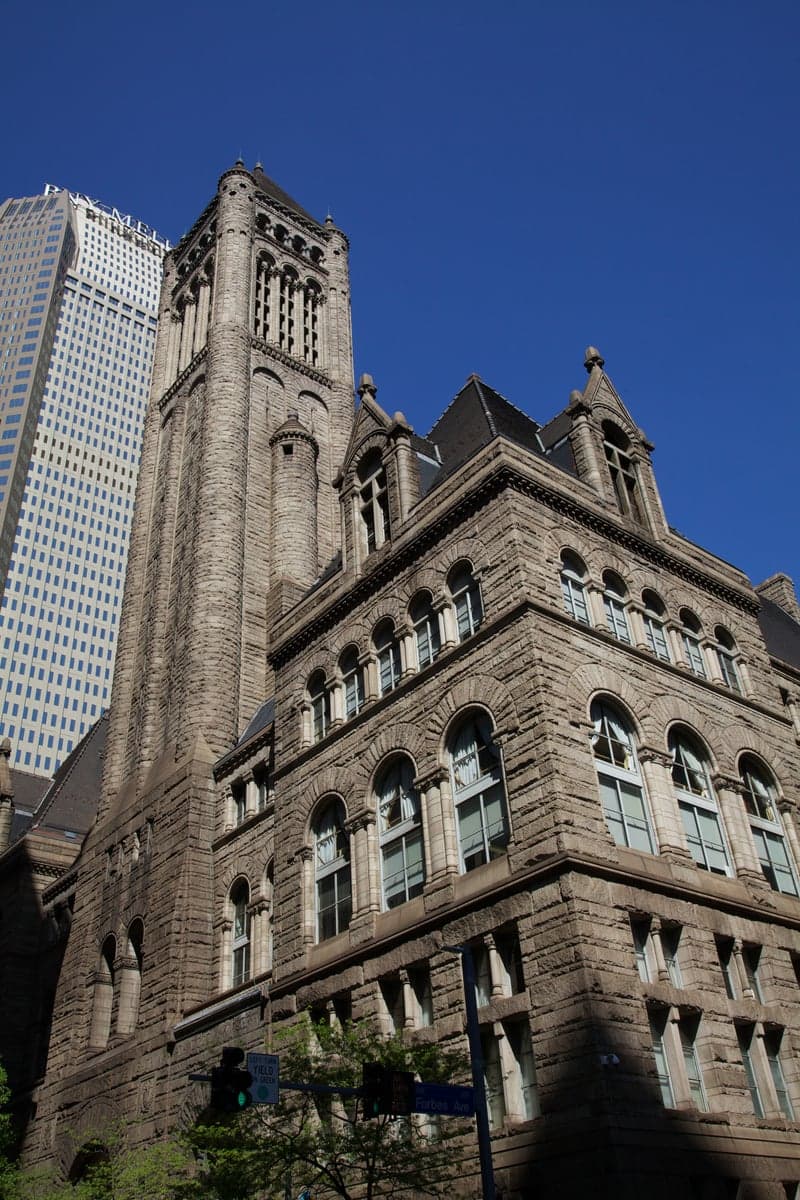
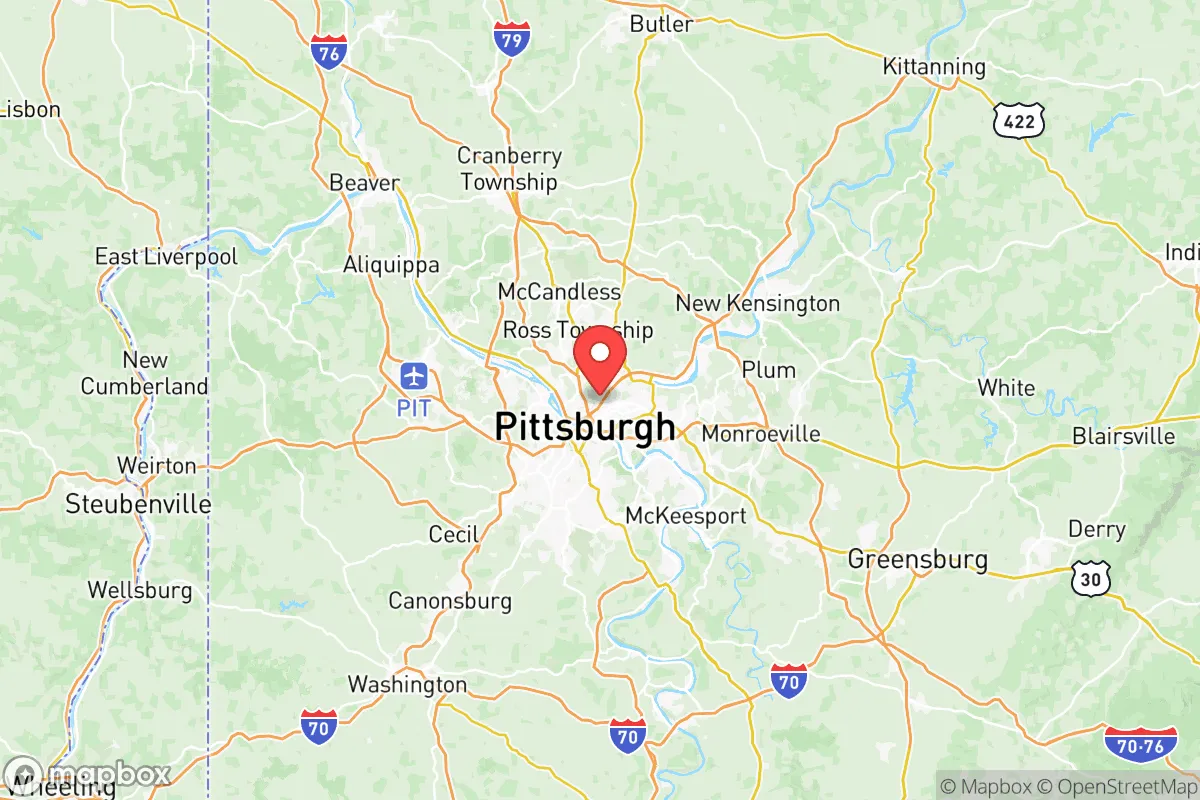
Photo: Wikipedia
Quality of Life in Allegheny County
A livable area that tracks near national norms for affordability, walkability, and neighborhood health.
What does Quality of Life tell us?
Quality of Life measures an area by evaluating factors like cost of living, nearby amenities, country club access, airport proximity, socioeconomic signals and neighborhood character. For large states, this is a general average — quality of life can vary dramatically between metro areas, suburbs, and rural communities within the same state.
What does this tell us?
Quality of Life measures an area by evaluating factors like cost of living, nearby amenities, country club access, airport proximity, socioeconomic signals and neighborhood character. For large states, this is a general average — quality of life can vary dramatically between metro areas, suburbs, and rural communities within the same state.
Cost of Living
12% below national average
123%
The Real Cost of Living in Allegheny County for 2026
| Tier | Individual | Family (4) |
|---|---|---|
| Survival | $18k | $33k |
| Comfortable | $42k | $62k |
| Luxury | $138k+ | $214k+ |
| Elite (Top 5%) | $178k+ | $276k+ |
Quality-of-Life Analysis
Allegheny County, Pennsylvania, offers one of the most diverse quality-of-life spectrums in the northeastern United States, spanning the dense urban core of Pittsburgh, its historic industrial suburbs, and quiet rural townships that feel a world away from the city lights. The county draws a wide range of residents: young professionals and students gravitate to the walkable, amenity-rich neighborhoods of Pittsburgh; families and commuters settle into the stable, middle-class boroughs of the Monongahela and Ohio River valleys; and those seeking space, lower taxes, and a slower pace find themselves in the agricultural townships of the county’s northern and eastern edges. With a cost of living index of 88 (well below the national average of 100), a median home value of $216,700, and a median rent of $1,111, the county provides affordable entry points across nearly every lifestyle preference.
Largest town(s) & population centers
Pittsburgh is the undisputed population and economic anchor of Allegheny County, home to roughly 302,000 residents within the city limits and anchoring a metro area of over 1.2 million. Daily life in Pittsburgh is defined by its walkable, neighborhood-based character — areas like Shadyside, Lawrenceville, and the Strip District offer dense concentrations of restaurants, breweries, independent shops, and cultural venues. The city is a hub for healthcare (UPMC and Allegheny Health Network), education (University of Pittsburgh, Carnegie Mellon), and technology (Google, Duolingo, Argo AI). The average commute in the county is 25.7 minutes, a figure that reflects both the city’s compact footprint and the ease of getting around via the Port Authority’s bus and light rail system. Outside the city, the largest suburban population centers include Penn Hills (pop. ~41,000), Mount Lebanon (pop. ~33,000), and Bethel Park (pop. ~32,000). These are classic inner-ring suburbs with strong school districts, tree-lined streets, and a mix of single-family homes and townhouses. Mount Lebanon, in particular, is known for its walkable Uptown business district and frequent light rail service to downtown Pittsburgh, making it a top choice for professionals who want suburban space without a car-dependent lifestyle.
Smaller towns & rural pockets
Beyond the suburban ring, Allegheny County contains dozens of smaller boroughs and townships that offer a distinctly rural or small-town feel. Sewickley, a historic Ohio River town about 12 miles northwest of Pittsburgh, features a charming Main Street with independent bookstores, cafes, and a strong sense of community — it feels more like a New England village than a Pittsburgh suburb. Oakmont, home to the famous Oakmont Country Club, is a tight-knit riverfront borough with a walkable business district and a mix of Victorian and Craftsman homes. Further east, Murrysville and Plum are large townships that blend suburban subdivisions with wooded hillsides, working farms, and preserved green space — residents here often commute 30–40 minutes to Pittsburgh but enjoy larger lots and lower property taxes. In the county’s northern reaches, Hampton Township and Richland Township are predominantly rural, with rolling farmland, horse properties, and access to the North Park trail system. These areas are popular with families who want good schools (Hampton and Pine-Richland districts are highly rated) and a quieter, more private lifestyle. The county also includes unincorporated communities like Bairdford and Russellton, which are little more than crossroads with a handful of homes, offering the most affordable land prices in the county.
Cost & lifestyle range
The cost of living in Allegheny County varies dramatically by location, even though the county-wide index sits at 88. At the high end, Sewickley and Mount Lebanon see median home values well above the county average — often in the $350,000–$500,000 range for a single-family home — while rents in these areas can exceed $1,500 for a two-bedroom. At the low end, communities like Wilkinsburg, McKeesport, and Duquesne offer median home values under $100,000 and rents as low as $700–$900. These former industrial boroughs are seeing reinvestment, particularly in Wilkinsburg, where a growing arts scene and easy bus access to Pittsburgh are attracting first-time homebuyers. The county’s rural townships — Frazier Township, Elizabeth Township, and Forward Township — offer the lowest property taxes and the largest lots (often 1–5 acres), but with fewer amenities and longer drives to grocery stores and healthcare. The lifestyle range is equally broad: a resident in Lawrenceville can walk to 20 restaurants and a Whole Foods, while a resident in rural West Deer Township might drive 15 minutes to the nearest supermarket. The county’s property tax structure also varies, with Pittsburgh city residents paying a higher millage rate (around 8.06 mills for the city portion) than those in many suburban and rural townships (often 4–6 mills).
Allegheny County is best suited for people who value choice and affordability over uniformity. Young professionals and empty-nesters thrive in Pittsburgh’s walkable, amenity-rich neighborhoods; families with school-age children often prefer the high-rated suburban districts of Mount Lebanon, Upper St. Clair, or North Allegheny; and those seeking land, privacy, and lower taxes find their niche in the rural townships of the county’s periphery. The county’s median home value of $216,700 — roughly half the national median — and average commute of 25.7 minutes make it one of the most accessible major metro areas in the country for achieving a balanced, high-quality life without the financial strain found in coastal markets.

Crime in Allegheny County
WARNING: The crime statistics are unreliable for this jurisdiction. Local authorities have either not reported or under reported their data to the FBI. This could be due to bad intentions, incompetence or technical issues. Regardless, we suggest skepticism.
Higher crime rates than 62% of comparable U.S. locations.
Violent CrimeViolent Crime Analysis
Property CrimeProperty Crime Analysis
Crime Analysis
Allegheny County, Pennsylvania, presents a mixed safety profile that varies sharply depending on whether you are in Pittsburgh’s urban core or its surrounding suburbs. The county’s violent crime rate of 225.9 per 100,000 residents sits below the national average but above the safest suburban benchmarks, while its property crime rate of 1,344.8 per 100,000 is notably higher than both state and national medians. Residents in communities like Mount Lebanon and Franklin Park enjoy crime rates far lower than the county average, while neighborhoods in Pittsburgh’s East End and parts of McKeesport and Wilkinsburg report significantly higher incidents, particularly for theft and aggravated assault.
Crime in context
Allegheny County’s violent crime rate of 225.9 per 100,000 is roughly 20% lower than the national average of 282.7 per 100,000 (2023 FBI data), but it remains elevated compared to Pennsylvania’s statewide rate of 195.0. Property crime, however, is a more pressing concern: the county’s 1,344.8 per 100,000 rate exceeds both the national average (1,954.0) and the Pennsylvania average (1,210.0), driven largely by larceny-theft and motor vehicle theft in denser urban areas. The disparity is stark when comparing Pittsburgh’s downtown and South Side neighborhoods, where property crime rates can double the county average, against suburbs like Upper St. Clair and Sewickley, where rates fall below 800 per 100,000. The county’s overall numbers are pulled upward by persistent property crime in post-industrial communities such as Braddock and Duquesne, where economic decline has left fewer eyes on the street and more vacant properties vulnerable to break-ins.
What residents experience
Daily life in Allegheny County involves navigating a patchwork of safety realities. In Pittsburgh’s East Liberty and Garfield neighborhoods, residents report frequent car break-ins and package thefts, while violent incidents—though less common—tend to cluster near commercial corridors late at night. Suburban commuters in Bethel Park and Ross Township describe a different experience: low violent crime but persistent concerns about unlocked vehicle entries and porch piracy. The county’s progressive judicial leadership, including District Attorney Stephen A. Zappala Jr. (a Democrat who has faced criticism for lenient plea deals and diversion programs), has drawn scrutiny from residents who feel that offender-focused policies reduce accountability. Critics point to Allegheny County’s pretrial release rates, which exceed 70% for non-violent offenses, as a factor in repeat property crime—a pattern visible in Wilkinsburg, where a small number of chronic offenders account for a disproportionate share of burglaries. Conversely, communities with conservative-leaning local courts, such as Pine-Richland and North Allegheny, report lower recidivism and higher resident satisfaction with police responsiveness.
Neighborhood-level variation is extreme. The safest enclaves—Mount Lebanon, Franklin Park, and Upper St. Clair—post violent crime rates below 50 per 100,000, rivaling the safest small towns in Pennsylvania. In contrast, McKeesport (violent crime rate near 600 per 100,000) and Wilkinsburg (over 500 per 100,000) struggle with concentrated poverty and gang-related activity. For families and professionals relocating to the county, the choice of municipality is the single strongest determinant of safety. Bethel Park and Ross Township offer a middle ground: property crime rates around 1,000 per 100,000 and violent crime rates under 100, with responsive police departments and active neighborhood watch programs. Prospective residents should examine block-level crime maps and consider that a 10-minute drive from Pittsburgh’s Strip District to Hampton Township can mean a 10-fold difference in both violent and property crime risk.
* Values derived from national, state, county, city and local statistics and may differ in a specific area. Last updated: 2026-06-12T09:29:08.000Z
Narrative content on this page is AI-generated and may contain mistakes. Verify any details that matter before acting on them.
ReloMaps may earn a commission from affiliate links at no extra cost to you.

