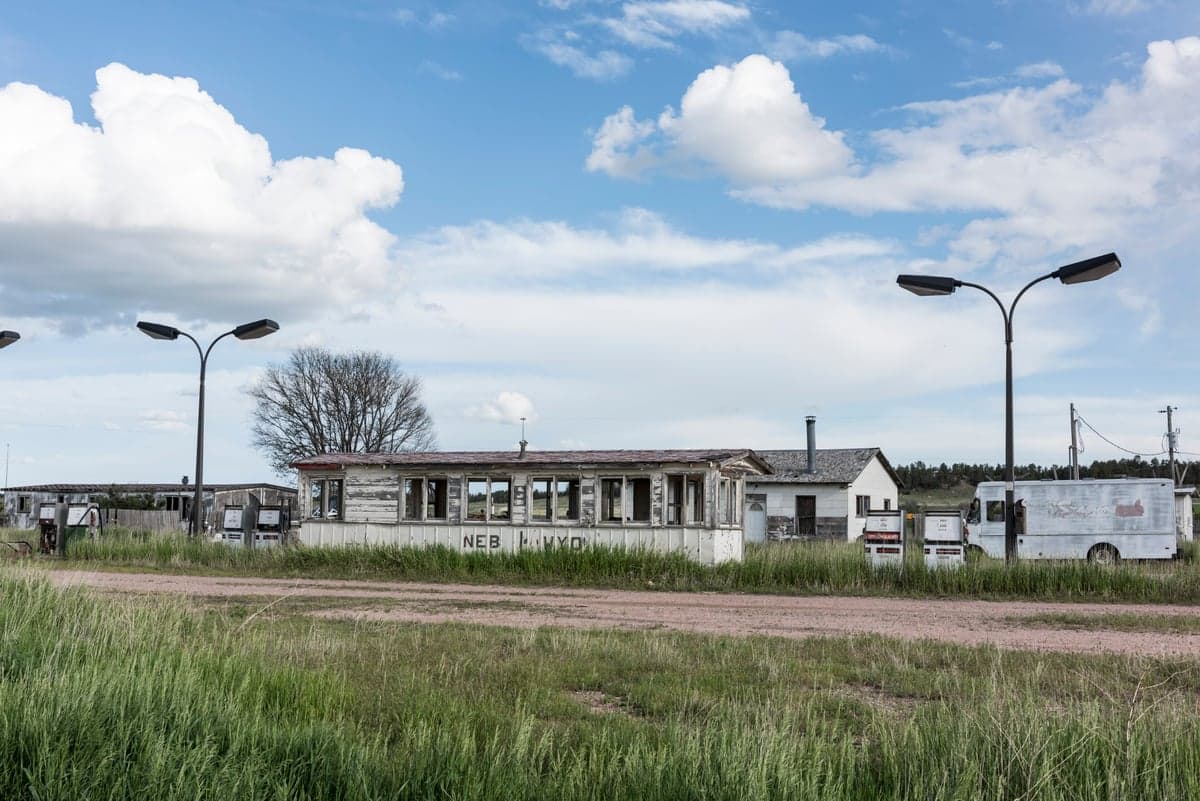
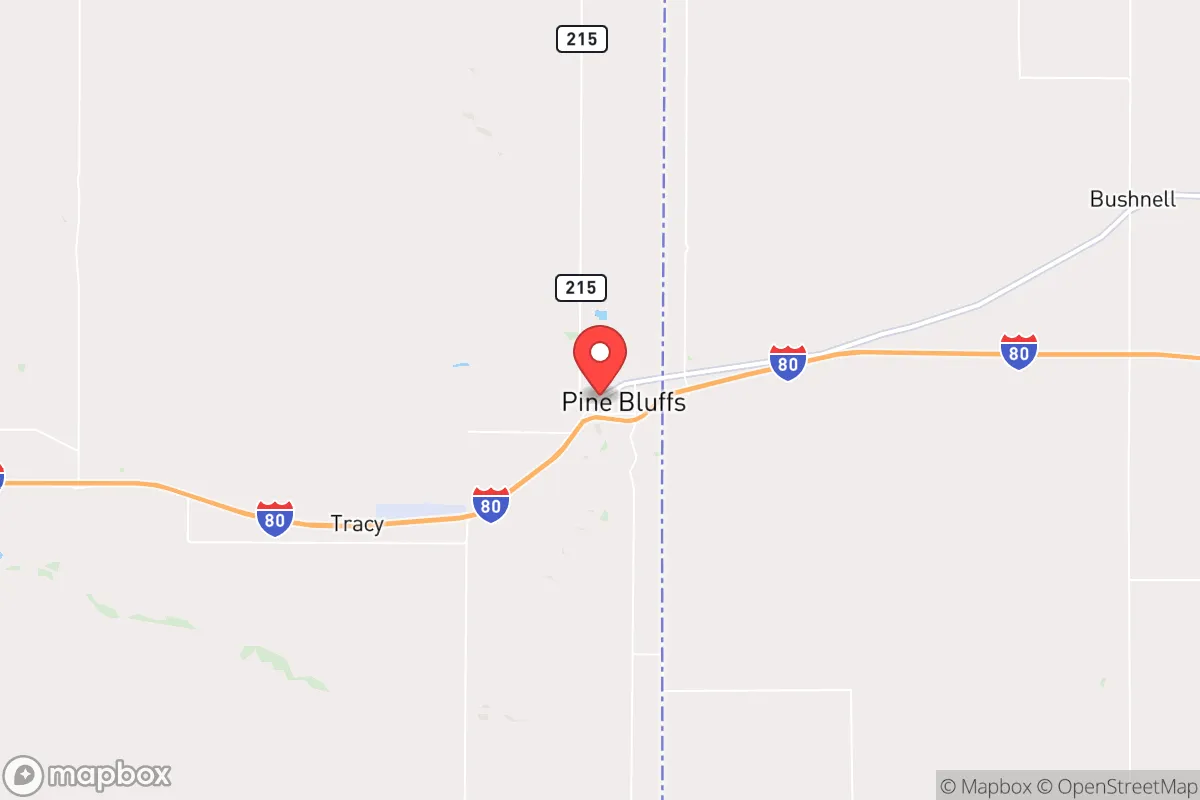
Photo: Wikipedia
Strategic Assessment of Pine Bluffs, WY
Workable tactical position. Some exposure to population density or targets, but generally defensible in a crisis.
What does the Strategic Assessment tell us?
Our Strategic Assessment grades tactical survivability of an area. Major population centers, military targets, fallout zones, natural disasters, and border exposure all drive risk — lower exposure means a more defensible position in a crisis.
This is heavily inspired by Joel Skousen's Strategic Relocation book. Highly recommended you checkout the book ($)What does this tell us?
Our Strategic Assessment grades tactical survivability of an area. Major population centers, military targets, fallout zones, natural disasters, and border exposure all drive risk — lower exposure means a more defensible position in a crisis.
This is heavily inspired by Joel Skousen's Strategic Relocation book. Highly recommended you checkout the book ($)Strategic Pillars

Key Distances
Regional Safe Places
Below is our recommended "safe zones" in Wyoming and the surrounding area based on our strategic heuristics. For most people, it's unrealistic to live in a “safe zone” full-time due to work, family or other personal reasons. They tend to be more rural. However, many of these areas are perfect for second homes and retreat properties that double as a vacation home or even a short-term rental.
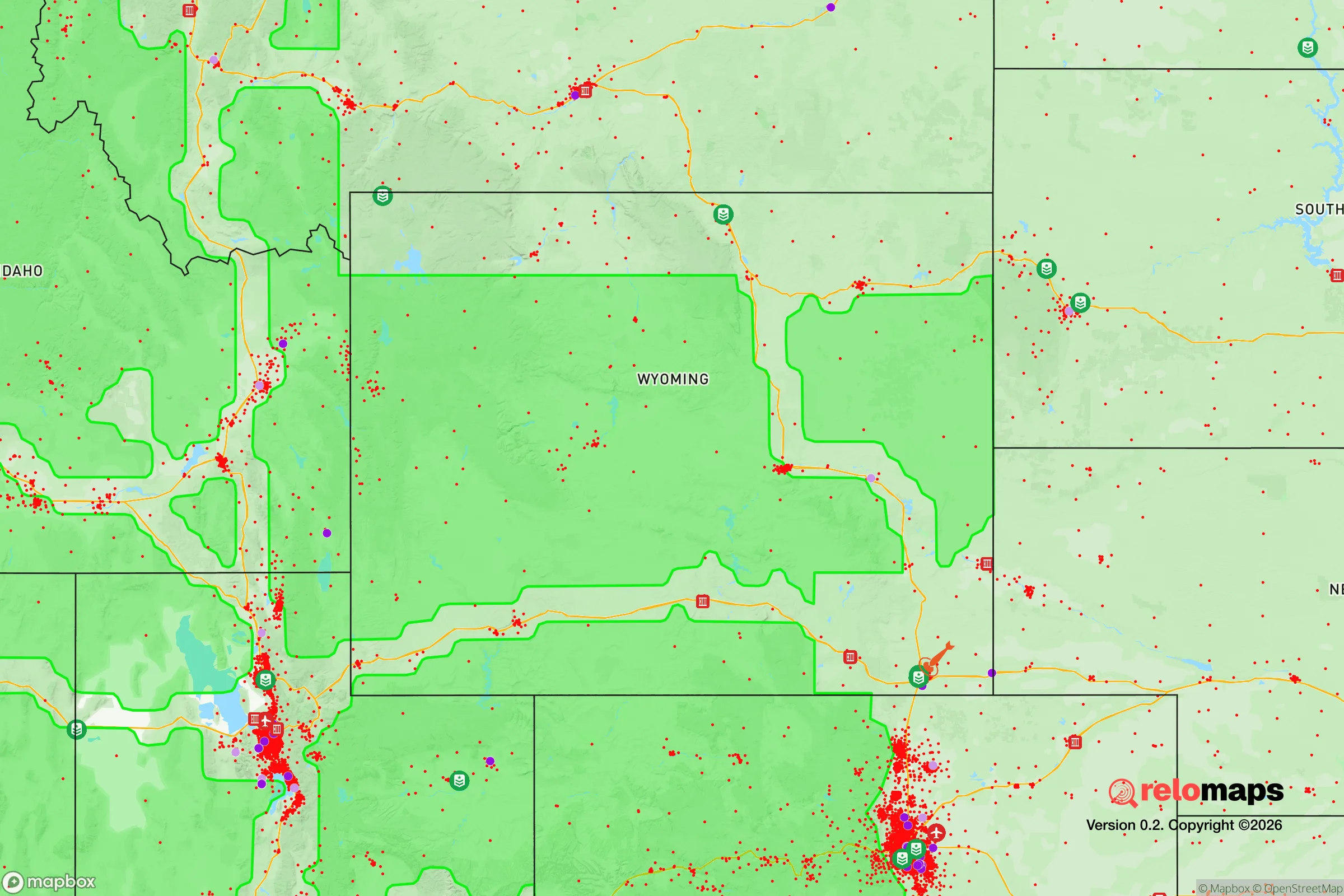
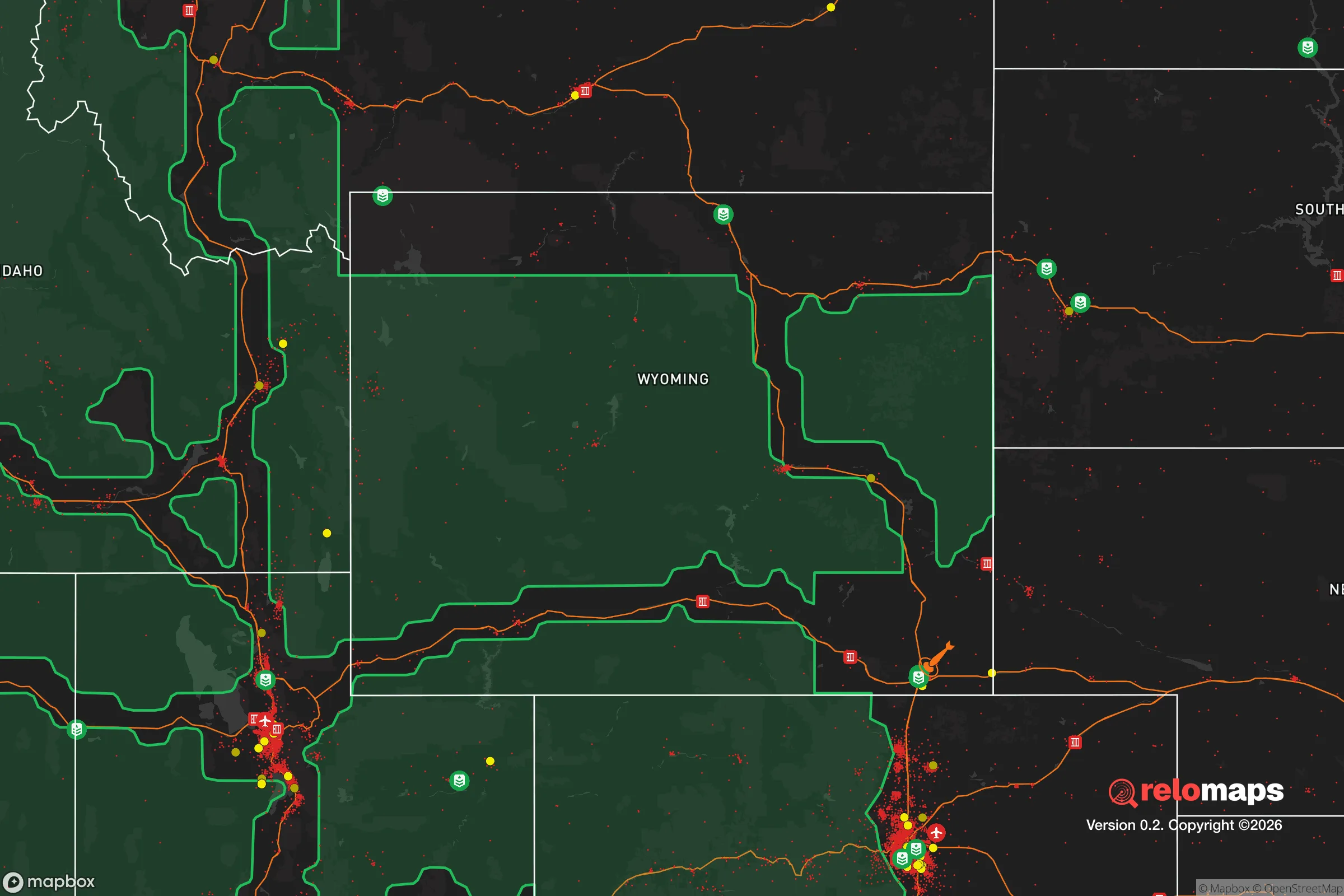


Important Note: For informational purposes only. This does not mean nothing bad ever happens in the green zones. Please use common sense. This is based on public data and modeled with AI. We tried to take a conservative approach but mistakes happen. We update this regularly as new information becomes available.
Solar Generator Recommendations
Backup power matters more here than in safer locations. We've picked three solar generators across budgets and capacity tiers — start with the budget unit if you only need a few essentials, or step up if you want to run a fridge and HVAC for days at a time.

Jackery Portable Power Station Explorer 300
Budget OptionPower on the Go: Weighing only 11 lbs, it's convenient to set up and store with book-sized foldable solar panels

BLUETTI Portable Power Station AC180
Designed for both indoor and outdoor scenarios, AC180 is highly capable as it has a robost capacity and continuous output power.

EF ECOFLOW DELTA Pro Ultra Power Station
Upgraded PickEcoFlow DELTA Pro Ultra is a whole-home energy system designed to grow with your family. Integrated with the Smart Home Panel 2, it scales to meet your evolving energy needs — keeping your home powered, intelligent, and secure through every stage of life.
We earn a commission, at no additional cost to you.
Strategic Assessment Analysis
Pine Bluffs, Wyoming, sits as a strategic outpost on the far southeastern edge of the state, offering a unique blend of isolation and access that appeals to those thinking seriously about resilience. Its location, just 10 miles west of the Nebraska state line and roughly 45 miles east of Cheyenne, places it far enough from major population centers to avoid the immediate chaos of a collapse event, yet close enough to a state capital for supply runs or medical care in stable times. For a conservative-leaning relocator concerned with civic unrest, mass casualty events, or broader societal breakdown, Pine Bluffs provides a low-profile, defensible position on the High Plains, where the wind blows hard and the neighbors are few. The town itself is small—around 1,200 residents—and its economy is rooted in agriculture, oil and gas, and the Union Pacific railroad, meaning the local population is already accustomed to self-reliance and hard work, not the soft dependencies of urban life.
Geographic position and natural advantages for long-term security
Pine Bluffs sits atop the Ogallala Aquifer, one of the largest freshwater reserves in North America, which is a critical advantage for anyone planning to stay put through a prolonged disruption. The area receives about 16 inches of precipitation annually, enough for dryland farming and grazing, but not so much that you’re fighting constant moisture issues. The terrain is rolling prairie with scattered pine-covered bluffs—hence the name—offering natural vantage points and some cover, though it’s not the mountainous hideaway some preppers dream of. What it lacks in dramatic topography, it makes up for in low population density: Laramie County, where Pine Bluffs is located, has just 12 people per square mile, compared to Cheyenne’s 1,200 per square mile. That means fewer eyes on your operations, less competition for resources, and a much lower chance of being caught in a mass evacuation route. The town is also a stone’s throw from Interstate 80, which runs east-west across the country, but that highway is a double-edged sword—useful for moving supplies in good times, but a potential funnel for refugees in bad ones. The key is that Pine Bluffs is off the main drag enough that most people will blow right past it, heading for Cheyenne or Denver, neither of which is a safe bet in a crisis.
Risks, exposures, and proximity to fallout-relevant landmarks
No strategic assessment is honest without addressing the downsides, and Pine Bluffs has a few that demand attention. The most obvious is its proximity to Cheyenne, home to F.E. Warren Air Force Base, which houses a wing of Minuteman III intercontinental ballistic missiles. In a nuclear exchange scenario, that base is a high-priority target, and while Pine Bluffs is 45 miles east, the prevailing winds blow from west to east, meaning fallout from a strike on Cheyenne could drift directly over the area. The same goes for the missile silos scattered across southeastern Wyoming and western Nebraska—there are dozens of them within a 100-mile radius. That’s a sobering reality for anyone serious about surviving a mass casualty event. Additionally, the Union Pacific rail line running through town carries hazardous materials, including crude oil and chemicals, which could pose a secondary risk if a derailment or sabotage event occurs during unrest. On the plus side, Pine Bluffs is far from the major fault lines, hurricane zones, and wildfire corridors that plague other parts of the country. Tornadoes are a seasonal risk—the area sits on the edge of Tornado Alley—but the wide-open landscape gives plenty of warning, and basements are common in older homes. The bigger concern is the lack of natural barriers: there’s no mountain range, river, or forest to slow down a determined group of looters or refugees moving along I-80. Defensibility here relies on distance, low profile, and community cohesion, not geography.
Practical resilience for a relocator: food, water, energy, and defensibility
For a single individual or a family looking to hunker down, Pine Bluffs offers a solid foundation for self-sufficiency, but it requires work. Water is the biggest win: the Ogallala Aquifer means you can drill a well and have a reliable, independent water source, unlike many parts of the West where water rights are a legal nightmare. Most residential lots in town and the surrounding rural areas can support a private well, and the water table is shallow enough that hand pumps or solar-powered pumps are viable options if the grid goes down. Food production is feasible but not effortless—the growing season is short (about 120 frost-free days), and the soil is alkaline clay, so raised beds, greenhouses, or hydroponics are smarter bets than traditional row crops. Local agriculture is dominated by cattle and hay, so bartering with neighbors for beef or eggs is a realistic option if you build relationships early. Energy is where Pine Bluffs shines: the area averages 220 sunny days per year, and wind speeds are consistently high, making solar and small-scale wind turbines practical for off-grid setups. The town’s electrical grid is served by Black Hills Energy, which is reliable in normal times but vulnerable to cascading failures during a national crisis. Defensibility comes down to community and positioning. Pine Bluffs has a strong rural culture where people know their neighbors, and the local sheriff’s office is responsive, but in a total breakdown, you’re largely on your own. The town’s layout—a compact grid with a few main roads—makes it easier to monitor approaches, and the surrounding farmland offers plenty of space for a retreat property with a good field of fire. Just don’t expect to disappear into the woods; this is prairie country, and visibility works both ways.
Overall, Pine Bluffs presents a mixed but workable strategic picture for the conservative relocator who takes preparedness seriously. It’s not a bug-out paradise—no mountains, no deep forests, and the missile-silo risk is real—but it offers a rare combination of water security, low population density, and a self-reliant local culture that’s increasingly hard to find. The town’s isolation from major urban centers like Denver (100 miles south) and Cheyenne (45 miles west) means you’re unlikely to be caught in the first wave of unrest or evacuation chaos, but you’re close enough to monitor events and make supply runs when the situation allows. The key is to treat Pine Bluffs as a long-term base, not a temporary hideout: invest in a well, set up renewable energy, stockpile supplies, and build ties with the local farming community. If the country holds together, you’ve got a quiet, affordable life on the plains. If it doesn’t, you’ve got a fighting chance—provided you’ve accounted for the wind direction and the railroad tracks. For the single individual or family willing to put in the sweat equity, Pine Bluffs is a solid bet in a shaky world.

* Values derived from national, state, county, city and local statistics and may differ in a specific area. Last updated: 2026-04-21T11:39:31.000Z
Narrative content on this page is AI-generated and may contain mistakes. Verify any details that matter before acting on them.
ReloMaps may earn a commission from affiliate links at no extra cost to you.

