
Photo: Wikipedia
Demographics of Pineville, LA
Affluence Level in Pineville, LA
A below-average socioeconomic profile. Incomes, home values, and educational attainment trail the U.S., with higher poverty and unemployment.
People of Pineville, LA
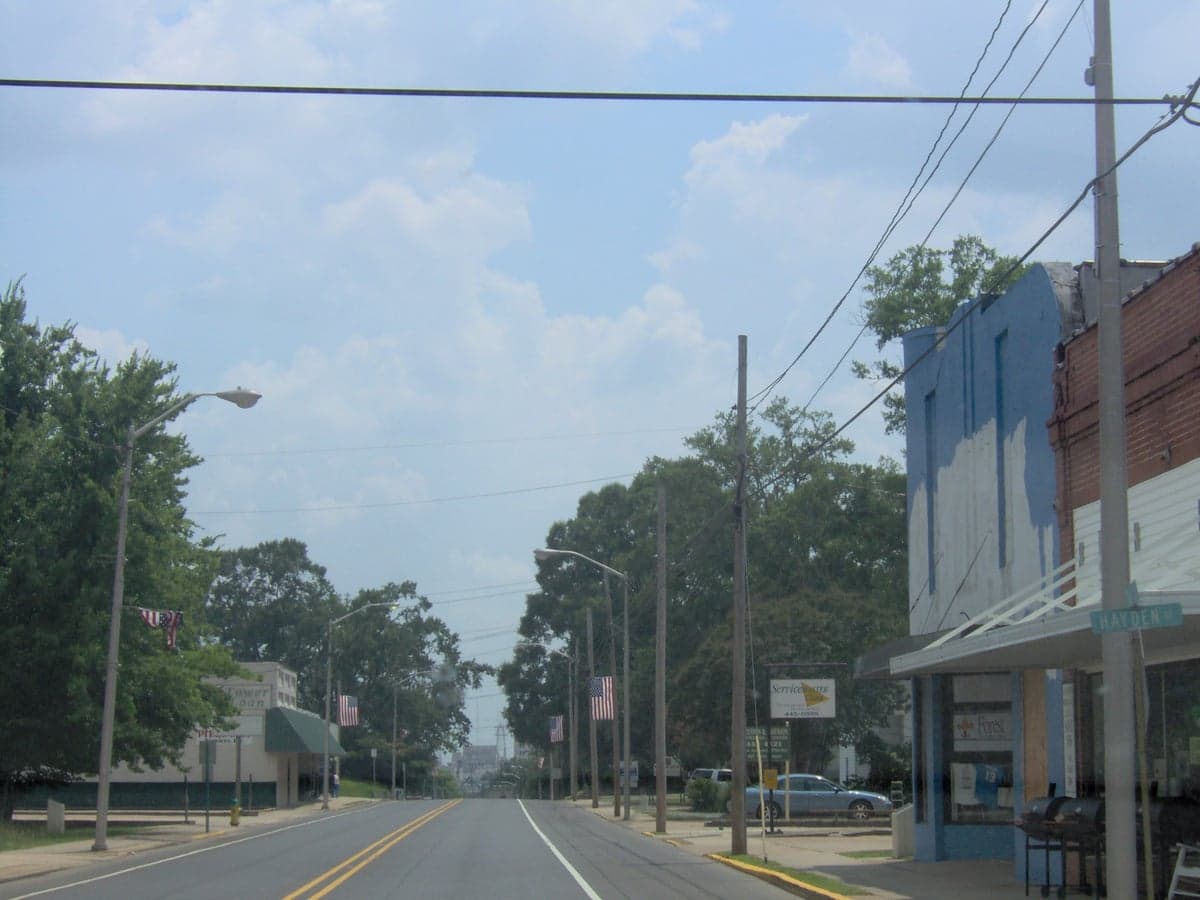
Pineville, Louisiana, is a small, historically rooted city of 14,268 residents that remains predominantly white (63.1%) with a significant Black population (30.4%). Its population is notably less diverse than the national average, with a foreign-born share of just 0.3% and minimal Hispanic (1.7%) or East/Southeast Asian (0.1%) presence. The city’s character is shaped by its role as a regional medical and educational hub, anchored by the Louisiana College campus and the VA Medical Center, giving it a stable, family-oriented feel with a higher-than-average share of college-educated residents (24.4%) compared to the surrounding area.
How the city was settled and grew
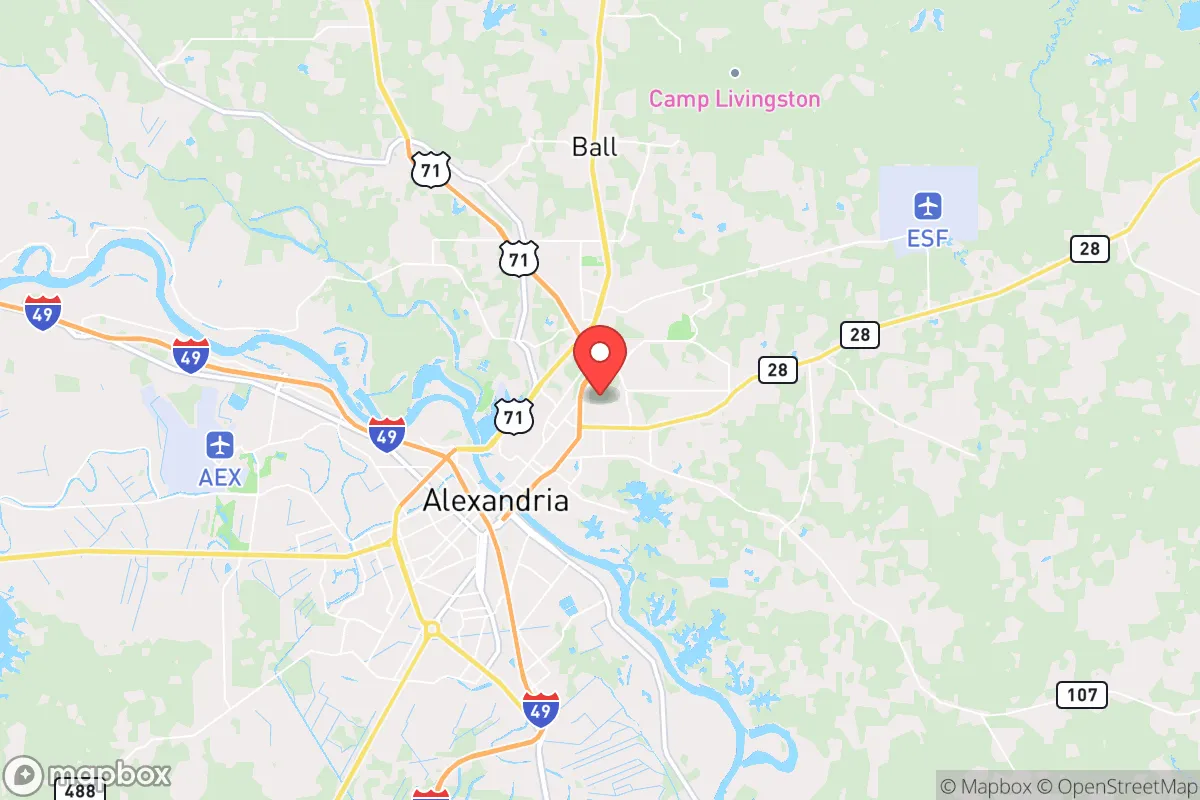
Pineville’s human history begins with its founding in the early 19th century as a ferry crossing and trading post on the Red River, opposite Alexandria. The original settlers were primarily Anglo-American farmers and merchants from the Deep South, drawn by fertile bottomlands and river access. The arrival of the Texas and Pacific Railroad in the 1880s spurred the first major growth wave, bringing a mix of white laborers and Black workers who built the rail infrastructure. These early Black families settled in what is now the Riverside neighborhood, a historic area along the riverfront that remains a core of the city’s Black community today. By the early 1900s, the establishment of Louisiana College (1906) and the VA hospital (1930s) attracted a professional class of white educators, doctors, and administrators, who built homes in the College Park district near the campus. The post-World War II era saw a second wave of white in-migration, as returning veterans and their families moved into new subdivisions like Southside and Westwood, expanding the city’s footprint westward. Pineville’s population peaked around 14,500 in the 1970s and has since stabilized, with no major immigrant waves altering its demographic core.
Modern era (post-1965)
After the 1965 Hart-Cellar Act, Pineville saw virtually no new immigration—its foreign-born population remains below 1%. Instead, the city’s modern demographic story is one of domestic stability and gradual suburbanization. White families continued to move into newer subdivisions like Northwood and Pinecrest during the 1970s and 1980s, while the Black population remained concentrated in Riverside and older sections of central Pineville. The Hispanic share (1.7%) and East/Southeast Asian share (0.1%) are negligible, reflecting the city’s lack of industrial or agricultural draw for these groups. The most notable modern shift has been the slight decline in the white population share (from roughly 70% in 1990 to 63.1% today) and a corresponding increase in the Black share, driven by natural growth and some movement from nearby Alexandria. The city’s Indian-subcontinent population is effectively zero (0.0%), and there is no visible Arab community. Pineville remains a biracial city in practice, with little of the multi-ethnic diversity seen in larger Louisiana metros like Baton Rouge or New Orleans.
The future
Pineville’s population is likely to remain stable or slowly decline over the next 10–20 years, mirroring trends across rural Louisiana. The city is not homogenizing into a single identity but is instead solidifying its existing biracial character, with white and Black residents living in distinct neighborhoods—whites concentrated in newer subdivisions like Northwood and Westwood, Blacks in the historic Riverside core. There is no evidence of growing immigrant enclaves; the foreign-born share is too small to sustain growth, and the Hispanic and Asian populations are plateauing at very low levels. The college-educated share (24.4%) may rise slightly if Louisiana College expands or if the VA hospital attracts more medical professionals, but the city lacks the economic drivers to draw significant new populations. The most likely scenario is a slow aging of the current population, with younger adults leaving for larger cities and retirees moving in for the lower cost of living.
For someone moving to Pineville now, the city offers a stable, low-cost, and safe environment with a clear social geography: white families in the newer subdivisions, Black families in the older neighborhoods, and virtually no other ethnic groups. It is a place where community ties are strong but demographic change is minimal—a predictable, traditional Southern small town that will likely look much the same in 2040 as it does today.

* Values derived from national, state, county, city and local statistics and may differ in a specific area. Last updated: 2026-05-01T10:41:48.000Z
Narrative content on this page is AI-generated and may contain mistakes. Verify any details that matter before acting on them.
ReloMaps may earn a commission from affiliate links at no extra cost to you.

