Photo: Wikipedia
Strategic Assessment of Pineville, LA
Meaningful friction. Expect exposure to either population pressure, blast zones, or natural disaster risk. Consider buying a retreat property.
What does the Strategic Assessment tell us?
Our Strategic Assessment grades tactical survivability of an area. Major population centers, military targets, fallout zones, natural disasters, and border exposure all drive risk — lower exposure means a more defensible position in a crisis.
This is heavily inspired by Joel Skousen's Strategic Relocation book. Highly recommended you checkout the book ($)What does this tell us?
Our Strategic Assessment grades tactical survivability of an area. Major population centers, military targets, fallout zones, natural disasters, and border exposure all drive risk — lower exposure means a more defensible position in a crisis.
This is heavily inspired by Joel Skousen's Strategic Relocation book. Highly recommended you checkout the book ($)Strategic Pillars

Key Distances
Regional Safe Places
Below is our recommended "safe zones" in Louisiana and the surrounding area based on our strategic heuristics. For most people, it's unrealistic to live in a “safe zone” full-time due to work, family or other personal reasons. They tend to be more rural. However, many of these areas are perfect for second homes and retreat properties that double as a vacation home or even a short-term rental.

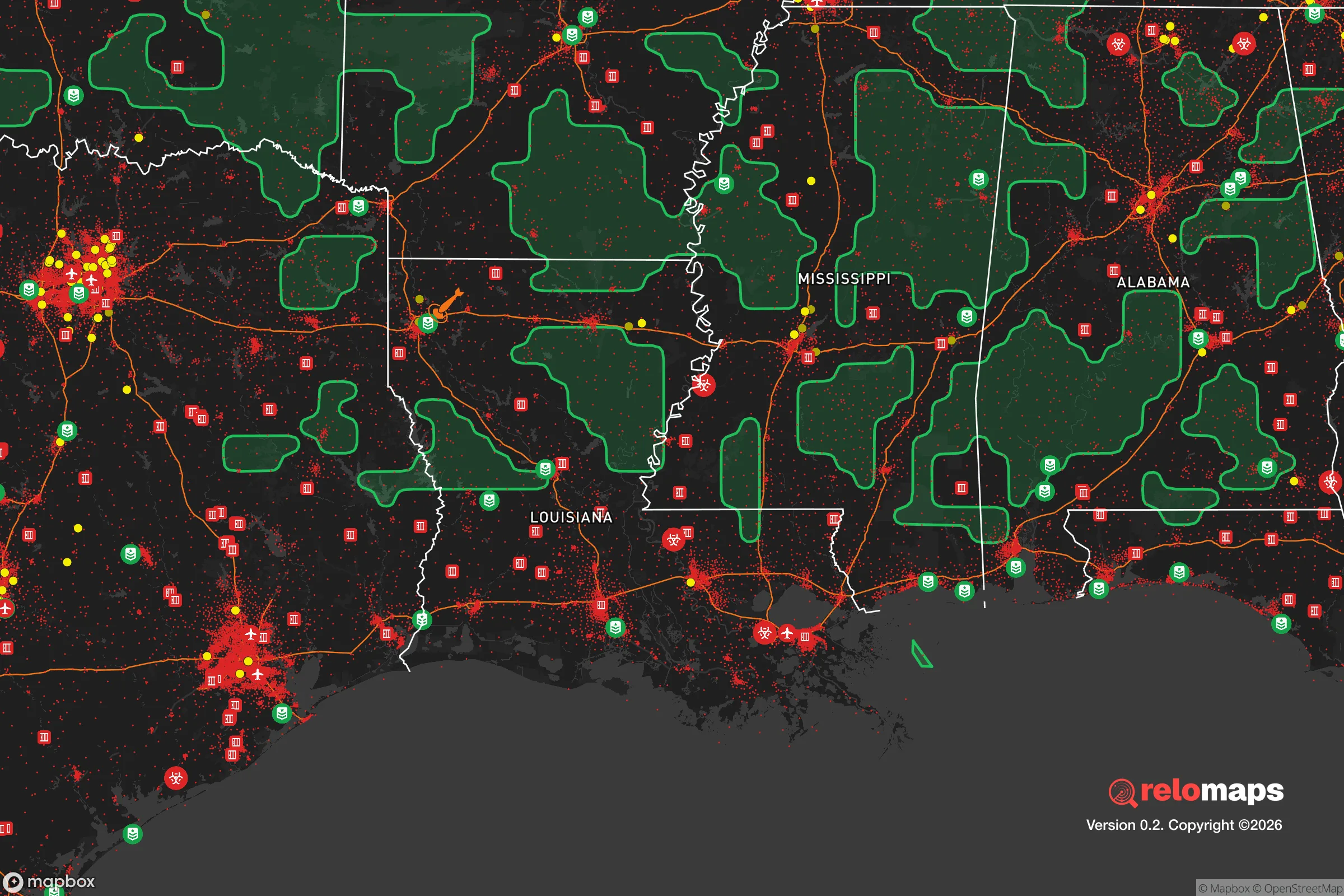


Important Note: For informational purposes only. This does not mean nothing bad ever happens in the green zones. Please use common sense. This is based on public data and modeled with AI. We tried to take a conservative approach but mistakes happen. We update this regularly as new information becomes available.
Solar Generator Recommendations
Backup power matters more here than in safer locations. We've picked three solar generators across budgets and capacity tiers — start with the budget unit if you only need a few essentials, or step up if you want to run a fridge and HVAC for days at a time.

Jackery Portable Power Station Explorer 300
Budget OptionPower on the Go: Weighing only 11 lbs, it's convenient to set up and store with book-sized foldable solar panels

BLUETTI Portable Power Station AC180
Designed for both indoor and outdoor scenarios, AC180 is highly capable as it has a robost capacity and continuous output power.

EF ECOFLOW DELTA Pro Ultra Power Station
Upgraded PickEcoFlow DELTA Pro Ultra is a whole-home energy system designed to grow with your family. Integrated with the Smart Home Panel 2, it scales to meet your evolving energy needs — keeping your home powered, intelligent, and secure through every stage of life.
We earn a commission, at no additional cost to you.
Strategic Assessment Analysis
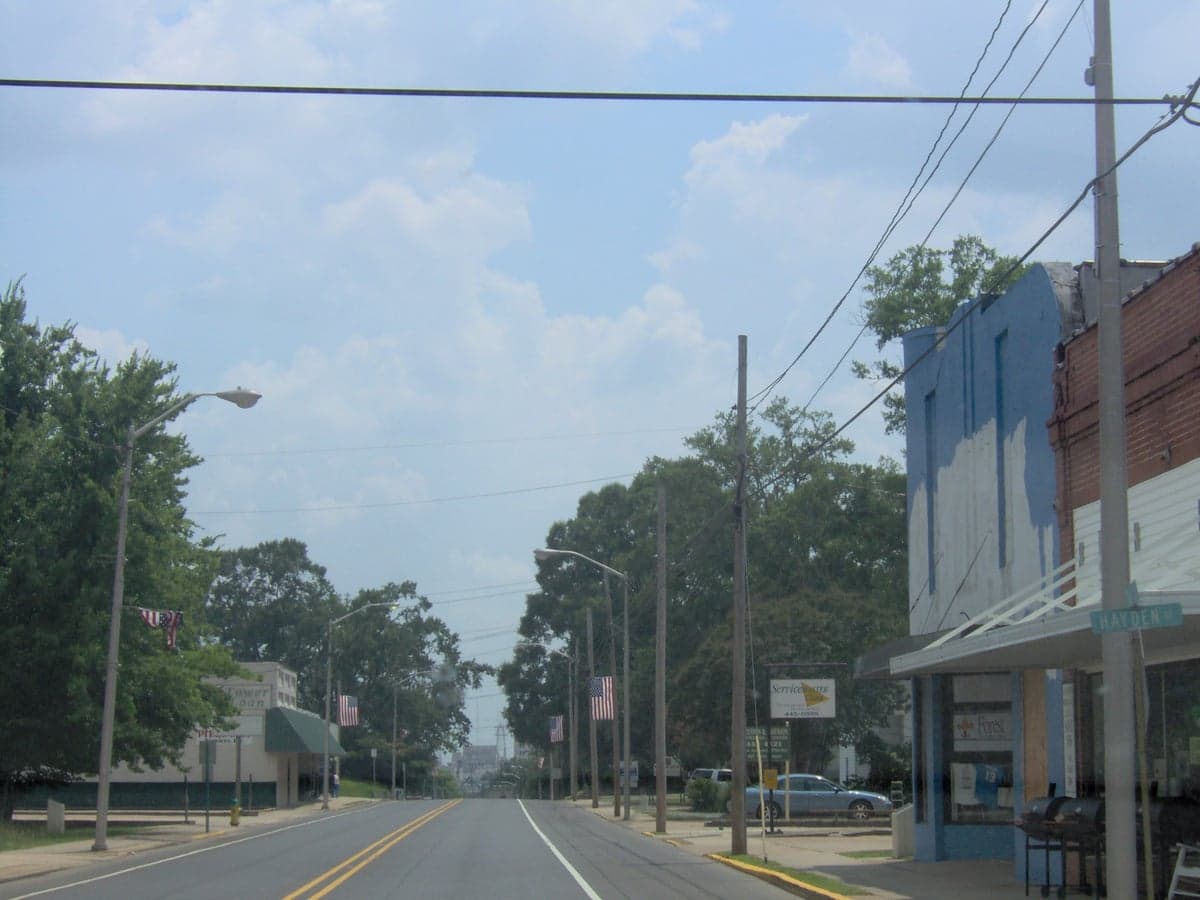
Pineville, Louisiana, offers a strategic resilience profile that is often overlooked by preppers focused on the Western states. Its position in central Louisiana provides a blend of geographic isolation from major coastal threats, access to fresh water, and a community fabric that remains largely intact. While no location is a perfect fortress, Pineville’s combination of low population density, a working-class economy, and distance from the most volatile urban centers makes it a viable base for those prioritizing long-term sustainability over immediate convenience. The area’s resilience is rooted not in high-tech infrastructure, but in its natural advantages and the self-reliant character of its residents.
Geographic position and natural advantages for long-term survival
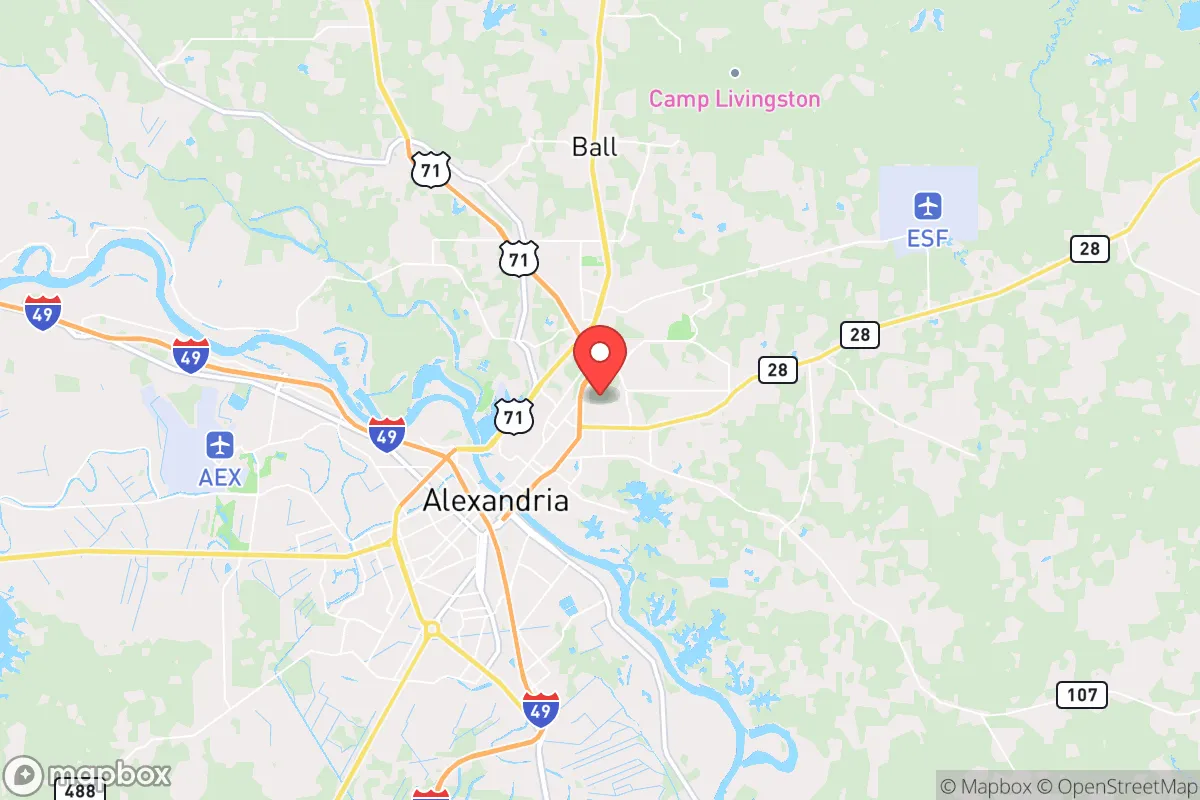
Pineville sits on the banks of the Red River, directly across from Alexandria, but it is the smaller, quieter half of the metro area. This positioning is critical: the Red River provides a reliable surface water source, which is a non-negotiable asset for any serious prepper. The surrounding landscape is a mix of pine forests, bayous, and agricultural land, offering ample opportunities for hunting, foraging, and small-scale farming. The area is far enough inland to be insulated from hurricane storm surge—a major concern for Gulf Coast relocators—and is not in a primary tornado alley, though severe weather is still a seasonal risk. The Kisatchie National Forest, with over 600,000 acres of managed woodland, lies just to the west and north, providing a vast buffer zone and a potential retreat area if needed. This natural cover also makes Pineville less visible from major transportation corridors, reducing the likelihood of being a target for looting or mass migration during a crisis.
Risks, exposures, and proximity to fallout-relevant landmarks
No strategic assessment is honest without addressing the liabilities. Pineville’s primary exposure is its proximity to the Louisiana Chemical Corridor, often called "Cancer Alley," which runs along the Mississippi River between Baton Rouge and New Orleans. While Pineville is roughly 100 miles northwest of the worst of that industrial concentration, prevailing winds and river systems could carry contamination from a major chemical release or sabotage event. The nearby England Airpark (former England Air Force Base) is now a civilian industrial park, but its history as a nuclear-capable bomber base means there is residual infrastructure that could be a target in a conflict scenario. The Fort Polk military installation (now Joint Readiness Training Center) is about 60 miles southwest, which is close enough to generate military traffic and potential secondary effects during a mobilization, but far enough that a direct strike is unlikely. The biggest practical risk is flooding: the Red River has a history of major floods (notably 2016 and 2019), and low-lying areas near the river are vulnerable. Relocators should prioritize properties on higher ground, ideally above the 100-year floodplain, to avoid losing supplies and shelter in a weather event.
Practical resilience for a relocator: food, water, energy, and defensibility
For the individual or family looking to establish a sustainable homestead, Pineville offers a realistic mix of resources and challenges. Water is abundant: the Red River is a year-round source, and the shallow groundwater table means private wells are feasible in most rural parcels. Municipal water from the city is treated but could be compromised in a grid-down scenario, so a well with a hand pump or solar-powered pump is a wise investment. Food production is viable: the growing season is long (typically March through November), and the soil, while sandy in some areas, is workable for vegetables, fruit trees, and even rice in low-lying plots. Local farmers’ markets and the presence of a strong hunting culture mean that protein sources (deer, wild hog, turkey, and fish from the river) are accessible even without a formal supply chain. Energy independence is more challenging. The local grid is served by Cleco Power, which has a mixed reliability record during storms. Solar is viable—central Louisiana gets about 60% of the solar potential of Arizona, but still enough for a well-designed off-grid system. Natural gas is available in many rural areas, and propane delivery is common. Defensibility is a strong point: the area is not densely populated, and many properties are set back from main roads with tree cover. The local culture is heavily pro-Second Amendment, and law enforcement presence is adequate but not overwhelming. A relocator should expect to be their own first responder, which aligns with the prepper mindset. The nearest Level 1 trauma center is in Alexandria (Rapides Regional Medical Center), about 10 minutes from downtown Pineville, but rural ambulance response times can be 20-30 minutes for outlying areas.
Overall strategic picture for a conservative relocator
Pineville is not a glamorous choice, and that is precisely its strength. It lacks the trendy cachet of mountain towns in the Rockies or the self-sufficiency hype of the Pacific Northwest, but it offers something more durable: a community that still operates on handshake agreements, church networks, and a general distrust of federal overreach. The cost of living is low—median home prices are well under $200,000—which allows a relocator to invest in land, supplies, and infrastructure rather than a mortgage. The political climate is reliably conservative, with Rapides Parish voting heavily Republican in recent cycles, and local governance is generally hands-off regarding property rights and building codes. The biggest strategic drawback is the heat and humidity, which can degrade supplies, accelerate mold growth, and make physical labor outdoors a serious endurance test for six months of the year. For the prepper who values water availability, low population pressure, and a community that will not collapse into chaos at the first sign of trouble, Pineville deserves a serious look. It is a place where you can quietly build your capability without drawing attention, and where the neighbors will likely be doing the same.

* Values derived from national, state, county, city and local statistics and may differ in a specific area. Last updated: 2026-05-01T10:41:48.000Z
Narrative content on this page is AI-generated and may contain mistakes. Verify any details that matter before acting on them.
ReloMaps may earn a commission from affiliate links at no extra cost to you.

