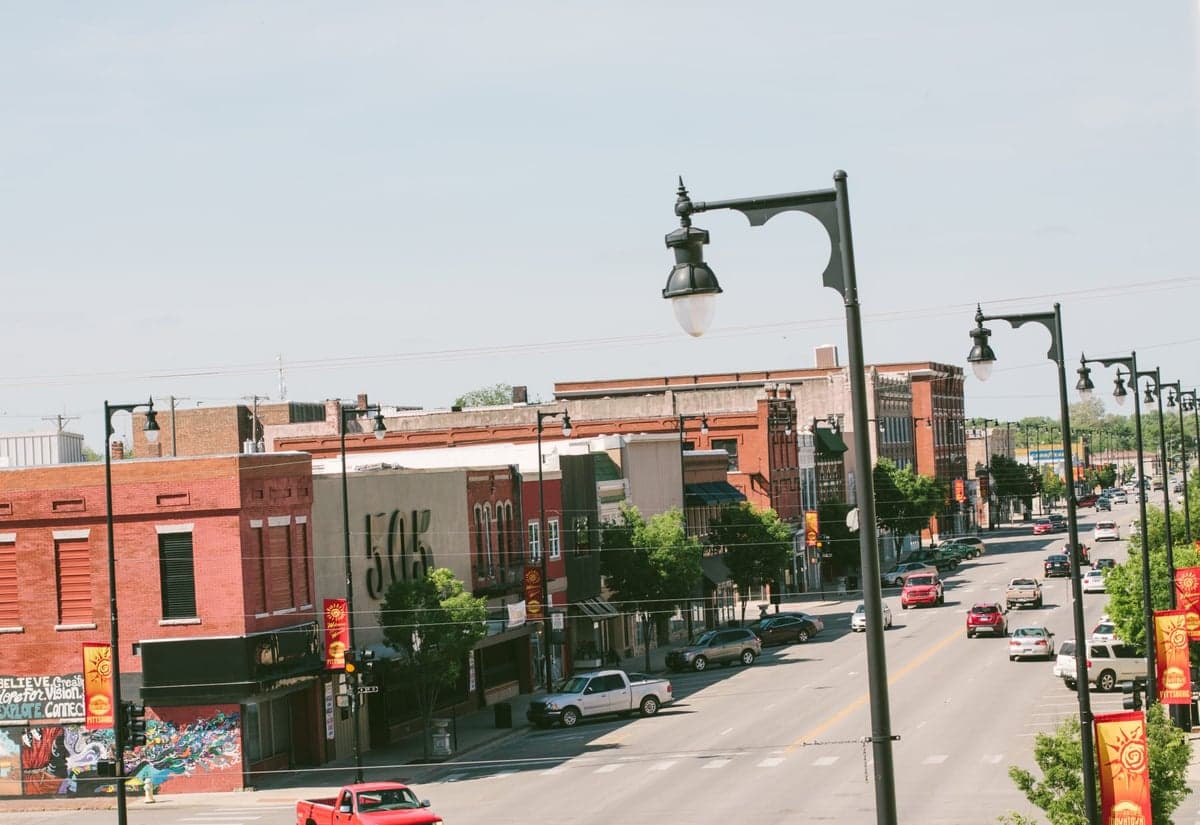
Photo: Wikipedia
Strategic Assessment of Pittsburg, KS
Strong survivability profile. Good buffer from population centers, with manageable environmental and tactical risks.
What does the Strategic Assessment tell us?
Our Strategic Assessment grades tactical survivability of an area. Major population centers, military targets, fallout zones, natural disasters, and border exposure all drive risk — lower exposure means a more defensible position in a crisis.
This is heavily inspired by Joel Skousen's Strategic Relocation book. Highly recommended you checkout the book ($)What does this tell us?
Our Strategic Assessment grades tactical survivability of an area. Major population centers, military targets, fallout zones, natural disasters, and border exposure all drive risk — lower exposure means a more defensible position in a crisis.
This is heavily inspired by Joel Skousen's Strategic Relocation book. Highly recommended you checkout the book ($)Strategic Pillars

Key Distances
Regional Safe Places
Below is our recommended "safe zones" in Kansas and the surrounding area based on our strategic heuristics. For most people, it's unrealistic to live in a “safe zone” full-time due to work, family or other personal reasons. They tend to be more rural. However, many of these areas are perfect for second homes and retreat properties that double as a vacation home or even a short-term rental.
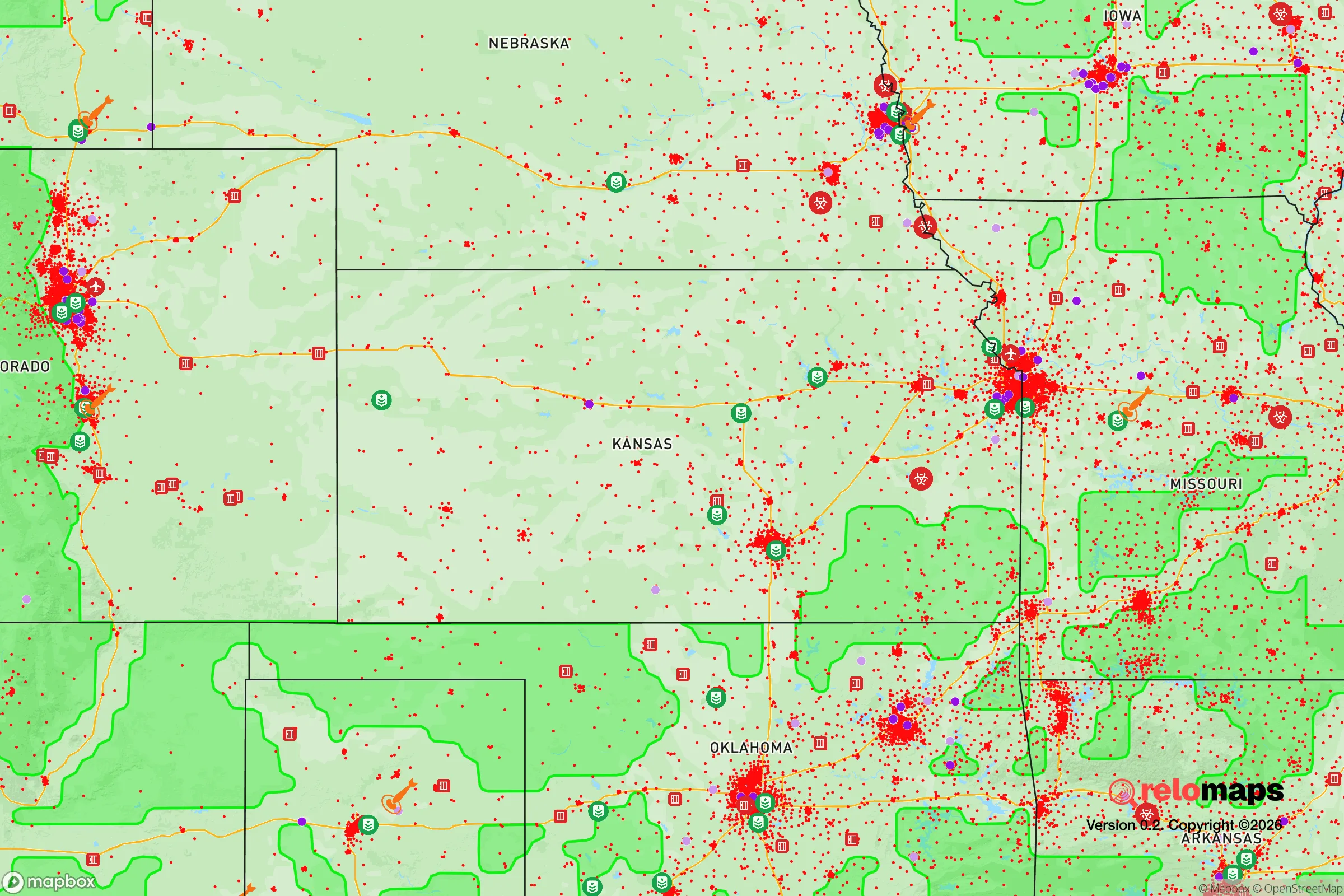
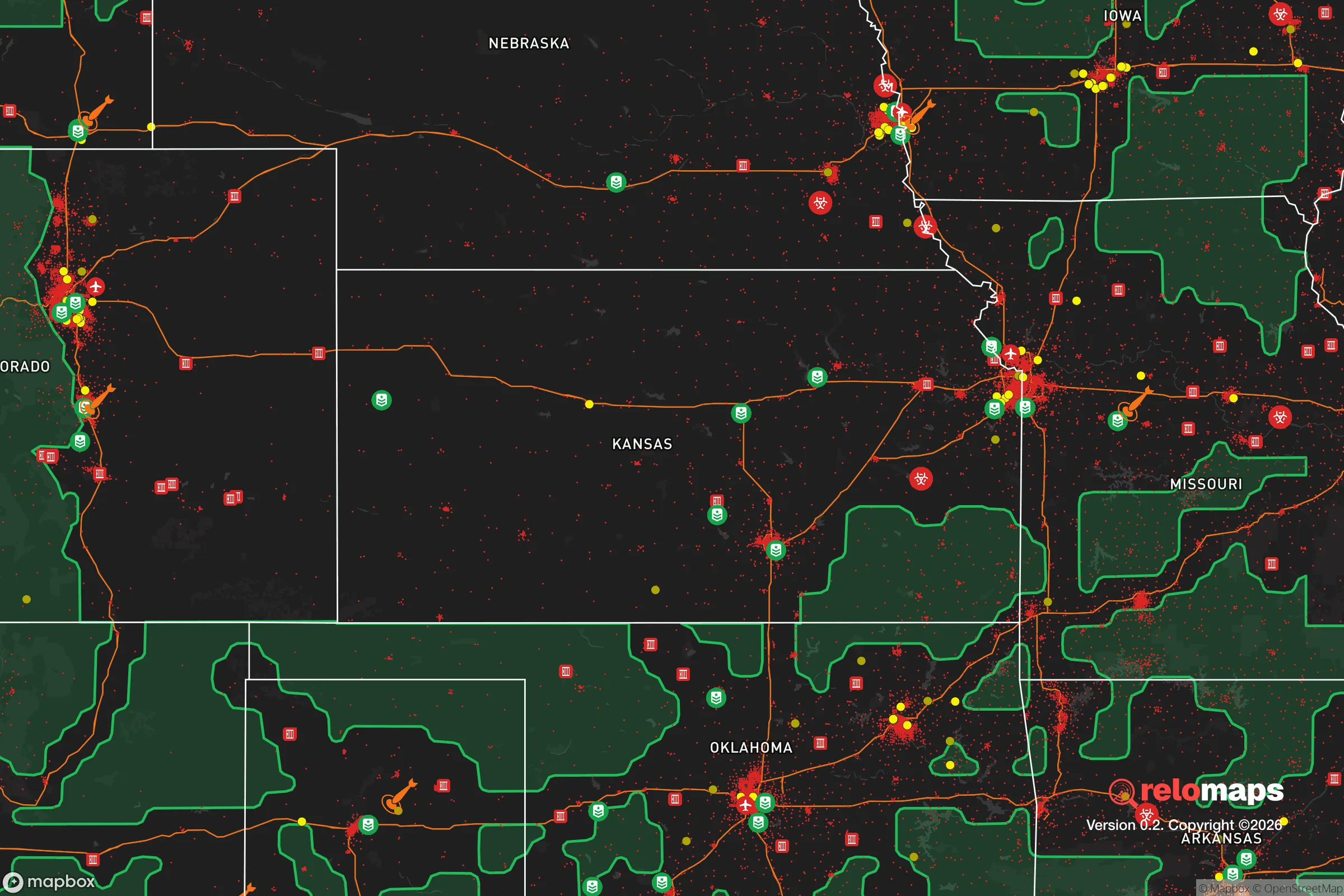


Important Note: For informational purposes only. This does not mean nothing bad ever happens in the green zones. Please use common sense. This is based on public data and modeled with AI. We tried to take a conservative approach but mistakes happen. We update this regularly as new information becomes available.
Solar Generator Recommendations
Backup power matters more here than in safer locations. We've picked three solar generators across budgets and capacity tiers — start with the budget unit if you only need a few essentials, or step up if you want to run a fridge and HVAC for days at a time.

Jackery Portable Power Station Explorer 300
Budget OptionPower on the Go: Weighing only 11 lbs, it's convenient to set up and store with book-sized foldable solar panels

BLUETTI Portable Power Station AC180
Designed for both indoor and outdoor scenarios, AC180 is highly capable as it has a robost capacity and continuous output power.

EF ECOFLOW DELTA Pro Ultra Power Station
Upgraded PickEcoFlow DELTA Pro Ultra is a whole-home energy system designed to grow with your family. Integrated with the Smart Home Panel 2, it scales to meet your evolving energy needs — keeping your home powered, intelligent, and secure through every stage of life.
We earn a commission, at no additional cost to you.
Strategic Assessment Analysis
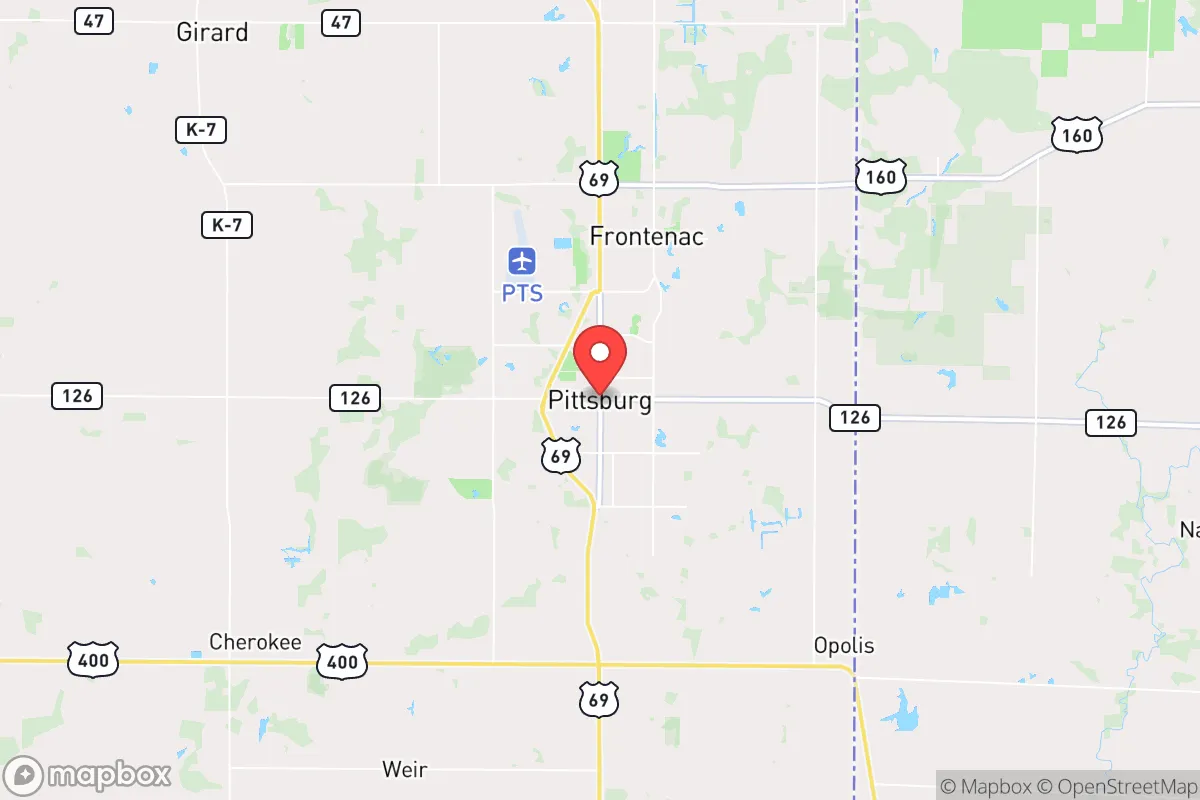
Pittsburg, Kansas, sits in the far southeastern corner of the state, roughly 120 miles from both Kansas City and Tulsa, Oklahoma. For a relocator with a survivalist or prepper mindset, this position offers a distinct blend of isolation and practical access — far enough from major population centers to avoid the worst of civic unrest or a mass casualty event, yet close enough to supply routes and regional medical infrastructure. The area’s historical resilience, rooted in a diversified economy of education, healthcare, and manufacturing, provides a stable baseline that many rural towns lack. This analysis examines Pittsburg’s strategic value for those prioritizing self-reliance, defensibility, and long-term preparedness in an increasingly uncertain national landscape.
Geographic position and natural advantages for long-term security
Pittsburg’s location in the Ozark Plateau region gives it a subtle but meaningful topographical edge. Unlike the flat, exposed expanses of western Kansas, this area features rolling hills, wooded valleys, and numerous creeks and rivers — terrain that offers natural cover, water sources, and defensible positions. The city sits near the Kansas-Missouri-Oklahoma tri-state junction, which means three distinct state jurisdictions converge within a short drive. For a prepper, this creates options: if one state imposes restrictive movement orders or confiscation policies during a crisis, crossing into another state may provide a legal or practical escape. The proximity to the Ozarks also means abundant timber for fuel, construction, and concealment, a resource that becomes critical if supply chains falter. The region’s average annual rainfall of roughly 40 inches supports reliable agriculture and recharges groundwater, reducing dependence on municipal water systems. For a family or individual planning to grow food or maintain livestock, this is a significant advantage over drier parts of the Plains.
Risks, exposures, and proximity to fallout-relevant landmarks
No location is without vulnerabilities, and Pittsburg has several that a strategic relocator must weigh. The most immediate concern is the city’s proximity to the Wolf Creek Generating Station, a nuclear power plant located about 90 miles east in Burlington, Kansas. While 90 miles provides a substantial buffer against a direct meltdown or sabotage event, prevailing westerly winds could carry fallout across the region in a worst-case scenario. A more pressing risk is the nearby rail and highway infrastructure. Pittsburg lies along U.S. Highway 69 and is served by the Union Pacific and BNSF rail lines, which transport hazardous materials — including anhydrous ammonia, chlorine, and petroleum products — through the area. A derailment or attack on these lines could produce a localized chemical or fire hazard. Additionally, the city is roughly 60 miles from the Fort Riley military installation, a potential target in a conflict scenario. While not a primary strike zone, secondary effects like troop movements, checkpoints, or refugee flows could disrupt daily life. The broader region also sits within Tornado Alley, with an average of 10-15 tornado warnings per year. A direct hit would challenge any prepper’s infrastructure, but the area’s low population density means fewer competing survivors for resources after a disaster.
Practical resilience for a relocator: food, water, energy, and defensibility
Pittsburg’s practical resilience hinges on its agricultural base and community networks. The surrounding Crawford County is home to numerous small farms, livestock operations, and orchards. A relocator with land can tap into local knowledge for sustainable food production — the area’s growing season runs roughly April through October, allowing for two crop cycles of staples like corn, beans, and squash. Water access is above average: the city draws from the Ozark Aquifer, a reliable groundwater source, and surface water is available from the Neosho River and several smaller creeks. For off-grid living, shallow wells are common and affordable to drill. Energy infrastructure is mixed. Pittsburg’s grid is served by Evergy, which relies on a mix of coal, natural gas, and wind. In a prolonged outage, the city’s hospital and university (Pittsburg State University) have backup generators, but residential solar adoption is low. A relocator should plan for independent power generation — solar panels with battery storage are viable given the region’s 210 sunny days per year. Defensibility is moderate. The city itself is compact, with a population of about 20,000, and the surrounding countryside offers numerous rural properties with good sightlines and limited road access. The local culture is heavily gun-friendly — Kansas is a constitutional carry state — and the Crawford County Sheriff’s Office maintains a visible presence. For a relocator concerned with civic unrest, the area’s strong community ties and low crime rate (violent crime is roughly half the national average) suggest that neighbors are more likely to band together than turn on each other. However, the city’s reliance on a single major highway (U.S. 69) for resupply is a vulnerability; a blocked or contested route would force reliance on secondary gravel roads, which are numerous but slow.
The overall strategic picture for Pittsburg, Kansas, is one of moderate-to-high viability for a conservative-leaning prepper seeking a balance between isolation and access. It avoids the extreme risks of coastal cities or major metropolitan hubs, while offering enough infrastructure to support a transition to self-reliance. The primary drawbacks — nuclear plant proximity, rail hazards, and tornado risk — are manageable with proper planning and site selection. For a single individual or family willing to invest in off-grid energy, water storage, and food production, Pittsburg provides a defensible, community-oriented base in a region that is politically and culturally aligned with self-sufficiency. It is not a bug-out location for a total collapse scenario, but for weathering a period of unrest, supply chain disruption, or localized disaster, it ranks as a solid, underappreciated option in the central United States.

* Values derived from national, state, county, city and local statistics and may differ in a specific area. Last updated: 2026-05-04T02:50:10.000Z
Narrative content on this page is AI-generated and may contain mistakes. Verify any details that matter before acting on them.
ReloMaps may earn a commission from affiliate links at no extra cost to you.

