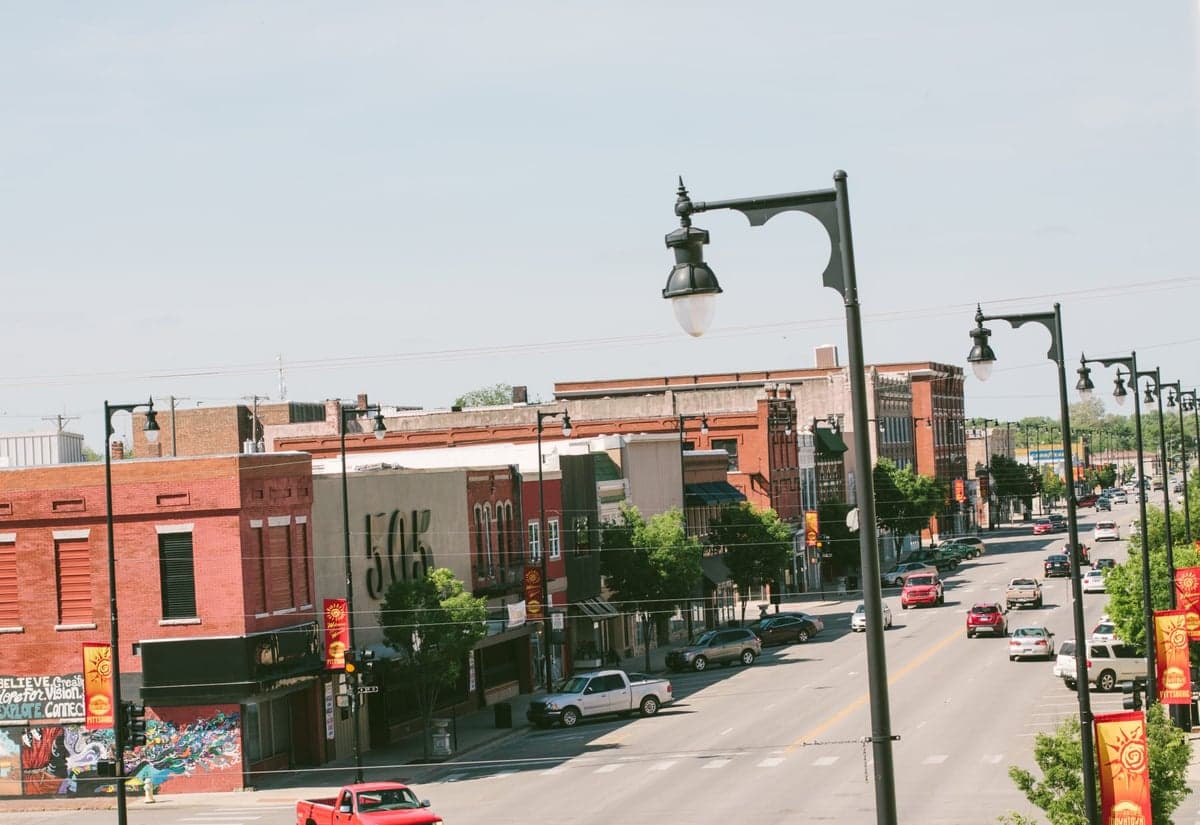
Photo: Wikipedia
Political ClimatePolitical Climate in Pittsburg, KS
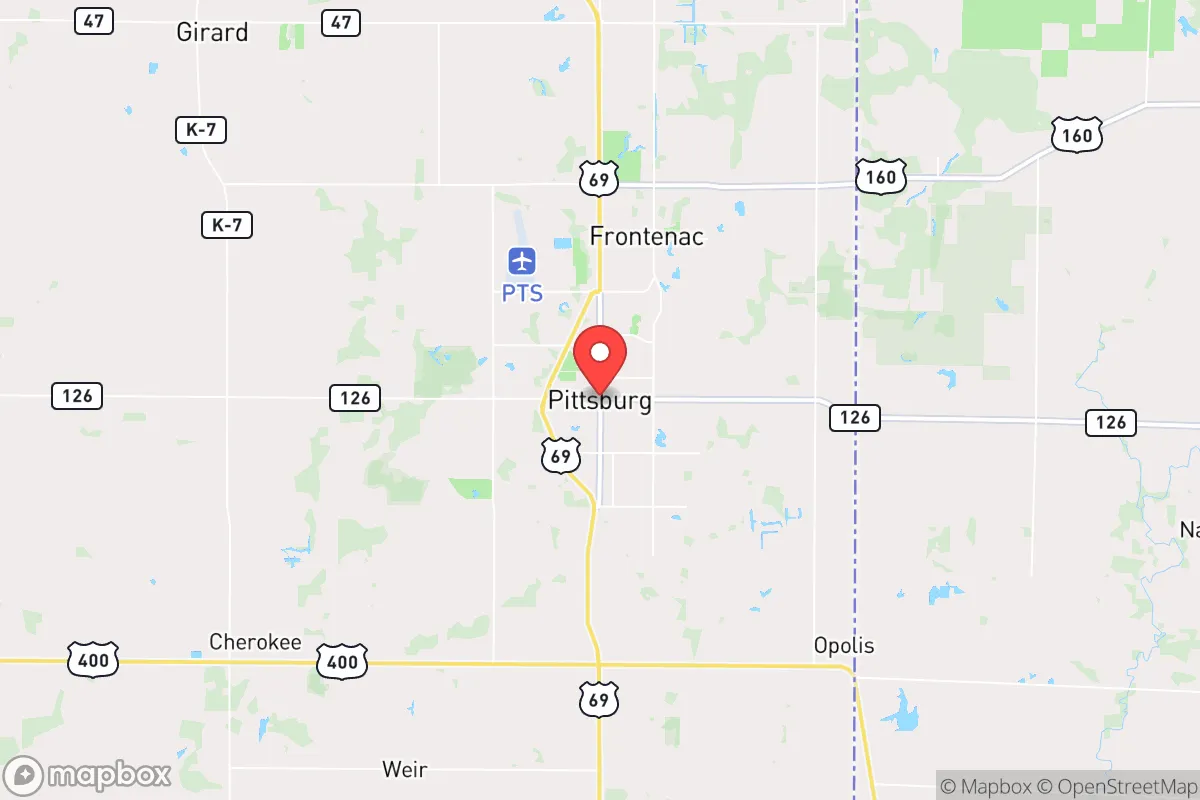
District shown is the primary district for this city’s centroid. Cities may span multiple districts.
Local Political AnalysisPolitical Analysis of Pittsburg, KS
Pittsburg, Kansas, has long been a reliably conservative community, and the numbers back that up with a Cook PVI of R+10. That means the area leans about ten points more Republican than the national average, and for most folks around here, that’s a point of pride. You see it in the local elections, the school board meetings, and the general attitude toward government—people here value their independence and don’t take kindly to being told how to live their lives. The political trajectory has been steady, but like a lot of small towns, there’s a quiet worry that outside influences could start chipping away at that foundation.
How it compares
When you look at the broader region, Pittsburg sits in a bit of a conservative bubble compared to some of the surrounding areas. Drive an hour north to Kansas City, and you’re in a completely different world—blue-leaning, with all the big-city politics that come with it. Even closer, towns like Frontenac and Girard tend to mirror Pittsburg’s conservative lean, but they’re smaller and don’t have the same economic pressures. The real contrast is with Lawrence, about two hours northwest, which is a progressive stronghold thanks to the university crowd. That’s the kind of shift that gives locals pause—seeing how fast a place can change when progressive ideology takes root. Pittsburg has its own university, Pittsburg State, but so far the town’s character has held firm against the kind of leftward drift you see in college towns elsewhere.
What this means for residents
For the people who live here, the political climate means a lot of everyday freedoms are still respected. You don’t have to worry about government overreach into your personal life—whether it’s how you run your small business, what you teach your kids, or how you choose to protect your family. Property rights are taken seriously, and there’s a general understanding that the local government should stay out of the way unless absolutely necessary. That said, there are warning signs. You see it in the push for more zoning regulations, the occasional talk of “equity” initiatives in the schools, and the slow creep of state-level mandates that feel disconnected from local values. If that trend continues, residents worry that the very things that make Pittsburg a great place to raise a family—low taxes, personal responsibility, and a tight-knit community—could start to erode.
Culturally, Pittsburg still holds onto its roots in a way that feels genuine. The annual Little Balkans Festival celebrates the area’s immigrant heritage, but it’s done with a sense of tradition, not political correctness. There’s a strong gun culture here, with plenty of folks who hunt or shoot for sport, and the Second Amendment isn’t up for debate. The biggest policy distinction you’ll notice is the local resistance to overreaching state or federal programs—whether it’s mask mandates, vaccine passports, or land-use restrictions, the community tends to push back. Long-term, the hope is that Pittsburg stays the course, but it’ll take vigilance. If you’re looking for a place where you can live your life without a bureaucrat looking over your shoulder, this is still one of the better spots in Kansas. Just keep an eye on the school board elections and the city commission—that’s where the real fights are happening.

State Political ClimatePolitical Climate in Kansas
State Political AnalysisPolitical Environment in the State
Kansas has long been a reliably Republican state, but don’t let that fool you into thinking it’s a monolith. The state’s political lean is solidly red at the state level, with Republicans holding supermajorities in both legislative chambers and every statewide office, but the last 15 years have seen a real tug-of-war between traditional conservatives and a more moderate-to-liberal coalition in the suburbs. The 2022 gubernatorial race, where Democrat Laura Kelly won re-election by a narrow 49.5% to 48.5% over Republican Derek Schmidt, shows the state isn’t a lock for either side in statewide races, especially when the GOP candidate is seen as too far right. Over the past two decades, the Kansas City suburbs have shifted left, while rural areas have hardened their conservative stance, creating a state that’s politically competitive in a way it wasn’t in the 2000s.
Urban vs. rural divide
The political map of Kansas is a classic tale of two landscapes. The eastern third of the state, anchored by the Kansas City metro area, is where the real action is. Johnson County, the state’s wealthiest and most populous county, was once a Republican stronghold but has been trending blue since 2016. In 2020, Joe Biden won Johnson County by 8 points, and in 2022, Laura Kelly carried it by 12 points. This shift is driven by the suburbs of Overland Park, Lenexa, and Olathe, where educated professionals and a growing diverse population have pushed the GOP to the center. Meanwhile, the western two-thirds of the state is deeply red. Counties like Ellis (Hays), Finney (Garden City), and Seward (Liberal) are reliably Republican, but the real conservative firepower comes from the rural plains. The I-35 corridor from Wichita to Kansas City is a battleground, with Sedgwick County (Wichita) leaning slightly right but not as hard as the surrounding farm counties. Manhattan, home to Kansas State University, is a conservative island in a sea of blue-leaning college towns, while Lawrence (home to KU) is the state’s most liberal city, consistently voting 70%+ Democratic. The divide isn’t just about geography—it’s about culture. Rural Kansans feel increasingly alienated from the suburban and urban centers, and that tension drives a lot of the state’s political energy.
Policy environment
Kansas has a policy environment that’s a mixed bag for conservatives. On the plus side, the state has a flat income tax rate of 5.7% (as of 2025), which was a hard-fought win after the disastrous Brownback tax experiment of 2012-2017. That experiment slashed taxes so deeply it cratered state revenue, leading to a bipartisan rollback in 2017. Today, the tax burden is moderate, but property taxes are a sore spot—they’re high relative to the region, especially in Johnson County. The state’s regulatory posture is generally business-friendly, with right-to-work laws and limited zoning in rural areas, but the Kansas Corporation Commission has been a battleground over energy policy, with conservatives pushing for coal and natural gas over renewables. Education policy is a flashpoint: the state has a school choice program (the Tax Credit for Low-Income Students Scholarship Program) but it’s limited, and the Kansas State Board of Education has swung between conservative and moderate control, affecting curriculum debates. On healthcare, Kansas has not expanded Medicaid under the Affordable Care Act, a win for fiscal conservatives, but it means rural hospitals are struggling. Election laws are a bright spot for conservatives: the state requires a photo ID to vote, has a voter registration deadline 21 days before an election, and has banned ballot harvesting. The 2021 election integrity law (HB 2332) tightened these rules further, requiring signature verification for mail ballots and limiting drop boxes. Overall, the policy environment is conservative-leaning but not as aggressively free-market as Texas or Florida.
Trajectory & freedom
Kansas is in a weird spot on the freedom front—it’s getting more conservative on some issues but less on others. On the positive side, the state has strong Second Amendment protections: it’s a constitutional carry state (no permit needed to carry a concealed firearm) since 2015, and it has a “stand your ground” law. In 2023, the legislature passed a law (SB 58) banning local governments from enforcing federal gun laws, a direct challenge to federal overreach. Parental rights got a boost in 2022 with the passage of the “Parents’ Bill of Rights” (HB 2566), which requires schools to notify parents about curriculum changes and allows them to opt their kids out of sex education. On medical autonomy, Kansas was one of the first states to pass a law (HB 2439 in 2022) banning gender transition procedures for minors, and it’s a strong pro-life state, with a near-total abortion ban in effect since the 2022 Dobbs decision. However, there are concerning trends. The state’s tax burden, while flat, is still high compared to neighbors like Missouri and Oklahoma, and property taxes have been rising faster than inflation. The Kansas Supreme Court has been a thorn in the side of conservatives, repeatedly ruling that the state’s school funding formula is inadequate, forcing the legislature to increase education spending. This has led to a push for judicial reform, but so far, no major changes. The biggest freedom concern is the state’s growing reliance on federal dollars—Kansas gets about 35% of its budget from the feds, which creates a vulnerability to federal mandates. Overall, the trajectory is mixed: the legislature is pushing conservative policies, but the courts and suburban voters are pulling the state toward the center.
Civil unrest & political movements
Kansas isn’t a hotbed of civil unrest, but there have been flashpoints. The 2020 Black Lives Matter protests in Kansas City and Lawrence were large but mostly peaceful, though there were some property damage incidents in the Westport area (just across the state line in Missouri). The state has seen a rise in organized conservative activism, particularly around school board meetings. In Johnson County, groups like “Kansans for Liberty” and “Moms for Liberty” have been vocal in opposing critical race theory and mask mandates, leading to heated school board elections in 2021 and 2022. Immigration politics are a quieter issue here than in border states, but the western part of the state, especially Garden City and Dodge City, has a large Hispanic population (over 50% in some towns), and there’s been tension over sanctuary city policies. In 2023, the legislature passed a law (HB 2350) banning sanctuary cities in Kansas, requiring local law enforcement to cooperate with federal immigration authorities. There’s no serious secession or nullification movement, but there’s a strong strain of “Kansas First” rhetoric among rural conservatives who feel ignored by the eastern suburbs. Election integrity controversies have been minimal—the 2020 election was smooth in Kansas, with no major fraud allegations, but the 2021 law was a response to national concerns. The most visible flashpoint for a new resident would be the culture war in schools, especially in Johnson County, where you’ll see “Let Parents Choose” signs in yards and heated debates at school board meetings.
Projection
Over the next 5-10 years, Kansas is likely to become more politically competitive, but not necessarily more liberal. The key demographic shift is the continued growth of Johnson County, which is becoming more diverse and more moderate. If this trend continues, the state could flip to a purple status in statewide races, similar to what happened in Arizona. However, the rural areas are not shrinking as fast as in other states—Kansas’s population is stable, and the rural counties are holding their own. The in-migration pattern is interesting: people are moving to the Kansas City suburbs from higher-tax states like California and Illinois, but they’re often conservative-leaning families looking for lower taxes and better schools. This could actually strengthen the GOP’s suburban base, but it’s a more moderate, business-friendly conservatism, not the hardline rural version. The biggest wildcard is the state’s fiscal health. If property taxes continue to rise and the state’s infrastructure (especially roads and broadband) lags, you could see a backlash against the GOP. But if the legislature can hold the line on taxes and keep the regulatory environment friendly, Kansas will remain a solidly conservative state for families. The courts will remain a battleground, especially on school funding and abortion, but the legislature has the tools to push back. For someone moving in now, expect a state that’s conservative but not extreme, with a growing suburban middle ground that will keep things interesting.
For a new resident, the bottom line is this: Kansas offers a solid conservative foundation—low crime, good schools in the suburbs, strong gun rights, and a pro-life culture—but it’s not a libertarian paradise. You’ll have to deal with high property taxes in Johnson County, a state supreme court that sometimes overrides the legislature, and a growing suburban-left influence in the Kansas City area. If you’re looking for a place where your vote counts and your values are respected, Kansas is a good bet, but keep an eye on the Johnson County suburbs—they’re the key to the state’s future. If you’re moving to a rural area like Hays or Garden City, you’ll find a deeply conservative community that’s been holding the line for decades. Just be ready for the culture war to follow you to the school board meetings.
* Values derived from national, state, county, city and local statistics and may differ in a specific area. Last updated: 2026-05-04T02:50:10.000Z
Narrative content on this page is AI-generated and may contain mistakes. Verify any details that matter before acting on them.
ReloMaps may earn a commission from affiliate links at no extra cost to you.

