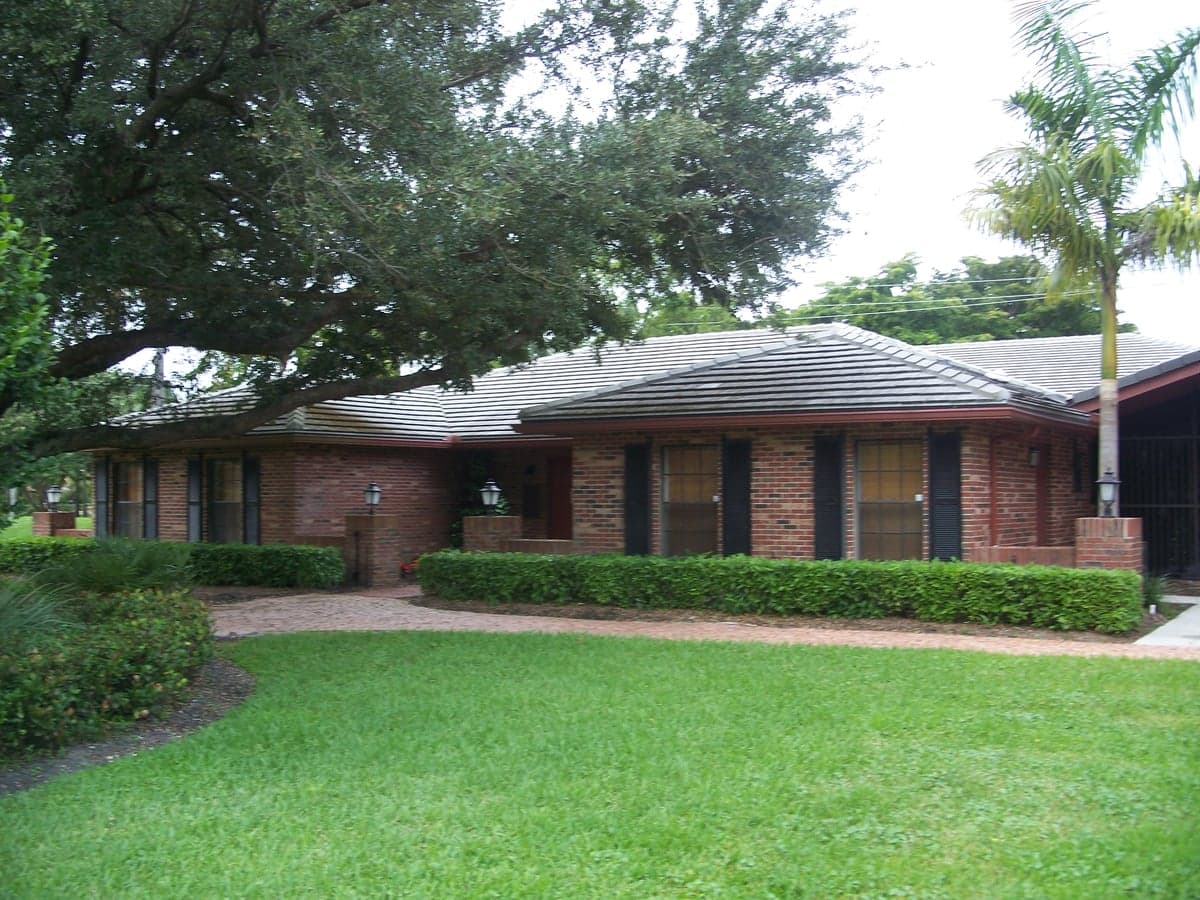
Photo: Wikipedia
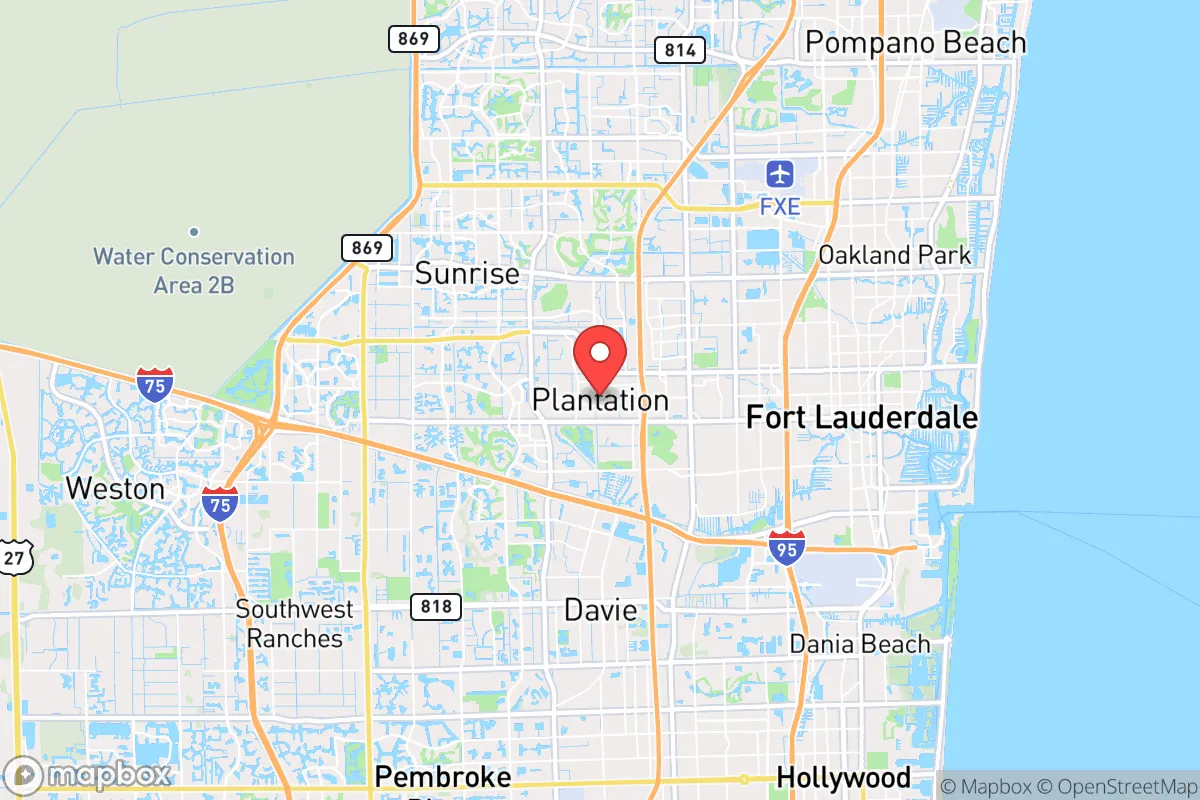
Personal Sovereignty in Plantation, FL
Viable for self-reliance. Generally workable, though some barriers may limit total independence.
What does Personal Sovereignty tell us?
Personal Sovereignty measures your capacity for self-reliance and independence with minimal government friction. Higher scores mean fewer barriers between you and the way you want to live... but it assumes you have the space you need and good neighbors.
What does this tell us?
Personal Sovereignty measures your capacity for self-reliance and independence with minimal government friction. Higher scores mean fewer barriers between you and the way you want to live... but it assumes you have the space you need and good neighbors.
State Policy
Energy independence: Importer (10% of energy produced in-state)
Personal Liberty
Homesteading

Personal Liberty Analysis
Plantation, Florida, offers a mixed bag for those prioritizing personal sovereignty, where the state’s generally pro-liberty framework is tempered by local municipal codes and a dense suburban environment that can complicate self-reliance. While Florida’s lack of a state income tax and strong preemption laws on firearms provide a solid baseline, the city’s zoning restrictions, homeowners’ association (HOA) prevalence, and proximity to Broward County’s regulatory apparatus mean that autonomy is something you must actively defend rather than take for granted. For the survivalist or prepper, this is not a frontier outpost but a managed community where strategic compliance and knowing the legal loopholes are essential skills.
Tax burden and regulatory posture: How Florida’s fiscal conservatism plays out locally
Florida’s absence of a state income tax is the single biggest win for personal sovereignty here, allowing residents to keep more of their earnings for their own priorities—whether that’s stocking supplies, investing in land, or funding legal defenses. Plantation’s combined sales tax rate is 7%, which is the state maximum (6% state plus 1% county surtax), so you’ll pay a bit more at the register than in rural counties. Property taxes are managed at the county level, with Broward County’s millage rate hovering around 20.5 mills for 2025, which is moderate for South Florida but higher than the state average of roughly 17 mills. The city itself has a business-friendly reputation, but don’t expect a deregulated free-for-all: building permits, noise ordinances, and short-term rental restrictions are enforced with typical suburban rigor. For the prepper, the key takeaway is that Florida’s state-level preemption laws prevent local governments from banning things like generator use or rainwater collection outright, but HOAs can and will impose their own covenants—so always check the fine print before buying.
Self-defense and gun law specifics: What the Second Sanctuary state means in practice
Florida is a “shall issue” state for concealed carry, and as of 2023, permitless (constitutional) carry is legal for residents 21 and older who can legally possess a firearm. This is a significant win for personal sovereignty, removing a bureaucratic hurdle that could be weaponized against law-abiding citizens. Plantation itself is not a “Second Amendment Sanctuary” city—that designation is more common in rural north Florida—but Broward County’s local ordinances cannot supersede state preemption. You can carry openly or concealed without a permit, though open carry is restricted to specific contexts like fishing, camping, or hunting. Stand-your-ground laws apply statewide, meaning you have no duty to retreat before using deadly force if you are in a place you have a right to be. Magazine capacity is not restricted at the state level, and there is no firearm registration. For the survivalist, the practical reality is that you can arm yourself without government permission, but you must still navigate the legal system if you ever use that weapon—so a solid relationship with a 2A-friendly attorney is a wise investment. The local sheriff’s office (Broward Sheriff’s Office) is generally professional but operates in a county with a history of progressive politics, so don’t expect leniency for minor infractions.
Self-reliance and homesteading viability: Lot sizes, zoning, and off-grid feasibility
This is where Plantation’s suburban DNA clashes hardest with the prepper ethos. Typical residential lots range from 6,000 to 10,000 square feet—enough for a garden and a small chicken coop, but not for serious homesteading. Zoning codes prohibit livestock like goats or pigs, and HOAs often ban visible solar panels, clotheslines, or sheds that don’t match the aesthetic. Off-grid living is effectively illegal: the city requires connection to municipal water and sewer, and building codes mandate grid-tied electrical systems for new construction. Rainwater collection is allowed under state law, but local codes may restrict barrel size or placement. For the serious survivalist, Plantation is a staging ground, not a final retreat. You can maintain a modest vegetable garden, store supplies in a garage or shed, and install a backup generator (gas or propane), but you will never achieve true self-sufficiency here. The smart play is to use Plantation as a base for income and networking while owning raw land in a less regulated county—like Glades or Highlands—for the actual bug-out location.
Personal liberties: Parental rights, medical autonomy, speech, and property
Florida has been a battleground for parental rights, and recent legislation (like the Parental Rights in Education Act) gives parents more leverage to challenge school curricula and medical decisions. In practice, Broward County Public Schools have a reputation for progressive administration, so parents must stay vigilant and attend school board meetings to protect their children from ideological overreach. Medical autonomy is a mixed bag: Florida did not impose broad vaccine mandates during the pandemic, but private employers and hospitals can still require them. The state has no income tax, but property rights are subject to eminent domain and HOA covenants, which can be more restrictive than local ordinances. Free speech is protected under the First Amendment, but local noise ordinances and “disorderly conduct” laws can be used to suppress protest or public assembly if authorities are so inclined. For the property owner, the biggest threat to sovereignty is the HOA—many Plantation neighborhoods have active associations that can fine you for parking a truck in the driveway or painting your front door the wrong color. If you value absolute control over your property, seek a non-HOA neighborhood or a rural parcel outside city limits.
Overall, Plantation offers a moderate-to-good sovereignty environment compared to deep-blue states like New York or California, but it falls short of the libertarian havens found in rural Idaho or New Hampshire. The lack of state income tax, constitutional carry, and strong parental rights laws create a solid foundation, but the dense suburban layout, HOA culture, and Broward County’s regulatory appetite mean you will constantly negotiate with authority rather than escape it. For the strategic relocator, Plantation works best as a high-income, low-tax base camp—not a sovereign retreat. If your priority is maximum personal autonomy, look to Florida’s rural northern counties or the Panhandle, where lot sizes are larger, zoning is looser, and the nearest HOA is a hundred miles away.

* Values derived from national, state, county, city and local statistics and may differ in a specific area. Last updated: 2026-09-21T19:02:07.000Z
Narrative content on this page is AI-generated and may contain mistakes. Verify any details that matter before acting on them.
ReloMaps may earn a commission from affiliate links at no extra cost to you.

