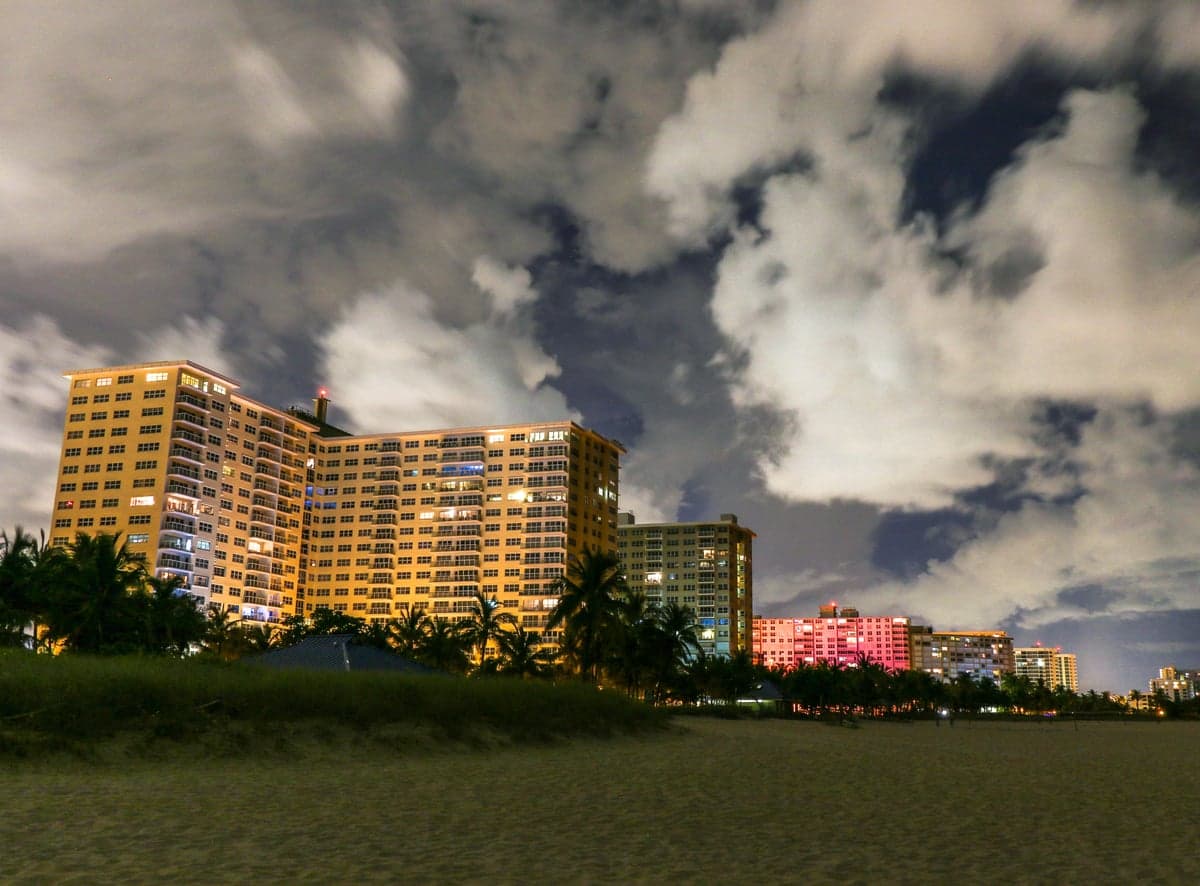
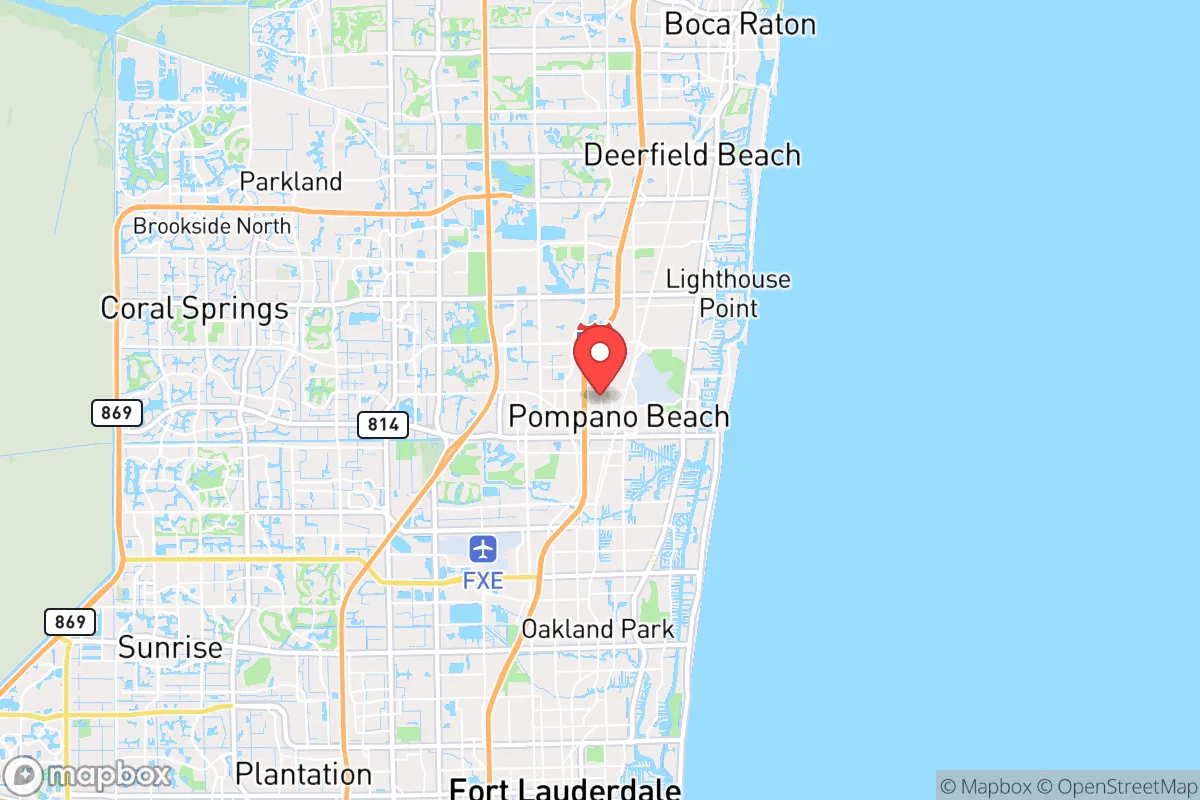
Photo: Wikipedia
Demographics of Pompano Beach, FL
Affluence Level in Pompano Beach, FL
A middle-class area roughly in line with national averages across income, home values, education, and employment.
People of Pompano Beach, FL
Today, Pompano Beach is a majority-minority city of 112,212 residents, defined by a near-equal tripartite split between White (39.8%), Black (27.6%), and Hispanic (24.9%) populations, with a modest 18.0% foreign-born share. The city lacks a single dominant ethnic identity, instead functioning as a collection of distinct neighborhoods that reflect successive waves of migration. Its character is less a melting pot than a mosaic of enclaves, each with its own history, economic base, and demographic trajectory.
How the city was settled and grew
Pompano Beach was not a colonial-era settlement. Its modern history begins in the late 19th century, when the Florida East Coast Railway arrived in 1896, opening the area to homesteaders and small-scale farmers. The original population was overwhelmingly White and native-born, drawn by the promise of cheap land for winter vegetable farming — particularly the namesake pompanos (a type of fish) and later beans, peppers, and tomatoes. The first permanent settlers clustered around what is now Old Pompano, the historic downtown core along Atlantic Boulevard, where the city's original wood-frame houses and commercial buildings still stand. By the 1920s, the land boom brought a second wave of White migrants from the Midwest and Northeast, who built the Hillsboro Shores and Pompano Beach Highlands neighborhoods as seasonal retreats for the wealthy. The city was formally incorporated in 1908, but remained a small agricultural and fishing village through the 1940s, with a population under 5,000.
Modern era (post-1965)
The 1965 Hart-Cellar Act reshaped Pompano Beach's demographics, but the most dramatic shift came from domestic migration. The city's Black population grew rapidly from the 1970s onward, as African Americans moved from rural Southern states and inner-city neighborhoods in search of service-sector jobs in Broward County's booming tourism and construction industries. This wave settled primarily in the Collier Manor-Cresthaven and Kendall Green neighborhoods east of I-95, areas that remain predominantly Black today. Simultaneously, Hispanic migration — initially Cuban exiles in the 1960s-70s, later Puerto Ricans, Dominicans, and Central Americans — concentrated in the Pompano Beach Lakes and Loch Lomond areas west of I-95, where affordable 1950s ranch homes and apartment complexes provided entry points. The White population, which had dominated through the 1960s, began a slow decline as older seasonal residents aged out and younger families moved to newer suburbs further west. By 2000, the city had become majority-minority. Today, the East/Southeast Asian population (0.9%) and Indian-subcontinent population (0.9%) remain small, concentrated in scattered pockets near the Pompano Citi Centre retail corridor, reflecting professional migration tied to the nearby medical and technology sectors.
The future
The population is heading toward further diversification, but not toward homogenization. The Hispanic share is growing steadily, driven by both immigration and higher birth rates, and is projected to approach 30% by 2035. The Black population is plateauing, as younger African Americans increasingly move to newer suburbs like West Palm Beach or out of state. The White share continues to decline, though the city is seeing a small influx of younger, college-educated Whites (31.1% of residents hold a bachelor's degree or higher) drawn to redeveloped waterfront condos in Pompano Beach's East District and the new Pompano Beach Innovation District near the municipal airport. The foreign-born share (18.0%) is likely to rise modestly, but the city is not a primary immigrant gateway — most growth will come from domestic migration and natural increase. The risk is tribalization: neighborhoods are already sharply divided by race and income, with little cross-mixing. The East District is becoming whiter and wealthier; Collier Manor remains Black and lower-income; Pompano Beach Lakes is solidifying as a Hispanic working-class enclave.
For a conservative-leaning individual or family moving in now, Pompano Beach offers a genuinely diverse environment, but one where community identity is strongly tied to specific neighborhoods rather than a unified citywide culture. The schools are mixed — some are high-performing magnets, others struggle — and property taxes are moderate by Broward standards. The city is becoming more urban and dense along the coast, while the western neighborhoods remain suburban and family-oriented. The bottom line: Pompano Beach is a city of distinct, self-reinforcing enclaves, not a single community. Your experience will depend almost entirely on which neighborhood you choose.

* Values derived from national, state, county, city and local statistics and may differ in a specific area. Last updated: 2026-05-03T04:49:32.000Z
Narrative content on this page is AI-generated and may contain mistakes. Verify any details that matter before acting on them.
ReloMaps may earn a commission from affiliate links at no extra cost to you.

