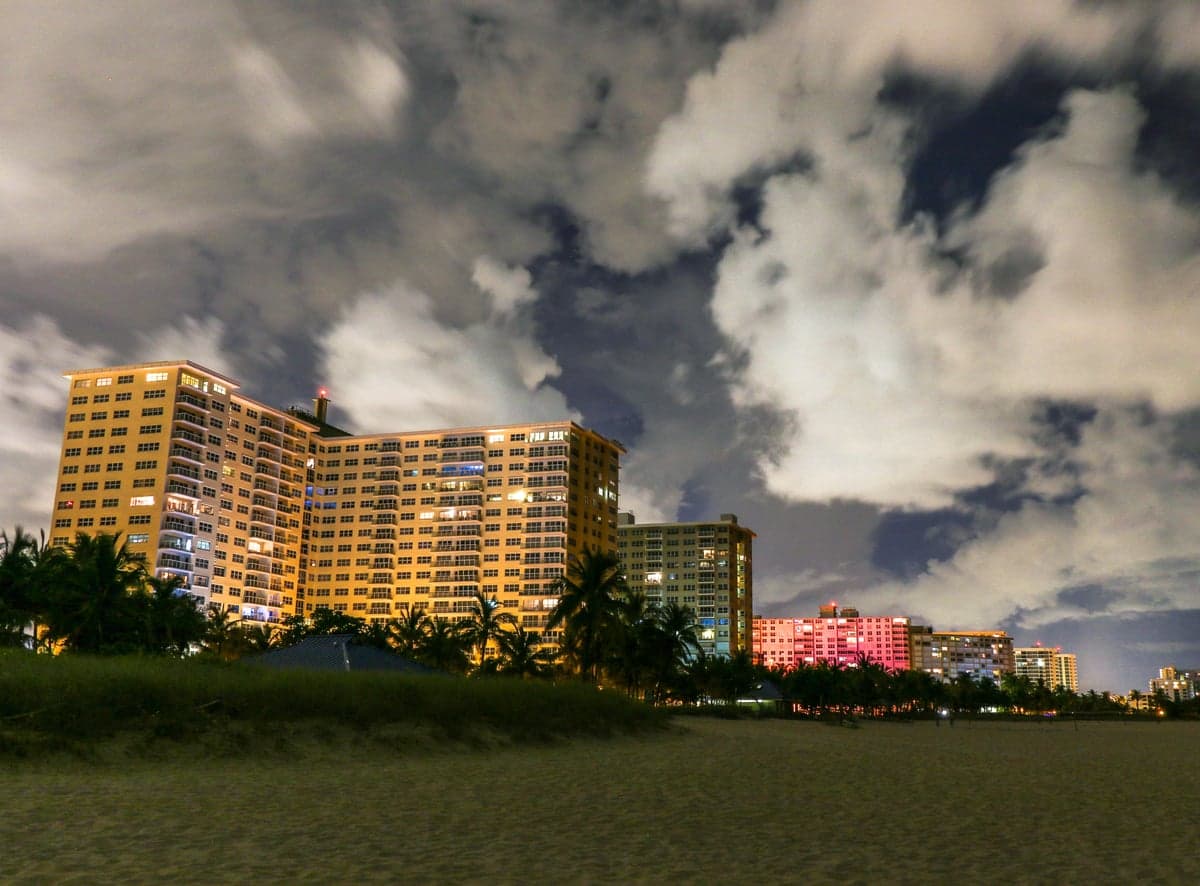
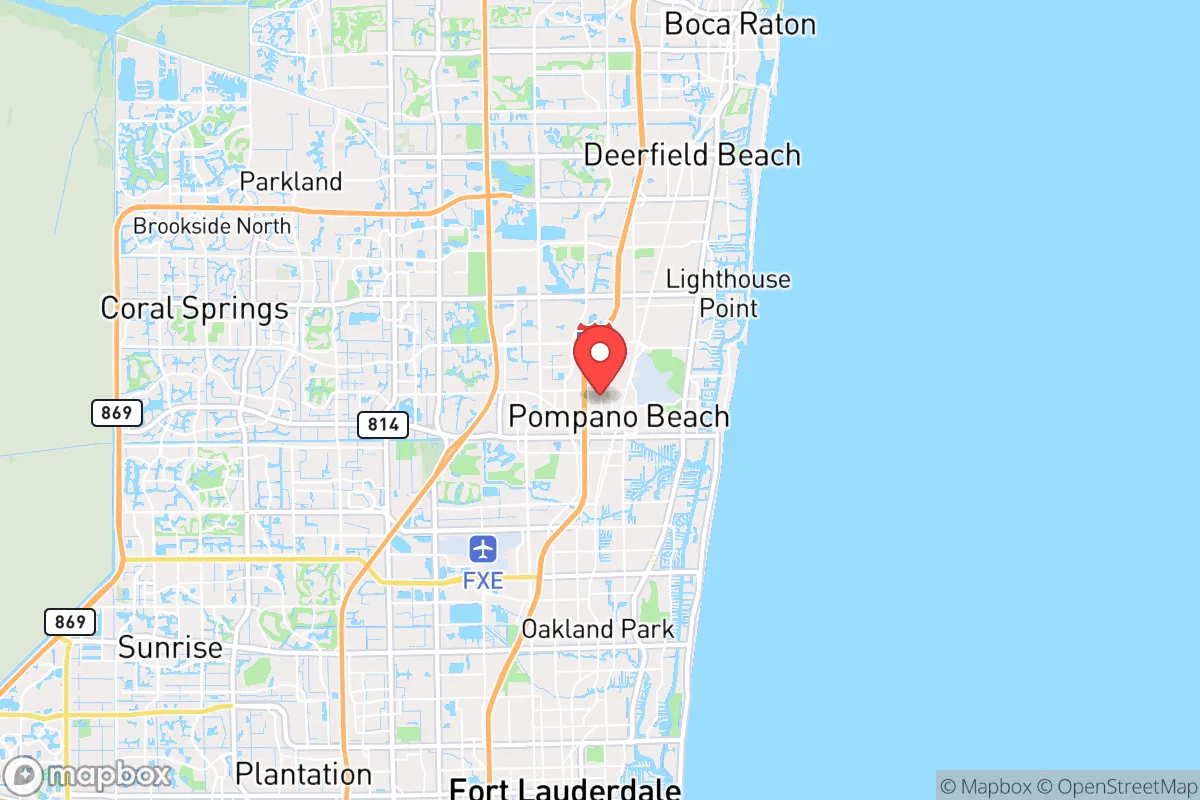
Photo: Wikipedia
Personal Sovereignty in Pompano Beach, FL
Viable for self-reliance. Generally workable, though some barriers may limit total independence.
What does Personal Sovereignty tell us?
Personal Sovereignty measures your capacity for self-reliance and independence with minimal government friction. Higher scores mean fewer barriers between you and the way you want to live... but it assumes you have the space you need and good neighbors.
What does this tell us?
Personal Sovereignty measures your capacity for self-reliance and independence with minimal government friction. Higher scores mean fewer barriers between you and the way you want to live... but it assumes you have the space you need and good neighbors.
State Policy
Energy independence: Importer (10% of energy produced in-state)
Personal Liberty
Homesteading

Personal Liberty Analysis
For the individual or family prioritizing personal sovereignty, Pompano Beach presents a complex picture: Florida’s strong state-level preemption laws and lack of income tax create a solid foundation for autonomy, but the city’s dense coastal development and local municipal codes impose meaningful constraints on self-reliant living. The trade-off is clear—you gain significant financial and defensive freedoms compared to Northeast or West Coast alternatives, but you lose the ability to truly homestead or operate off-grid within city limits. This analysis breaks down the specific levers of personal sovereignty in Pompano Beach for those approaching relocation with a survivalist or prepper mindset.
Tax burden and regulatory posture: Florida’s shield vs. local creep
Florida’s constitutional prohibition on a state income tax is the single biggest win for personal sovereignty here. Every dollar you earn stays in your pocket, and there is no state-level capital gains or estate tax to erode generational wealth. For a single individual or family, this means more capital for land, supplies, and training—resources that directly support self-reliance. Property taxes in Pompano Beach run roughly 1.1% to 1.3% of assessed value, which is moderate for coastal Florida but higher than inland counties like Hendry or Glades. The regulatory posture at the state level is broadly pro-property-rights, with Florida’s “Live Local Act” (2023) preempting many local zoning restrictions on housing density, but this primarily benefits developers, not individuals seeking low-density autonomy. Locally, Pompano Beach enforces standard coastal building codes (wind mitigation, flood elevation) that add cost and complexity to any construction or retrofit. The city also has a robust code enforcement division that actively pursues violations related to unpermitted structures, vehicle storage, and property maintenance—meaning you cannot simply “do what you want” on your own land. For the prepper, this means stockpiling, vehicle parking, and outbuilding construction are all subject to municipal oversight, and the city’s density makes discreet operations difficult.
Self-defense and gun law specifics: Constitutional carry with local limits
Florida became a constitutional carry state on July 1, 2023, meaning no permit is required to carry a concealed firearm for anyone legally allowed to possess one. This is a major sovereignty win. Open carry remains illegal except in specific circumstances (hunting, fishing, camping), but concealed carry without a permit gives residents the ability to defend themselves without government permission. Pompano Beach is in Broward County, which historically has a more restrictive sheriff’s office culture than rural counties—but state preemption prevents local governments from passing their own gun ordinances. That means no local waiting periods, no magazine bans, and no “assault weapon” restrictions beyond state law. However, the practical reality is that Pompano Beach is a dense, urbanized area with a high crime rate (violent crime roughly 50% above the national average per 2024 FBI data). Carrying in such an environment requires constant situational awareness, and the city’s many “gun-free” zones (schools, government buildings, airports) create legal traps. For the survivalist, the legal framework is sound, but the operational environment is challenging—you are not in a rural county where you can train on your own land. The nearest public shooting ranges are Markham Park (about 20 minutes west) or the Broward Sheriff’s Office range in Davie, both of which require range fees and adherence to strict safety protocols.
Self-reliance and homesteading viability: Lot sizes, zoning, and off-grid feasibility
This is where Pompano Beach falls short for the serious prepper. The typical residential lot in the city is 6,000 to 8,000 square feet—small by any homesteading standard. Zoning is predominantly R-1 (single-family residential) with minimum lot sizes of 5,000 to 7,500 square feet, but the city’s land development code prohibits keeping livestock (chickens are allowed only with a permit and strict coop requirements, and larger animals are banned outright). Gardening is permitted, but front-yard vegetable gardens are subject to “neat and orderly” standards that limit practical food production. Off-grid living is effectively impossible within city limits: the city requires connection to municipal water and sewer for any habitable structure, and solar panels must comply with building codes and HOA rules if applicable. Rainwater collection is allowed under Florida law but limited to 2,500 gallons per property without a permit, and the city’s floodplain regulations complicate any underground cistern installation. For the family seeking true self-reliance, Pompano Beach is a compromise at best. The better play is to own a primary residence here for income and coastal access, then acquire raw land in an inland county like Hendry or Glades (where 5-acre parcels with no zoning restrictions run $5,000–$10,000 per acre) for a bug-out location or secondary homestead.
Personal liberties: Parental rights, medical autonomy, speech, and property
Florida’s Parental Rights in Education Act (often called the “Don’t Say Gay” law) and the expanded Parental Bill of Rights (2021) give parents strong legal standing to direct their children’s upbringing, including medical decisions and educational content. In Pompano Beach, this means you can opt your child out of objectionable curriculum and have legal recourse if the school district oversteps. The city’s public schools (Broward County Public Schools) are large and bureaucratic—the district has over 250,000 students—so individual parental influence is diluted, but the state law provides a legal backstop. Medical autonomy is mixed: Florida banned COVID-19 vaccine mandates for most employers and schools (2023), and the state protects the right to refuse any medical treatment. However, Florida also has strict prescription drug monitoring and does not allow medical aid-in-dying. For the prepper, the key concern is emergency medical autonomy—the state’s Good Samaritan Act protects those who render aid in good faith, but practicing medicine without a license (including herbal or holistic treatments) can still draw legal scrutiny. Free speech is robustly protected under Florida’s constitution and state preemption laws, which prohibit local governments from restricting speech based on content. Property rights are strong on paper—Florida’s “Private Property Rights Protection Act” (1995) requires governments to compensate landowners for regulatory takings—but in practice, Pompano Beach’s zoning and code enforcement create a thicket of restrictions that limit what you can do with your land.
Overall, Pompano Beach offers a moderate-to-high level of personal sovereignty relative to the national average, but it is not a libertarian haven. The state-level wins—no income tax, constitutional carry, parental rights, and speech protections—are real and valuable. The local reality, however, is that you are in a dense, regulated coastal city with high crime, small lots, and active code enforcement. For the single individual or family with a survivalist mindset, the smart strategy is to use Pompano Beach as a base for income and coastal access while maintaining a secondary property in a less-regulated inland county for true self-reliance. If you must be in South Florida, this is one of the better options for personal autonomy—but it demands constant vigilance and a clear-eyed understanding of where the boundaries of freedom end and municipal control begins.

* Values derived from national, state, county, city and local statistics and may differ in a specific area. Last updated: 2026-05-03T04:49:32.000Z
Narrative content on this page is AI-generated and may contain mistakes. Verify any details that matter before acting on them.
ReloMaps may earn a commission from affiliate links at no extra cost to you.

