Find The Best Places To Live
in West Palm Beach
PRO TIP! You can paste a Zillow or Redfin link to get info on that property.
What It's Like Living in West Palm Beach, FL
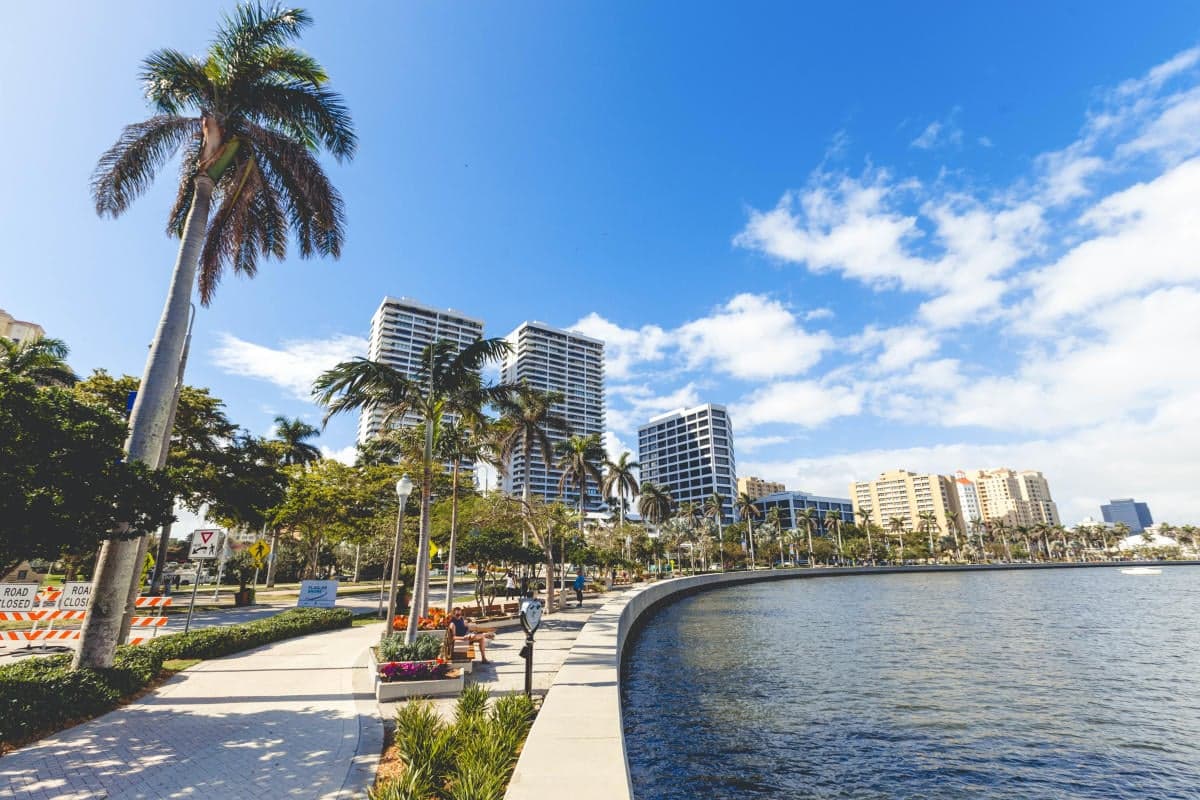
West Palm Beach has a split personality in the best way. One day you’re grabbing a Cuban coffee in a historic bungalow neighborhood, the next you’re rubbing elbows with yacht owners on Clematis Street. It’s the scrappy, slightly more affordable mainland cousin to Palm Beach island, and it attracts a mix of young professionals, families who want space without leaving the coast, and retirees who still want a social life. The vibe is less “golf cart and pearls” and more “brunch on a patio, then a walk along the Intracoastal.”
Daily Rhythm: Where You Shop, Eat, and Spend Your Weekends
For most people, the week revolves around the water and the weather. Mornings start early—not because of a commute (the average is a manageable 23 minutes), but because the sun is up and the humidity hasn’t hit yet. You’ll see runners on the Lake Trail, kayakers pushing off from Currie Park, and parents grabbing coffee at Subculture Coffee on Clematis before school drop-off. Grocery shopping is split between Publix (the default) and the West Palm Beach GreenMarket on Saturday mornings, which runs from October through April and is a genuine community hub—not just a tourist trap.
Weekends are built around the water. Locals head to Peanut Island for a day of snorkeling and picnicking (you take a short ferry from the Riviera Beach marina), or they rent a boat slip at Sailfish Marina for lunch and people-watching. The restaurant scene is solid but not flashy: Hullaballoo Diner for comfort food, RH Rooftop for a splurge, and Rocco’s Tacos for margaritas and a crowd. The median income here is $69,261, which means most people aren’t eating out every night—but the cost of living index of 141 means you feel the pinch on housing more than on groceries or gas.
Sports, Festivals, and the Social Calendar
Sports are a big deal, but not in the way you’d expect. There’s no major pro team in West Palm Beach itself, but the Miami Dolphins hold training camp at the Palm Beach County Convention Center, and the Florida Panthers (NHL) have their practice facility in nearby Coral Springs. What really gets people out are the high school games. Friday night football at Palm Beach Gardens High or Benjamin School draws huge crowds—it’s a social event as much as a sporting one. The West Palm Beach Surf, a minor-league baseball team, plays at FITTEAM Ballpark of the Palm Beaches, and it’s a cheap, fun night out with kids.
The festival calendar is packed. SunFest in May is the big one—a three-day waterfront music festival on Flagler Drive that brings national acts and a massive crowd. Clematis by Night (every Thursday evening, October through May) is a free concert series that feels like a block party. For something quieter, the Palm Beach International Film Festival in April draws indie films and a few celebrities. The cultural quirk here: people take their charity galas seriously. If you’re new, expect to be invited to a fundraiser for the local historical society or the Palm Beach Zoo within your first six months.
What Frustrates Locals and What Keeps Them Here
Let’s be honest about the downsides. Violent crime is a real concern—the rate of 492.1 per 100,000 is higher than the national average, and it’s concentrated in certain neighborhoods (north of Okeechobee Boulevard and west of I-95). Most families stick to the east side or the suburbs west of the turnpike. Traffic is seasonal: from November to April, the snowbirds double the population, and a 20-minute drive can stretch to 45. The weather is glorious from October through May, but June through September is brutally hot and humid, with afternoon thunderstorms that flood low-lying streets.
What keeps people here is the lifestyle density. You can live in a 1950s ranch house with a pool, walk to a craft brewery, and be on the beach in 15 minutes. The median home value of $369,800 is steep for a city with a median income of $69,261—most buyers need a dual income or a down payment from a previous home sale. But compared to Miami or Fort Lauderdale, you get more square footage and a yard. The schools are a mixed bag: Palm Beach Public and South Olive Elementary are well-regarded, but many families with means opt for private schools like Cardinal Newman or St. Andrew’s. The community is friendly but not intrusive—you’ll know your neighbors’ dogs’ names before their own.
Who Fits In and Who Might Struggle
West Palm Beach works best for people who want a coastal lifestyle without the Miami price tag or the Naples quiet. It’s a good fit for remote workers in finance or tech (the airport has direct flights to New York and Chicago), for families who want a yard and a pool, and for empty-nesters who still want a social scene. It’s a tougher fit for anyone on a tight budget—the cost of living index of 141 means a one-bedroom apartment in a decent area runs $1,800–$2,200. The median age of 40.2 reflects a city that’s not a college town but not a retirement village either. The political lean is slightly conservative, especially west of I-95, but Clematis Street and the arts district lean younger and more liberal. The key is knowing which pocket you belong in—and being okay with the fact that summer air feels like a wet blanket.

Similar small cities to West Palm Beach
* Values derived from national, state, county, city and local statistics and may differ in a specific area. Last updated: 2026-09-14T15:09:05.000Z
Narrative content on this page is AI-generated and may contain mistakes. Verify any details that matter before acting on them.
ReloMaps may earn a commission from affiliate links at no extra cost to you.

