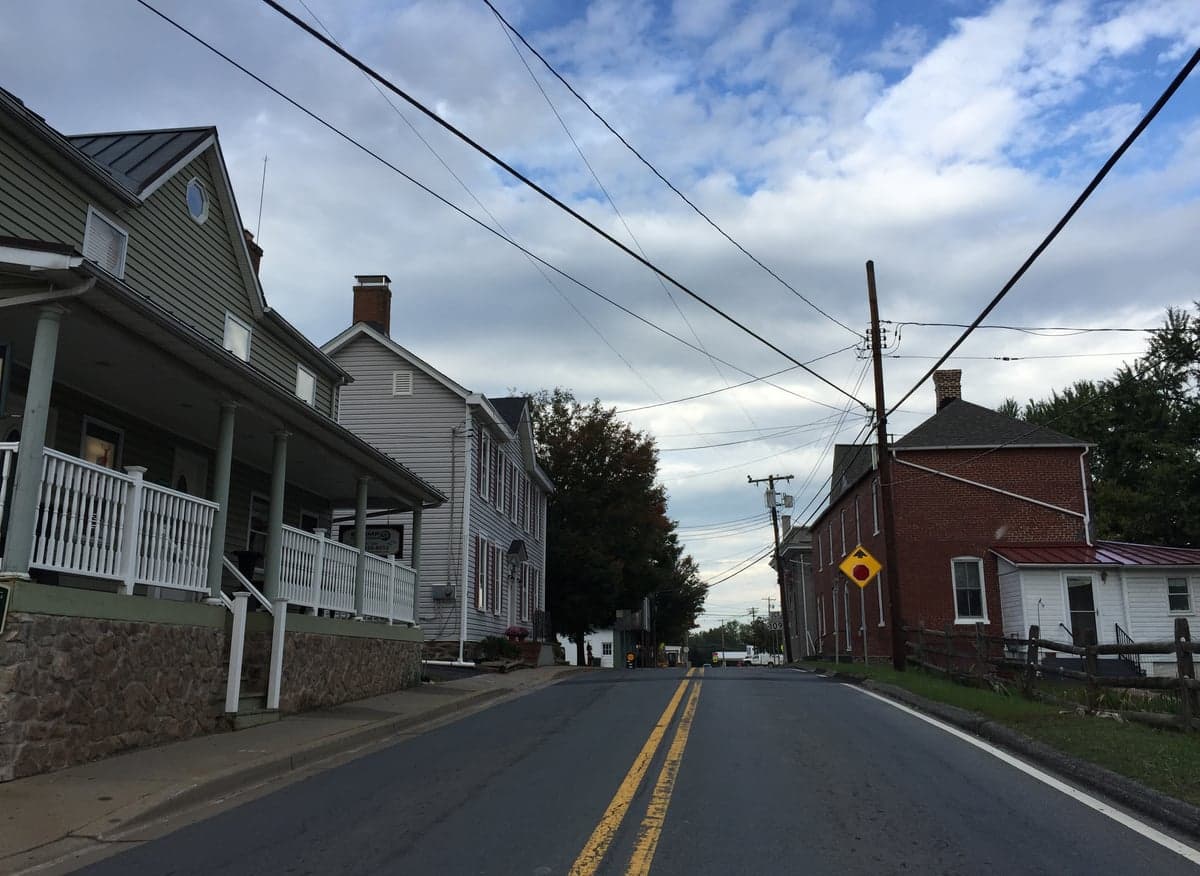
Photo: Wikipedia
Political ClimatePolitical Climate in Poolesville, MD
District shown is the primary district for this city’s centroid. Cities may span multiple districts.
Local Political AnalysisPolitical Analysis of Poolesville, MD
Poolesville, Maryland, has long been a quiet, rural outpost in Montgomery County, but its political climate is shifting in ways that should give any freedom-minded resident pause. The area’s Cook PVI of D+3 might sound moderate, but that number masks a steady march leftward, driven by an influx of D.C. commuters and county-level policies that increasingly prioritize progressive agendas over local autonomy. If you’ve been here a while, you’ve watched the old-school, independent spirit of the town get slowly squeezed by a government that seems to think it knows better than you do.
How it compares
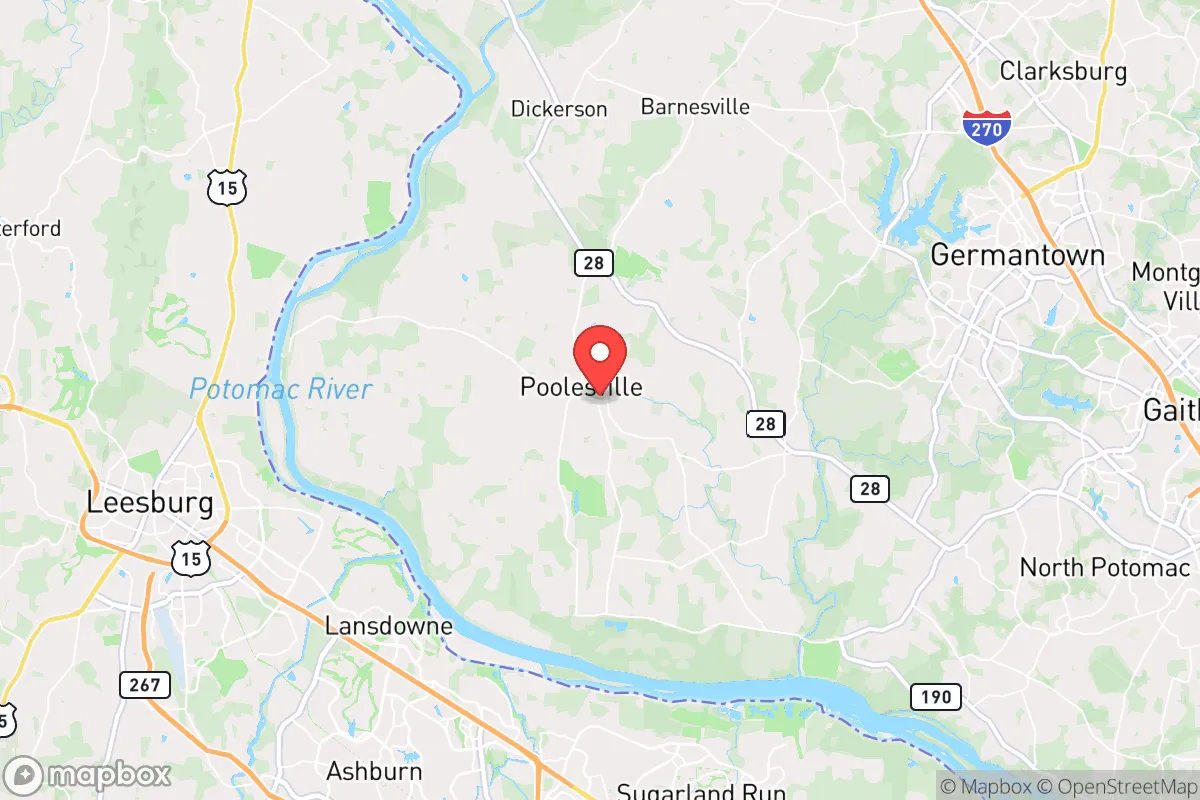
Poolesville sits in a strange political pocket. Drive ten miles east to Gaithersburg or Rockville, and you’re deep in deep-blue territory—places where county zoning and tax policies are written by people who’ve never swung a hammer or baled hay. Head west across the Potomac into Loudoun County, Virginia, and you’ll find a different story: places like Lovettsville and Purcellville still lean more libertarian, with lower taxes and fewer mandates. Poolesville used to feel like that—a place where folks minded their own business. Now, it’s caught between the county’s push for denser development and stricter environmental rules, and the town’s own desire to stay small. The contrast is stark: Montgomery County’s government has been a leader in gun control, energy mandates, and COVID-era overreach, while Poolesville’s residents have consistently voted against those trends when given a chance.
What this means for residents
For the average Poolesville homeowner or small business owner, the political drift means more than just bumper stickers. It means property taxes that keep climbing to fund county programs you didn’t ask for, from equity initiatives to climate action plans that add red tape to any renovation or farm operation. It means school board decisions that prioritize social engineering over reading and math, with curriculum changes that make you wonder if your kid is being taught to think or to conform. And it means zoning fights that threaten the rural character you moved here for, as the county eyes your neighbor’s pasture for another “affordable housing” development that nobody local actually needs. The long-time residents I know are increasingly talking about moving to Frederick County or even West Virginia, where the government still remembers its job is to protect your rights, not manage your life.
There are still bright spots. Poolesville’s town council has fought to keep local control over land use, and the volunteer fire department remains a model of community self-reliance. But the pressure from the county is relentless. The 2024 election results in the precinct showed a slight rightward shift compared to 2020, which suggests folks are waking up. Still, the county board’s progressive majority isn’t going anywhere, and they’ve made it clear they see rural areas like Poolesville as obstacles to their vision of a “sustainable” future—which usually means more regulations, more fees, and less freedom.
If you’re considering a move here, know this: the land is beautiful, the neighbors are still friendly, and the pace of life is slower. But the political winds are blowing in a direction that values collective goals over individual rights. Poolesville is a last stand for common sense in a county that’s lost its way, and whether it holds depends on whether enough people are willing to speak up at town meetings and vote against the tide. It’s not too late, but the clock is ticking.

State Political ClimatePolitical Climate in Maryland
State Political AnalysisPolitical Environment in the State
Maryland has long been a solidly blue state, but its political reality is far more complex than the statewide numbers suggest. Democrats hold a supermajority in the General Assembly and have won every presidential election here since 1992, typically by double digits — Joe Biden carried the state by 33 points in 2020. However, that blue veneer masks a deep internal divide: the state’s liberal tilt is almost entirely driven by the Washington, D.C. suburbs (Montgomery and Prince George’s counties) and the Baltimore metro area, while the rest of the state — from the Eastern Shore to Western Maryland — votes reliably red. Over the past 20 years, the Democratic stronghold has only tightened as in-migration from D.C. and federal government expansion has flooded the central corridor with progressive voters, while rural counties have grown more conservative in reaction.
Urban vs. rural divide
The political map of Maryland is a tale of two states. The D.C. suburbs — Montgomery County and Prince George’s County — are among the most liberal jurisdictions in the entire country, routinely voting 75-80% Democratic. Baltimore City and its inner-ring suburbs like Baltimore County and Howard County add another massive blue bloc. Together, these four jurisdictions cast nearly 60% of the state’s votes. Meanwhile, the rest of Maryland is deeply conservative. Garrett County in the far west voted 72% for Trump in 2020. The Eastern Shore counties — Worcester (Ocean City), Talbot, and Queen Anne’s — are reliably red, as are the rural exurbs like Harford County and Carroll County. The only real swing territory is Anne Arundel County (home to Annapolis), which has trended blue in recent cycles but still elects some Republicans locally. The divide isn’t just about geography — it’s about culture, economy, and worldview. The urban core is dominated by federal employees, tech contractors, and academics; the rural areas are farming, manufacturing, and outdoor recreation communities that feel increasingly alienated from the state government in Annapolis.
Policy environment
Maryland’s policy environment is a textbook example of progressive governance with a heavy hand. The state has a progressive income tax that tops out at 5.75% (plus county taxes that can push the effective rate over 8%), one of the highest sales tax rates at 6%, and some of the highest property taxes in the nation — especially in Montgomery and Prince George’s counties. The regulatory climate is burdensome: Maryland has a strict 10-cent bag fee, a ban on foam containers, and some of the most aggressive environmental regulations on the East Coast, including the Clean Energy Jobs Act mandating 50% renewable energy by 2030. On education, the state spends more per pupil than almost any other state, but the Blueprint for Maryland’s Future — a massive $4 billion education reform package — has been criticized for expanding bureaucracy without improving outcomes. Healthcare is heavily regulated, with a state-based insurance exchange and strict certificate-of-need laws that limit competition. Election laws are among the most liberal: no-excuse mail-in voting, same-day registration, and automatic voter registration are all in place. For a conservative-leaning resident, the policy environment feels like a constant expansion of government into daily life — from what kind of lightbulbs you can buy to how you heat your home.
Trajectory & freedom
Maryland is unmistakably trending toward less personal freedom, especially for conservatives. The most glaring example is gun rights: in 2023, the General Assembly passed the Gun Safety Act, which bans carrying firearms in a long list of "sensitive places" (including parks, hospitals, and any private business that hasn’t explicitly posted a "guns allowed" sign), effectively gutting the permitless carry that was briefly legal after the Bruen decision. The state also passed a red flag law and a ban on so-called "ghost guns." On parental rights, Maryland has moved aggressively in the opposite direction: the Trans Health Equity Act (2023) mandates that Medicaid cover gender transition procedures for minors, overriding parental consent requirements in some cases. The state also passed a law requiring school districts to adopt comprehensive sex education curricula that include LGBTQ+ content, with no parental opt-out for certain lessons. On medical freedom, Maryland was one of the first states to mandate COVID-19 vaccines for healthcare workers and school staff, and it maintains some of the strictest vaccine requirements for schoolchildren in the nation. Property rights are also under pressure: the state’s Renters’ Rights and Stabilization Act (2024) imposed statewide rent caps and just-cause eviction requirements, effectively limiting what landlords can do with their own property. The trajectory is clear: Annapolis is moving to centralize control over health, education, and property, with little regard for local or individual autonomy.
Civil unrest & political movements
Maryland has seen its share of political flashpoints. The Freddie Gray protests in Baltimore in 2015 were among the most intense in the nation, leading to days of rioting, a state of emergency, and a lasting distrust between the city’s largely Black population and the police. More recently, the 2020 George Floyd protests saw widespread demonstrations in Baltimore, D.C. suburbs, and even smaller cities like Frederick and Annapolis. On the right, the Maryland Shall Issue gun rights group has been a persistent legal force, successfully challenging the state’s handgun permit law in the Bruen case. The Eastern Shore has seen a growing "secession" movement — talk of forming a new state called "Delmarva" — driven by frustration with Annapolis’s one-party rule and progressive policies. Immigration politics are a live wire: Maryland is a sanctuary state (2019’s Trust Act limits local law enforcement cooperation with ICE), and the town of Hagerstown has seen tensions over the influx of immigrants and the strain on local services. Election integrity has been a hot topic since 2020, with Republican activists in Carroll County and Harford County pushing for audits and ballot security measures, though the state’s Democratic-controlled legislature has blocked most reforms. The overall atmosphere is one of simmering cultural conflict — the urban core and the rural periphery are increasingly living in different political realities.
Projection
Over the next 5-10 years, Maryland is likely to become even more deeply blue. The D.C. suburbs continue to grow as federal employment expands and remote workers from D.C. move into Montgomery and Prince George’s counties. The Purple Line light rail project and other transit expansions will only accelerate that trend. Meanwhile, rural counties are losing population — Garrett County has shrunk by 5% since 2010, and the Eastern Shore is aging faster than the rest of the state. The state’s blue wall in the General Assembly is virtually unbreakable due to gerrymandering; the 2021 redistricting map was widely criticized as one of the most partisan in the country. However, there are countercurrents: Frederick County and Anne Arundel County are becoming more competitive as moderate Republicans and independents move in. The Maryland Republican Party is slowly rebuilding around a message of fiscal restraint and local control, but it remains a minority party. For a conservative moving in now, the realistic expectation is that state-level politics will remain hostile to their values for the foreseeable future, though local control in counties like Carroll, Harford, and Garrett offers some refuge.
Bottom line for a new resident: If you’re a conservative considering Maryland, you need to be strategic about where you land. The state government in Annapolis will continue to push progressive policies on taxes, guns, education, and healthcare — and you’ll have little say in it. But if you choose a county like Carroll, Harford, or Garrett, you can find a community that shares your values, with good schools, low crime, and a slower pace of life. Just know that your vote for president or governor will be a protest vote, and your real political influence will be at the county commission and school board level. Maryland is a beautiful state with great outdoor opportunities and strong job markets in certain sectors, but it’s not a place where conservative ideals are likely to gain traction anytime soon.
* Values derived from national, state, county, city and local statistics and may differ in a specific area. Last updated: 2026-04-22T01:23:42.000Z
Narrative content on this page is AI-generated and may contain mistakes. Verify any details that matter before acting on them.
ReloMaps may earn a commission from affiliate links at no extra cost to you.

