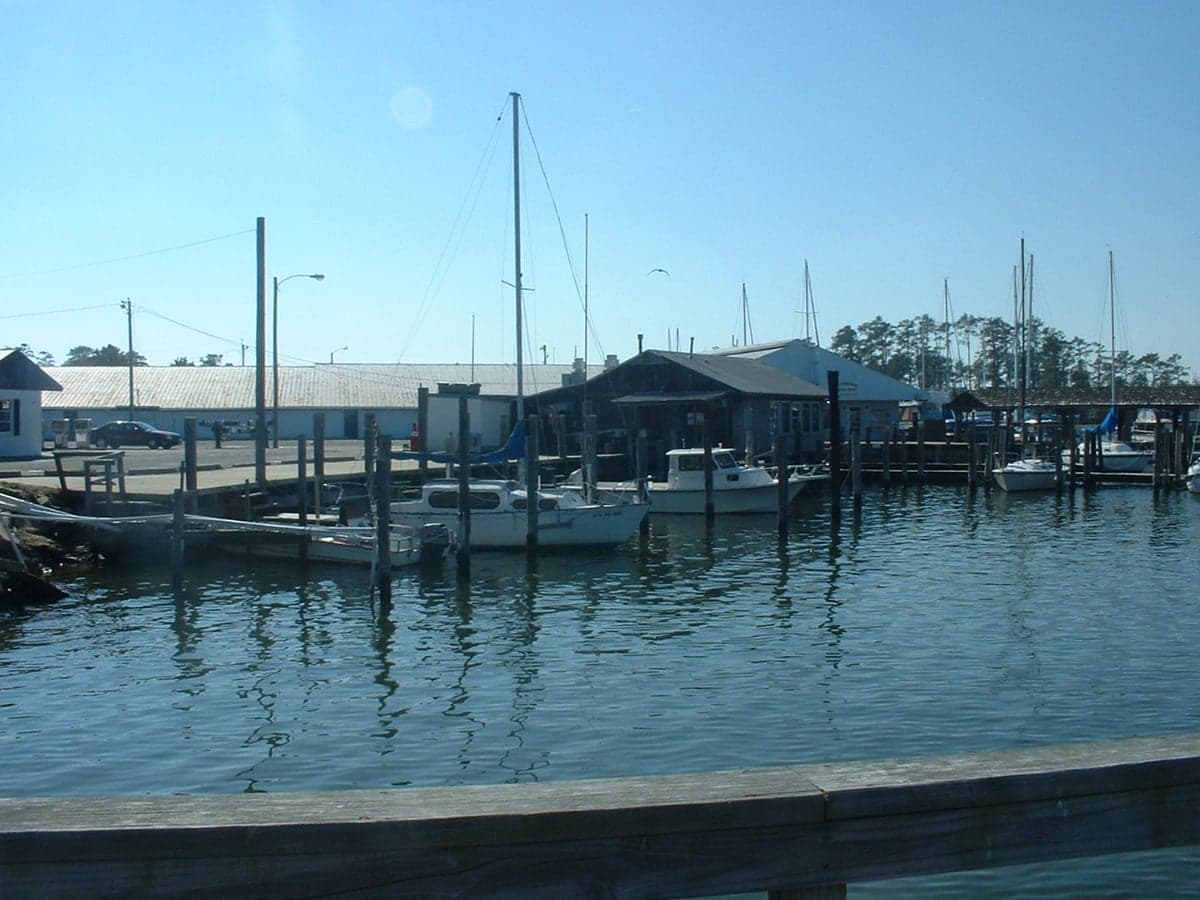
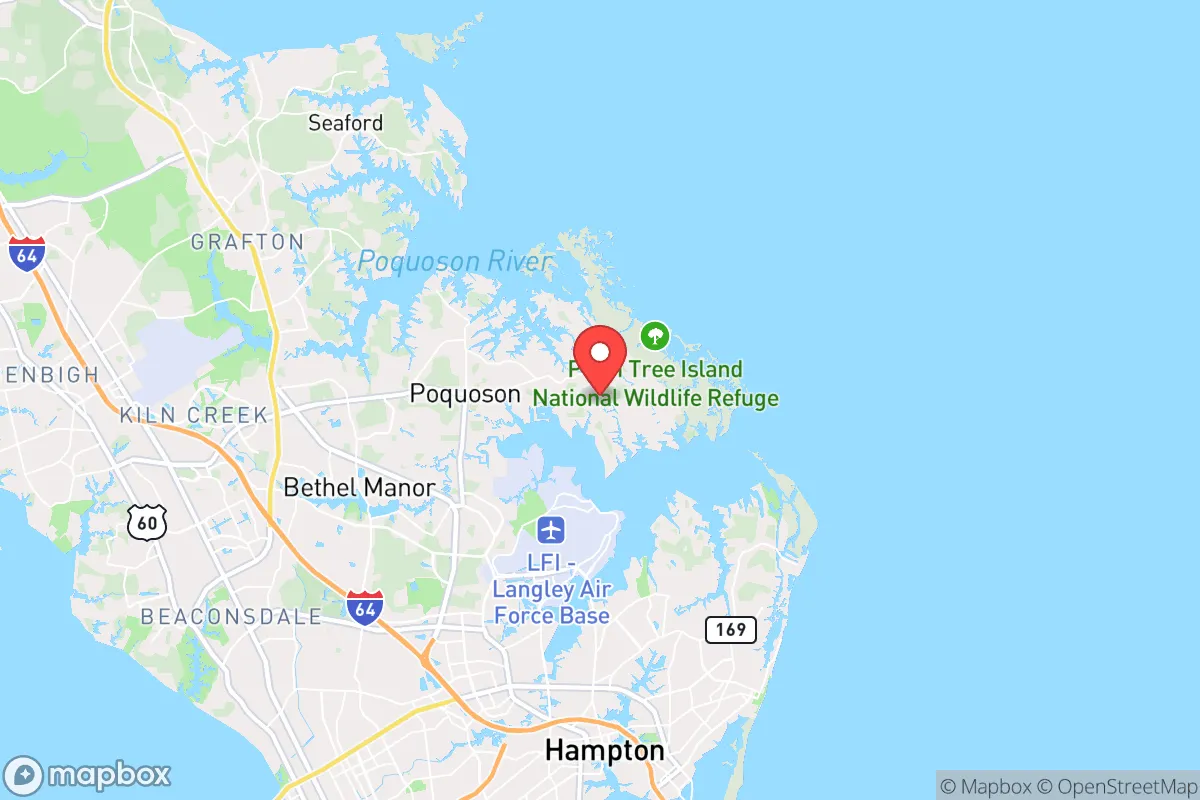
Photo: Wikipedia
Demographics of Poquoson, VA
Affluence Level in Poquoson, VA
An upper-middle-class area. Household wealth, education levels, and homeownership run ahead of national benchmarks.
People of Poquoson, VA
The people of Poquoson, Virginia, today form a remarkably stable, tight-knit community of 12,556 residents, characterized by deep generational roots and a strong sense of local identity. With a population that is 88.8% White and only 1.0% foreign-born, Poquoson stands as one of the most ethnically homogeneous cities in the Hampton Roads region. Its residents are disproportionately college-educated (40.1%) and heavily tied to the military, defense contracting, and maritime industries, creating a culture that values service, self-reliance, and civic engagement. The city’s identity is less that of a typical suburb and more that of an old-waterman’s town that has absorbed modern commuters without losing its core character.
How the city was settled and grew
Poquoson’s human history begins not with a planned settlement but with land grants to English planters in the 1630s, making it one of the oldest continuously inhabited English communities in North America. The original population were tobacco planters and, later, watermen who worked the Chesapeake Bay and its tributaries. These early families—the Messicks, Forrests, and Hogges—established the first homesteads along the creeks, creating what are now the historic neighborhoods of Poquoson Avenue and Messick Point. Messick Point, in particular, became the heart of the watermen’s community, a working waterfront where generations of families lived and worked on the water. The area remained sparsely populated and overwhelmingly rural through the 19th century, with the population hovering around a few hundred. The arrival of the railroad in the late 1800s brought a modest wave of new residents, but the community’s isolation—bounded by water on three sides—preserved its insular, family-based social structure. By the mid-20th century, Poquoson was still a village of watermen and farmers, with the Wythe Creek corridor serving as the main commercial and social spine.
Modern era (post-1965)
The post-1965 era transformed Poquoson from a sleepy fishing village into a bedroom community for nearby military installations, particularly Langley Air Force Base and Naval Weapons Station Yorktown. The 1970s and 1980s saw the first significant in-migration of non-native families, mostly military personnel and defense contractors who were drawn by the area’s low crime, good schools, and proximity to work. These newcomers settled primarily in newer subdivisions like Poquoson Shores and White Marsh, which were developed on former farmland along the city’s northern and western edges. The city’s population grew from roughly 5,000 in 1970 to over 11,000 by 2000, driven almost entirely by domestic migration from other parts of Virginia and the Mid-Atlantic. Unlike many Hampton Roads cities, Poquoson saw very little immigration from abroad; the foreign-born share remains at just 1.0%, and the Asian (East/Southeast Asian) population is only 1.3%, with an additional 0.5% Indian-subcontinent residents. The Hispanic population, at 3.9%, is the largest minority group but remains small in absolute numbers. The Black population is just 1.7%, reflecting the city’s historical lack of diversity and the absence of the large African American communities found in nearby Hampton and Newport News. The Poquoson Avenue corridor, once the heart of the original settlement, now serves as a transitional zone between the old watermen’s families and the newer commuter population.
The future
Demographic projections suggest Poquoson will remain a predominantly White, native-born community for the foreseeable future. The city’s housing stock—dominated by single-family homes on large lots with limited new construction—constrains population growth, and the median age is rising as younger adults move to more affordable or urban areas. The Hispanic and Asian populations are growing slowly, primarily through second-generation families moving from nearby Hampton and Newport News, but they are unlikely to reach double-digit shares within the next decade. The Messick Point neighborhood, historically the most working-class and waterman-oriented area, is seeing gradual gentrification as higher-income newcomers buy waterfront properties, potentially displacing some long-time families. The Poquoson Shores and White Marsh subdivisions will likely remain the primary destinations for incoming military and contractor families. The city is not tribalizing into distinct ethnic enclaves; rather, it is slowly homogenizing as the older watermen’s culture fades and is replaced by a more generic, commuter-oriented suburban lifestyle. The foreign-born population is so small that it has little demographic impact, and immigration from abroad is unlikely to increase given the city’s high housing costs and lack of rental stock.
For someone moving to Poquoson now, the bottom line is this: you are joining a community that values stability, tradition, and low crime above all else. The population is overwhelmingly White, native-born, and college-educated, with strong ties to the military and defense sectors. The city is not becoming more diverse in any meaningful way, and its insular character—while welcoming to newcomers who share its values—offers little cultural or ethnic variety. If you seek a safe, homogeneous, family-oriented environment with deep historical roots, Poquoson is a strong fit. If you want demographic diversity or a rapidly evolving urban scene, you will find it in neighboring Hampton or Newport News instead.

* Values derived from national, state, county, city and local statistics and may differ in a specific area. Last updated: 2026-05-03T20:38:33.000Z
Narrative content on this page is AI-generated and may contain mistakes. Verify any details that matter before acting on them.
ReloMaps may earn a commission from affiliate links at no extra cost to you.

