Photo: Wikipedia
Strategic Assessment of Poquoson, VA
Meaningful friction. Expect exposure to either population pressure, blast zones, or natural disaster risk. Consider buying a retreat property.
What does the Strategic Assessment tell us?
Our Strategic Assessment grades tactical survivability of an area. Major population centers, military targets, fallout zones, natural disasters, and border exposure all drive risk — lower exposure means a more defensible position in a crisis.
This is heavily inspired by Joel Skousen's Strategic Relocation book. Highly recommended you checkout the book ($)What does this tell us?
Our Strategic Assessment grades tactical survivability of an area. Major population centers, military targets, fallout zones, natural disasters, and border exposure all drive risk — lower exposure means a more defensible position in a crisis.
This is heavily inspired by Joel Skousen's Strategic Relocation book. Highly recommended you checkout the book ($)Strategic Pillars

Key Distances
Regional Safe Places
Below is our recommended "safe zones" in Virginia and the surrounding area based on our strategic heuristics. For most people, it's unrealistic to live in a “safe zone” full-time due to work, family or other personal reasons. They tend to be more rural. However, many of these areas are perfect for second homes and retreat properties that double as a vacation home or even a short-term rental.
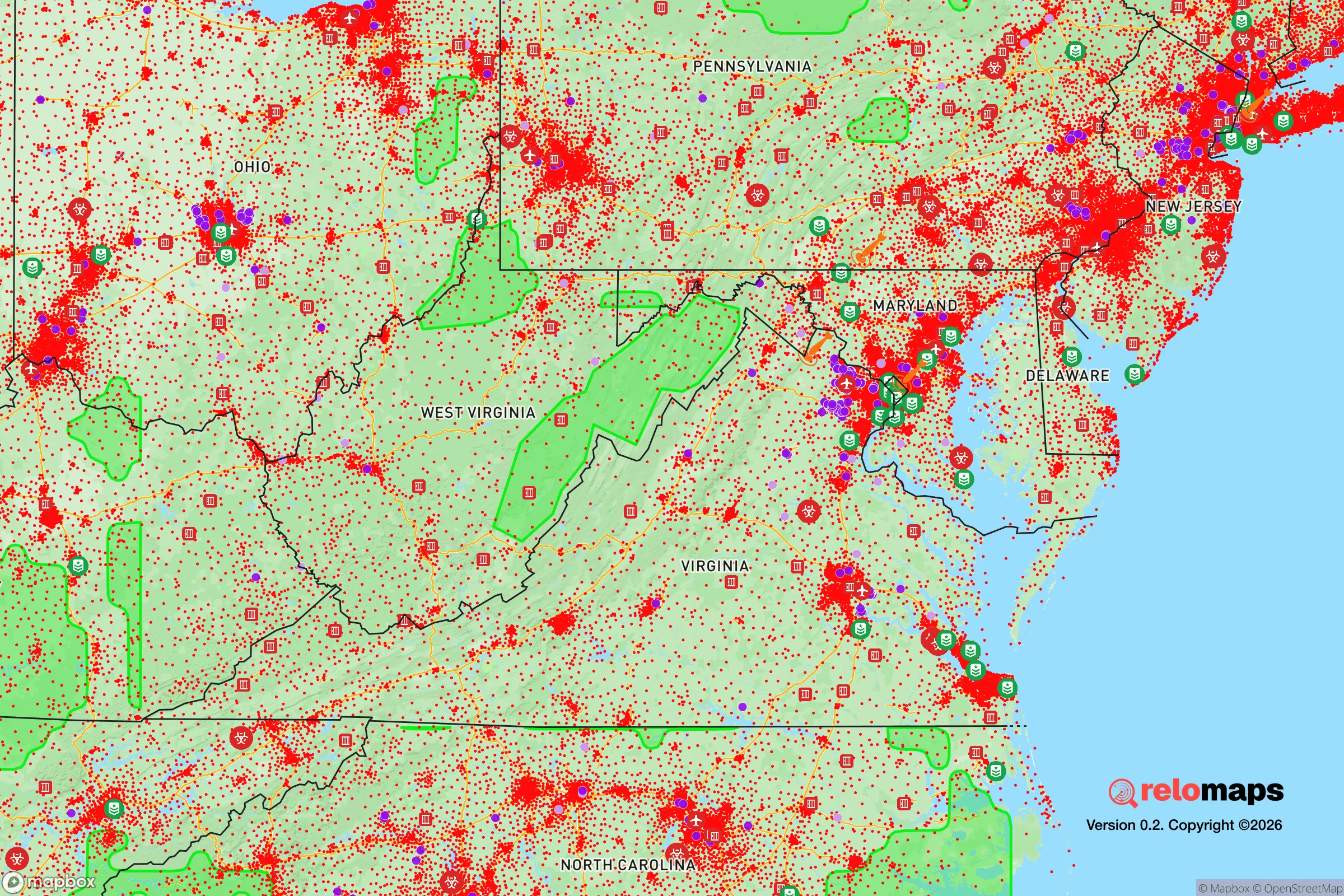
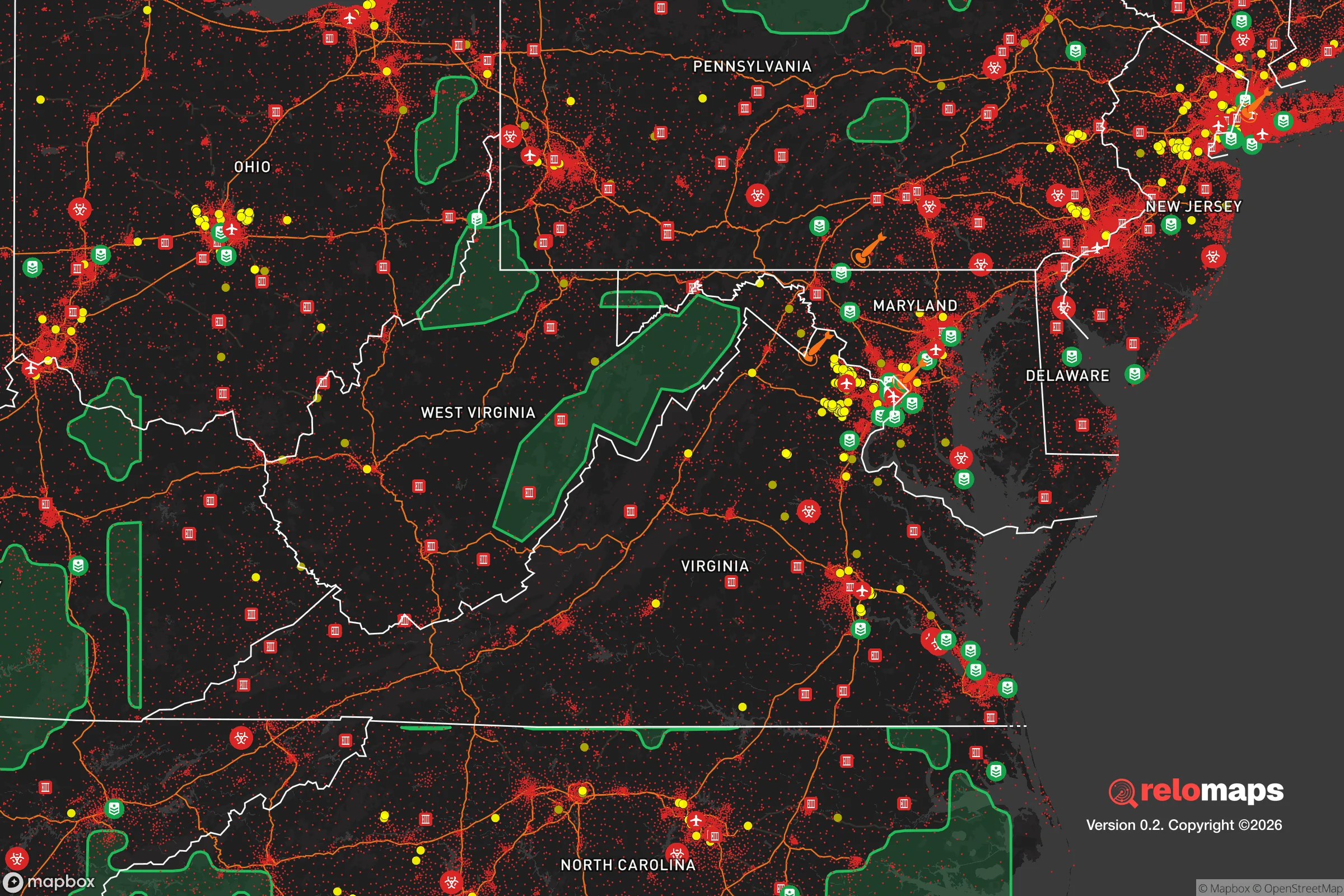


Important Note: For informational purposes only. This does not mean nothing bad ever happens in the green zones. Please use common sense. This is based on public data and modeled with AI. We tried to take a conservative approach but mistakes happen. We update this regularly as new information becomes available.
Solar Generator Recommendations
Backup power matters more here than in safer locations. We've picked three solar generators across budgets and capacity tiers — start with the budget unit if you only need a few essentials, or step up if you want to run a fridge and HVAC for days at a time.

Jackery Portable Power Station Explorer 300
Budget OptionPower on the Go: Weighing only 11 lbs, it's convenient to set up and store with book-sized foldable solar panels

BLUETTI Portable Power Station AC180
Designed for both indoor and outdoor scenarios, AC180 is highly capable as it has a robost capacity and continuous output power.

EF ECOFLOW DELTA Pro Ultra Power Station
Upgraded PickEcoFlow DELTA Pro Ultra is a whole-home energy system designed to grow with your family. Integrated with the Smart Home Panel 2, it scales to meet your evolving energy needs — keeping your home powered, intelligent, and secure through every stage of life.
We earn a commission, at no additional cost to you.
Strategic Assessment Analysis
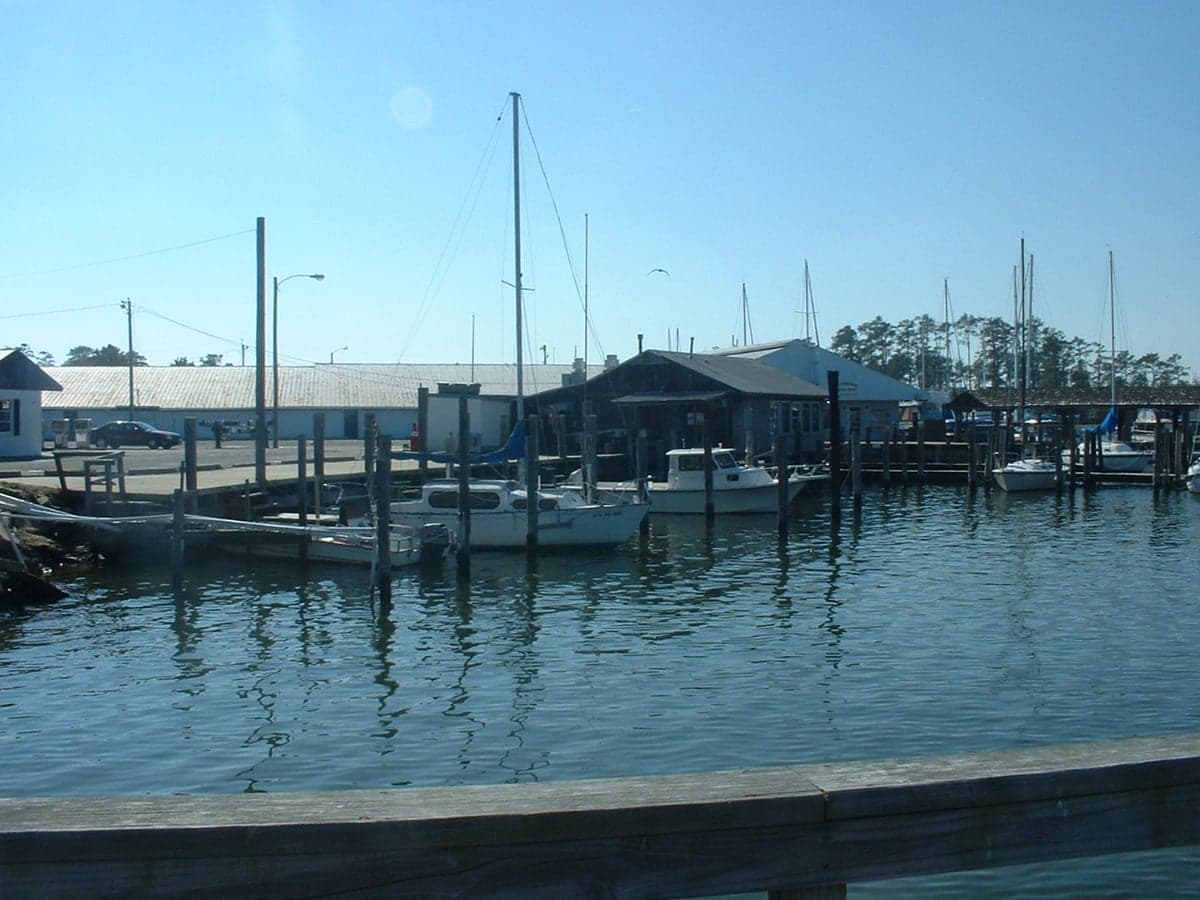
Poquoson, Virginia, presents a complex strategic picture for the conservative prepper or survivalist. Its primary advantage is its physical isolation—a peninsula jutting into the Chesapeake Bay, accessible by only two main roads—which offers natural chokepoints and a degree of separation from the urban chaos of Hampton Roads. However, that same geography creates a potential trap: if civil unrest or a mass casualty event triggers a mass exodus from nearby Norfolk, Newport News, and Hampton, Poquoson’s limited egress could become a liability rather than a fortress. The key is understanding that this is a location for those who want to be near the coast but not of the coast, leveraging the water for resources while accepting the risks of being a short drive from major military and industrial targets.
Geographic position and natural advantages for long-term survival
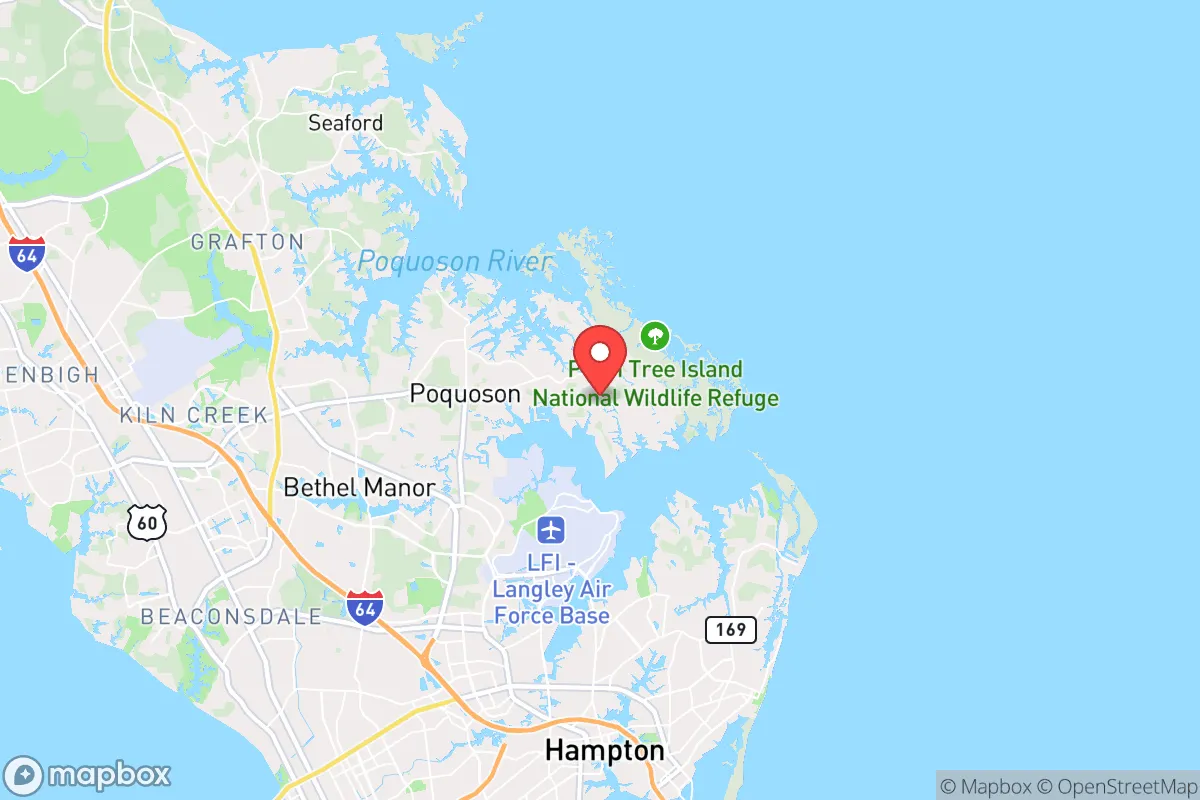
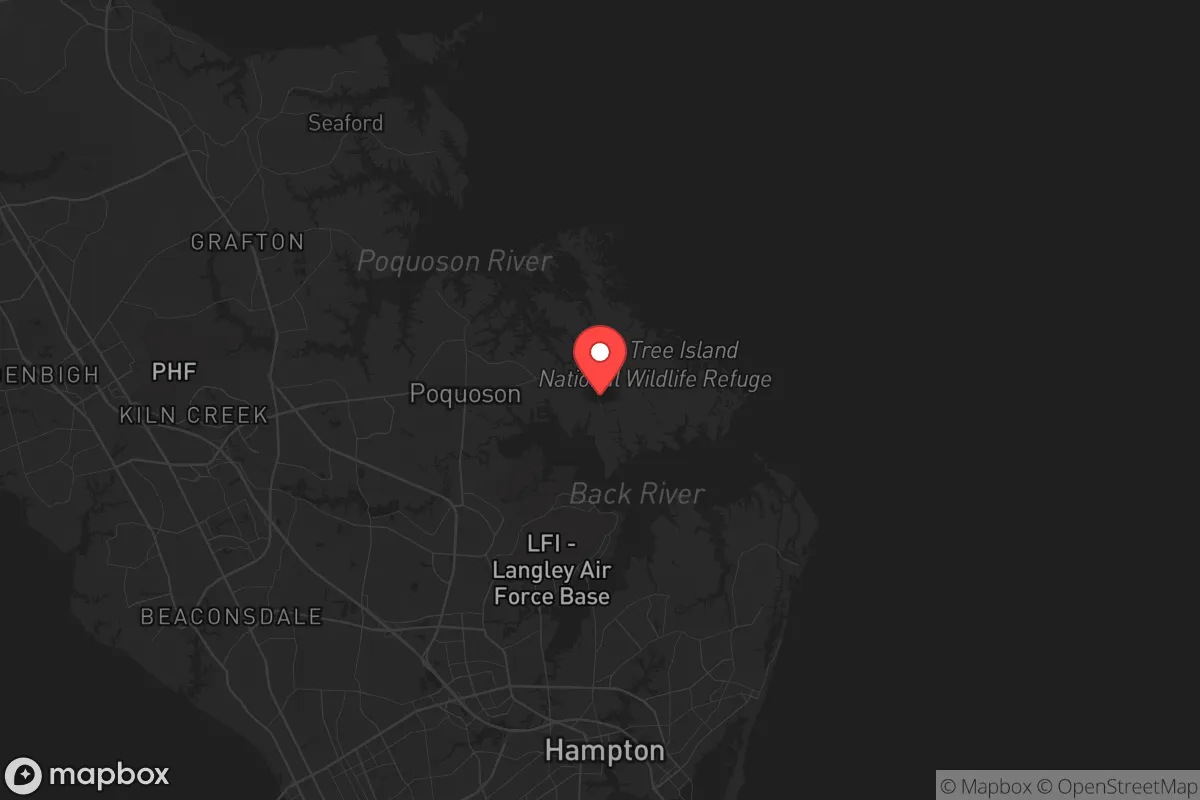
Poquoson sits on a low-lying peninsula between the York River and the Back River, with the Chesapeake Bay to its east. This position offers several hard-to-replicate benefits. First, the surrounding waterways provide a natural defensive perimeter; any approach by land must funnel through the two-lane Victory Boulevard (Route 171) or the single bridge connecting to the Poquoson Marina area. For a relocator concerned with civic unrest, this means you can monitor and control access far more easily than in a sprawling suburb. Second, the bay and rivers offer a reliable source of seafood—oysters, crabs, and fish—which is a critical food security asset if supply chains collapse. The local marshes and tidal creeks also support waterfowl hunting, adding protein diversity. Third, the area’s relatively low population density (around 12,000 residents) means fewer people competing for resources in a crisis, compared to the 1.8 million in the broader Hampton Roads metro. The city’s zoning is predominantly residential with large lots, allowing for private gardens, rainwater catchment, and even small-scale livestock without drawing attention. For a prepper, this is the sweet spot: rural enough to be defensible, but close enough to the bay to exploit maritime resources.
Risks, exposures, and proximity to fallout-relevant landmarks
This is where the analysis gets sobering. Poquoson’s location within the Hampton Roads region is a double-edged sword. The area is home to some of the most significant military and industrial targets on the East Coast: Naval Station Norfolk (the world’s largest naval base), Joint Base Langley-Eustis (home to the Air Force’s 633rd Air Base Wing and Army transportation units), and the Newport News Shipbuilding yard, which builds and refuels nuclear aircraft carriers. In a scenario involving a mass casualty event or geopolitical conflict, these are prime targets for conventional or asymmetric attack. The fallout risk is not just from a nuclear detonation—though that is a real concern given the nuclear-powered ships and submarines—but also from a chemical or biological release at the shipyard or a coordinated sabotage of the port infrastructure. Poquoson is roughly 15 miles from Norfolk and 10 miles from Newport News, meaning a blast or plume could reach the peninsula within minutes. The city’s low elevation (average 10 feet above sea level) also makes it vulnerable to storm surge from hurricanes, which could compound a disaster scenario by cutting off escape routes. Furthermore, the two main roads out—Victory Boulevard and the Poquoson Avenue bridge—are easily blocked by a single accident, downed tree, or panicked crowd. In a mass evacuation, Poquoson could become a dead end.
Practical resilience for a relocator: food, water, energy, and defensibility
For the serious prepper, Poquoson offers a mixed bag of practical assets and liabilities. Water security is a major concern: the city relies on groundwater wells and the Newport News Waterworks system, which could be compromised by power outages or contamination. A private well with a hand pump is a must, and rainwater collection is viable given the region’s 47 inches of annual rainfall. Food production is feasible—the sandy loam soil supports vegetable gardens, and the bay provides year-round protein. However, the growing season is shorter than in the Deep South, so a greenhouse or cold frames would extend yields. Energy independence is achievable but requires upfront investment: solar panels work well here (average 210 sunny days per year), but the coastal humidity and salt air degrade equipment faster. A backup generator with a buried propane tank is a wise hedge. Defensibility is the strongest card. The peninsula’s shape means you only need to secure the two landward approaches. A small, organized group could hold the Victory Boulevard bridge and the Poquoson Avenue causeway with minimal force. The marshes and creeks also provide natural barriers against foot traffic. But here’s the catch: the same geography that makes it defensible also makes it a potential prison. If the bridges are compromised or blocked, you’re stuck. A boat—preferably a shallow-draft skiff or kayak—becomes an essential escape route, allowing you to cross the Back River to the Eastern Shore or head up the York River toward rural Gloucester County. Without a watercraft, you’re betting everything on those two roads.
The overall strategic picture for a conservative relocator
Poquoson is not a bug-out location for the lone wolf; it’s a community for the prepared family or small group willing to invest in redundancy and accept the risks of coastal living. The conservative prepper will appreciate the city’s quiet, family-oriented character—low crime, strong local schools, and a population that skews older and more self-reliant. The local government is small and responsive, with a city council that leans conservative on fiscal matters. But the strategic calculus demands honesty: you are living in the shadow of the world’s largest naval base, and that reality cannot be ignored. If you’re looking for a place to ride out a short-term disruption—a power outage, a hurricane, a week of civil unrest—Poquoson is excellent. If you’re planning for a long-term collapse or a major conflict, you need to have a secondary plan: a retreat further inland (perhaps in the Shenandoah Valley or the Blue Ridge foothills) and a reliable vehicle or boat to get there. The best use of Poquoson is as a forward operating base—a place to stockpile supplies, maintain a garden, and monitor the situation in Hampton Roads—with the understanding that when the balloon goes up, you may need to move. For the strategic relocator, it’s a high-risk, high-reward proposition that demands constant vigilance and a willingness to adapt.

* Values derived from national, state, county, city and local statistics and may differ in a specific area. Last updated: 2026-05-03T20:38:33.000Z
Narrative content on this page is AI-generated and may contain mistakes. Verify any details that matter before acting on them.
ReloMaps may earn a commission from affiliate links at no extra cost to you.

