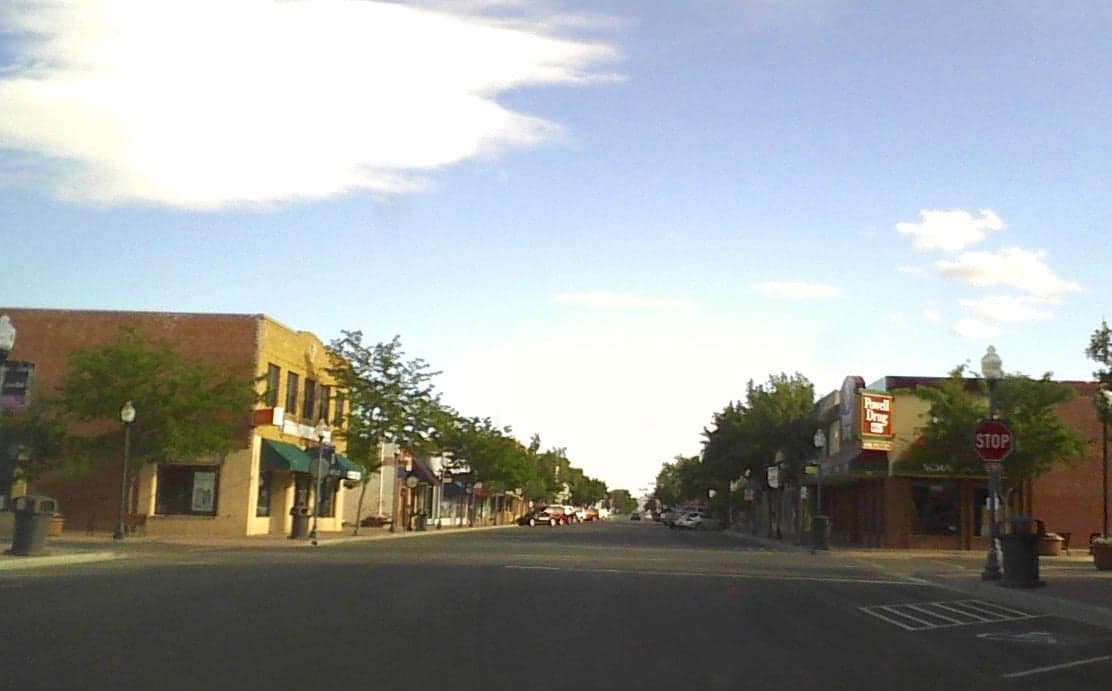
Photo: Wikipedia
Strategic Assessment of Powell, WY
Workable tactical position. Some exposure to population density or targets, but generally defensible in a crisis.
What does the Strategic Assessment tell us?
Our Strategic Assessment grades tactical survivability of an area. Major population centers, military targets, fallout zones, natural disasters, and border exposure all drive risk — lower exposure means a more defensible position in a crisis.
This is heavily inspired by Joel Skousen's Strategic Relocation book. Highly recommended you checkout the book ($)What does this tell us?
Our Strategic Assessment grades tactical survivability of an area. Major population centers, military targets, fallout zones, natural disasters, and border exposure all drive risk — lower exposure means a more defensible position in a crisis.
This is heavily inspired by Joel Skousen's Strategic Relocation book. Highly recommended you checkout the book ($)Strategic Pillars

Key Distances
Regional Safe Places
Below is our recommended "safe zones" in Wyoming and the surrounding area based on our strategic heuristics. For most people, it's unrealistic to live in a “safe zone” full-time due to work, family or other personal reasons. They tend to be more rural. However, many of these areas are perfect for second homes and retreat properties that double as a vacation home or even a short-term rental.
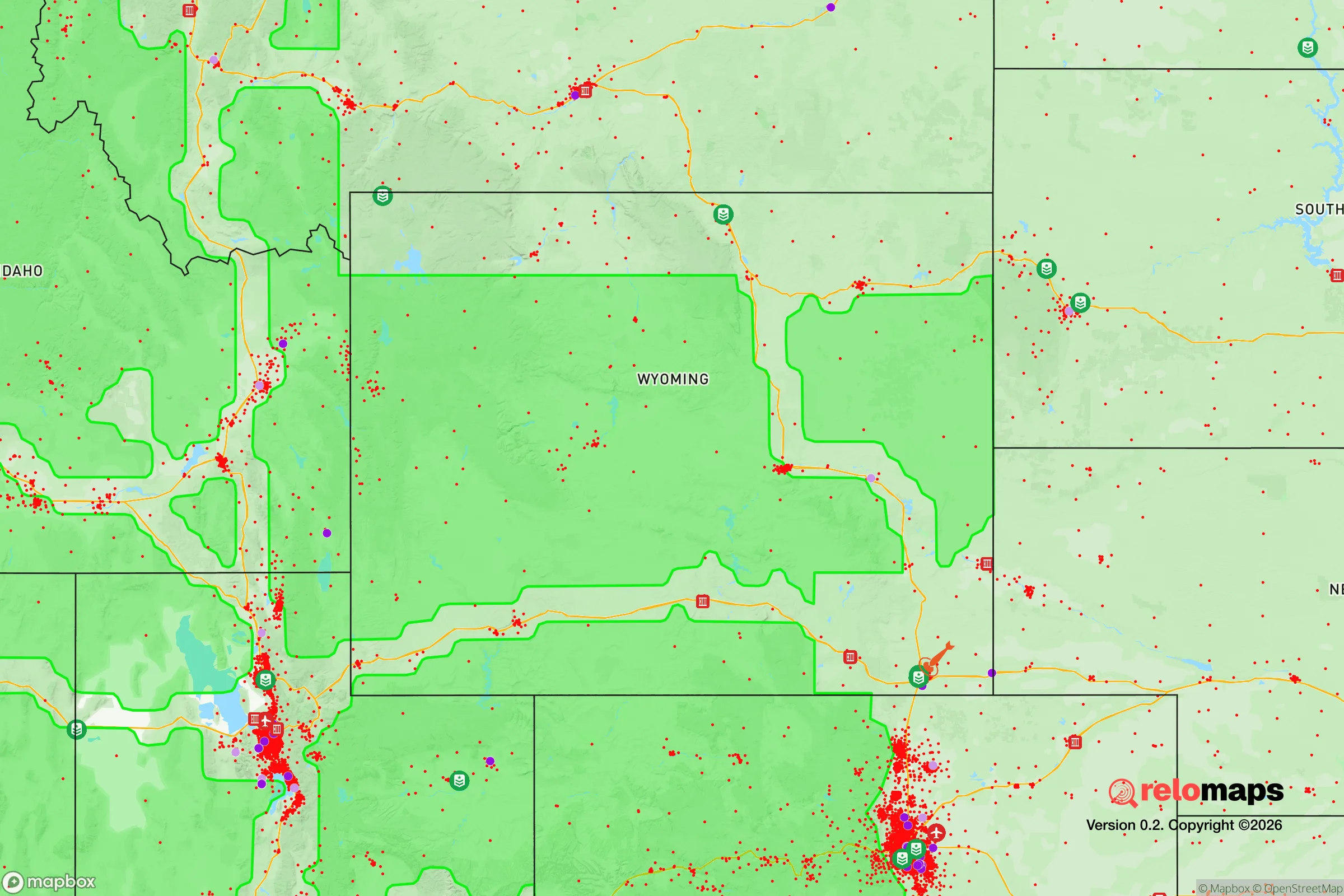
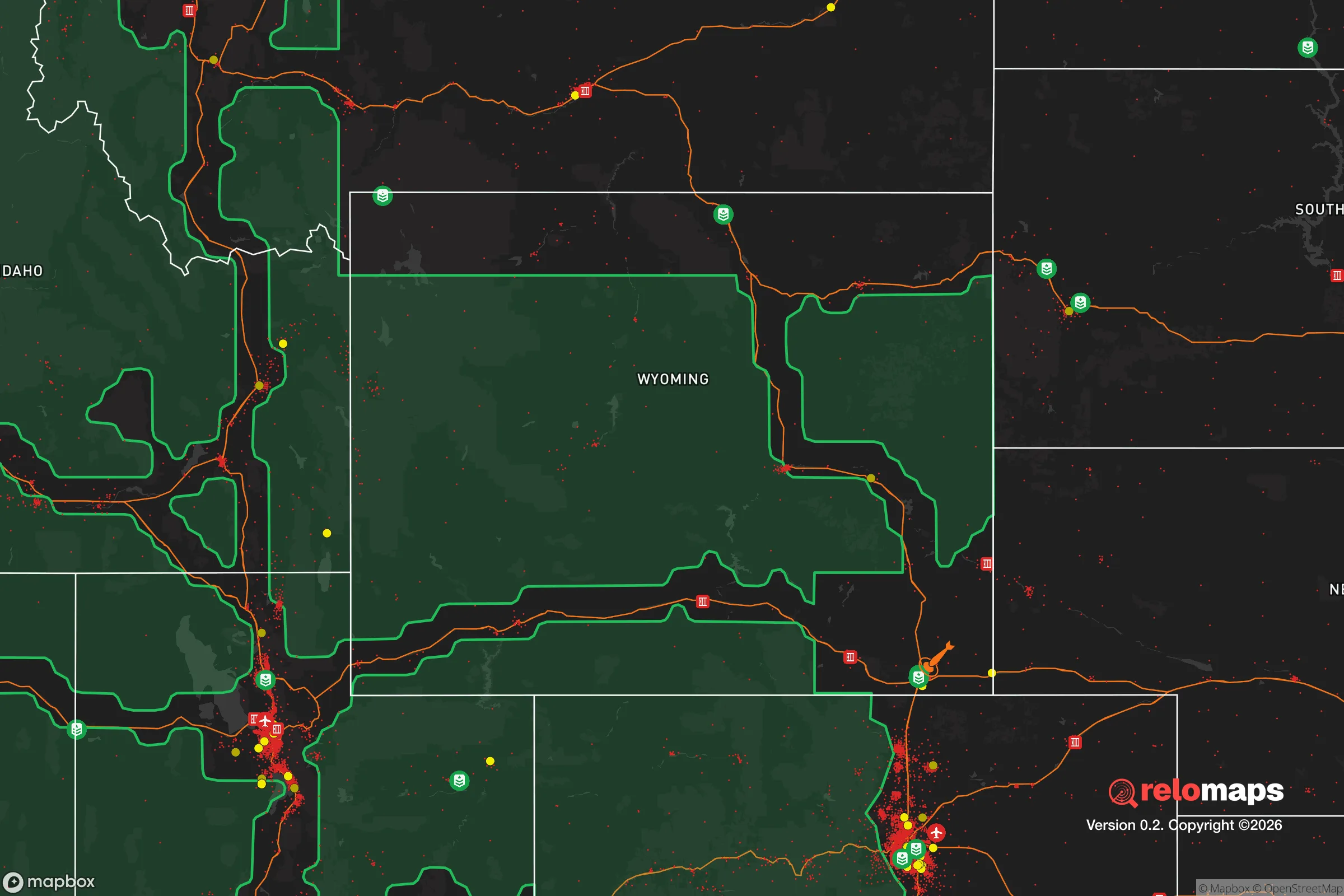


Important Note: For informational purposes only. This does not mean nothing bad ever happens in the green zones. Please use common sense. This is based on public data and modeled with AI. We tried to take a conservative approach but mistakes happen. We update this regularly as new information becomes available.
Solar Generator Recommendations
Backup power matters more here than in safer locations. We've picked three solar generators across budgets and capacity tiers — start with the budget unit if you only need a few essentials, or step up if you want to run a fridge and HVAC for days at a time.

Jackery Portable Power Station Explorer 300
Budget OptionPower on the Go: Weighing only 11 lbs, it's convenient to set up and store with book-sized foldable solar panels

BLUETTI Portable Power Station AC180
Designed for both indoor and outdoor scenarios, AC180 is highly capable as it has a robost capacity and continuous output power.

EF ECOFLOW DELTA Pro Ultra Power Station
Upgraded PickEcoFlow DELTA Pro Ultra is a whole-home energy system designed to grow with your family. Integrated with the Smart Home Panel 2, it scales to meet your evolving energy needs — keeping your home powered, intelligent, and secure through every stage of life.
We earn a commission, at no additional cost to you.
Strategic Assessment Analysis
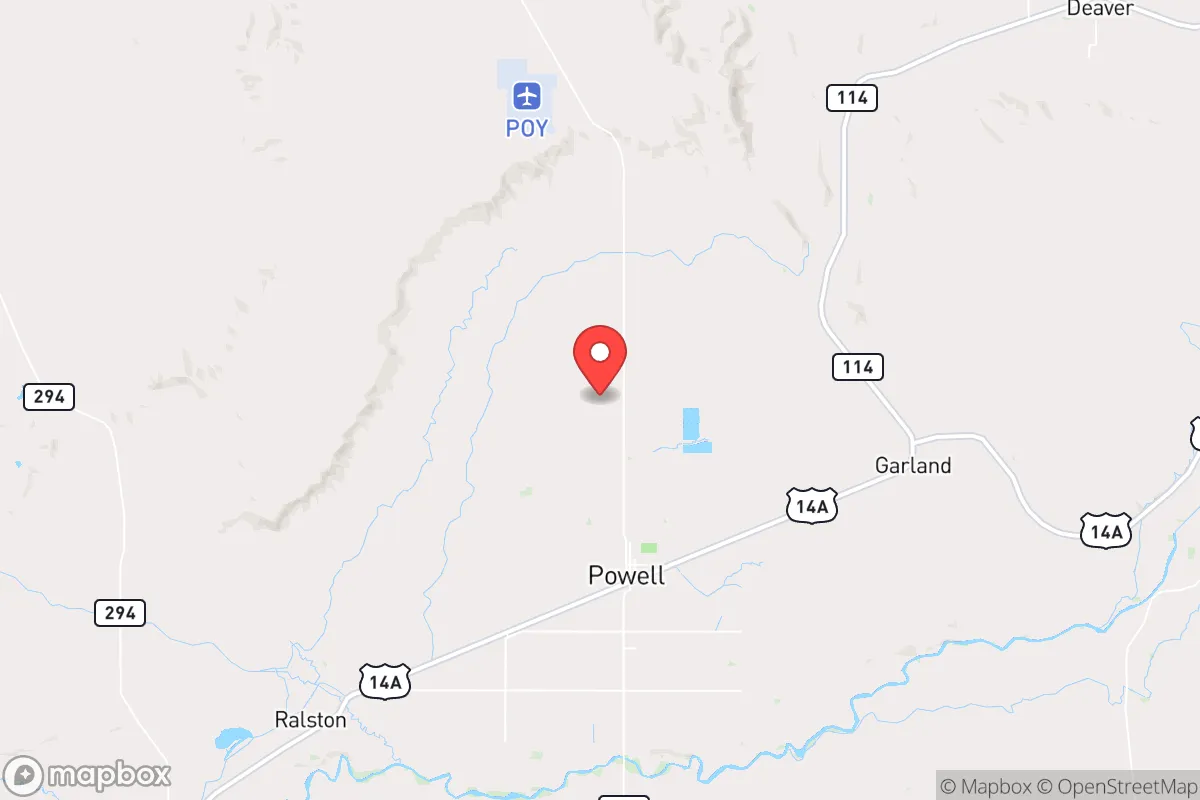
Powell, Wyoming, offers a strategic relocation option for those prioritizing long-term resilience, geographic isolation, and a community ethos that leans heavily toward self-reliance. Located in the Big Horn Basin, roughly 80 miles from the Montana border and 90 miles from Yellowstone National Park, this town of roughly 6,500 people sits far from the major population corridors of the Front Range and the Intermountain West. For a conservative-minded individual or family concerned with civic unrest, mass casualty events, or large-scale disasters, Powell’s distance from primary fallout targets—like missile silos, major military installations, and dense urban centers—is a significant advantage. The area’s agricultural base, cold-war-era infrastructure, and low population density create a foundation for a more sustainable, defensible lifestyle, provided you understand the specific risks and limitations of the region.
Geographic position and natural advantages for long-term security
Powell sits on the western edge of the Big Horn Basin, a high-elevation plateau (roughly 4,500 feet) surrounded by the Absaroka, Beartooth, and Big Horn mountain ranges. This geography provides natural barriers to large-scale movement, making the area difficult to approach quickly from any direction. The nearest city of any size is Billings, Montana, about 90 miles north—a city of roughly 110,000 that, while not a primary nuclear target, could still experience secondary effects from a major event. The closest major urban center is Denver, over 500 miles south, placing Powell well outside the immediate blast and fallout zones of any likely high-value target. The region’s climate is semi-arid, with cold winters and hot summers, but the growing season (about 120 days) is sufficient for cold-hardy crops like wheat, barley, and alfalfa. The area is also part of the Yellowstone Plateau volcanic system, but the risk of a catastrophic eruption in a human lifetime is extremely low—far lower than the risk of civil disruption in a major city. For a relocator, the key takeaway is that Powell offers a buffer of hundreds of miles from the most likely flashpoints of unrest, while still being accessible via U.S. Highway 14A and the Burlington Northern Santa Fe rail line for resupply in stable times.
Risks, exposures, and proximity to fallout-relevant landmarks
No location is risk-free, and Powell has specific vulnerabilities that a prepper must account for. The most significant exposure is the presence of the Yellowstone Caldera roughly 90 miles to the west. While a super-eruption is not imminent, the region does experience periodic earthquake swarms and hydrothermal activity. A more immediate concern is the Malmstrom Air Force Base in Great Falls, Montana (about 250 miles north), which is home to Minuteman III intercontinental ballistic missiles. In a full-scale nuclear exchange, Malmstrom is a high-priority target, and prevailing winds could carry fallout southeast toward the Big Horn Basin. Similarly, the Warren Air Force Base near Cheyenne, Wyoming (about 350 miles south) is another missile field. The risk is not zero, but Powell’s distance from these sites—and the fact that prevailing winds in the region are generally westerly—means fallout would likely be diluted and dispersed before reaching the area. More mundane risks include severe winter storms, occasional flooding from the Shoshone River, and the potential for a prolonged power outage due to the area’s reliance on a single major transmission line from the Dave Johnston Power Plant near Glenrock. For a relocator, the practical takeaway is that Powell is not a primary target, but you should have a fallout shelter plan and a backup power source for winter heating.
Practical resilience for a relocator: food, water, energy, and defensibility
Powell’s agricultural base is its strongest asset for long-term survival. The surrounding farmland produces sugar beets, barley, dry beans, and alfalfa, and the area is home to several large-scale farms and ranches. The Powell Research and Extension Center (part of the University of Wyoming) provides a local knowledge base for sustainable agriculture. Water is available from the Shoshone River and the Big Horn Canal system, which irrigates over 100,000 acres. However, water rights are tightly regulated, and a relocator should secure a property with a well or a senior water right before moving. The town’s municipal water supply comes from the river, but a prolonged power outage could disrupt pumping. Energy is a mixed picture: the area is served by Rocky Mountain Power, which relies on coal and natural gas, but there is growing interest in small-scale solar and wind. The region’s high elevation and clear skies make solar viable, but winter days are short. Wood heating is common in rural homes, and the surrounding national forests provide a renewable fuel source. Defensibility is excellent: the town is compact, with a single main highway (US 14A) providing the primary access. The surrounding mountains and open plains offer natural chokepoints, and the local culture is heavily armed—Park County has one of the highest per-capita gun ownership rates in the state. The local sheriff’s office is well-funded and responsive, and the community has a strong tradition of mutual aid. For a family, the practical steps are to secure a property with a well, install a wood stove, stockpile at least three months of food, and establish relationships with local farmers and ranchers before any crisis.
The overall strategic picture for Powell is one of moderate-to-high resilience with specific, manageable risks. It is not a bug-out location for a sudden collapse—it is a place to build a life that is already oriented toward self-sufficiency. The town’s isolation from major population centers, its agricultural capacity, and its conservative, community-minded population make it a strong candidate for those who want to be prepared for a range of scenarios, from economic disruption to civil unrest to a major natural disaster. The key trade-off is that you are trading the convenience of urban life for a buffer of hundreds of miles from the most likely flashpoints. If you are willing to invest in a well, a wood stove, and a good set of neighbors, Powell offers a solid foundation for a resilient future. Just keep an eye on the wind direction from Montana and have a plan for a long winter without the grid.

* Values derived from national, state, county, city and local statistics and may differ in a specific area. Last updated: 2026-04-21T11:32:11.000Z
Narrative content on this page is AI-generated and may contain mistakes. Verify any details that matter before acting on them.
ReloMaps may earn a commission from affiliate links at no extra cost to you.

