Photo: Wikipedia
Demographics of Provo, UT
Affluence Level in Provo, UT
A middle-class area roughly in line with national averages across income, home values, education, and employment.
People of Provo, UT
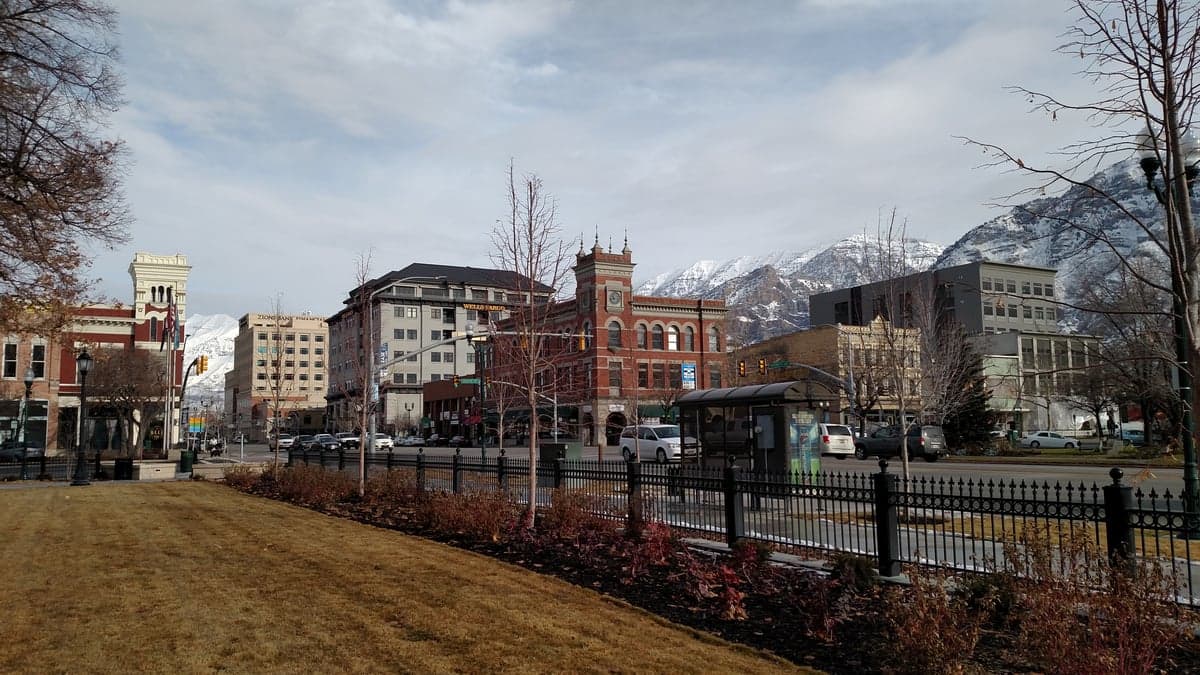
The people of Provo, Utah today number 114,303, forming a dense, highly educated, and predominantly white city with a distinctive Latter-day Saint cultural character. The city is notably young and family-oriented, with 45.0% of adults holding a college degree, while the population is 71.1% white and 18.9% Hispanic. Provo’s identity is shaped by Brigham Young University, a robust tech sector, and a strong sense of community rooted in its pioneer heritage, making it a magnet for conservative-leaning families and single professionals seeking a safe, values-driven environment.
How the city was settled and grew
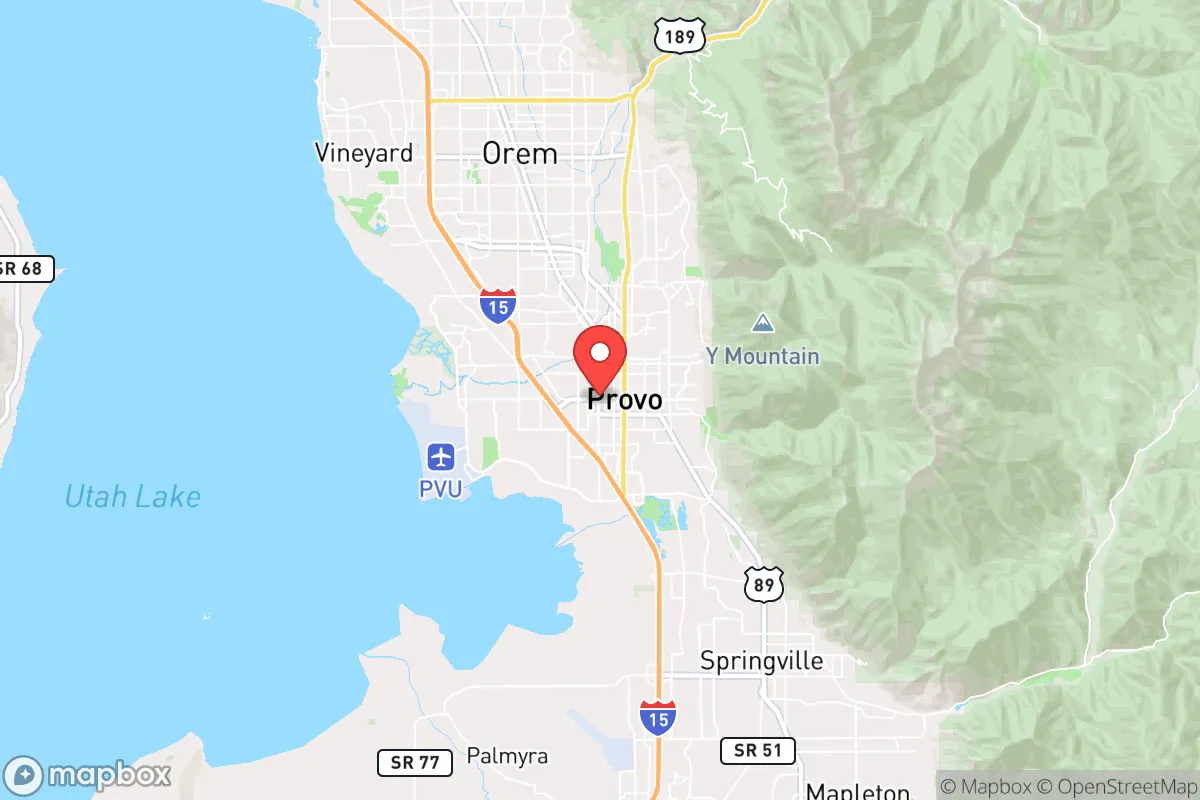
Provo was founded in 1849 by Mormon pioneers sent by Brigham Young to establish a farming and trading outpost in Utah Valley. The original settlers were predominantly members of the Church of Jesus Christ of Latter-day Saints (LDS) from the eastern United States and Europe, who arrived in organized wagon companies. They built the city around a central grid, with the historic Pioneer Park and Downtown Provo neighborhoods serving as the initial settlement core. The completion of the transcontinental railroad in 1869 and the arrival of the Utah Southern Railroad in 1873 spurred growth, bringing a wave of Scandinavian and British converts who settled in the North Park and Franklin neighborhoods, where their descendants remain today. By the early 20th century, Provo’s population was overwhelmingly white and LDS, with a small Hispanic presence from railroad and agricultural labor, concentrated in the Westside area near the railroad tracks.
Modern era (post-1965)
The post-1965 era brought significant demographic shifts, though Provo remained less diverse than many U.S. cities. The Immigration and Nationality Act of 1965 opened doors for new arrivals, but Provo’s growth was driven primarily by domestic in-migration—especially LDS families moving from other states and BYU students from across the country. The Hispanic population grew steadily from the 1970s onward, fueled by agricultural and construction jobs, with many settling in the Westside and Lakeview North neighborhoods, where they now form a visible community with Spanish-language churches and businesses. The East/Southeast Asian population (1.9%) and Indian subcontinent population (0.3%) are small but present, largely tied to BYU’s international student programs and tech sector employment, with clusters near the university in the Joaquin and South Campus areas. The Black population remains minimal at 0.9%, reflecting Provo’s historical homogeneity and limited economic pull for African American migrants. Suburbanization after 1980 pushed growth south and east into the East Bay and Riverbottoms neighborhoods, which absorbed middle-class white families seeking newer housing and better schools.
The future
Provo’s population is heading toward modest diversification, but the city is not homogenizing or tribalizing into distinct enclaves. The Hispanic share (18.9%) is the fastest-growing segment, driven by both immigration and higher birth rates, and is expected to reach 25-30% by 2040, with continued concentration in the Westside and Lakeview North neighborhoods. The East/Southeast Asian and Indian communities are likely to grow slowly, tied to BYU and tech jobs, but will remain small and dispersed. The white, LDS-majority population is aging slightly but remains dominant, with young families moving into newer developments in the South Provo and East Bay areas. The city’s strong economy—anchored by BYU, tech firms like Qualtrics and Adobe, and a growing healthcare sector—will continue to attract educated, conservative-leaning migrants, reinforcing Provo’s character as a family-centric, religiously influenced community. Gentrification pressures in the Westside may slowly integrate Hispanic neighborhoods, but cultural and economic divides are likely to persist.
For someone moving in now, Provo is becoming a more diverse but still overwhelmingly white and LDS city, where the Hispanic community is growing in size and visibility while other minority groups remain niche. The city offers a safe, highly educated, and family-oriented environment with strong job prospects, but newcomers should expect a culture deeply shaped by the LDS Church and a population that is younger and more religious than the national average. The next decade will see gradual demographic change, not a transformation, making Provo a stable choice for those seeking a conservative, community-focused lifestyle.

* Values derived from national, state, county, city and local statistics and may differ in a specific area. Last updated: 2026-04-15T23:40:26.000Z
Narrative content on this page is AI-generated and may contain mistakes. Verify any details that matter before acting on them.
ReloMaps may earn a commission from affiliate links at no extra cost to you.

