Photo: Wikipedia
Strategic Assessment of Provo, UT
Meaningful friction. Expect exposure to either population pressure, blast zones, or natural disaster risk. Consider buying a retreat property.
What does the Strategic Assessment tell us?
Our Strategic Assessment grades tactical survivability of an area. Major population centers, military targets, fallout zones, natural disasters, and border exposure all drive risk — lower exposure means a more defensible position in a crisis.
This is heavily inspired by Joel Skousen's Strategic Relocation book. Highly recommended you checkout the book ($)What does this tell us?
Our Strategic Assessment grades tactical survivability of an area. Major population centers, military targets, fallout zones, natural disasters, and border exposure all drive risk — lower exposure means a more defensible position in a crisis.
This is heavily inspired by Joel Skousen's Strategic Relocation book. Highly recommended you checkout the book ($)Strategic Pillars

Key Distances
Regional Safe Places
Below is our recommended "safe zones" in Utah and the surrounding area based on our strategic heuristics. For most people, it's unrealistic to live in a “safe zone” full-time due to work, family or other personal reasons. They tend to be more rural. However, many of these areas are perfect for second homes and retreat properties that double as a vacation home or even a short-term rental.


Important Note: For informational purposes only. This does not mean nothing bad ever happens in the green zones. Please use common sense. This is based on public data and modeled with AI. We tried to take a conservative approach but mistakes happen. We update this regularly as new information becomes available.
Solar Generator Recommendations
Backup power matters more here than in safer locations. We've picked three solar generators across budgets and capacity tiers — start with the budget unit if you only need a few essentials, or step up if you want to run a fridge and HVAC for days at a time.

Jackery Portable Power Station Explorer 300
Budget OptionPower on the Go: Weighing only 11 lbs, it's convenient to set up and store with book-sized foldable solar panels

BLUETTI Portable Power Station AC180
Designed for both indoor and outdoor scenarios, AC180 is highly capable as it has a robost capacity and continuous output power.

EF ECOFLOW DELTA Pro Ultra Power Station
Upgraded PickEcoFlow DELTA Pro Ultra is a whole-home energy system designed to grow with your family. Integrated with the Smart Home Panel 2, it scales to meet your evolving energy needs — keeping your home powered, intelligent, and secure through every stage of life.
We earn a commission, at no additional cost to you.
Strategic Assessment Analysis
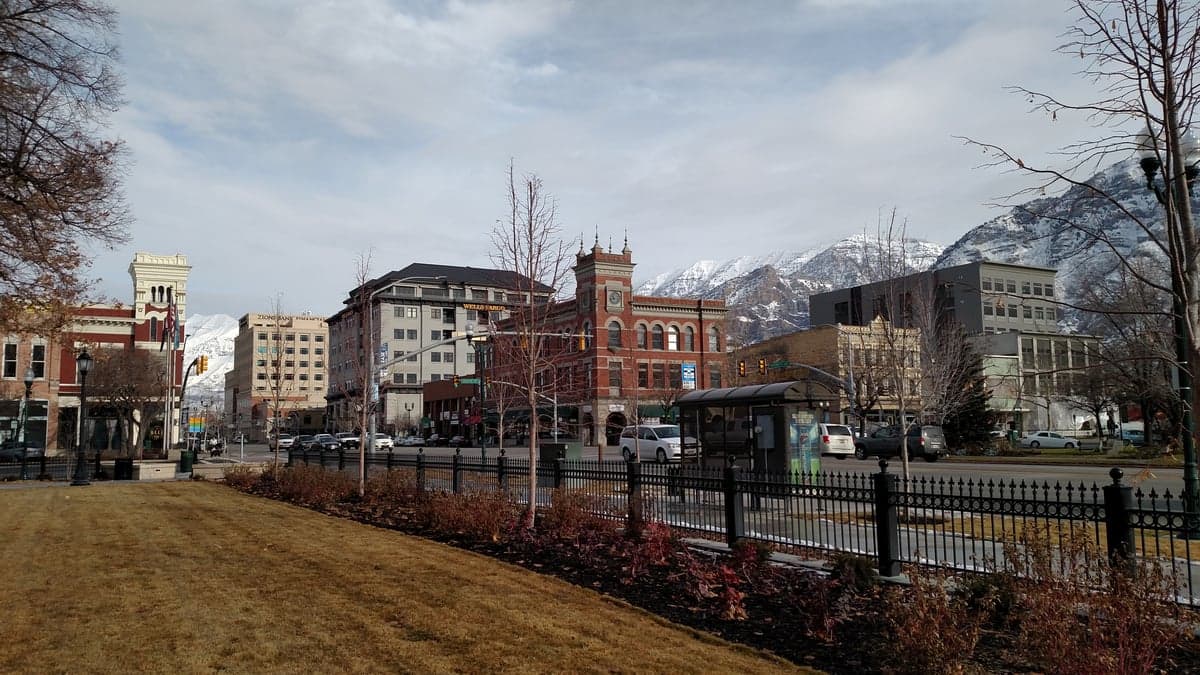
Provo, Utah, occupies a unique strategic position in the Mountain West, offering a blend of natural fortress geography and modern infrastructure that appeals to those prioritizing long-term resilience. Nestled against the Wasatch Range and anchored by Utah Lake, the city benefits from a strong local economy, a deeply rooted community culture, and a state government that has consistently prioritized individual liberties and self-reliance. For a relocator with a conservative, prepper-oriented mindset, Provo presents a compelling case as a secondary or primary relocation node, provided one understands its specific vulnerabilities and advantages in a scenario of national instability.
Geographic position and natural advantages for long-term security
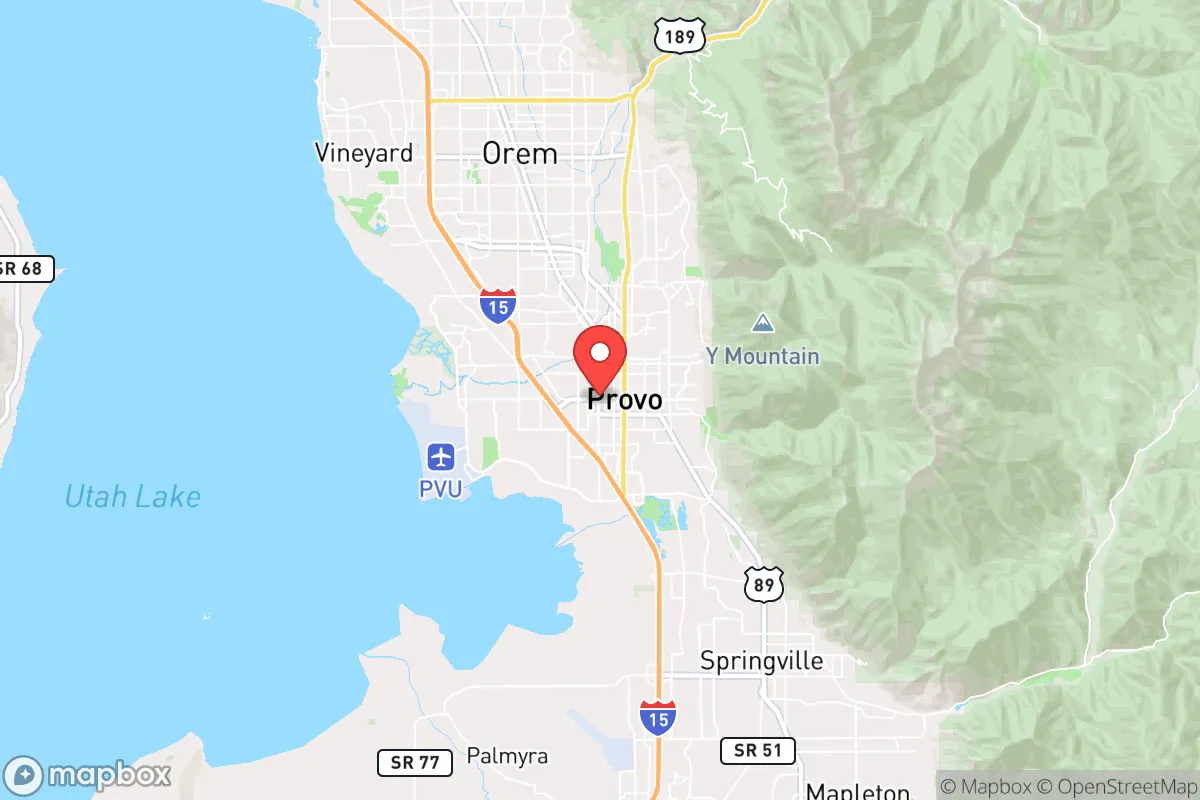
Provo’s geography is its first and most significant strategic asset. The city sits in a narrow valley corridor between the Wasatch Mountains to the east and Utah Lake to the west, creating a natural choke point that limits approach vectors. The surrounding mountain ranges—including the Uinta-Wasatch-Cache National Forest—provide immediate access to high-altitude terrain, water catchments, and game habitat. This is not flat, exposed desert; it is a vertical landscape that offers defensible positions and multiple escape routes into the backcountry. The Provo River, which runs through the city, is a reliable surface water source, and the nearby Jordanelle and Deer Creek reservoirs add significant water storage capacity for the region. For a relocator thinking in terms of decades, the Wasatch Front’s snowpack acts as a natural water battery, recharging aquifers and streams each spring. The valley’s elevation—around 4,500 feet—also means cooler summers and a lower risk of the extreme heat events that plague lower-elevation Western cities, a factor that becomes critical if grid-dependent cooling fails.
Risks, exposures, and proximity to fallout-relevant landmarks
No location is without risk, and Provo has several exposures that a serious prepper must weigh. The most obvious is its proximity to the broader Wasatch Front urban corridor, which runs from Ogden through Salt Lake City to Provo. Salt Lake City, just 45 miles north, is a major transportation hub with a large international airport, a significant military presence (Hill Air Force Base), and critical infrastructure like the Tooele Army Depot—all potential targets in a conflict scenario. A detonation or major incident in Salt Lake City could produce fallout patterns that affect Provo, depending on wind direction. Additionally, the Utah Valley itself is seismically active; the Wasatch Fault runs directly through the region, and a major earthquake (a 7.0+ event is considered overdue by geologists) would severely damage older infrastructure, disrupt the I-15 corridor, and potentially cause liquefaction in areas near Utah Lake. The lake itself is a shallow, eutrophic water body—not a reliable drinking source without heavy treatment. For the relocator, the key takeaway is that Provo is not a remote, off-grid sanctuary; it is a medium-sized city (population ~120,000) within a larger metropolitan area of over 2.5 million. Its resilience depends heavily on the stability of the surrounding region and the state’s ability to maintain order.
Practical resilience for a relocator: food, water, energy, and defensibility
For the individual or family looking to establish a resilient foothold, Provo offers several practical advantages that are hard to replicate elsewhere. Water is the first concern: the Provo River and its tributaries provide a year-round surface supply, and the city’s municipal water system draws from high-quality mountain sources. A relocator with a small parcel near the river or in the foothills can reasonably develop a gravity-fed or solar-pumped water system. The local climate supports extended growing seasons for cold-hardy crops (root vegetables, greens, apples), and the surrounding agricultural areas—Utah County is a major producer of hay, alfalfa, and livestock—mean that local food networks are more robust than in most Western metros. Energy is another strong point: Utah has a deregulated energy market, and Provo is served by Provo City Power, a municipal utility that has invested in local generation and grid hardening. Solar potential is excellent, with over 200 sunny days per year, and net metering policies are favorable for homeowners who want to build battery-backed systems. Defensibility is more nuanced. The valley floor is open and exposed, but the east bench neighborhoods (e.g., near the Y Mountain trailhead, or up Provo Canyon) offer terrain that is naturally defensible, with limited road access and high ground overlooking the city. The local culture is heavily influenced by The Church of Jesus Christ of Latter-day Saints, which emphasizes community self-reliance, food storage, and emergency preparedness. This means that a relocator will find a population that is already culturally aligned with prepping principles, including a widespread network of home storage, canning, and mutual aid. However, this same cultural cohesion can be a double-edged sword: outsiders may find it difficult to integrate into established networks, and the social pressure to conform can be intense.
The overall strategic picture for a conservative relocator
Taking the full view, Provo represents a high-functioning, community-oriented enclave within a state that has consistently pushed back against federal overreach and maintained a strong local governance structure. For a relocator who is serious about resilience, the calculus is clear: Provo is not a bug-out location for a complete societal collapse—it is too connected, too populated, and too close to high-value targets for that. Instead, it is a staging ground and a community node where one can build skills, store supplies, and establish relationships before a crisis, and then have the option to move deeper into the mountains (the Uintas, the Book Cliffs, or southern Utah) if conditions deteriorate. The city’s strengths—reliable water, a prepper-friendly culture, a strong local economy, and defensible terrain on its edges—make it one of the better urban options in the Intermountain West for a conservative family that wants to be prepared without going fully off-grid. The weaknesses—seismic risk, proximity to Salt Lake City, and the potential for social friction with the dominant culture—are manageable with proper planning and a low-profile approach. For the strategic relocator, Provo is a solid B+ location: not a fortress, but a well-stocked forward operating base with good neighbors and a defensible perimeter. The key is to buy on the east bench, invest in water and solar infrastructure, and build relationships with the local preparedness community before the window of stability closes.

* Values derived from national, state, county, city and local statistics and may differ in a specific area. Last updated: 2026-04-15T23:40:26.000Z
Narrative content on this page is AI-generated and may contain mistakes. Verify any details that matter before acting on them.
ReloMaps may earn a commission from affiliate links at no extra cost to you.

