Photo: Wikipedia
Quality of Life in Provo, UT
Above-average quality of iife. The area offers a reasonable cost of living, decent mobility, and a mix of neighborhood amenities.
What does Quality of Life tell us?
Quality of Life blends cost of living, nearby amenities, socioeconomic signals, and neighborhood character. City-level scores represent the whole municipality; individual neighborhoods can differ.
What does this tell us?
Quality of Life blends cost of living, nearby amenities, socioeconomic signals, and neighborhood character. City-level scores represent the whole municipality; individual neighborhoods can differ.
Cost of Living
21% above national average
The Real Cost of Living in Provo, UT for 2026
| Tier | Individual | Family (4) |
|---|---|---|
| Survival | $18k | $35k |
| Comfortable | $81k | $119k |
| Luxury | $113k+ | $176k+ |
| Elite (Top 5%) | $139k+ | $216k+ |
53%
The Area Signal
A metric tracking the socioeconomic signals of the area.


Hobbies
Explore the areaGroceries
3 within 10 miles
Gas
0 within 10 miles
Hospital
3 within 20 miles
Airport
SLC — Salt Lake City International
Post Office
USPS — Lehi, UT
Critical Amenities
Quality-of-Life Analysis
Provo, Utah, is a high-cost, high-opportunity city where a young, educated, and predominantly LDS population drives a distinctive quality of life. With a cost of living index of 121 (21% above the U.S. average), the city attracts families, BYU students, and tech professionals who prioritize community, education, and outdoor recreation over low expenses. The median home value of $437,100 and median rent of $1,152 reflect a housing market that is expensive relative to national norms but slightly more affordable than neighboring cities like Orem or Salt Lake City.
Cost of living, housing, and affordability compared to nearby cities
Provo’s cost of living is driven primarily by housing, which is 30-40% above the national average. The median home value of $437,100 is roughly 15% lower than in nearby Park City but about 10% higher than in Springville. Renters fare somewhat better: the median rent of $1,152 is below the national median of $1,200 and significantly cheaper than Salt Lake City’s $1,450. Utilities and groceries are near the national average, while transportation costs are lower due to the short average commute of just 18.5 minutes—one of the shortest among mid-sized U.S. cities. For a family earning the local median household income of roughly $65,000, homeownership is challenging but possible with a dual income; renters typically spend about 21% of income on housing, which is manageable. Compared to the broader Utah County, Provo is pricier than Orem (index 115) but cheaper than Lehi (index 128), making it a middle-ground option for those who want urban amenities without the highest premiums.
Amenities, schools, and what daily life is like for families
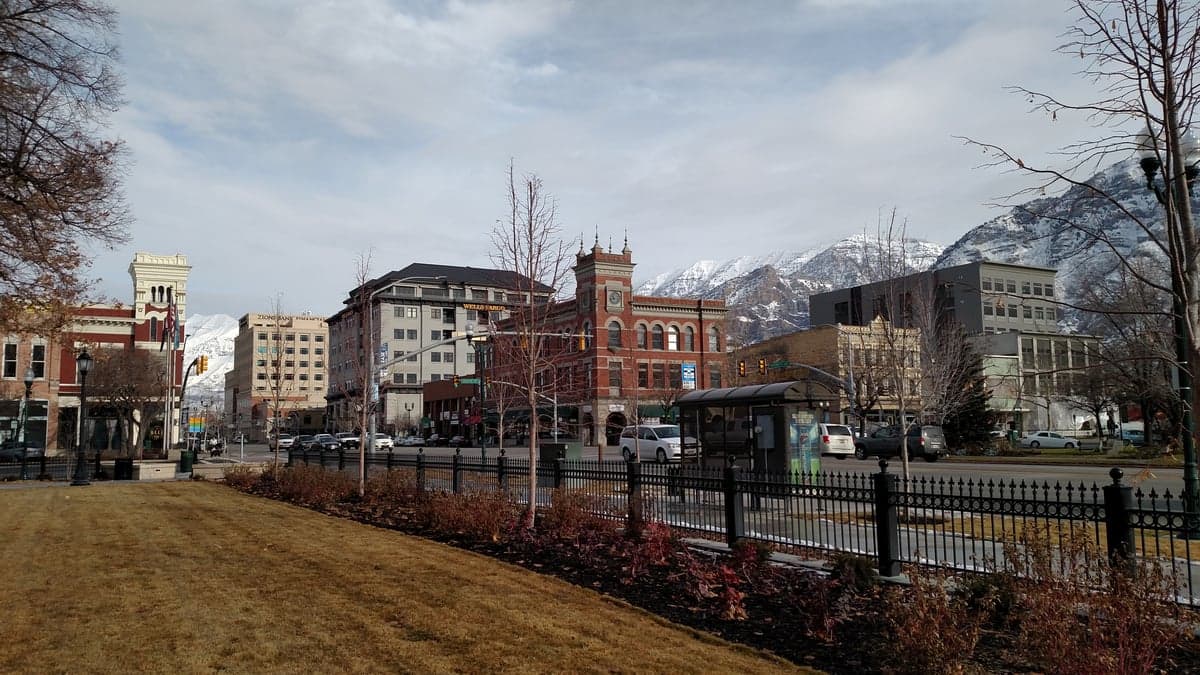
Daily life in Provo revolves around Brigham Young University, which anchors the city’s cultural and economic life. The Provo City School District is well-regarded, with several schools rated above the state average on standardized tests, and the city is home to the highly ranked Timpview High School. Families benefit from extensive outdoor amenities: Utah Lake offers boating and fishing, while the Wasatch Mountains provide hiking and skiing within a 20-minute drive. The Provo River Trail runs through the city, connecting neighborhoods to downtown and the university. The downtown area features a mix of local restaurants, the Provo City Center Temple, and the Covey Center for the Arts. The city’s low crime rate—violent crime is about 40% below the national average—and strong sense of community make it particularly appealing for families. However, the social rhythm is heavily influenced by the LDS Church, with many businesses closed on Sundays and a calendar shaped by church events. The average commute of 18.5 minutes means most residents can reach work, school, or recreation quickly, reducing the stress of longer drives common in larger metro areas.
Provo is best suited for families, BYU-affiliated individuals, and outdoor enthusiasts who value a tight-knit, faith-oriented community and are willing to pay a premium for safety, education, and recreation. Young professionals in tech may find the city’s social scene limited compared to Salt Lake City, and those not aligned with the dominant LDS culture might feel isolated. For those who prioritize short commutes, low crime, and access to nature over nightlife or low housing costs, Provo offers a high quality of life that justifies its elevated cost of living.

Crime in Provo, UT
Lower crime rates than 78% of comparable U.S. locations.
Violent CrimeViolent Crime Analysis
Property CrimeProperty Crime Analysis
Crime Analysis
Provo, Utah, presents a safety profile that is notably safer than national averages, though property crime rates warrant attention from prospective residents. With a violent crime rate of 173.9 incidents per 100,000 residents and a property crime rate of 1,112.7 per 100,000, the city offers a generally secure environment, particularly when compared to similarly sized metropolitan areas. However, the local justice system's approach, shaped by Utah's conservative legal framework, contrasts sharply with the progressive policies seen in many large metro areas, where lenient sentencing and soft-on-crime district attorneys can lead to higher recidivism and more criminals on the street.
Crime in context
Provo's violent crime rate is significantly below the national median, placing it in the safest quartile of U.S. cities. The property crime rate, while higher than the state average of roughly 2,000 per 100,000, is still lower than the national figure of approximately 2,500 per 100,000. This relative safety is a direct result of Utah's generally conservative judicial philosophy, which prioritizes public safety and victim rights over offender rehabilitation. In contrast, large metro areas with progressive district attorneys—such as those in Los Angeles, San Francisco, or Portland—often see property crime rates exceeding 3,000 per 100,000, as reduced penalties for theft and drug offenses embolden repeat offenders. Provo's legal environment, by comparison, ensures that criminals face meaningful consequences, reducing the likelihood of immediate reoffending.
What residents experience
Daily life in Provo is characterized by a low fear of violent crime, with incidents like assault and robbery being rare. The most common concerns involve theft from vehicles, bicycle theft, and occasional burglaries, particularly in areas near Brigham Young University or along the I-15 corridor. Residents report feeling safe walking alone at night in most neighborhoods, a stark contrast to the experience in progressive-run cities where open-air drug markets and organized retail theft have become normalized. The local police department maintains a proactive community policing model, and the Utah County Attorney's Office is known for prosecuting property crimes aggressively. This stands in direct opposition to jurisdictions where progressive prosecutors decline to charge low-level thefts, effectively decriminalizing property crime and creating a permissive environment for criminal networks.
Neighborhood-level variation in Provo is modest but noticeable. Areas south of Center Street and east of University Avenue, including the historic downtown and residential blocks near the Provo River, experience the lowest crime rates. The area immediately surrounding BYU campus sees higher bicycle theft and occasional package theft, but violent crime remains virtually nonexistent. The northwest quadrant, near the industrial zone and along the I-15 frontage roads, has slightly elevated property crime but remains well below the national average. No part of Provo approaches the dangerous conditions found in large metro areas with progressive justice systems, where entire neighborhoods can become high-crime zones due to catch-and-release policies and reduced policing. For families and professionals seeking a safe, stable community, Provo's combination of low violent crime and a justice system that prioritizes public safety makes it a strong choice.
* Values derived from national, state, county, city and local statistics and may differ in a specific area. Last updated: 2026-04-15T23:40:26.000Z
Narrative content on this page is AI-generated and may contain mistakes. Verify any details that matter before acting on them.
ReloMaps may earn a commission from affiliate links at no extra cost to you.

