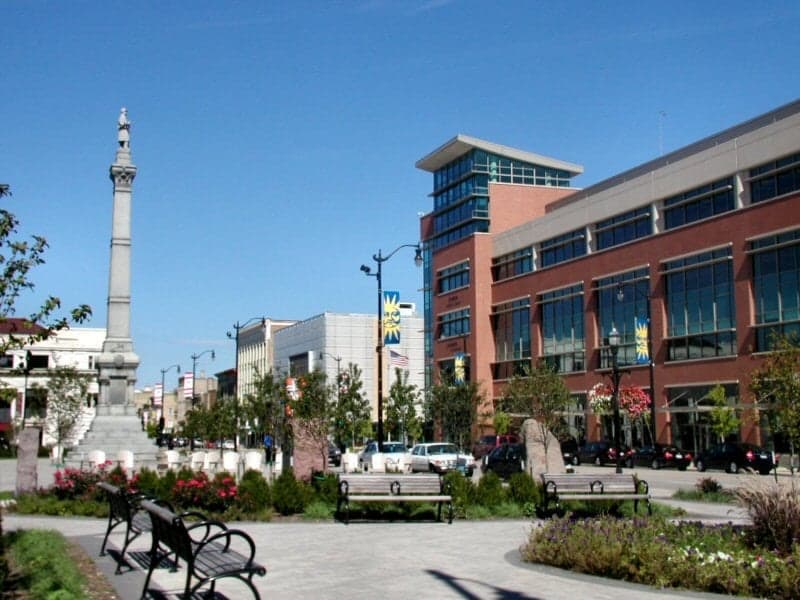
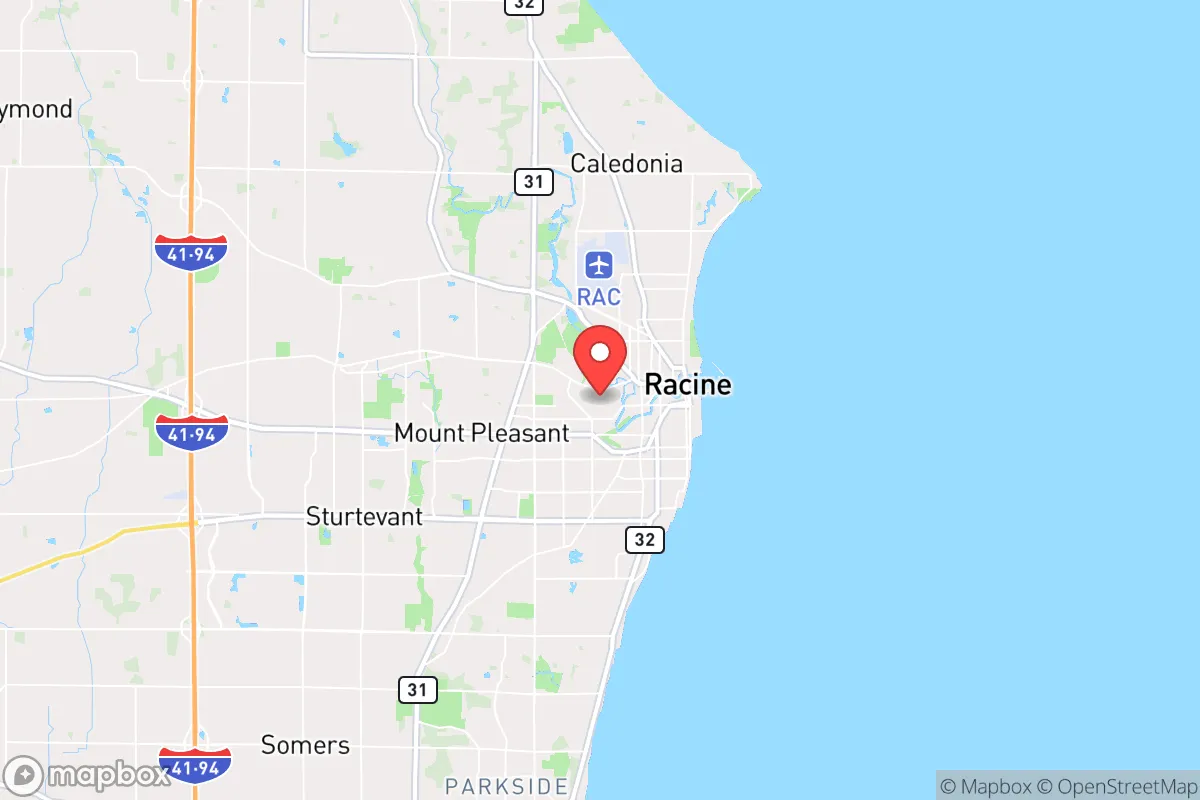
Photo: Wikipedia
Strategic Assessment of Racine, WI
Meaningful friction. Expect exposure to either population pressure, blast zones, or natural disaster risk. Consider buying a retreat property.
What does the Strategic Assessment tell us?
Our Strategic Assessment grades tactical survivability of an area. Major population centers, military targets, fallout zones, natural disasters, and border exposure all drive risk — lower exposure means a more defensible position in a crisis.
This is heavily inspired by Joel Skousen's Strategic Relocation book. Highly recommended you checkout the book ($)What does this tell us?
Our Strategic Assessment grades tactical survivability of an area. Major population centers, military targets, fallout zones, natural disasters, and border exposure all drive risk — lower exposure means a more defensible position in a crisis.
This is heavily inspired by Joel Skousen's Strategic Relocation book. Highly recommended you checkout the book ($)Strategic Pillars

Key Distances
Regional Safe Places
Below is our recommended "safe zones" in Wisconsin and the surrounding area based on our strategic heuristics. For most people, it's unrealistic to live in a “safe zone” full-time due to work, family or other personal reasons. They tend to be more rural. However, many of these areas are perfect for second homes and retreat properties that double as a vacation home or even a short-term rental.
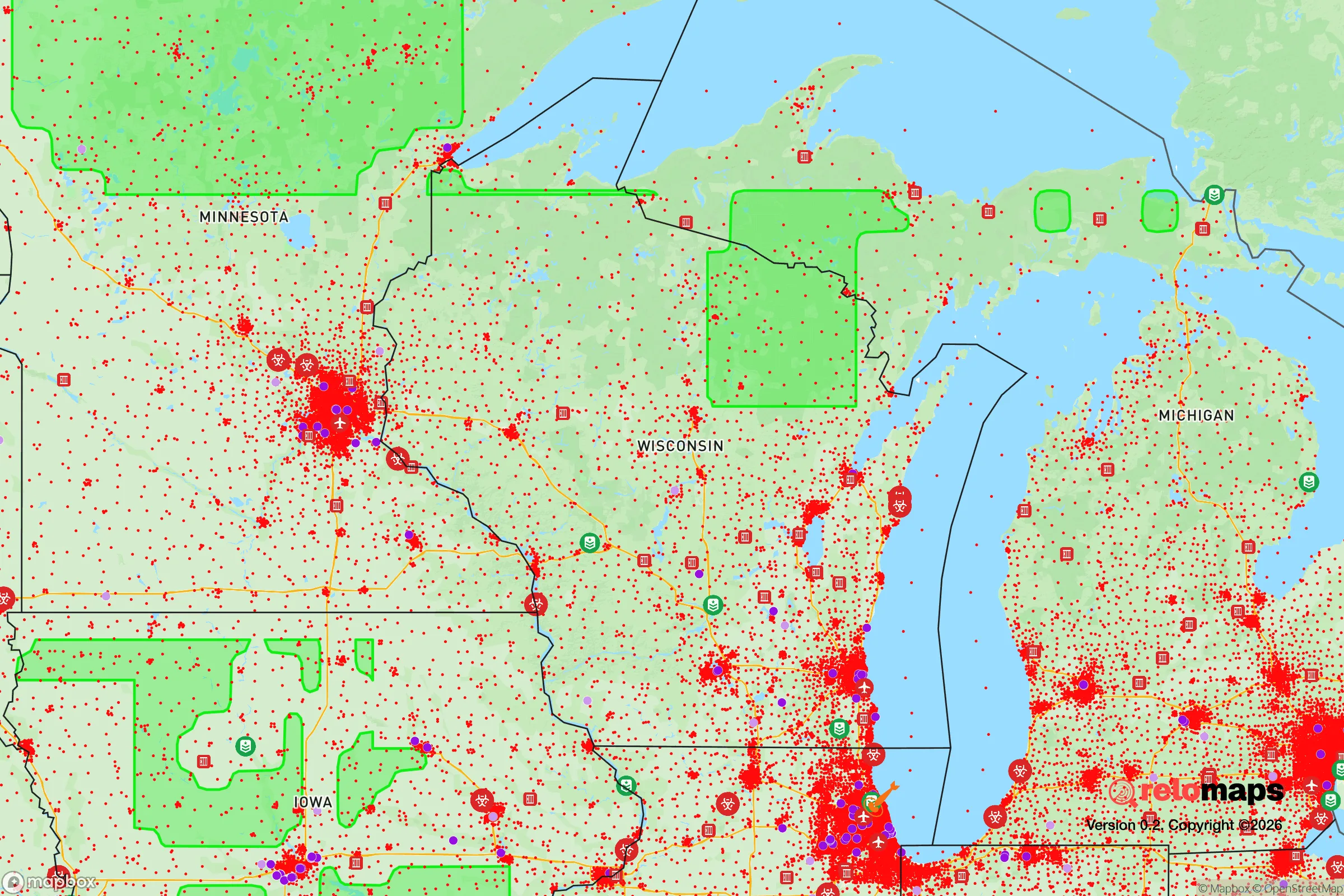
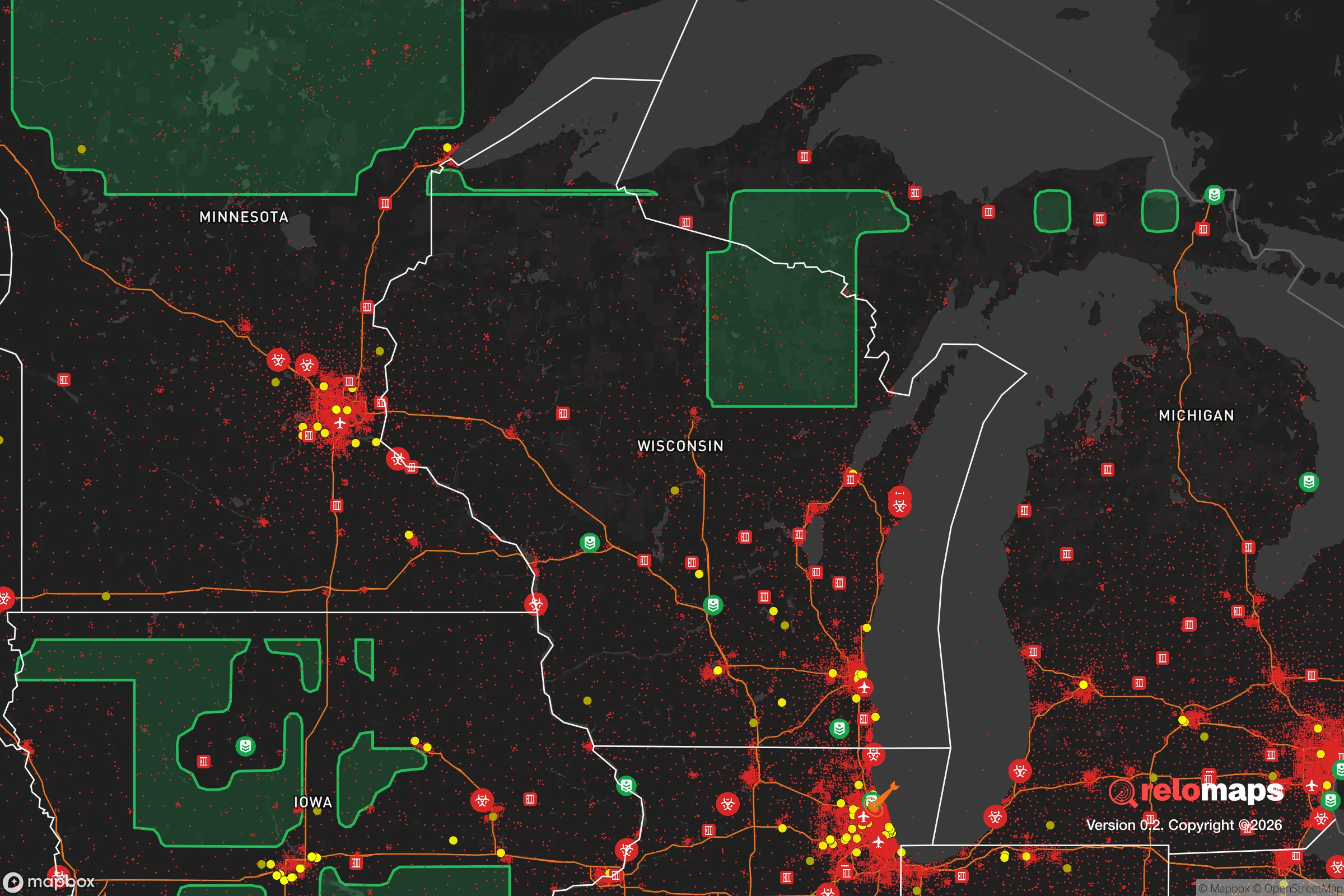


Important Note: For informational purposes only. This does not mean nothing bad ever happens in the green zones. Please use common sense. This is based on public data and modeled with AI. We tried to take a conservative approach but mistakes happen. We update this regularly as new information becomes available.
Solar Generator Recommendations
Backup power matters more here than in safer locations. We've picked three solar generators across budgets and capacity tiers — start with the budget unit if you only need a few essentials, or step up if you want to run a fridge and HVAC for days at a time.

Jackery Portable Power Station Explorer 300
Budget OptionPower on the Go: Weighing only 11 lbs, it's convenient to set up and store with book-sized foldable solar panels

BLUETTI Portable Power Station AC180
Designed for both indoor and outdoor scenarios, AC180 is highly capable as it has a robost capacity and continuous output power.

EF ECOFLOW DELTA Pro Ultra Power Station
Upgraded PickEcoFlow DELTA Pro Ultra is a whole-home energy system designed to grow with your family. Integrated with the Smart Home Panel 2, it scales to meet your evolving energy needs — keeping your home powered, intelligent, and secure through every stage of life.
We earn a commission, at no additional cost to you.
Strategic Assessment Analysis
Racine, Wisconsin, sits in a precarious strategic position that demands serious consideration for anyone prioritizing long-term resilience and self-sufficiency. While its location on Lake Michigan offers undeniable advantages in water security and temperate climate moderation, its proximity to the Chicago-Milwaukee corridor introduces significant vulnerabilities that a prepper or survivalist cannot ignore. For a conservative-leaning relocator concerned with civic unrest, mass casualty events, and systemic collapse, Racine presents a mixed bag: genuine natural assets paired with exposure to the very urban decay and political instability many are seeking to escape.
Geographic position and natural advantages for long-term survival
Racine’s primary strategic asset is its direct access to Lake Michigan, the largest freshwater source in the Great Lakes basin. In a scenario where municipal water systems fail or become contaminated, a household with a proper filtration setup—like a Berkey or a sand filter—can draw from an effectively inexhaustible supply. The lake also moderates temperatures, reducing the risk of extreme cold snaps compared to inland Wisconsin, which matters for both heating fuel consumption and crop survival during marginal growing seasons. The surrounding Racine County is a mix of agricultural land and light industrial zones, meaning that a relocator with acreage in the western or northern parts of the county can realistically pursue small-scale farming, livestock, and solar or wind energy without immediate urban encroachment. The Root River, which flows through the city and county, provides a secondary water source and a natural corridor for game movement, though it is not large enough to sustain a community alone. The area’s position roughly 30 miles south of Milwaukee and 60 miles north of Chicago places it within a day’s drive of multiple major medical centers and supply hubs—useful for pre-disaster stockpiling, but a liability when those same corridors become chokepoints during an evacuation or unrest event.
Risks, exposures, and proximity to fallout-relevant landmarks
The most glaring vulnerability for Racine is its location in the shadow of the Chicago-Milwaukee megalopolis. In the event of a mass casualty event, civil unrest, or a coordinated attack on critical infrastructure, Racine sits directly on the I-94 evacuation corridor that connects these two population centers. That highway is a natural funnel for refugees, looters, and military convoys, and any relocator should assume that the city’s eastern edge—closest to the lake and the interstate—will become a contested zone within hours of a major crisis. Additionally, Racine is within 20 miles of the Kenosha-Racine-Milwaukee industrial corridor, which includes multiple chemical plants, rail yards, and a major port facility in Milwaukee that could be a target for sabotage or collateral damage. The presence of the Racine Wastewater Treatment Plant and the nearby We Energies power plant (coal and natural gas) means that a grid-down scenario could release toxic plumes or create a secondary disaster zone. For those with a prepper mindset, the city’s proximity to the Great Lakes Naval Station in North Chicago (about 40 miles south) is a double-edged sword: it provides a potential military response asset, but also makes the region a target for any adversary seeking to disrupt naval operations. The fallout risk from a nuclear event—whether a dirty bomb or a strike on Chicago’s O’Hare or the Argonne National Laboratory near Lemont, Illinois—is real, with prevailing westerly winds potentially carrying contamination directly over Racine. A relocator should plan for a 50-mile buffer zone from any major city, and Racine fails that test.
Practical resilience for a relocator: food, water, energy, and defensibility
For a single individual or family willing to invest in off-grid capability, Racine County offers workable but not ideal conditions. Water is the strongest suit: Lake Michigan is a reliable, high-volume source, but accessing it requires either a shoreline property (expensive and exposed) or a long-distance hauling plan. The Root River and several smaller creeks in the county’s rural western townships (like Burlington or Waterford) provide secondary options, but these are subject to seasonal low flow and agricultural runoff. Food resilience is moderate: the county has a strong agricultural base, with dairy, corn, and soybean operations, but most of this is industrial-scale and not accessible to a smallholder without land. Farmers’ markets and local CSAs are common in normal times, but in a crisis, those supply chains will be the first to collapse. A relocator should plan to secure at least 5–10 acres in the western part of the county, away from the lake and the interstate, to establish a garden, orchard, and small livestock operation. Energy is a weak point: Racine’s grid is tied to the regional MISO network, which has shown fragility during winter storms (e.g., the 2021 Texas-style cold snap that caused rolling blackouts in the Midwest). Solar is viable, with average annual sunlight comparable to northern Illinois, but winter cloud cover will require battery storage and a backup generator. Defensibility is poor near the city itself—Racine’s urban core is dense, with narrow streets and limited fields of fire—but improves dramatically in the rural townships, where properties are separated by farmland and wooded lots. A well-chosen property with a long driveway, a well, and a septic system can be made reasonably defensible with basic perimeter measures. However, the lack of natural barriers (mountains, rivers wide enough to block vehicles) means that a determined group could approach from multiple directions. The local law enforcement presence is adequate for normal times, but the Racine Police Department and Racine County Sheriff’s Office are understaffed relative to the population, and in a crisis, response times will stretch to hours or days.
The overall strategic picture for Racine is one of calculated risk. It offers genuine water security and a moderate climate that supports year-round habitation and food production, but it sits too close to the urban chaos that most preppers are trying to avoid. For a relocator who is willing to invest in a rural property in the western part of the county, maintain a low profile, and stockpile supplies for a 90-day window of self-sufficiency, Racine can work as a base of operations—especially if the goal is to ride out a temporary crisis rather than a permanent collapse. But for those seeking true isolation, defensible terrain, and distance from fallout targets, the upper peninsula of Michigan or the Driftless Region of southwestern Wisconsin offer far better options. Racine is a compromise: better than living in Chicago, but not by as much as the lake views might suggest. If you are serious about resilience, treat Racine as a stepping stone, not a destination, and have a bug-out plan that heads west or north within the first 24 hours of a major event.

* Values derived from national, state, county, city and local statistics and may differ in a specific area. Last updated: 2026-05-03T20:39:03.000Z
Narrative content on this page is AI-generated and may contain mistakes. Verify any details that matter before acting on them.
ReloMaps may earn a commission from affiliate links at no extra cost to you.

