Photo: Wikipedia
Demographics of Radcliff, KY
Affluence Level in Radcliff, KY
A middle-class area roughly in line with national averages across income, home values, education, and employment.
People of Radcliff, KY
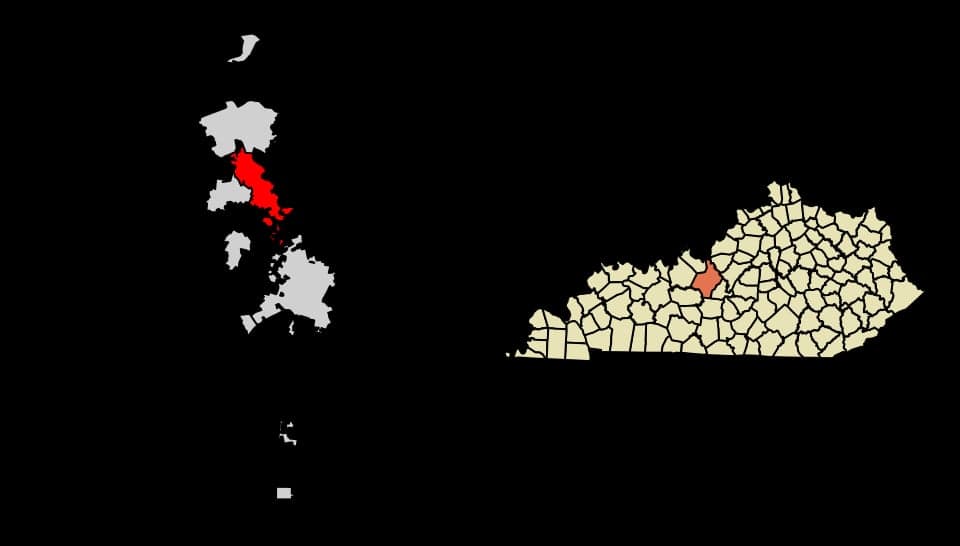
Radcliff, Kentucky, is a city of 22,967 residents shaped overwhelmingly by the U.S. Army and the Cold War. Its population is distinctly younger and more racially diverse than the surrounding Hardin County, with a 56.6% white, 23.9% Black, and 8.8% Hispanic composition, yet it remains a low-density, family-oriented community where only 16.6% of adults hold a college degree. The city’s identity is rooted in its role as the primary civilian gateway to Fort Knox, creating a transient, patriotic, and working-class character that sets it apart from Kentucky’s more agrarian towns.
How the city was settled and grew
Radcliff did not exist before 1918. The area was sparsely settled farmland until the U.S. Army established Camp Knox (later Fort Knox) that year, drawing a small population of laborers and merchants. The city was formally incorporated in 1956, but its real growth exploded during the Cold War buildup of the 1950s and 1960s. The original settlers were overwhelmingly white, native-born Kentuckians and Southerners who moved to work in construction, retail, and base support services. They built the earliest neighborhoods like Oak Grove and Westview, which remain predominantly white, older subdivisions today. The 1950s and 1960s also saw the first wave of Black families, many of them military-affiliated or civilian workers from the South, settling in areas like Sun Valley and Colonial Heights, where Black homeownership became concentrated. By 1970, Radcliff’s population had surged past 10,000, almost entirely driven by Fort Knox’s permanent presence and the Vietnam-era draft.
Modern era (post-1965)
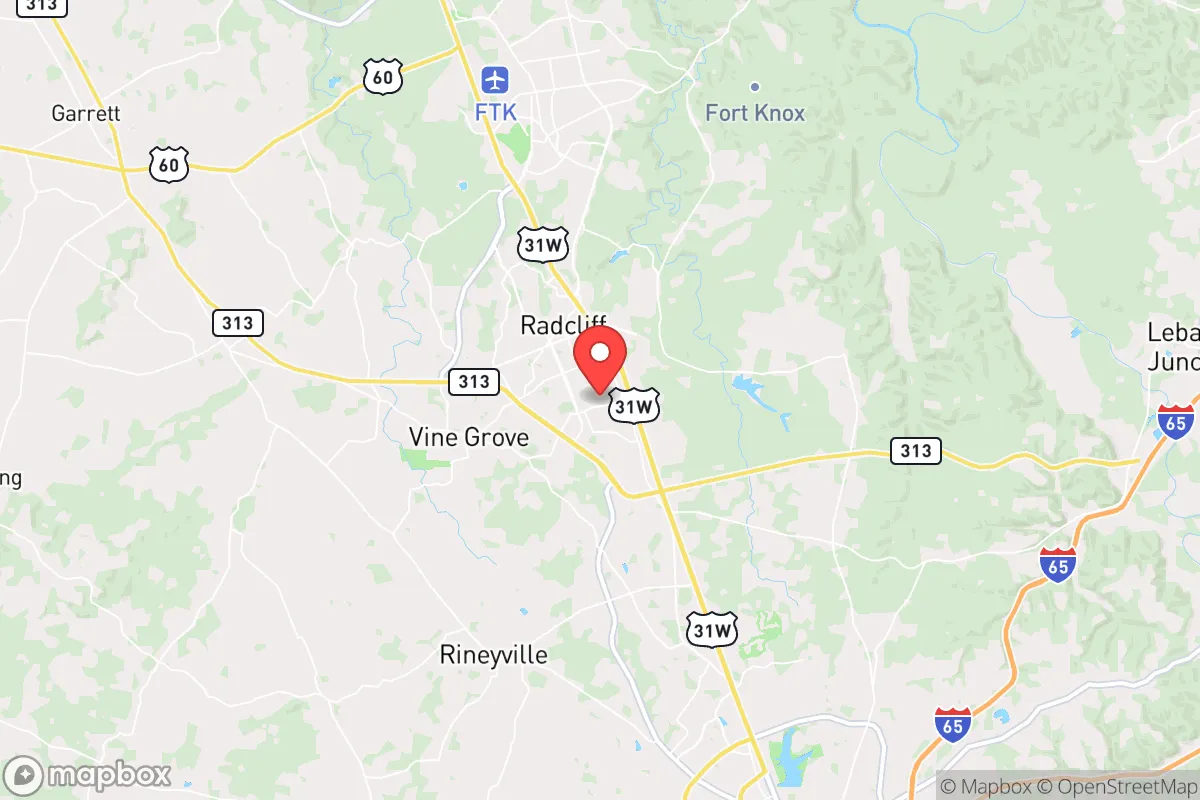
The 1965 Hart-Cellar Act had a modest direct effect on Radcliff, as the city’s foreign-born population remains low at just 1.8%. However, the post-1965 era brought major domestic demographic shifts. The all-volunteer military, established in 1973, transformed Fort Knox into a more racially integrated institution, and Radcliff absorbed the families of Black, Hispanic, and East/Southeast Asian service members. The Woodland Hills and Lincoln Trail neighborhoods, built in the 1970s and 1980s, became the most diverse areas, with a mix of white, Black, and Hispanic households. The 1990s and 2000s saw a notable influx of Filipino and Korean families (the 2.6% East/Southeast Asian share), many of whom are military spouses or veterans, clustering around North Dixie Boulevard and the Fort Knox Gate area. The Indian subcontinent population (0.7%) is smaller and more dispersed, often tied to professional roles in military medicine or logistics. The Hispanic population (8.8%) grew steadily after 2000, driven by both military families and civilian workers in construction and service industries, with a visible presence in Sun Valley and newer apartment complexes near the base. Black residents, now 23.9% of the city, remain the largest minority group, with deep roots in the Colonial Heights and Sun Valley neighborhoods, though younger Black families are increasingly moving into newer subdivisions like Meadowood.
The future
Radcliff’s population is plateauing, with slow growth projected over the next decade. The city is not homogenizing; instead, it is solidifying into distinct, stable enclaves. The white population (56.6%) is aging and declining slightly, while the Black and Hispanic shares are holding steady or growing modestly through military turnover and natural increase. The East/Southeast Asian community is likely to remain small but stable, tied to Fort Knox’s medical and technical roles. The Indian subcontinent population is too tiny to drive trends. The biggest demographic wildcard is Fort Knox itself: any major base realignment or mission change could rapidly alter Radcliff’s composition. For now, the city is becoming a more settled, less transient place as military families increasingly choose to stay after retirement, deepening the roots of all racial groups in their respective neighborhoods.
Radcliff is becoming a stable, racially diverse, working-class military suburb where neighborhoods remain somewhat tribalized by race and era of construction. For a conservative-leaning family or individual moving in, this means a patriotic, family-oriented environment with clear community identities, low crime relative to similarly sized Kentucky cities, and a population that values service and stability over rapid change. The city’s future is tied to Fort Knox, and that anchor provides both predictability and a distinct, grounded character.

* Values derived from national, state, county, city and local statistics and may differ in a specific area. Last updated: 2026-04-21T09:43:20.000Z
Narrative content on this page is AI-generated and may contain mistakes. Verify any details that matter before acting on them.
ReloMaps may earn a commission from affiliate links at no extra cost to you.

