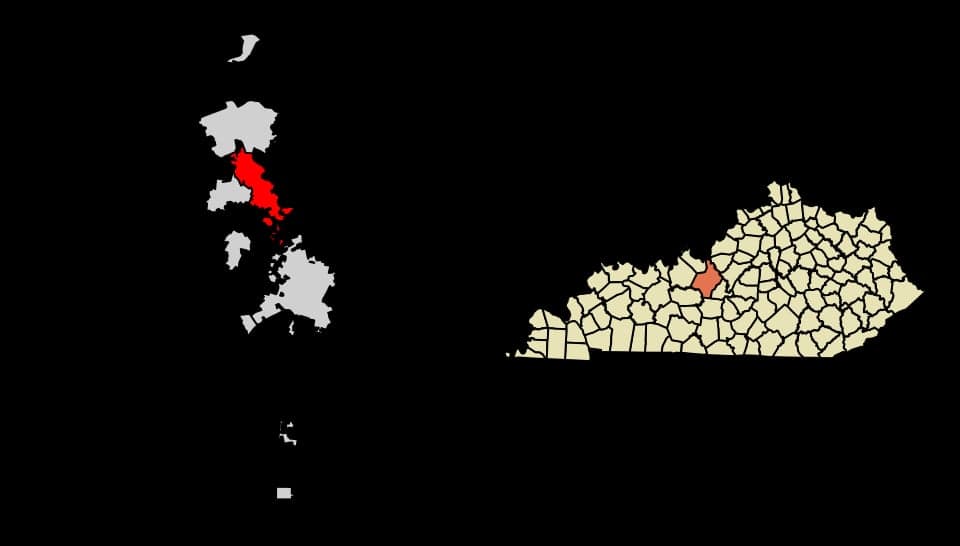
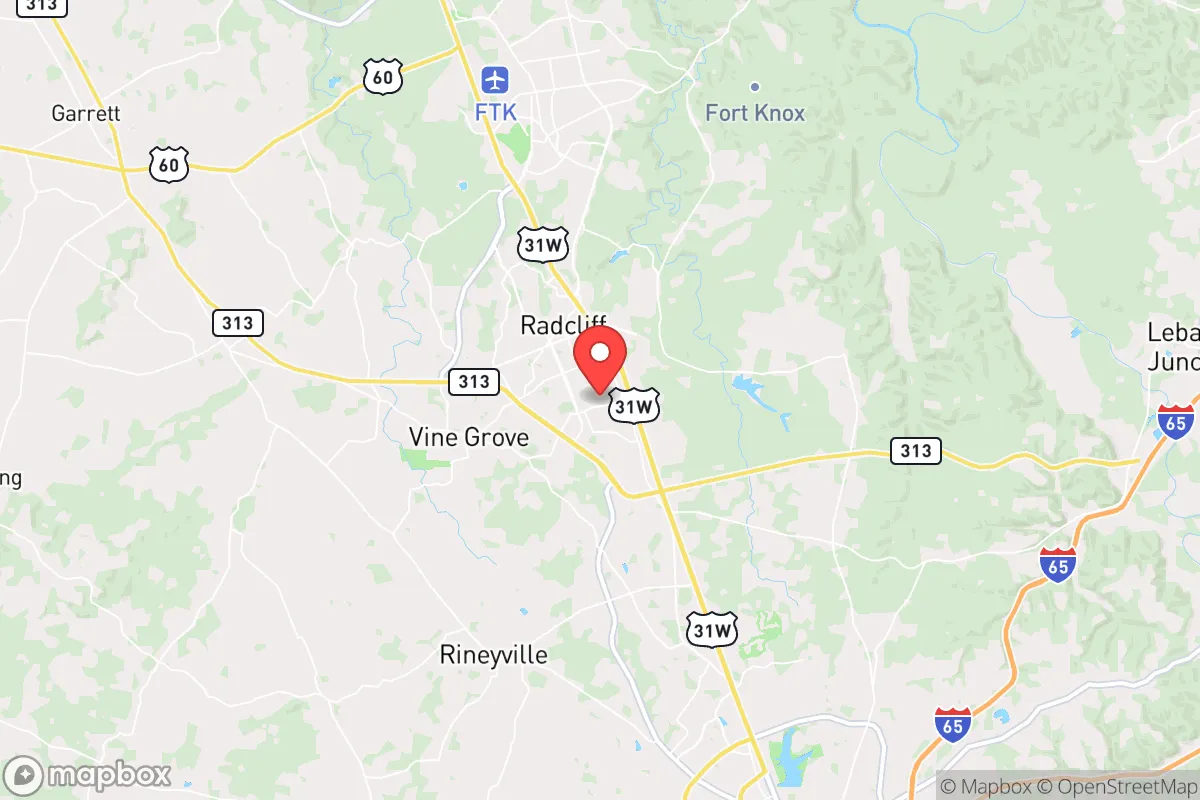

Photo: Wikipedia
Political ClimatePolitical Climate in Radcliff, KY
District shown is the primary district for this city’s centroid. Cities may span multiple districts.
Local Political AnalysisPolitical Analysis of Radcliff, KY
Radcliff, Kentucky, sits squarely in deep-red territory with a Cook PVI of R+20, meaning the area votes about 20 points more Republican than the national average. In the 2024 election, Hardin County went for the GOP candidate by a comfortable margin, and that’s been the pattern for decades—this isn’t a place that flips blue in any recent memory. But if you’ve lived here as long as I have, you’ve seen the political winds shift in subtle ways, and not always for the better. The conservative foundation is still rock-solid, but there’s a creeping unease about outside influences trying to nudge things leftward, especially on issues like local governance and personal freedoms.
How it compares
Drive 30 minutes north to Elizabethtown, and you’ll find a similar conservative vibe, though it’s a bit more moderate due to the larger population and military presence from Fort Knox. Radcliff itself is more insular—folks here value self-reliance and don’t take kindly to government overreach. Contrast that with Louisville, about 45 minutes northeast, which is a blue island in a red state, pushing progressive policies on everything from zoning to public health mandates. Even within Hardin County, Radcliff stands out as a place where the Second Amendment is a given, not a debate, and where local leaders generally keep their noses out of your business. The nearby town of Vine Grove leans similar, but Radcliff has a stronger “don’t tread on me” streak, likely because many residents are veterans or military families who’ve seen firsthand what happens when bureaucrats get too cozy with power.
What this means for residents
For the average Radcliff resident, the political climate means lower taxes and fewer regulations compared to blue-leaning areas—property taxes here are a fraction of what you’d pay in Louisville, and there’s no city income tax. But it also means you have to stay vigilant. In recent years, there’s been chatter about adopting more “progressive” zoning rules that could limit how you use your own land, and some school board meetings have gotten heated over curriculum changes that feel like they’re imported from the coasts. If you value personal freedoms—like the right to homeschool without heavy oversight or to carry a firearm without a permission slip—Radcliff is still a safe bet, but it’s not immune to the national trend of government creep. The local economy leans on Fort Knox, which brings federal dollars and a transient population, so you’ll occasionally see pushback on issues like vaccine mandates or DEI initiatives that don’t sit well with the local culture. Long-term, I worry that if the county keeps growing, we’ll see more pressure to adopt policies that erode the very independence that makes this place worth living in.
One cultural distinction worth noting: Radcliff has a strong “live and let live” ethos, but it’s paired with a no-nonsense attitude about law and order. You won’t find the kind of soft-on-crime policies that plague bigger cities—the sheriff’s office here is proactive, and residents expect it. That said, there’s a growing frustration with federal overreach, especially on environmental regulations that affect local farming and land use. The bottom line is that Radcliff remains a conservative stronghold, but it’s a place where you need to stay engaged if you want to keep it that way. If you’re moving here, you’ll find neighbors who share your values, but don’t assume the fight for freedom is over—it’s just quieter than in the blue cities.

State Political ClimatePolitical Climate in Kentucky
State Political AnalysisPolitical Environment in the State
Kentucky has been a reliably red state for decades, but it’s a deeper shade of crimson than the national map suggests. The state hasn’t voted for a Democratic presidential candidate since 1996, and in 2024, Donald Trump carried it by a comfortable 16-point margin. Over the past 20 years, the dominant coalition has shifted from a mix of culturally conservative Democrats in rural areas and union households to a solidly Republican base anchored by evangelical voters, gun owners, and those fed up with federal overreach. The real story, though, is how the urban-rural split has widened, and how recent legislative sessions have cemented Kentucky as a laboratory for conservative policy — for better or worse, depending on where you stand.
Urban vs. rural divide
The political map of Kentucky is a tale of two worlds. Louisville (Jefferson County) and Lexington (Fayette County) are the blue islands, consistently voting Democratic by double digits. Louisville’s urban core and Lexington’s university influence drive progressive energy, but they’re surrounded by a sea of red. Northern Kentucky — the suburban crescent of Covington, Florence, and Independence — has trended Republican for years, though it’s more moderate than the rest of the state. The real engine of the GOP’s dominance is the vast rural expanse: Bowling Green, Owensboro, Paducah, and the Appalachian counties in the east. In 2024, counties like Pike and Knox voted 80%+ Republican. The divide isn’t just cultural — it’s economic. Rural areas feel left behind by the coastal and urban economies, and they vote accordingly. One notable flip: Warren County (Bowling Green) has become a GOP stronghold as its manufacturing base grew, while Fayette County remains stubbornly blue, driven by UK’s academic and healthcare workforce.
Policy environment
Kentucky’s policy environment is aggressively conservative, and it’s been shaped by a Republican supermajority in Frankfort since 2017. The state has a flat income tax that’s been cut from 5% to 4% as of 2024, with a path to elimination by 2029. Sales tax is 6%, but groceries and prescription drugs are exempt. The regulatory posture is business-friendly: Kentucky is a right-to-work state, and it passed a “license to carry” law for concealed firearms in 2019, meaning no permit or training is required. On education, the state has leaned into school choice, with a 2022 law creating education opportunity accounts (vouchers) for low-income students, though it’s been tied up in court. Healthcare is a mixed bag: the state expanded Medicaid under the Affordable Care Act in 2014, but the current administration has pushed work requirements and privatization. Election laws tightened after 2020: voter ID is required, absentee voting was restricted, and drop boxes were banned. For a conservative moving in, the policy environment is largely aligned with limited-government principles, though the Medicaid expansion remains a point of contention among fiscal hawks.
Trajectory & freedom
On the freedom front, Kentucky has been moving in the right direction for conservatives, but it’s not a libertarian paradise. The biggest win was the 2019 “constitutional carry” law — you can now carry a concealed firearm without a permit, and the state preempts local gun ordinances. In 2023, the legislature passed a parental rights bill that requires schools to notify parents about any changes to a student’s mental, emotional, or physical health, effectively banning secret gender-transition policies. The same session saw a near-total abortion ban, with exceptions only for life of the mother, rape, or incest (and only if reported to police). On the downside, property taxes are locally set and can rise with assessments, though the state has a homestead exemption for seniors. Medical autonomy took a hit with the abortion ban, but the state also passed a law protecting doctors who refuse to perform procedures on moral grounds. The biggest threat to freedom, in my view, is the creeping influence of federal dollars — Kentucky takes a lot of Medicaid and highway money, which gives Washington leverage. Still, the trajectory is toward more state-level control, not less.
Civil unrest & political movements
Kentucky has seen its share of political flashpoints, but they’re more localized than national. The 2020 Breonna Taylor protests in Louisville were intense — there were nightly demonstrations, property damage, and a state of emergency. That event galvanized the left in Louisville, but it also hardened conservative sentiment in the rest of the state. The “Back the Blue” movement is strong here, and you’ll see pro-police signs in rural counties. On the right, the Kentucky Freedom Coalition and local Tea Party groups are active, pushing for school board transparency and election integrity. Immigration politics are less heated than in border states, but there’s a vocal opposition to sanctuary cities — and there are none in Kentucky. The state did see a brief secessionist murmur in 2020 when some rural counties passed symbolic “Second Amendment sanctuary” resolutions, but it never went anywhere. Election integrity remains a live issue: the 2020 audit in Kentucky found no widespread fraud, but the legislature tightened rules anyway. For a new resident, you won’t see daily protests unless you’re in downtown Louisville, but the cultural divide is real and visible in bumper stickers and church signs.
Projection
Over the next 5-10 years, Kentucky will likely get redder, not bluer. In-migration is modest but growing — people are moving from Illinois, Ohio, and Indiana for lower taxes and housing costs. The biggest demographic shift is the aging of the rural population, which could soften the GOP’s margins if young people continue to leave for cities. But the urban growth in Lexington and Louisville is offset by the fact that those cities are already blue and not expanding fast enough to flip the state. The real wildcard is Northern Kentucky: if the Cincinnati suburbs continue to moderate, they could become a swing region. But for now, the legislature will keep cutting taxes, expanding school choice, and defending gun rights. The biggest risk to freedom is the state’s reliance on federal healthcare dollars — if Washington ever strings conditions on that money, Kentucky will have to choose between its budget and its principles. For someone moving in now, expect a state that’s stable, conservative, and unlikely to surprise you politically.
Bottom line for a new resident: Kentucky is a safe bet if you want a state that respects gun rights, keeps taxes low, and pushes back on federal overreach. You’ll find a welcoming culture in the suburbs and rural areas, but you’ll need to be comfortable with a slower pace and a less diverse economy. The political climate is predictable — conservative, with a strong evangelical influence — and the trajectory is toward more freedom, not less. Just know that the urban islands are a different world, and if you land in Louisville or Lexington, you’ll be in a blue bubble surrounded by red. Choose your county wisely, and you’ll feel right at home.
* Values derived from national, state, county, city and local statistics and may differ in a specific area. Last updated: 2026-04-21T09:43:20.000Z
Narrative content on this page is AI-generated and may contain mistakes. Verify any details that matter before acting on them.
ReloMaps may earn a commission from affiliate links at no extra cost to you.

