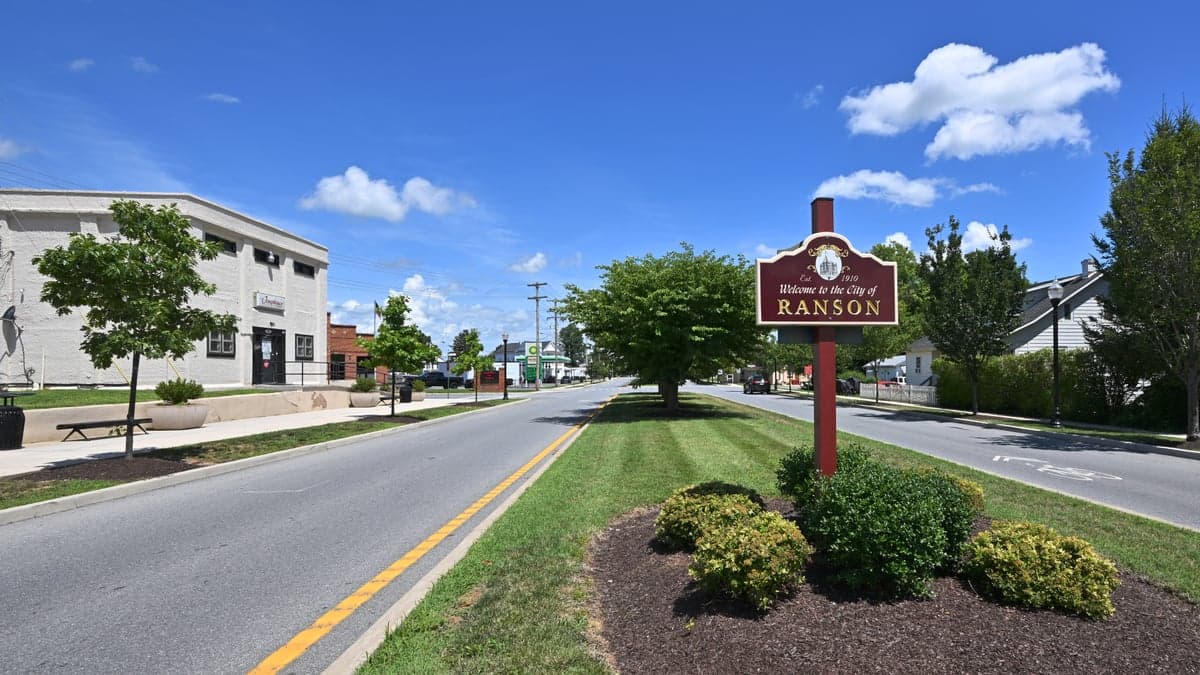
Photo: Wikipedia
Political ClimatePolitical Climate in Ranson, WV
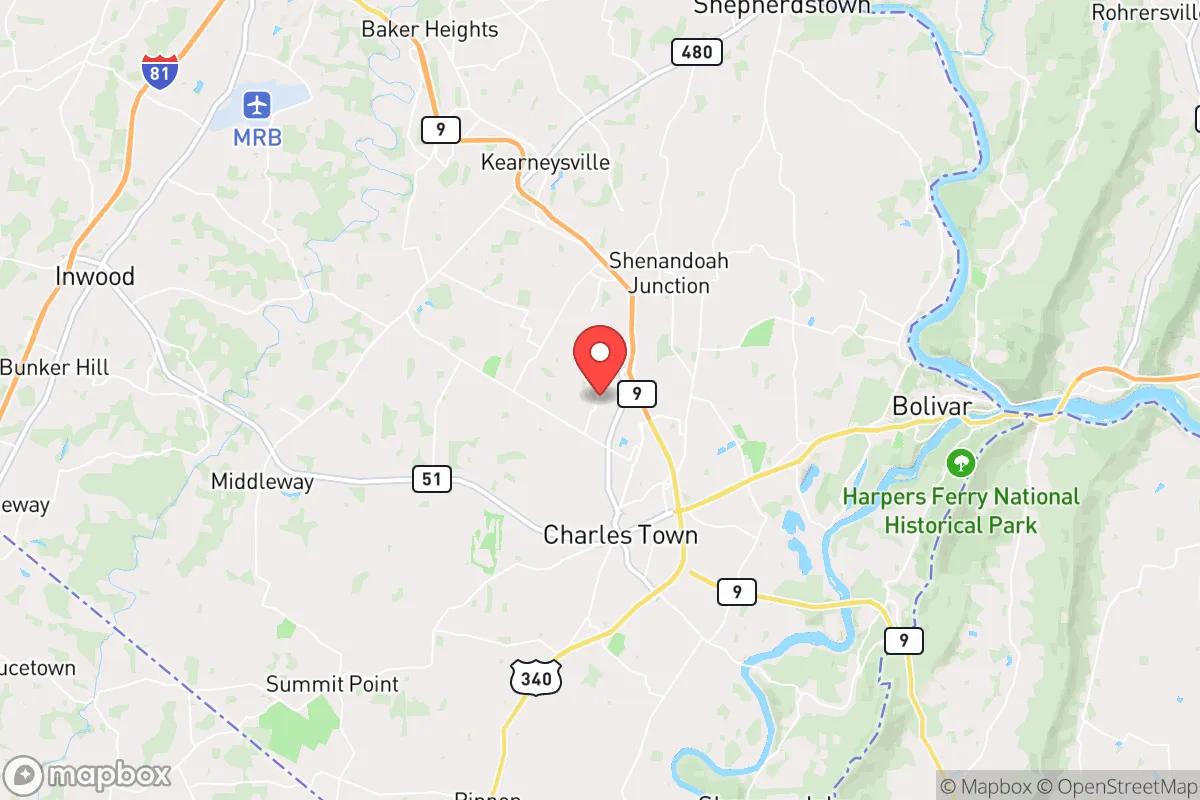
District shown is the primary district for this city’s centroid. Cities may span multiple districts.
Local Political AnalysisPolitical Analysis of Ranson, WV
Ranson, West Virginia, sits in Jefferson County, and if you’ve been around here long enough, you know this town has always leaned solidly conservative. The Cook PVI clocks it at R+20, which means Republicans hold a 20-point advantage over the national average—and that’s not just a number on a map. Walking into the local diner or the hardware store, you’ll hear folks talking about property rights, Second Amendment freedoms, and keeping government out of their backyards. Over the past decade, though, there’s been a slow creep of progressive influence bleeding in from the D.C. suburbs, especially as folks from Northern Virginia and Maryland move east looking for cheaper land. That shift has some of us worried about the long-term direction of the town.
How it compares
Drive ten miles east and you hit Charles Town, which has seen a more noticeable influx of out-of-state transplants and a slightly more moderate tilt—though still red overall. Head west toward Martinsburg, and you’re in Berkeley County, which is reliably conservative but has its own battles with development and zoning overreach. The real contrast is with Shepherdstown, just a few miles north, which is a blue dot in a red sea—home to Shepherd University and a younger, more progressive crowd. In Ranson, you don’t see the same kind of “defund the police” or heavy-handed environmental mandates that pop up in Shepherdstown. Our local government has historically been hands-off, letting folks run their businesses and live their lives without a lot of red tape. But as the county grows, there’s pressure to adopt more regional planning rules, and that’s where the tension starts.
What this means for residents
For the average family in Ranson, the political climate means lower taxes and fewer hoops to jump through compared to places like Loudoun County, Virginia, just across the river. You can build a shed on your property without a permit board breathing down your neck, and you won’t see mask mandates or vaccine passports enforced at the local grocery store. The school board here still focuses on core academics and parental rights, not woke curriculum experiments. That said, the recent push for “equity” initiatives in Jefferson County schools has raised eyebrows among longtime residents. If you value personal freedom—like the right to choose your own healthcare, keep and bear arms, or opt out of government overreach—Ranson still feels like a refuge. But keep an eye on city council meetings: there’s a quiet effort to bring in more grant-funded programs that come with strings attached, and that’s how the camel gets its nose under the tent.
Culturally, Ranson is a working-class town with deep roots in the railroad and manufacturing industries. You won’t find many bike lanes or organic co-ops here, and that’s fine by most of us. The biggest policy distinction is the lack of a local income tax and a general reluctance to raise property taxes, even as infrastructure needs grow. The long-term concern is that as more people flee the high costs and heavy regulations of the D.C. metro area, they’ll bring the same voting habits and policy preferences that made them leave in the first place. If that happens, Ranson could slowly drift toward the kind of progressive governance that’s choking places like Montgomery County, Maryland. For now, though, it’s still a place where a handshake matters more than a government mandate, and where the Second Amendment isn’t up for debate.

State Political ClimatePolitical Climate in West Virginia
State Political AnalysisPolitical Environment in the State
West Virginia has long been one of the most reliably Republican states in the nation, but that wasn’t always the case. As recently as the 1990s, it was a Democratic stronghold at the state and local level, with registered Democrats outnumbering Republicans by huge margins. The shift began in earnest around 2000, accelerated by the collapse of the coal industry and a cultural realignment that saw working-class voters abandon the national Democratic Party over gun rights, energy policy, and social issues. By 2024, Donald Trump carried the state by nearly 40 points, and Republicans now hold supermajorities in both chambers of the legislature, all three U.S. House seats, and both U.S. Senate seats. The state’s political DNA is now deeply conservative, but the flavor is distinct—populist, anti-establishment, and fiercely protective of local control.
Urban vs. rural divide
The political map of West Virginia is not a simple city-versus-country story. The state’s largest metro, Charleston (Kanawha County), leans Republican but is more competitive than the rest of the state—Trump won it by about 15 points in 2024, compared to 40 points statewide. Morgantown, home to West Virginia University, is the only real blue dot, with Monongalia County voting Democratic in recent presidential cycles thanks to the academic and younger population. Huntington (Cabell County) and Parkersburg (Wood County) are solidly red, while Wheeling (Ohio County) and Martinsburg (Berkeley County) in the Eastern Panhandle have become reliably Republican as well. The real divide is between the old coal counties in the south—like Mingo, Logan, and McDowell—which were once Democratic but now vote Republican by 50-60 point margins, and the more moderate, college-educated pockets around Morgantown and Charleston. The Eastern Panhandle, particularly Jefferson County, is seeing an influx of commuters from the D.C. metro area, which is slowly nudging it toward purple territory—something to watch if you’re moving there.
Policy environment
West Virginia’s policy environment is aggressively pro-business and pro-liberty by design. There is no state income tax on Social Security benefits, and the state has been phasing down its personal income tax—the rate dropped from 6.5% to 3.99% in 2023, with a goal of elimination. Property taxes are among the lowest in the nation, and there is no estate or inheritance tax. The regulatory climate is light, especially for energy extraction, manufacturing, and agriculture. Education policy has shifted rightward: the state passed a robust school choice law in 2021, creating education savings accounts (ESAs) that let parents use public funds for private school, homeschooling, or tutoring. The legislature also passed a Parents’ Bill of Rights in 2023, requiring schools to notify parents of any changes to a child’s health or well-being. On healthcare, West Virginia expanded Medicaid under the Affordable Care Act, but the state has not embraced broader progressive health reforms. Election laws are straightforward: voter ID is required, early voting is available, and the state has no-excuse absentee voting. There is no ballot harvesting, and drop boxes are limited. The state’s Second Amendment protections are among the strongest in the country—constitutional carry was enacted in 2016, and there are no red-flag laws or waiting periods.
Trajectory & freedom
West Virginia is moving in a decidedly more free direction, especially on economic and personal liberty fronts. The 2023 income tax cut was a major step, and the legislature is actively working toward full elimination. In 2024, the state passed a law prohibiting any government entity from enforcing federal gun laws that violate the Second Amendment—a direct challenge to federal overreach. Parental rights were strengthened with the 2023 Parents’ Bill of Rights, which also banned critical race theory and gender ideology instruction in K-12 schools. The state has also taken a strong stance on medical freedom: in 2021, it passed a law prohibiting vaccine passports and mask mandates by government entities. Property rights were bolstered by a 2022 law limiting the use of eminent domain for private development. On the downside, the state’s heavy reliance on federal funding (about 40% of the budget) creates a long-term vulnerability—if Washington ever tightens the purse strings, West Virginia’s freedom to set its own tax and spending priorities could be constrained. But for now, the trajectory is clearly toward more personal autonomy and less government intrusion.
Civil unrest & political movements
West Virginia is not a hotbed of street-level political conflict, but it has a proud history of organized resistance. The 2018 teachers’ strike, which shut down schools statewide for nine days, was a rare moment of cross-ideological labor activism that won pay raises and preserved the state’s health insurance system. More recently, the state has seen organized opposition to federal energy policies, with coal miners and their families rallying against the EPA’s power plant rules. There is a strong Second Amendment sanctuary movement—dozens of counties have passed resolutions vowing not to enforce unconstitutional gun laws. Immigration politics are muted, as the state has a very small foreign-born population (about 1.5%), but the legislature passed a law in 2023 requiring all state agencies to verify immigration status for benefits. There is no sanctuary city movement to speak of. Election integrity has been a flashpoint: after the 2020 election, the legislature tightened voter ID laws and banned private funding of election administration. You won’t see daily protests in Charleston or Morgantown, but the political culture is one of deep skepticism toward federal authority and a willingness to push back when the state feels its rights are being trampled.
Projection
Over the next 5-10 years, West Virginia is likely to become even more conservative, but with a growing tension between the old coal-country populism and the new suburban conservatism of the Eastern Panhandle. In-migration is modest but real—people are coming from Maryland, Virginia, and Pennsylvania for lower taxes, cheaper housing, and a slower pace of life. These newcomers tend to be more culturally conservative but less tied to the state’s labor and energy traditions. The biggest wildcard is the state’s demographic decline: West Virginia is one of the oldest and most rural states in the country, and without significant in-migration, its political influence will shrink. The state’s Republican supermajority is safe for the foreseeable future, but internal fights may emerge over how aggressively to cut taxes (some want elimination, others worry about funding schools and roads) and how to handle the Eastern Panhandle’s growth. If you move here now, expect a decade of continued conservative governance, lower taxes, and a political culture that values local control and personal freedom—but also a state that will need to attract more people to sustain its economy and public services.
For a conservative-leaning individual or family looking to relocate, West Virginia offers a rare combination of low taxes, strong gun rights, school choice, and a government that is actively trying to get out of your way. The trade-offs are real: the economy is not booming, the infrastructure is aging, and the winters can be harsh. But if you value freedom over convenience and are willing to trade some amenities for a lower cost of living and a community that shares your values, this state is one of the best bets in the country. Just know that the political climate is not passive—it’s a place where people show up to school board meetings, write letters to the editor, and vote in every election. If that sounds like home, you’ll fit right in.
* Values derived from national, state, county, city and local statistics and may differ in a specific area. Last updated: 2026-04-23T06:07:43.000Z
Narrative content on this page is AI-generated and may contain mistakes. Verify any details that matter before acting on them.
ReloMaps may earn a commission from affiliate links at no extra cost to you.

