Photo: Wikipedia
Political ClimatePolitical Climate in Rawlins, WY
District shown is the primary district for this city’s centroid. Cities may span multiple districts.
Inherited from parent state — no local data available.
Local Political AnalysisPolitical Analysis of Rawlins, WY
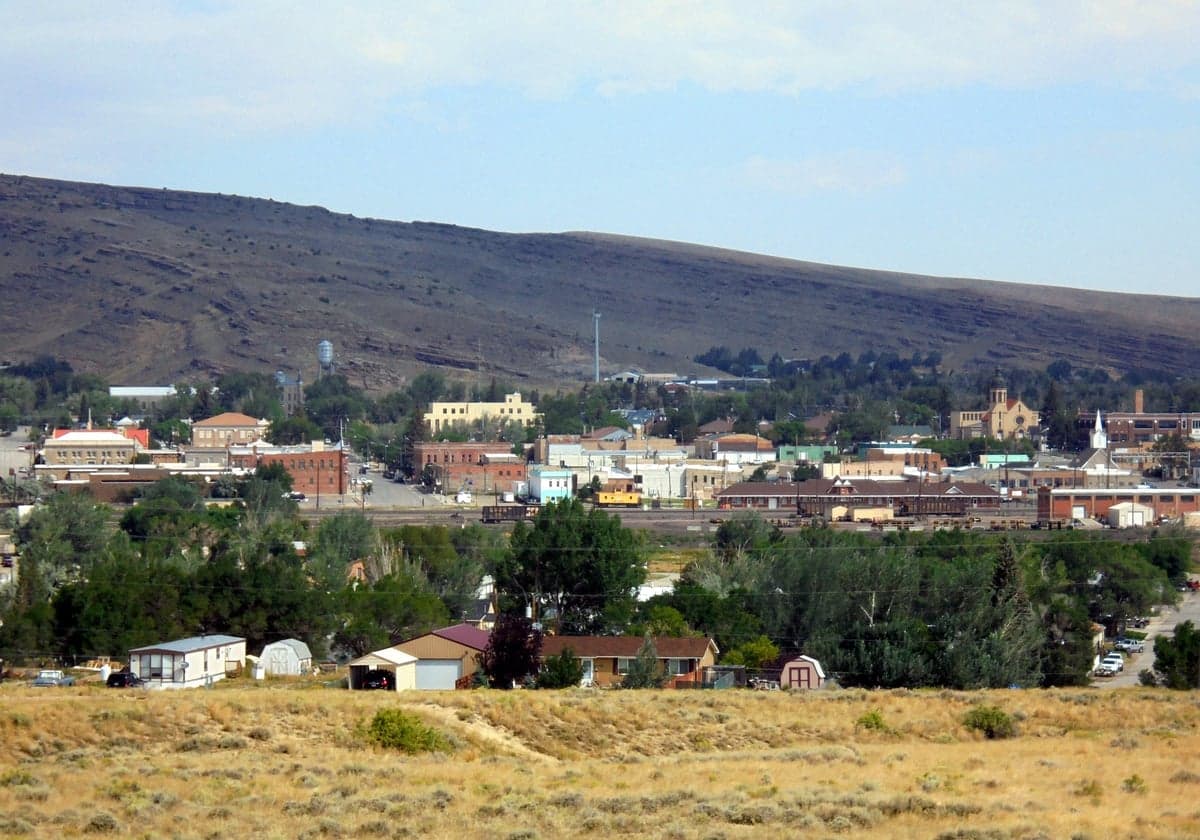
Rawlins sits deep in the red, and I mean deep. The Cook PVI clocks it at R+23, which puts it among the most reliably conservative spots in the state. That’s not just a number on a map—it’s how folks here have voted for as long as I can remember, and it’s not budging much. You’ll see that reflected in local races, where Republicans win by landslides, and in the general attitude: people here want government to stay out of their lives, their businesses, and their land. If you’re looking for a place where the political winds haven’t shifted toward the progressive coast, Rawlins is still holding the line.
How it compares
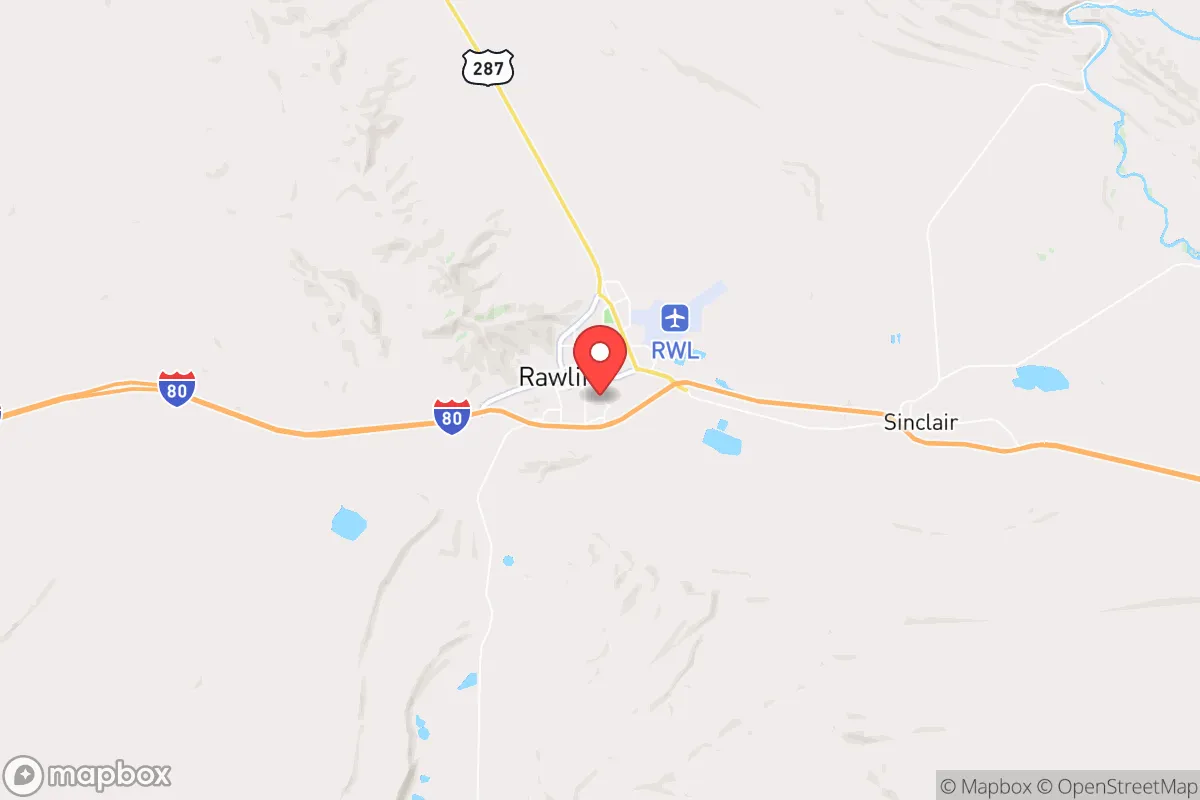
Drive an hour east to Laramie, and you’ll feel the difference like a cold front. Laramie’s got the university, which pulls in a younger, more left-leaning crowd, and you’ll see more yard signs for Democrats and more chatter about green energy mandates. Down south, Rock Springs is a bit more mixed—still conservative, but with a stronger union history that sometimes splits the vote. Rawlins, though? It’s steadier. We don’t have the same influx of out-of-state transplants that are slowly shifting places like Jackson Hole or even Cheyenne. The political culture here is rooted in ranching, energy work, and a deep skepticism of federal overreach. When you hear folks talk about “government overreach” in Rawlins, it’s not abstract—it’s about BLM land use, water rights, and the constant feeling that someone in Washington wants to tell you how to run your life. That’s the lens everything gets viewed through.
What this means for residents
For someone moving here, the political climate means you can expect a lot less red tape on personal freedoms. There’s no city-wide mask mandate drama or talk of defunding the police—those conversations don’t get traction. Property taxes stay low, and there’s a strong pushback against any new state-level gun restrictions. The downside? If you lean left, you’ll feel isolated. There’s no real progressive infrastructure here—no activist groups, no Democratic party offices that do much. But for folks who value local control and minimal interference, it’s a relief. The county commission and city council are full of people who’ve lived here decades and aren’t interested in importing big-city policies. That said, keep an eye on the long-term: if energy jobs decline and the state starts chasing tourism dollars like other parts of Wyoming have, you might see a slow creep of progressive ideas. For now, though, Rawlins is a place where your rights are still your own.
Culturally, that conservative streak shows up in small ways that add up. You won’t find a lot of chain stores pushing woke messaging—local businesses are run by neighbors, not corporate boards. The schools still teach traditional values, and the annual events like the Carbon County Fair feel like a throwback to a simpler time. There’s a quiet pride in being left alone, and that’s something you can’t buy. If you’re worried about the direction of the country, Rawlins is a pocket where the old Wyoming way—self-reliance, low taxes, and a healthy distrust of government—is still the norm. Just don’t expect it to stay that way forever. Every election cycle, there’s a little more pressure from outside, a few more transplants asking why we can’t be more like Boulder or Portland. So far, we’ve held firm. But you’ve got to be willing to vote and speak up if you want to keep it that way.

State Political ClimatePolitical Climate in Wyoming
State Political AnalysisPolitical Environment in the State
Wyoming is one of the most reliably Republican states in the nation, with a partisan lean that has only deepened over the past two decades. The state voted for Donald Trump by a margin of nearly 43 points in 2020, and in 2024, that margin widened further to over 45 points, making it the reddest state in the union by presidential vote share. The dominant political coalition is a mix of traditional Western libertarians, evangelical conservatives, and resource-industry workers, all united by a deep skepticism of federal overreach. Over the last 10-20 years, the trajectory has been a steady march rightward, driven by out-migration of liberals from the state’s few urban pockets and an influx of conservative-leaning remote workers from blue states seeking lower taxes and fewer restrictions.
Urban vs. rural divide
The political map of Wyoming is starkly divided between its handful of small cities and the vast, sparsely populated rural expanse. Laramie County (Cheyenne) and Natrona County (Casper) are the two most populous counties, and they both lean Republican, but with a more moderate flavor than the rest of the state. Cheyenne, home to the state government and F.E. Warren Air Force Base, has a noticeable contingent of white-collar professionals and unionized government workers who sometimes vote for moderate Democrats in local races. However, even Cheyenne voted for Trump by 30 points in 2024. Teton County (Jackson Hole) is the glaring exception — it’s the only county that consistently votes Democratic, driven by a wealthy, amenity-seeking population of second-home owners and outdoor recreationists. Jackson Hole itself is a liberal enclave where property taxes are high and land-use regulations are strict, a stark contrast to the rest of the state. Meanwhile, rural counties like Sublette, Carbon, and Niobrara routinely deliver 80-90% of their votes to Republicans, fueled by ranching, mining, and oil-and-gas communities that view the federal government as a hostile landlord. The divide isn’t just about population density — it’s about economic dependence on extractive industries versus tourism and government services.
Policy environment
Wyoming’s policy environment is a textbook example of small-government conservatism, but with some notable wrinkles. The state has no personal or corporate income tax, relying instead on a 4% state sales tax (with local options up to 2%) and a severance tax on minerals like coal, oil, and natural gas. Property taxes are among the lowest in the nation, with no state-level property tax and local rates averaging around 0.6% of assessed value. The regulatory posture is aggressively pro-business, with minimal zoning outside of Jackson Hole and a right-to-work law that keeps union influence weak. Education policy is a mixed bag: Wyoming spends more per pupil than most states (thanks to mineral revenue), but the state has embraced school choice, including charter schools and a robust homeschool community. In 2024, the legislature passed a universal school voucher program, allowing parents to use state funds for private or homeschool expenses. Healthcare policy is limited — the state did not expand Medicaid under the ACA, and the legislature has repeatedly rejected efforts to create a state-based insurance exchange. Election laws are among the most secure in the nation: Wyoming requires a photo ID to vote, has no same-day registration, and conducts all elections with paper ballots. The state also has a closed primary system, meaning only registered Republicans can vote in the GOP primary, which effectively decides most races.
Trajectory & freedom
Wyoming is becoming more free in many respects, particularly on gun rights, parental rights, and medical autonomy. In 2021, the legislature passed a constitutional carry law, allowing any adult who can legally possess a firearm to carry it openly or concealed without a permit. In 2023, the state enacted a Second Amendment Preservation Act, prohibiting state and local law enforcement from enforcing any federal gun laws that infringe on the right to keep and bear arms. On parental rights, Wyoming passed a Parents’ Bill of Rights in 2022, requiring schools to notify parents of any curriculum involving sexuality or gender identity and to obtain parental consent before any medical or mental health services. Medical autonomy has expanded with the passage of a law in 2023 allowing terminally ill patients to use experimental treatments without FDA approval. However, the state has also seen some concerning trends: in 2024, the legislature passed a law banning TikTok on government devices, citing national security, which some see as a slippery slope on speech. Property rights remain strong, with no statewide zoning and a robust right-to-farm law protecting agricultural operations from nuisance lawsuits. Taxation has actually decreased — in 2023, the legislature cut the state sales tax from 5% to 4%, and there’s a growing push to eliminate the tax on groceries entirely.
Civil unrest & political movements
Wyoming is remarkably free of the civil unrest seen in larger states. There have been no major protests or riots in recent memory, and political activism tends to be low-key and issue-specific. The most visible flashpoint is the Bureau of Land Management (BLM) headquarters in Grand Junction, Colorado, but Wyoming’s own BLM office in Cheyenne has been a target of local frustration over federal land management. The state has a strong county supremacy movement, with several counties passing resolutions asserting local control over federal lands. In 2023, the legislature passed a bill allowing the state to sue the federal government over land-use restrictions, and there’s ongoing talk of a “transfer of public lands” movement that would give the state control over federal acreage. Immigration politics are muted — Wyoming has a very small foreign-born population (around 3%), and there are no sanctuary cities. However, in 2024, the legislature passed a law requiring all state agencies to verify the immigration status of applicants for public benefits. Election integrity is a non-issue here; the state’s paper ballot system and strict voter ID laws have produced no significant controversies. The most organized activist groups are on the right, including the Wyoming Liberty Group and the Wyoming chapter of the American Conservative Union, which focus on tax reform and property rights. On the left, the only real presence is in Jackson Hole, where environmental groups like the Jackson Hole Conservation Alliance push for stricter land-use regulations.
Projection
Over the next 5-10 years, Wyoming will likely become even more conservative, driven by two demographic trends. First, the state’s population is aging and shrinking in rural areas, which means the remaining voters are overwhelmingly older, whiter, and more conservative. Second, the influx of remote workers from blue states — particularly to places like Laramie and Sheridan — is bringing people who are fleeing high taxes and restrictive policies, and they tend to vote even more Republican than native Wyomingites. The state’s reliance on mineral revenue is a vulnerability; as coal declines, the state will need to either cut spending or find new revenue sources. There’s already talk of a consumption tax or a flat income tax, but neither has gained traction. The most likely scenario is that Wyoming will continue to cut spending and rely on its savings account (the “rainy day fund”), which currently stands at over $2 billion. The political culture will remain fiercely independent, with a strong distrust of federal authority. New residents should expect a state that is stable, safe, and predictable, but also one that is resistant to change and deeply skeptical of outsiders telling them how to live.
For a new resident, the bottom line is this: Wyoming offers a level of personal freedom that is increasingly rare in the United States. You will not be taxed on your income, you can carry a firearm without a permit, your children’s education is largely under your control, and your property rights are respected. The trade-offs are a limited job market (outside of energy, agriculture, and government), harsh winters, and a social scene that revolves around hunting, fishing, and church. If you value autonomy and are willing to accept a slower pace of life, Wyoming is one of the last places where you can truly live as you see fit. Just don’t expect to change it — the state is what it is, and most people like it that way.
* Values derived from national, state, county, city and local statistics and may differ in a specific area. Last updated: 2026-04-21T11:15:38.000Z
Narrative content on this page is AI-generated and may contain mistakes. Verify any details that matter before acting on them.
ReloMaps may earn a commission from affiliate links at no extra cost to you.

