Photo: Wikipedia
Demographics of Rehoboth Beach, DE
Affluence Level in Rehoboth Beach, DE
A wealthy area with high-earning, well-educated households. Incomes, home values, and educational attainment meaningfully outpace national averages.
People of Rehoboth Beach, DE
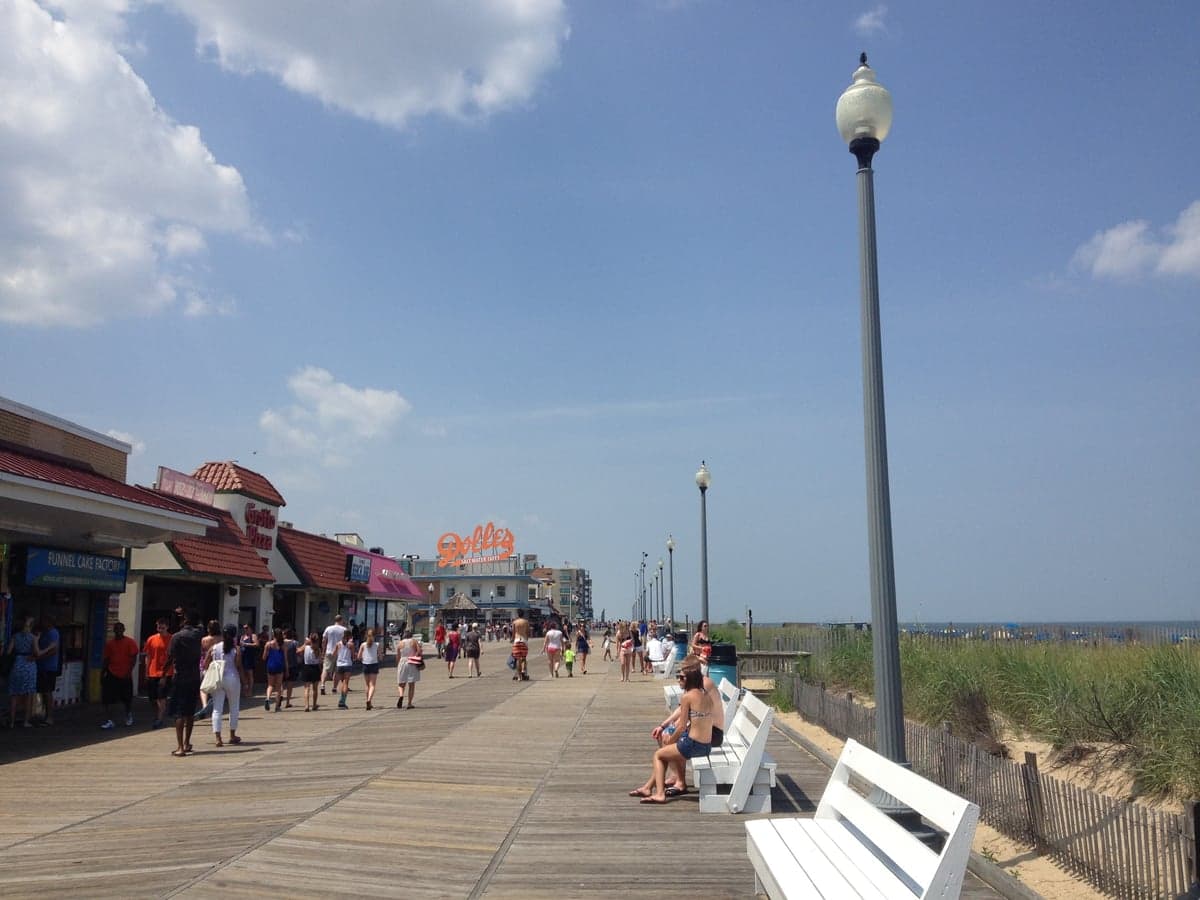
The people of Rehoboth Beach, Delaware, today form a small, predominantly white, and highly educated community of 1,388 residents, with a distinctive identity shaped by seasonal tourism, a significant LGBTQ+ presence, and a growing Hispanic population. The city is 89.1% white, 5.9% Hispanic, and 1.0% Indian (subcontinent), with 68.0% of adults holding a college degree. Its character is defined by a sharp contrast between the year-round locals and the vast summer influx, creating a tight-knit but transient-feeling social fabric. The city’s human history is a story of successive waves—from Native American seasonal camps to Methodist camp meetings, to a beach resort for Washington D.C. elites, and finally to a modern destination for retirees, second-home owners, and the LGBTQ community.
How the city was settled and grew
Long before European settlement, the area was used by the Nanticoke and Lenape peoples for seasonal fishing and hunting, with no permanent village. The first permanent European settlers arrived in the late 19th century, drawn by the 1873 founding of the Rehoboth Beach Camp Meeting Association, a Methodist revivalist group. This religious organization purchased 414 acres of coastal land to create a seaside retreat for Christian worship and family recreation. The original population clustered around the Boardwalk and Baltimore Avenue corridor, where the first cottages and the iconic Rehoboth Beach Convention Center (originally a tabernacle) were built. By the early 1900s, the camp meeting faded, but the town had already established itself as a beach resort. The next wave came from Washington D.C. and Philadelphia, with wealthy families building summer homes in the Henlopen Acres neighborhood (an exclusive, gated community incorporated in 1929) and along Lake Gerar. These early residents were overwhelmingly white, Protestant, and upper-middle-class, setting a pattern of affluence that persists today.
Modern era (post-1965)
The post-1965 era brought the most transformative demographic shift: the emergence of Rehoboth Beach as a major LGBTQ+ destination. Beginning in the 1970s and accelerating through the 1990s, gay and lesbian individuals and couples from the Mid-Atlantic—particularly Washington D.C., Baltimore, and Philadelphia—purchased second homes and opened businesses, especially in the Pines neighborhood (the area south of Rehoboth Avenue, near the state park) and along Lake Drive. This wave was driven by the area’s relative tolerance, beautiful beaches, and proximity to major cities. By the 2000s, Rehoboth Beach had one of the highest per-capita LGBTQ+ populations of any U.S. resort town. The foreign-born population remained very small (2.2% today), with the Indian (subcontinent) community (1.0%) and East/Southeast Asian community (0.9%) concentrated in the Rehoboth Avenue commercial corridor, often running restaurants and retail businesses. The Hispanic population (5.9%) grew steadily from the 1990s onward, largely driven by workers in the hospitality and construction industries; many live in the Stockley Street area and the adjacent unincorporated areas of Sussex County, rather than within the city limits proper. The Black population (0.1%) remains negligible, reflecting the city’s historical exclusion and the broader pattern of Delaware’s coastal resorts being overwhelmingly white.
The future
The population of Rehoboth Beach is heading toward further homogenization by income and education, even as it diversifies modestly by ethnicity. The city’s small year-round population (1,388) is constrained by extremely high property values and limited housing stock, which filters for wealthy retirees and second-home owners. The Hispanic population is likely to continue growing slowly, but will remain concentrated in service-sector roles and in neighborhoods just outside the city limits, as in-town housing becomes increasingly unaffordable. The Indian and East/Southeast Asian communities are expected to remain small, plateauing at current levels due to the lack of employment anchors beyond tourism. The LGBTQ+ population, while still a defining cultural force, may see a slight plateau as younger generations find more affordable and inclusive destinations elsewhere. The city is not tribalizing into distinct ethnic enclaves; rather, it is becoming a more economically exclusive enclave overall, with the Henlopen Acres and Pines neighborhoods solidifying as high-net-worth zones, while the Boardwalk area remains the commercial and social hub for all groups.
For someone moving in now, Rehoboth Beach offers a stable, safe, and culturally vibrant community with a strong seasonal rhythm, but it is not a place of rapid demographic change or ethnic diversity. The city is becoming a more expensive, more educated, and slightly more Hispanic version of its current self, with the LGBTQ+ and retiree populations remaining the dominant social forces. New residents should expect a tight-knit but transient social scene, where year-round life revolves around local civic groups, beach activities, and a shared appreciation for the city’s historic character.

* Values derived from national, state, county, city and local statistics and may differ in a specific area. Last updated: 2026-04-19T09:44:19.000Z
Narrative content on this page is AI-generated and may contain mistakes. Verify any details that matter before acting on them.
ReloMaps may earn a commission from affiliate links at no extra cost to you.

