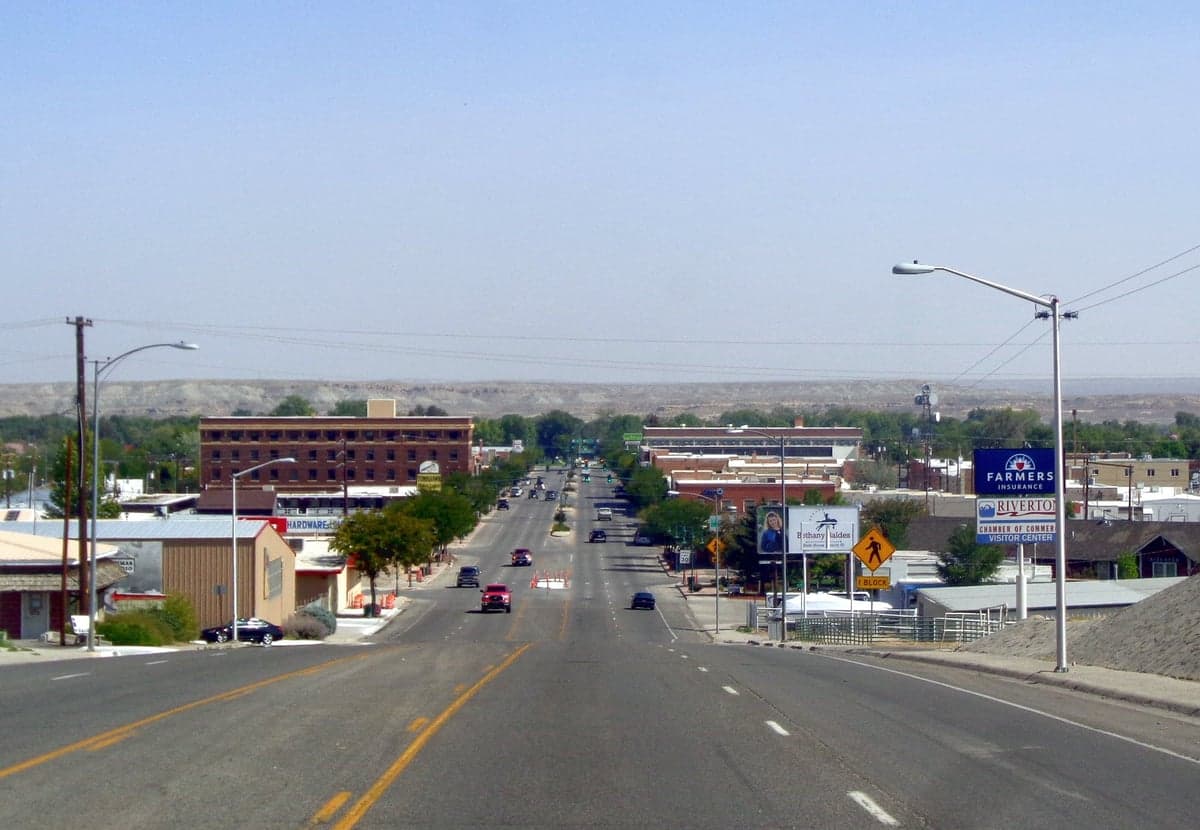
Photo: Wikipedia
Political ClimatePolitical Climate in Riverton, WY
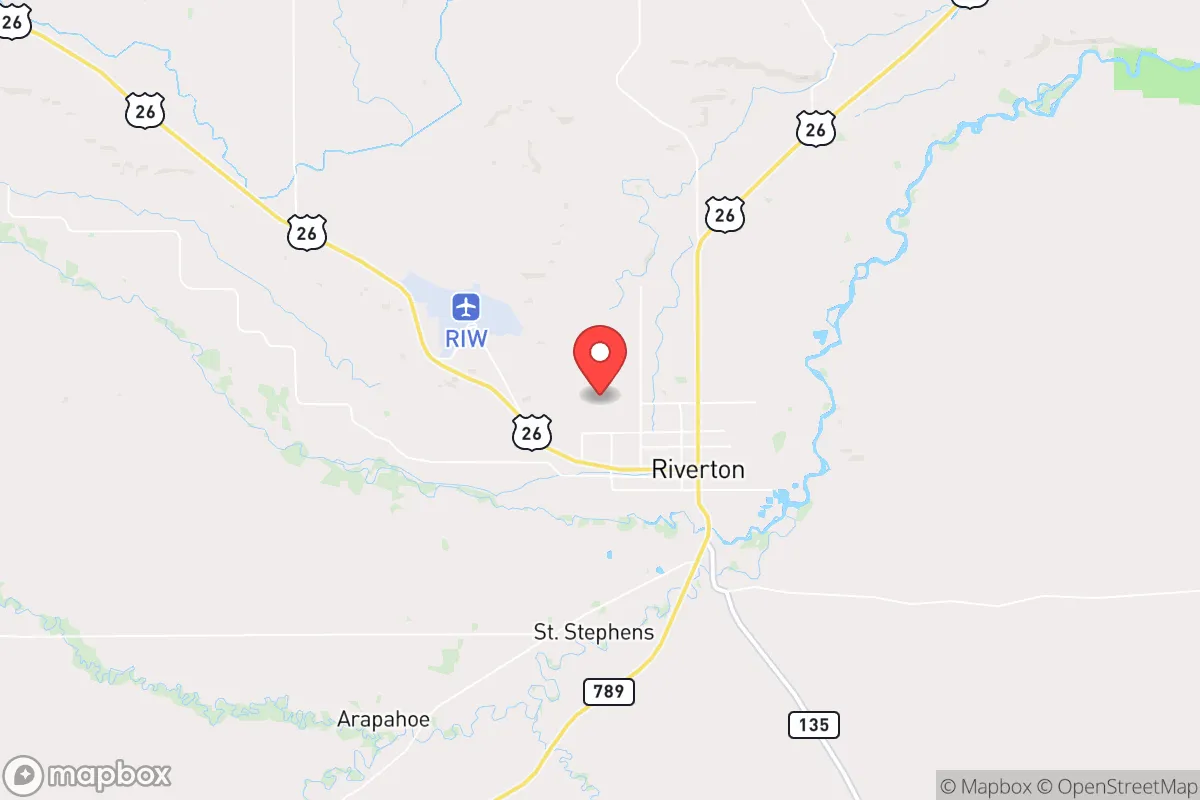
District shown is the primary district for this city’s centroid. Cities may span multiple districts.
Inherited from parent state — no local data available.
Local Political AnalysisPolitical Analysis of Riverton, WY
Riverton, Wyoming, has long been a rock-solid conservative stronghold, and that hasn't changed much despite the national trends. The Cook PVI of R+23 tells you everything you need to know about the baseline here—this isn't a purple area that flips back and forth. If anything, the political lean has gotten a little more entrenched over the last decade, as folks who value personal freedom and limited government have dug in their heels against the creeping overreach we're seeing from Washington and even Cheyenne.
How it compares
When you stack Riverton up against the rest of Fremont County, it's actually a bit more conservative than the county average, which still leans red but has a few pockets of blue around Lander and the Wind River Reservation. Drive an hour east to Casper, and you'll find a similar vibe—R+15 or so—but with a bit more corporate influence and a younger crowd that's starting to flirt with libertarian ideas. The real contrast is if you head west over the mountains to Jackson Hole. That place is a different planet politically, with its progressive tax base and green-energy mandates that feel like they're imported from California. Riverton folks look at Jackson and see exactly what happens when government overreach gets a foothold: higher costs, less personal freedom, and a loss of the independent spirit that built this state.
What this means for residents
For the people who actually live here year-round, the conservative tilt means a few practical things. First, you're not going to see a lot of heavy-handed zoning or business regulations—Riverton still operates on a handshake and a nod in many ways, and that's how most folks like it. Second, the local school board and city council elections are dominated by candidates who talk about parental rights and local control, not national talking points. There's a real wariness about any progressive ideology creeping into the curriculum or local ordinances, and that's been a unifying issue. You'll hear people say, "We moved here to get away from that stuff," and they mean it. The downside? If you're not on board with the majority view, you might feel a bit isolated, but that's the trade-off for living in a place where your voice actually counts in a local meeting.
One thing that stands out culturally is the strong sense of self-reliance. People here don't look to the government to solve their problems—they fix their own fences, plow their own driveways, and keep their own counsel. There's a healthy skepticism of any new policy that sounds like it's designed to "help" people, because the assumption is that help usually comes with strings attached. The recent push for renewable energy mandates and federal land-use restrictions has been met with real pushback, not because folks are against clean energy, but because they see it as another way for outside interests to dictate how they live their lives. Riverton's political climate isn't just about voting red—it's about preserving a way of life where the government stays out of your business, and that's something worth fighting for.

State Political ClimatePolitical Climate in Wyoming
State Political AnalysisPolitical Environment in the State
Wyoming is, and has long been, one of the most reliably Republican states in the union, with a partisan lean that is both deep and durable. The state hasn’t voted for a Democratic presidential candidate since 1964, and in 2024, Donald Trump carried it by a margin of roughly 40 points. The dominant coalition is a mix of rural ranchers, energy-sector workers, and a growing number of conservative refugees from blue states, all united by a fierce commitment to limited government, gun rights, and energy independence. Over the last 20 years, the state has actually become more Republican, not less, as the small Democratic presence in Teton County (Jackson Hole) has been overwhelmed by the influx of wealthy, often left-leaning second-home owners, while the rest of the state has hardened its conservative identity.
Urban vs. rural divide
The political map of Wyoming is a study in stark contrasts. The only real blue dot is Teton County, home to Jackson Hole, which voted for Joe Biden by a 30-point margin in 2020. This is driven by a high concentration of out-of-state wealth, environmental activism, and a tourism-based economy that attracts a transient, progressive-leaning workforce. But Teton County is an island. The rest of the state is deeply red. Laramie County (Cheyenne) and Natrona County (Casper) are reliably Republican, though they have a more moderate, establishment GOP flavor due to state government and energy industry presence. The real engine of the state’s conservative identity is the rural interior: Sublette County, Lincoln County, and Carbon County routinely vote 80%+ Republican. Campbell County (Gillette), the heart of the coal and oil fields, is a bastion of pro-energy, pro-gun, anti-regulation sentiment. The divide isn’t really urban vs. suburban; it’s the wealthy, amenity-driven enclave of Jackson versus everything else. A new resident moving to Sheridan or Buffalo will find a very different political culture than someone settling in Teton Village.
Policy environment
Wyoming’s policy environment is a textbook example of small-government conservatism. There is no state income tax, and the sales tax is a low 4% (with local options pushing it to around 6% in some towns). Property taxes are among the lowest in the nation, though they have been rising due to a booming housing market. The regulatory posture is aggressively pro-business, especially for energy extraction, agriculture, and mining. Education policy is a mixed bag: the state funds schools through a mineral trust, but per-pupil spending is below the national average, and there is a growing school-choice movement, with a new Education Savings Account (ESA) program passed in 2024 that allows parents to use state funds for private or homeschool expenses. Healthcare is a perennial challenge, with a shortage of providers in rural areas and a heavy reliance on the federal government for funding. Election laws are secure: voter ID is required, same-day registration is not allowed, and the state uses paper ballots. There is no mail-in voting unless you have a valid excuse. The legislature has also passed laws to ban ballot drop boxes and limit third-party ballot collection. For a conservative, this is a state where the government is generally on your side, not in your way.
Trajectory & freedom
Wyoming is on a trajectory of expanding personal freedom, not contracting it. The state has been a national leader in pushing back against federal overreach. In 2022, the legislature passed the Wyoming Freedom Act, which prohibits the enforcement of any federal law that infringes on the right to keep and bear arms, effectively nullifying any future federal gun bans. In 2023, the state enacted a parental rights in education law, requiring schools to notify parents of any curriculum involving sexuality or gender identity and to obtain parental consent before any counseling. Medical autonomy is protected: Wyoming has banned nearly all abortions (with narrow exceptions for rape, incest, and life of the mother) and has no vaccine mandates. Property rights are strong, with a robust right-to-farm law and a new law limiting the ability of counties to impose zoning restrictions on agricultural land. The state also passed a law in 2024 that prohibits the use of central bank digital currency (CBDC) as legal tender, a forward-looking move against financial surveillance. The only area where freedom has arguably contracted is in the realm of land use: the influx of out-of-state buyers has driven up property prices, and some counties have begun to impose short-term rental restrictions to preserve housing stock. But overall, the trend is toward more liberty, not less.
Civil unrest & political movements
Wyoming is not a hotbed of civil unrest. The state is politically homogeneous, and most disagreements are settled at the ballot box or in the legislature, not in the streets. There have been no major protests or riots in recent memory. The most visible political movements are on the right: the Wyoming Liberty Group and the Wyoming Republican Party have been active in pushing for election integrity, school choice, and Second Amendment sanctuary status. There is a strong strain of nullification rhetoric, particularly around federal land management. The state is 48% federally owned, and there is a long-running movement to transfer those lands to state control. In 2024, the legislature passed a resolution calling for a convention of states to propose amendments to the U.S. Constitution, specifically to impose fiscal restraints and term limits. Immigration politics are not a major flashpoint, simply because the state has a very small foreign-born population (less than 3%). There are no sanctuary cities. The only real flashpoint a new resident might notice is the tension between the pro-energy, rural majority and the environmentalist, wealthy minority in Teton County, which occasionally flares up over wolf management, oil and gas leasing, and the proposed closure of coal-fired power plants.
Projection
Over the next 5-10 years, Wyoming is likely to become even more conservative, but with a new flavor. The demographic shift is driven by two forces: first, the continued exodus of liberals from Teton County as housing prices become unsustainable even for the wealthy; second, the steady influx of conservative migrants from California, Colorado, and the Pacific Northwest, who are drawn by low taxes, gun freedom, and a culture of self-reliance. These new arrivals are often more libertarian than traditional Wyoming Republicans, and they are pushing the state toward even more radical positions on federal nullification, school choice, and property rights. The energy transition is the wild card: as coal declines, the state is betting on carbon capture, advanced nuclear, and crypto mining to replace lost revenue. If those bets pay off, the state’s fiscal health will remain strong. If they don’t, there could be pressure to raise taxes or cut services, which would be a major test of the state’s small-government ethos. The most likely outcome is that Wyoming remains a conservative stronghold, with a growing libertarian streak, and continues to serve as a laboratory for conservative policy innovation.
For a new resident, the bottom line is this: Wyoming is a place where the government largely leaves you alone, and the culture rewards self-sufficiency. You will not find the political friction of a swing state or the bureaucratic hassle of a blue state. The trade-offs are real: limited healthcare access, harsh winters, and a thin job market outside of energy, agriculture, and tourism. But if your priority is personal freedom, low taxes, and a community that shares your values, Wyoming is one of the few places left in America where you can still find it. Just don’t move to Jackson unless you’re ready to be the conservative minority in your own county.
* Values derived from national, state, county, city and local statistics and may differ in a specific area. Last updated: 2026-04-21T11:22:13.000Z
Narrative content on this page is AI-generated and may contain mistakes. Verify any details that matter before acting on them.
ReloMaps may earn a commission from affiliate links at no extra cost to you.

