 Popular
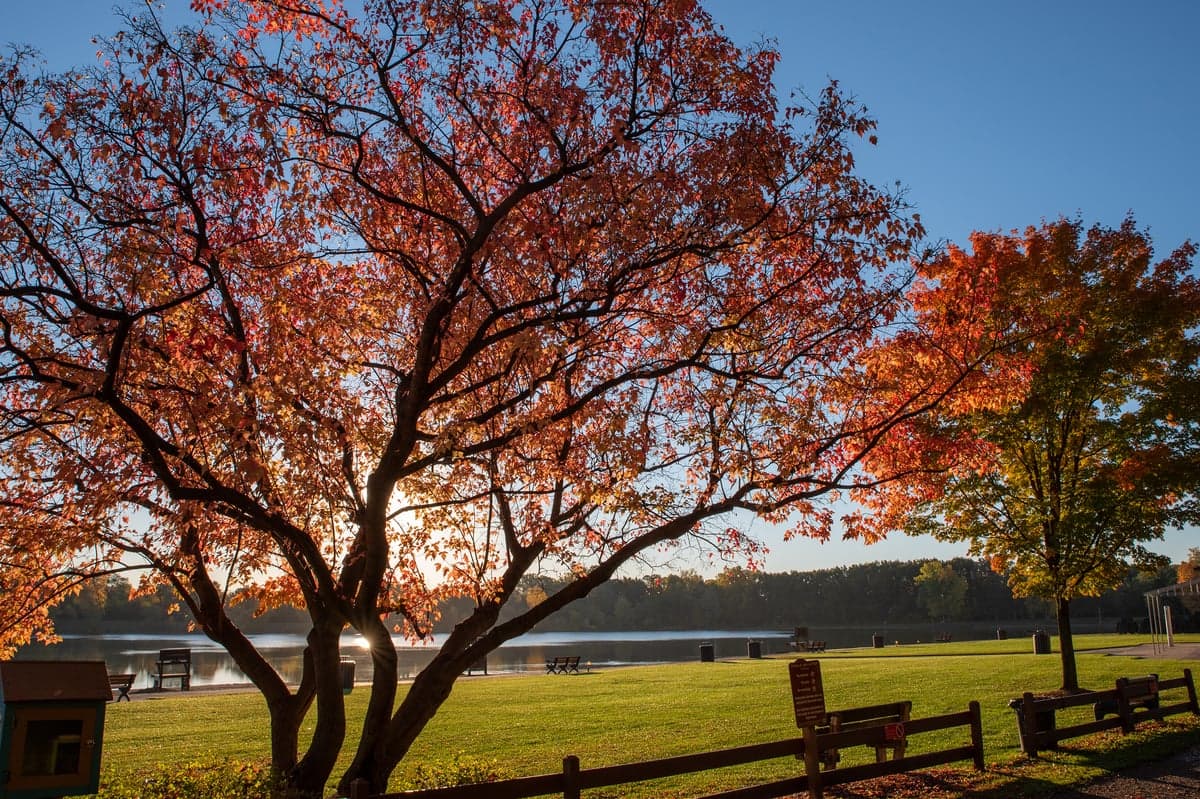
Photo: Wikipedia
Quality of Life in Rochester Hills, MI
A high quality of life with strong walkability, manageable living costs, healthy neighborhood signals, and solid amenity access.
What does Quality of Life tell us?
Quality of Life blends cost of living, nearby amenities, socioeconomic signals, and neighborhood character. City-level scores represent the whole municipality; individual neighborhoods can differ.
What does this tell us?
Quality of Life blends cost of living, nearby amenities, socioeconomic signals, and neighborhood character. City-level scores represent the whole municipality; individual neighborhoods can differ.
Cost of Living
36% above national average
The Real Cost of Living in Rochester Hills, MI for 2026
| Tier | Individual | Family (4) |
|---|---|---|
| Survival | $26k | $48k |
| Comfortable | $73k | $108k |
| Luxury | $180k+ | $278k+ |
| Elite (Top 5%) | $211k+ | $327k+ |
110%
The Area Signal
A metric tracking the socioeconomic signals of the area.
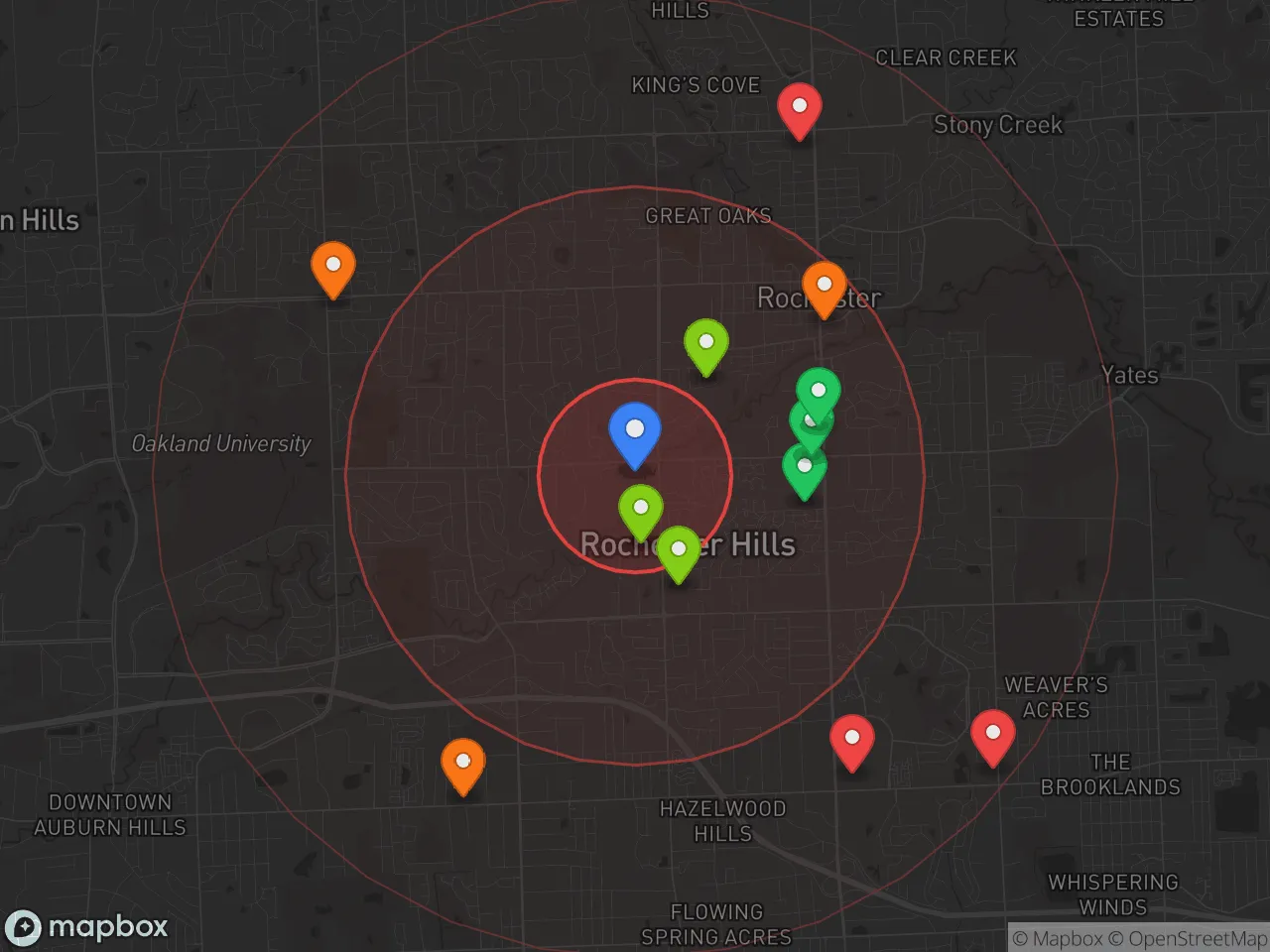
Hobbies
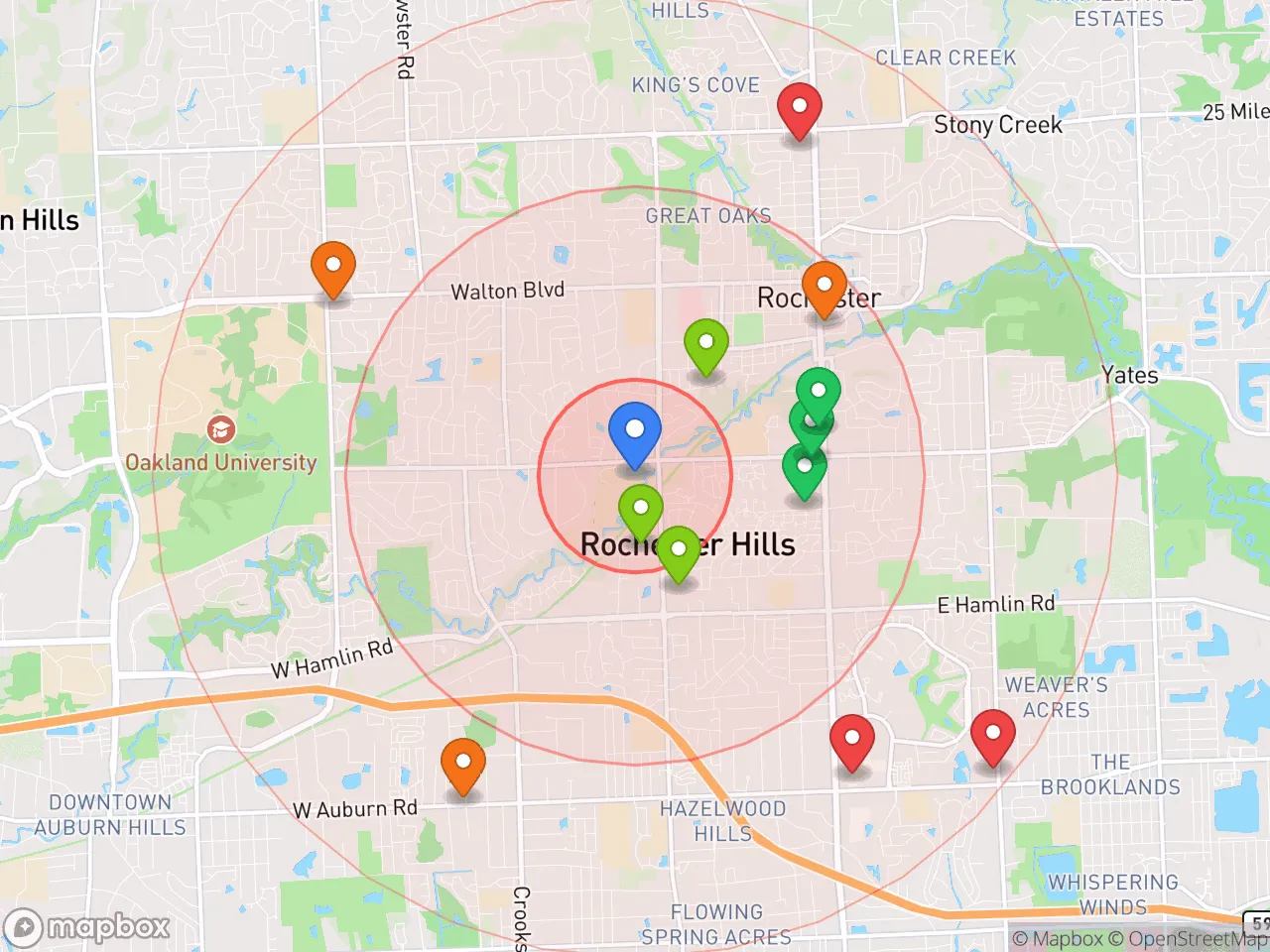
Explore the areaGroceries
7 within 10 miles
Gas
20 within 10 miles
Hospital
20 within 20 miles
Airport
DTW — Detroit Metropolitan Wayne County
Post Office
USPS — Rochester Hills, MI
Critical Amenities
Quality-of-Life Analysis
Rochester Hills, Michigan, is an affluent suburban city in Oakland County where the cost of living index of 136 (100 = US average) reflects a premium for high-quality public services, low crime, and strong schools. The population skews toward upper-middle-class families and professionals, many of whom commute to nearby Detroit or work in the region’s engineering and healthcare sectors. With a median home value of $377,400 and median rent of $1,606, the city commands prices well above the national average but remains more affordable than comparable suburbs in the northern Detroit metro, such as Birmingham or Bloomfield Hills.
Cost of living, housing, and affordability compared to nearby suburbs
Housing in Rochester Hills is the primary driver of its elevated cost of living, with the median home value of $377,400 sitting roughly 80% above the national median. Renters face a median monthly rent of $1,606, which is significantly higher than the U.S. average of roughly $1,200 but still below the $2,000+ rents seen in Birmingham or Royal Oak. Property taxes in Oakland County are among the highest in Michigan, often adding $4,000–$6,000 annually to homeownership costs. However, residents benefit from a strong local economy anchored by employers like Ford Motor Company and Beaumont Health, and the average commute time of 24.4 minutes is notably shorter than the 30-minute average for the Detroit metro, reducing transportation costs. For buyers, Rochester Hills offers more square footage per dollar than closer-in suburbs, making it a pragmatic choice for families seeking space without sacrificing proximity to Detroit’s job centers.
Parks, schools, and what daily life is like for families
Daily life in Rochester Hills revolves around its highly rated Rochester Community Schools district, which consistently ranks among Michigan’s top 10 for academic performance and college readiness. The city maintains over 1,000 acres of parkland, including the 120-acre Stony Creek Metropark and the paved Paint Creek Trail, a 8.9-mile multi-use path popular for biking and running. The downtown Rochester area, adjacent to the city, offers a walkable mix of independent restaurants, boutiques, and seasonal farmers’ markets, though Rochester Hills itself is primarily residential with strip-mall retail along M-59. The Rochester Hills Public Library is a regional draw, and the city’s recreation department runs extensive youth sports leagues and summer camps. Traffic on M-59 and Rochester Road can be heavy during peak hours, but the overall pace is slower than in denser suburbs, with a strong emphasis on outdoor recreation and community events like the annual Rochester Hills Art in the Park.
Rochester Hills is best suited for families and professionals who prioritize school quality, low crime rates, and access to nature over urban nightlife or ultra-short commutes. The city’s demographic profile—median household income exceeding $100,000—means it attracts residents who can absorb the higher housing costs in exchange for a safe, amenity-rich environment. Empty-nesters and retirees also find appeal in the city’s active adult programs and proximity to medical facilities like Corewell Health Beaumont Troy Hospital. Those seeking a more affordable entry point might consider neighboring communities like Shelby Township or Rochester itself, where housing prices are 10–15% lower. For buyers and renters willing to pay a premium for top-tier schools and a suburban lifestyle with strong civic infrastructure, Rochester Hills delivers a consistently high quality of life that justifies its above-average cost of living.

Crime in Rochester Hills, MI
Lower crime rates than 86% of comparable U.S. locations.
Violent CrimeViolent Crime Analysis
Property CrimeProperty Crime Analysis
Crime Analysis
Rochester Hills, Michigan, presents a notably safe environment within the metro Detroit region, with violent and property crime rates that are a fraction of both state and national averages. The city's violent crime rate of 62.1 incidents per 100,000 residents is roughly one-tenth the national average, while its property crime rate of 628.7 per 100,000 is less than half the U.S. figure. This strong safety record is a key factor for families and professionals considering relocation to this Oakland County suburb.
Crime in context
To understand Rochester Hills' safety, it helps to compare it to broader benchmarks. The national violent crime rate stands at approximately 380 per 100,000, and Michigan's state rate hovers around 460 per 100,000. Rochester Hills' rate of 62.1 is dramatically lower than both. Similarly, the national property crime rate is about 1,950 per 100,000, and Michigan's is roughly 1,100 per 100,000. The city's property crime rate of 628.7 is well below these figures. However, it is important to note that Rochester Hills is part of the larger metro Detroit area, which includes jurisdictions with progressive district attorneys and judges. This broader regional philosophy, which often prioritizes rehabilitation over incarceration, can lead to higher recidivism and more criminals on the street, potentially impacting surrounding communities like Rochester Hills through regional crime patterns.
What residents experience
For those living in Rochester Hills, the low crime numbers translate into a tangible sense of security. The most common crimes are non-violent property offenses, such as theft from vehicles and shoplifting, which are typical of an affluent suburban retail hub. Violent crime is rare, with the city averaging fewer than 20 violent incidents per year. Residents frequently cite the visible police presence and active neighborhood watch programs as contributing factors. The city's strong local economy and high property values also act as a buffer against the types of property crime driven by economic desperation. That said, the progressive justice policies at the county and state level remain a concern for residents, as they can result in shorter sentences and earlier releases for offenders who may then re-offend in the area.
Neighborhood-level variation in Rochester Hills is minimal compared to larger cities, but some patterns exist. Areas near the Great Lakes Crossing Outlets and along the M-59 corridor see slightly higher rates of property crime, primarily retail theft and vehicle break-ins. In contrast, the residential subdivisions north of Auburn Road and west of Adams Road are among the safest, with near-zero violent crime and very low property crime. Overall, Rochester Hills is consistently ranked as one of the safest cities in Michigan, but the regional context of a liberal-leaning justice system means residents should remain vigilant about broader crime trends emanating from the metro area.
* Values derived from national, state, county, city and local statistics and may differ in a specific area. Last updated: 2026-04-30T01:27:58.000Z
Narrative content on this page is AI-generated and may contain mistakes. Verify any details that matter before acting on them.
ReloMaps may earn a commission from affiliate links at no extra cost to you.

