 Popular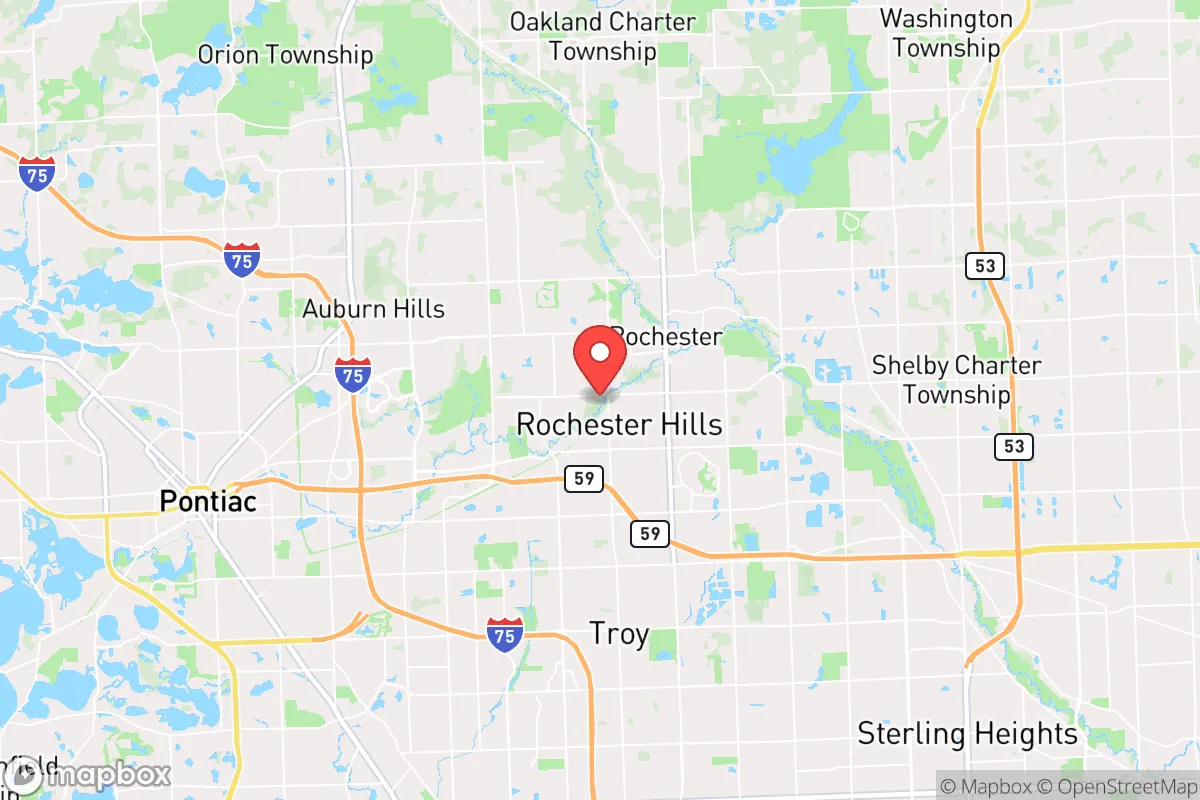
Photo: Wikipedia
Strategic Assessment of Rochester Hills, MI
Multiple tactical vulnerabilities. Population density, target proximity, or disaster risk are likely compounding. A retreat property and exit planning is required.
What does the Strategic Assessment tell us?
Our Strategic Assessment grades tactical survivability of an area. Major population centers, military targets, fallout zones, natural disasters, and border exposure all drive risk — lower exposure means a more defensible position in a crisis.
This is heavily inspired by Joel Skousen's Strategic Relocation book. Highly recommended you checkout the book ($)What does this tell us?
Our Strategic Assessment grades tactical survivability of an area. Major population centers, military targets, fallout zones, natural disasters, and border exposure all drive risk — lower exposure means a more defensible position in a crisis.
This is heavily inspired by Joel Skousen's Strategic Relocation book. Highly recommended you checkout the book ($)Strategic Pillars

Key Distances
Regional Safe Places
Below is our recommended "safe zones" in Michigan and the surrounding area based on our strategic heuristics. For most people, it's unrealistic to live in a “safe zone” full-time due to work, family or other personal reasons. They tend to be more rural. However, many of these areas are perfect for second homes and retreat properties that double as a vacation home or even a short-term rental.


Important Note: For informational purposes only. This does not mean nothing bad ever happens in the green zones. Please use common sense. This is based on public data and modeled with AI. We tried to take a conservative approach but mistakes happen. We update this regularly as new information becomes available.
Solar Generator Recommendations
Backup power matters more here than in safer locations. We've picked three solar generators across budgets and capacity tiers — start with the budget unit if you only need a few essentials, or step up if you want to run a fridge and HVAC for days at a time.

Jackery Portable Power Station Explorer 300
Budget OptionPower on the Go: Weighing only 11 lbs, it's convenient to set up and store with book-sized foldable solar panels

BLUETTI Portable Power Station AC180
Designed for both indoor and outdoor scenarios, AC180 is highly capable as it has a robost capacity and continuous output power.

EF ECOFLOW DELTA Pro Ultra Power Station
Upgraded PickEcoFlow DELTA Pro Ultra is a whole-home energy system designed to grow with your family. Integrated with the Smart Home Panel 2, it scales to meet your evolving energy needs — keeping your home powered, intelligent, and secure through every stage of life.
We earn a commission, at no additional cost to you.
Strategic Assessment Analysis
Rochester Hills, Michigan, presents a nuanced strategic picture for the conservative prepper: it offers genuine resilience advantages—solid infrastructure, a strong local economy, and a community that leans right—but sits uncomfortably close to a major metropolitan target. Located about 25 miles north of Detroit, this Oakland County suburb benefits from the buffer of suburban sprawl while still being within the blast radius of a worst-case scenario involving the Motor City. For the relocator weighing long-term stability against proximity to fallout-relevant landmarks, Rochester Hills is a calculated compromise—not a bunker, but far from a death trap.
Geographic position and natural advantages for long-term stability
Rochester Hills occupies a sweet spot in southeast Michigan’s geography. It’s perched on the edge of the Clinton River watershed, with ample groundwater and a network of small lakes—Stony Creek Lake, Yates Cider Mill’s pond, and the Clinton River itself—that provide decentralized water sources. The area sits on the relatively stable Michigan Basin, meaning seismic risk is negligible. The terrain is gently rolling, offering natural drainage and defensible high ground in spots like the Bloomer Park ridge. Winters are harsh but predictable, which is actually a strategic plus: it discourages transient populations and forces year-round residents to maintain cold-weather gear and supplies. The region’s agricultural history means decent soil for gardening, though the growing season is short (about 150 days). For a prepper, the key advantage is that Rochester Hills is far enough from Detroit’s urban core to avoid the immediate chaos of a collapse, but close enough to access the region’s industrial base—machine shops, metal fabrication, and automotive parts suppliers that could be repurposed for post-disaster needs.
Risks, exposures, and proximity to fallout-relevant landmarks
The elephant in the room is Detroit. At 25 miles south, the city is a primary target for any strategic strike—its auto plants, the Ambassador Bridge corridor, and the Detroit Metropolitan Airport are all high-value assets. A ground burst at any of those points would put Rochester Hills in the moderate fallout zone, depending on wind patterns. The area is also within 50 miles of the Fermi 2 nuclear plant in Newport, a potential secondary target or accident risk. Closer to home, the General Motors Orion Assembly plant in nearby Lake Orion is a plausible sabotage target, and the I-75 corridor running through Rochester Hills is a chokepoint for evacuation or supply movement. On the civil unrest front, Detroit’s history of riots (1967, 2020) and its current economic fragility mean that any major crisis could send a wave of desperate people north along M-59 and I-75. Rochester Hills’ police force is well-funded and professional, but they’d be overwhelmed in a mass exodus scenario. The city’s dense suburban layout—cul-de-sacs, strip malls, and subdivisions—offers limited defensibility compared to rural properties. A relocator should plan for a 72-hour bug-out window if the Detroit skyline goes dark.
Practical resilience for a relocator: food, water, energy, and defensibility
For the practical prepper, Rochester Hills has mixed marks. Water is the strongest suit: the Clinton River is a reliable surface source, and the city’s water system draws from Lake Huron via the Detroit Water and Sewerage Department, which is hardened but vulnerable to a single-point failure. A well-permitted private well is a smart investment—many homes in the area have them, and the water table is high (30-50 feet). Food security is moderate: there are several small farms within 10 miles (e.g., Yates Cider Mill’s orchards, local CSA operations), but the area is not a breadbasket. Stockpiling is essential. Energy is a weak point: the grid is aging and DTE Energy has a poor reliability record, with frequent outages from ice storms and summer thunderstorms. Solar is viable but requires battery storage due to Michigan’s cloudy winters. Natural gas is the primary heating fuel, which is a vulnerability if pipelines are disrupted. Defensibility is the biggest challenge. Rochester Hills is a classic suburban sprawl—easy to enter, hard to secure. The best bet is a home on a larger lot (2+ acres) near the northern edge, closer to rural Oakland Township, where you can establish a perimeter and have escape routes via dirt roads and state land. The city’s proximity to the Paint Creek Trail and the Polly Ann Trail provides off-road movement options for foot or bike. For a single individual or family, the strategy should be layered: a well-stocked primary residence with a secondary cache in the rural thumb region (e.g., near Lapeer or Port Austin) as a fallback.
The overall strategic picture for Rochester Hills is one of calculated risk. It’s not a survivalist paradise—you’re still in the shadow of a major city with all the attendant dangers of civil unrest, infrastructure fragility, and target proximity. But for the conservative relocator who values community stability, decent schools, and a local government that hasn’t gone full progressive, it’s a defensible base of operations. The key is to treat it as a hub, not a fortress: maintain a low profile, build relationships with like-minded neighbors, and have a clear plan for extraction if the Detroit metro area goes hot. The area’s natural advantages—water, moderate climate, industrial access—are real, but they’re offset by the density and the fallout risk. If you’re willing to invest in hardening your home and building a network, Rochester Hills can work. If you want true isolation, look further north. This is a compromise, and in a compromised world, that might be the best you can get.

* Values derived from national, state, county, city and local statistics and may differ in a specific area. Last updated: 2026-04-30T01:27:58.000Z
Narrative content on this page is AI-generated and may contain mistakes. Verify any details that matter before acting on them.
ReloMaps may earn a commission from affiliate links at no extra cost to you.

