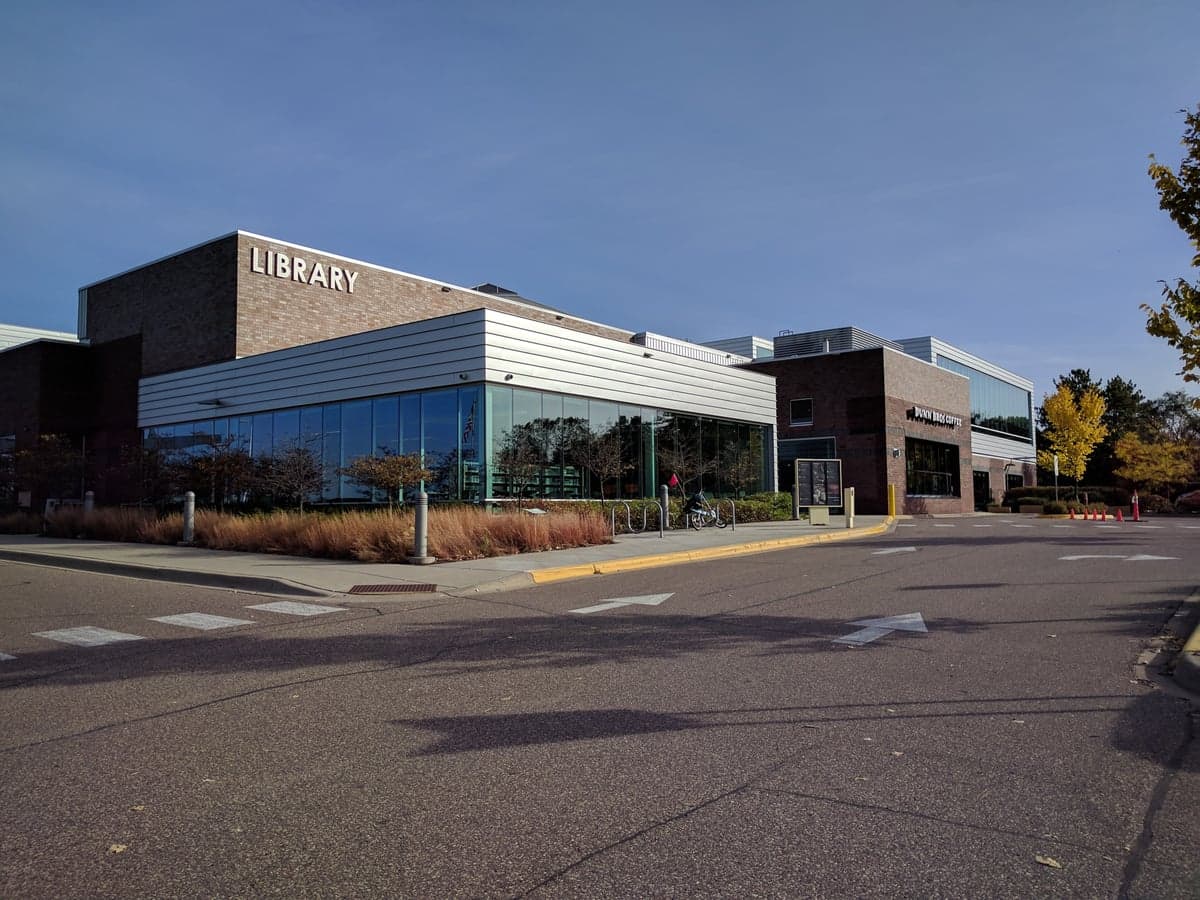
Photo: Wikipedia
Personal Sovereignty in Roseville, MN
Viable for self-reliance. Generally workable, though some barriers may limit total independence.
What does Personal Sovereignty tell us?
Personal Sovereignty measures your capacity for self-reliance and independence with minimal government friction. Higher scores mean fewer barriers between you and the way you want to live... but it assumes you have the space you need and good neighbors.
What does this tell us?
Personal Sovereignty measures your capacity for self-reliance and independence with minimal government friction. Higher scores mean fewer barriers between you and the way you want to live... but it assumes you have the space you need and good neighbors.
State Policy
Energy independence: Importer (20% of energy produced in-state)
Personal Liberty
Homesteading

Personal Liberty Analysis
Roseville, Minnesota, presents a mixed picture for those prioritizing personal sovereignty, where the state's progressive governance often clashes with individual autonomy. While the city itself offers a stable, suburban environment with decent access to resources, residents must navigate a regulatory landscape that increasingly favors collective mandates over personal choice. For the survivalist or prepper mindset, the key question is whether the area's practical advantages—like proximity to supplies and a strong community network—outweigh the creeping encroachments on self-reliance from state-level policies. The overall autonomy environment here is one of managed freedom, where you can live quietly but must remain vigilant against government overreach.
Tax burden and regulatory posture: what you pay and what you can do
Minnesota's tax burden is among the highest in the nation, and Roseville residents feel it directly. The state imposes a progressive income tax with a top marginal rate of 9.85%, and property taxes in Ramsey County are above average, with effective rates around 1.1% of home value. Sales tax in Roseville is 8.125%, combining state, county, and local levies. For a prepper household, this means less disposable income for stockpiling supplies, land purchases, or alternative energy investments. The regulatory posture is similarly restrictive. Minnesota has stringent environmental regulations that can complicate building projects, and the state's energy code is one of the most demanding in the Midwest, making off-grid solar or wind installations subject to permitting hurdles. Zoning in Roseville is largely suburban residential, with minimum lot sizes typically around 7,000 to 10,000 square feet—enough for a garden but not for significant homesteading. The city's planning department has a reputation for enforcing code strictly, so any modification to a property, from a shed to a chicken coop, requires formal approval. This regulatory density creates a friction that can frustrate those seeking to live with minimal government interference.
Self-defense and gun law specifics: what you can carry and where
Minnesota is a "shall-issue" state for concealed carry permits, and Roseville does not impose additional local restrictions beyond state law. This means law-abiding adults can obtain a permit to carry a firearm after a background check and training course, with no requirement to demonstrate a specific need. However, the state has a permit-to-purchase system for handguns, which adds a bureaucratic step. Open carry is legal without a permit, but local ordinances in Roseville restrict firearms in city parks and public buildings, which can be a nuisance for those who prefer to carry everywhere. The state's "stand your ground" doctrine is limited; Minnesota follows a "duty to retreat" in public spaces unless you are in your home or vehicle. This is a significant drawback for self-defense advocates, as it places the burden on the individual to avoid confrontation rather than stand firm. Magazine capacity is not restricted at the state level, but the political climate in the Twin Cities metro area is increasingly hostile to gun rights, with frequent legislative attempts to ban certain firearms. For the prepper, this means you can legally own and carry, but you must stay informed about rapidly shifting laws and be prepared to defend your rights at the ballot box.
Self-reliance and homesteading viability: lot sizes, zoning, and off-grid feasibility
Roseville's suburban character limits serious homesteading. Typical residential lots are small—often under a quarter-acre—and zoning codes prohibit livestock like chickens or goats in most neighborhoods, though a few areas allow hens with a permit. Gardening is permitted, but homeowners associations (HOAs) in some subdivisions may impose restrictions on visible structures like greenhouses or rain barrels. Off-grid living is effectively illegal within city limits; the city requires connection to municipal water and sewer, and building codes mandate grid-tied electrical systems for new construction. For those seeking true self-reliance, Roseville is not the place. The practical workaround is to own a rural property within a 30-minute drive, such as in Chisago or Isanti counties, where lot sizes of 5 to 40 acres are common and zoning is far more permissive. Many preppers in the area adopt a "bug-out" strategy: a suburban home in Roseville for daily life and a rural retreat for serious stockpiling and off-grid capability. The city's advantage is its location near major supply chains—Costco, Home Depot, and several outdoor gear stores are within 10 minutes—making it easy to rotate supplies and acquire bulk goods. But for actual homesteading, the regulatory environment is a barrier, not a support.
Personal liberties: parental rights, medical autonomy, speech, and property
Parental rights in Minnesota are under increasing pressure. The state has passed laws that allow minors to consent to certain medical treatments without parental notification, including mental health services and, controversially, gender-affirming care. This directly undermines a parent's authority to guide their child's health decisions. In Roseville, school district policies have also shifted toward inclusive curriculum standards that some parents view as overstepping into family values. Medical autonomy for adults is similarly constrained. Minnesota has a strict vaccine mandate for school attendance, and during the pandemic, the state imposed some of the longest-lasting emergency orders in the country. For those who prioritize medical freedom, this track record is concerning. Free speech is protected under the First Amendment, but the state has enacted laws against "hate speech" that some legal experts argue could be used to chill political dissent. Property rights are relatively strong in terms of ownership, but eminent domain has been used aggressively for redevelopment projects in the Twin Cities metro, including in Roseville's commercial corridors. The city's comprehensive plan gives it broad authority to regulate land use, meaning your ability to modify your property is subject to public hearings and planning commission approval. Overall, personal liberties in Roseville are best described as conditional—you have them as long as they don't conflict with state or local priorities.
Compared to other areas in the Upper Midwest, Roseville offers a moderate level of personal sovereignty that requires constant vigilance. It is more restrictive than rural Minnesota or Wisconsin, where property taxes are lower and zoning is looser, but less restrictive than coastal states like California or New York. For the strategic relocator with a conservative, prepper mindset, Roseville can work as a base of operations if you are willing to engage in local politics, join a gun rights organization, and maintain a secondary property for true self-reliance. The city's infrastructure and community resources are strong, but the regulatory and tax environment will test your commitment to autonomy. If you value low interference and maximum personal freedom, look further north or west. If you need proximity to jobs and supplies and are prepared to fight for your rights, Roseville is a viable, if imperfect, choice.

* Values derived from national, state, county, city and local statistics and may differ in a specific area. Last updated: 2026-04-29T23:18:15.000Z
Narrative content on this page is AI-generated and may contain mistakes. Verify any details that matter before acting on them.
ReloMaps may earn a commission from affiliate links at no extra cost to you.

