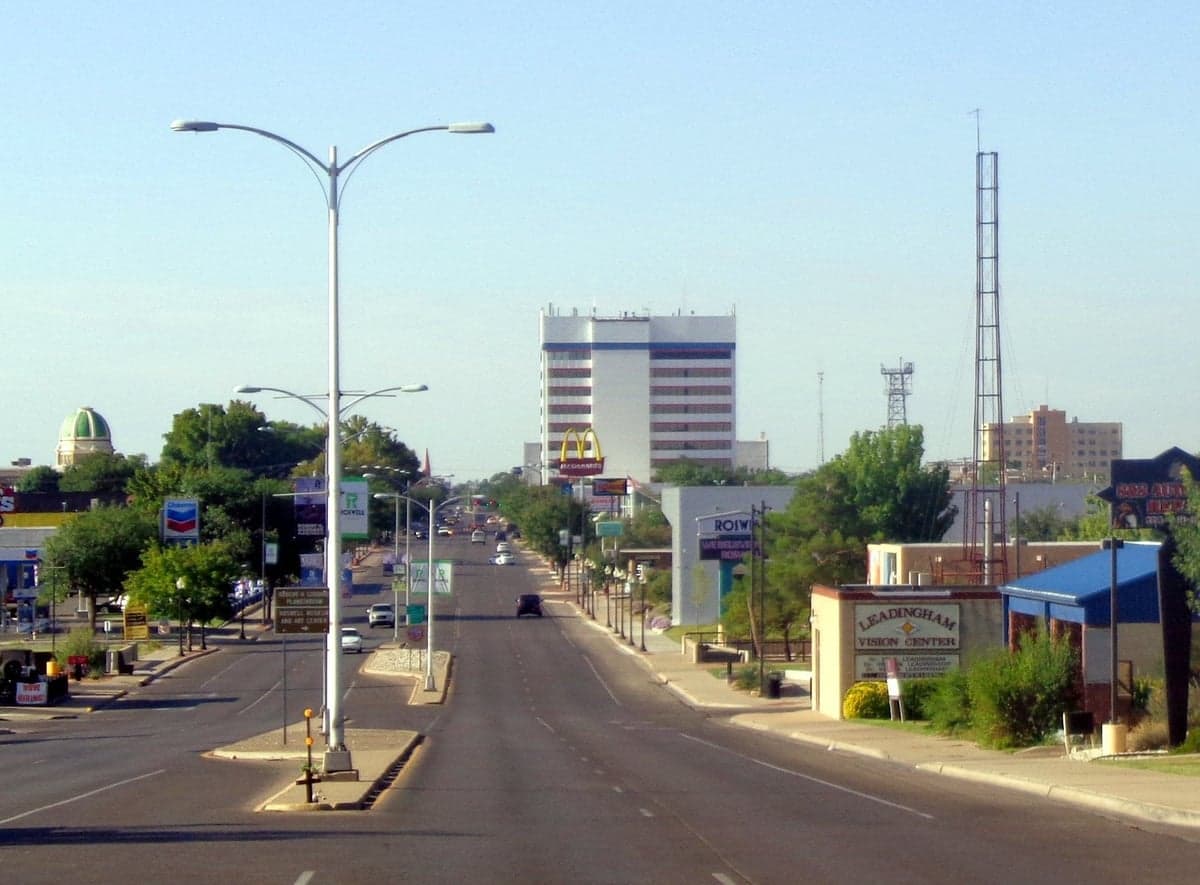
Photo: Wikipedia
Personal Sovereignty in Roswell, NM
Viable for self-reliance. Generally workable, though some barriers may limit total independence.
What does Personal Sovereignty tell us?
Personal Sovereignty measures your capacity for self-reliance and independence with minimal government friction. Higher scores mean fewer barriers between you and the way you want to live... but it assumes you have the space you need and good neighbors.
What does this tell us?
Personal Sovereignty measures your capacity for self-reliance and independence with minimal government friction. Higher scores mean fewer barriers between you and the way you want to live... but it assumes you have the space you need and good neighbors.
State Policy
Energy independence: Net exporter (250% of energy produced in-state)
Personal Liberty
Homesteading

Personal Liberty Analysis
Roswell, New Mexico offers a mixed but increasingly attractive environment for personal sovereignty, where the state's constitutional protections for self-defense and property rights are tempered by a regulatory climate that can feel intrusive to those accustomed to true autonomy. The city sits in Chaves County, a region where the frontier spirit of self-reliance still lingers, but where state-level mandates—particularly around energy, education, and health—create friction for those seeking maximum independence. For the strategic relocator with a survivalist or prepper mindset, Roswell presents a workable base, but only if you understand where the lines of government overreach are drawn and how to navigate them.
Tax burden and regulatory posture in Roswell and Chaves County
New Mexico's tax structure is a double-edged sword for sovereignty-minded individuals. The state levies a progressive income tax with rates from 1.7% to 5.9% (2025), which hits higher earners harder than flat-tax states like Texas or Florida. Property taxes in Chaves County are relatively low—around 0.6% of assessed value—which is a genuine advantage for landowners wanting to hold acreage without crippling annual costs. However, the state's gross receipts tax (GRT) on goods and services, which in Roswell totals roughly 8.4375%, adds a hidden burden to daily living expenses. Regulatory posture is where the state's overreach becomes most apparent. New Mexico mandates strict vehicle emissions testing in Chaves County, a program that feels like unnecessary government intrusion for those who maintain their own vehicles or drive older, pre-1995 models (which are exempt). Building permits in Roswell are enforced through the city's Development Services Department, and while the process is not as draconian as in Santa Fe or Albuquerque, any off-grid construction—like a detached workshop or root cellar—requires permits and inspections that can delay self-reliant projects. The state's energy transition mandates, including a 2021 law requiring utilities to be 100% carbon-free by 2045, signal a long-term regulatory creep that could affect property use and energy independence.
Self-defense and gun law specifics for Roswell residents
New Mexico is a shall-issue state for concealed carry, meaning the county sheriff must issue a permit if you meet basic requirements—no subjective "good cause" nonsense. Roswell residents can carry openly without a permit, and the state preempts local gun ordinances, so the city cannot ban firearms in parks or public spaces. This is a solid foundation for self-defense sovereignty. However, there are critical caveats. New Mexico has a red flag law (Extreme Risk Firearm Protection Order Act) that allows law enforcement or family members to petition a court to temporarily seize firearms from someone deemed a threat—a law that preppers rightly view as ripe for abuse by overzealous officials or vindictive relatives. The state also bans private firearm transfers without a background check through a licensed dealer, which adds a layer of government oversight to what should be a private transaction between neighbors. Magazine capacity is not restricted, and there is no state-level assault weapons ban, so you can own standard AR-15s and high-capacity magazines. For the survivalist, the key takeaway is that while New Mexico respects the right to carry and own firearms, the red flag law and universal background check requirement represent a vulnerability that could be exploited in a crisis. Castle doctrine and stand-your-ground protections are strong—no duty to retreat in your home, vehicle, or workplace—but the state's liberal judiciary in higher courts has occasionally narrowed these protections in practice.
Self-reliance and homesteading viability in Roswell
Roswell's semi-arid climate and available land make it a viable but challenging location for homesteading and off-grid living. Lot sizes in the county range from 0.25 acres in town to 40+ acres in the rural outskirts, with many parcels under $5,000 per acre for raw land. Zoning in unincorporated Chaves County is minimal—no county-wide building codes for agricultural structures, and no restrictions on keeping chickens, goats, or even a few head of cattle on parcels over one acre. However, the city of Roswell itself enforces zoning that limits livestock and requires permits for accessory dwellings, so true self-reliance requires moving outside the city limits. Off-grid feasibility is mixed. New Mexico has a "right to solar" law that prohibits HOAs from banning solar panels, but the state's net metering policies are less generous than in neighboring Arizona, and the grid connection requirement for selling excess power back can feel like a leash. Water is the critical constraint: the Ogallala Aquifer underlies the region, but well drilling is regulated by the Office of the State Engineer, and new wells require a permit that can take months to approve. Rainwater harvesting is legal and encouraged, but annual precipitation is only about 12 inches, making it insufficient as a primary water source without extensive storage. For the prepper, Roswell's rural fringe offers affordable land and minimal zoning, but water independence requires significant upfront investment in wells, cisterns, and filtration systems—and the state's permitting bureaucracy is a hurdle you must plan for.
Personal liberties: parental rights, medical autonomy, speech, and property
Parental rights in New Mexico are under active assault from the state government. The state mandates comprehensive sex education in public schools, and parents cannot opt their children out of specific lessons—only the entire curriculum. Vaccine mandates for school attendance are enforced, with only narrow medical exemptions (no religious or philosophical exemptions), which is a direct infringement on parental medical autonomy. Medical freedom is similarly constrained: New Mexico has no right-to-try law for terminally ill patients seeking experimental treatments, and the state's medical cannabis program, while legal, is heavily regulated with a limited qualifying conditions list that excludes many chronic issues. Free speech protections are strong on paper, but the state's hate crime laws and social media regulation attempts signal a willingness to police expression that conservatives find troubling. Property rights are a bright spot: New Mexico has strong eminent domain protections, requiring "public use" (not just economic development) for takings, and the state's right-to-farm law shields agricultural operations from nuisance lawsuits—important for homesteaders. However, the state's water rights system is a complex prior-appropriation regime that can feel like government micromanagement; you cannot simply dig a pond or divert runoff without a permit from the state engineer.
Overall, Roswell offers a workable but imperfect environment for personal sovereignty. The low property taxes, strong self-defense laws, and affordable land for homesteading are genuine advantages that place it ahead of blue-state strongholds like California or New York. But the state-level overreach on medical mandates, education, and energy regulation means you cannot fully escape government intrusion. For the strategic relocator who values autonomy, Roswell is a solid middle-ground—better than most coastal cities, but not as free as Texas or Arizona. The key is to buy land outside city limits, invest in water independence, and stay vigilant against state-level encroachments that could tighten the screws in the years ahead.

* Values derived from national, state, county, city and local statistics and may differ in a specific area. Last updated: 2026-05-01T06:11:45.000Z
Narrative content on this page is AI-generated and may contain mistakes. Verify any details that matter before acting on them.
ReloMaps may earn a commission from affiliate links at no extra cost to you.

