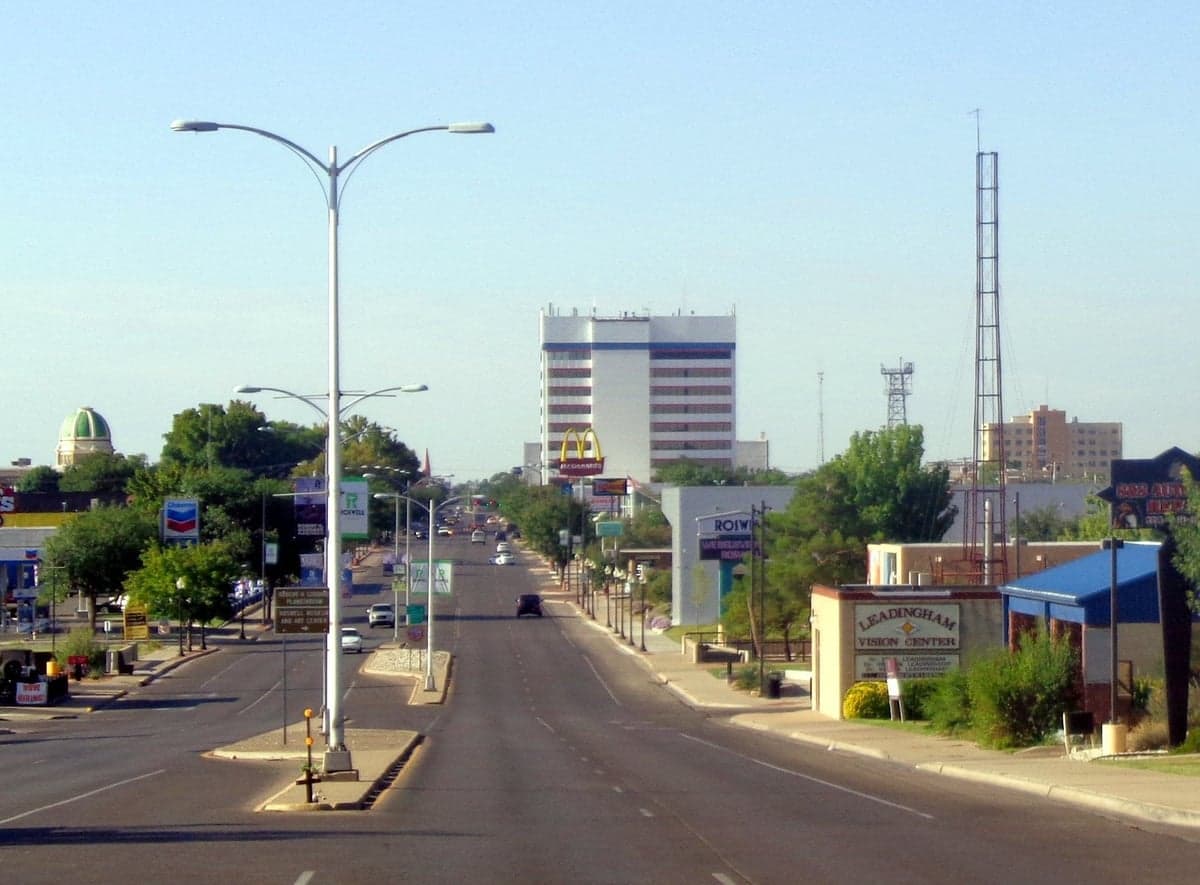
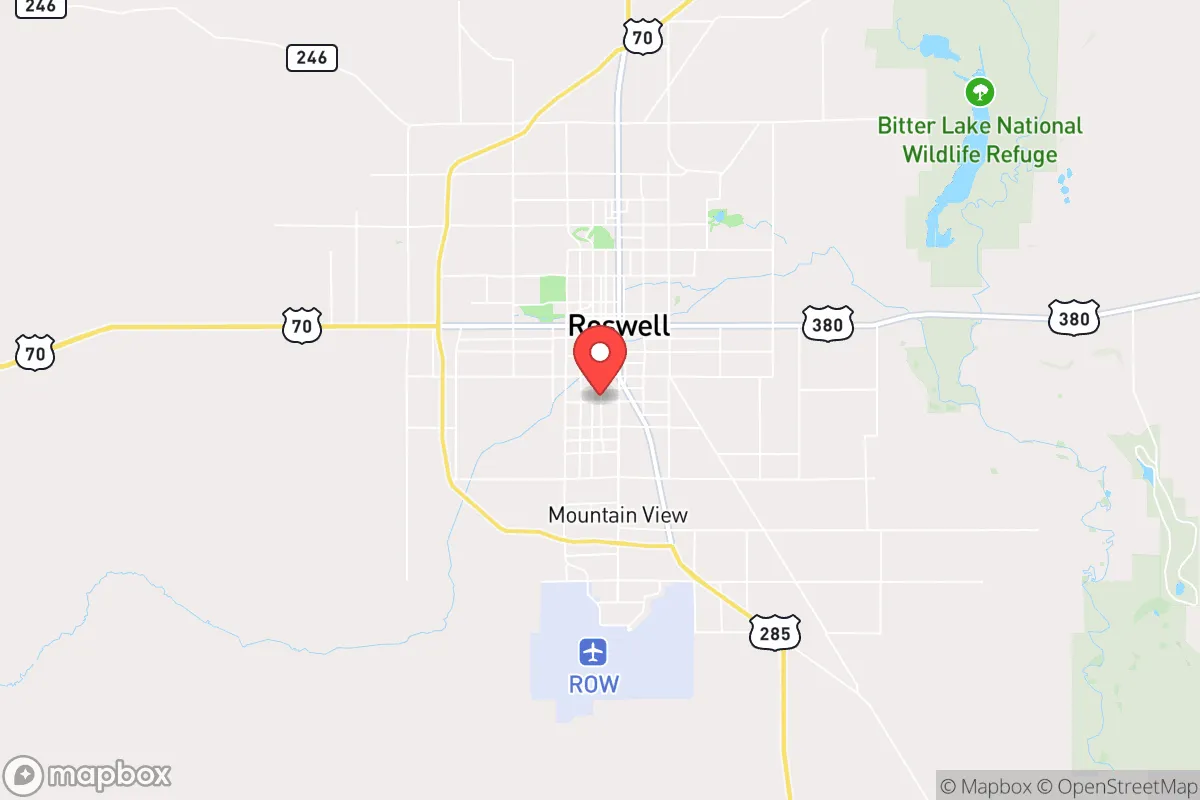
Photo: Wikipedia
Strategic Assessment of Roswell, NM
Workable tactical position. Some exposure to population density or targets, but generally defensible in a crisis.
What does the Strategic Assessment tell us?
Our Strategic Assessment grades tactical survivability of an area. Major population centers, military targets, fallout zones, natural disasters, and border exposure all drive risk — lower exposure means a more defensible position in a crisis.
This is heavily inspired by Joel Skousen's Strategic Relocation book. Highly recommended you checkout the book ($)What does this tell us?
Our Strategic Assessment grades tactical survivability of an area. Major population centers, military targets, fallout zones, natural disasters, and border exposure all drive risk — lower exposure means a more defensible position in a crisis.
This is heavily inspired by Joel Skousen's Strategic Relocation book. Highly recommended you checkout the book ($)Strategic Pillars

Key Distances
Regional Safe Places
Below is our recommended "safe zones" in New Mexico and the surrounding area based on our strategic heuristics. For most people, it's unrealistic to live in a “safe zone” full-time due to work, family or other personal reasons. They tend to be more rural. However, many of these areas are perfect for second homes and retreat properties that double as a vacation home or even a short-term rental.

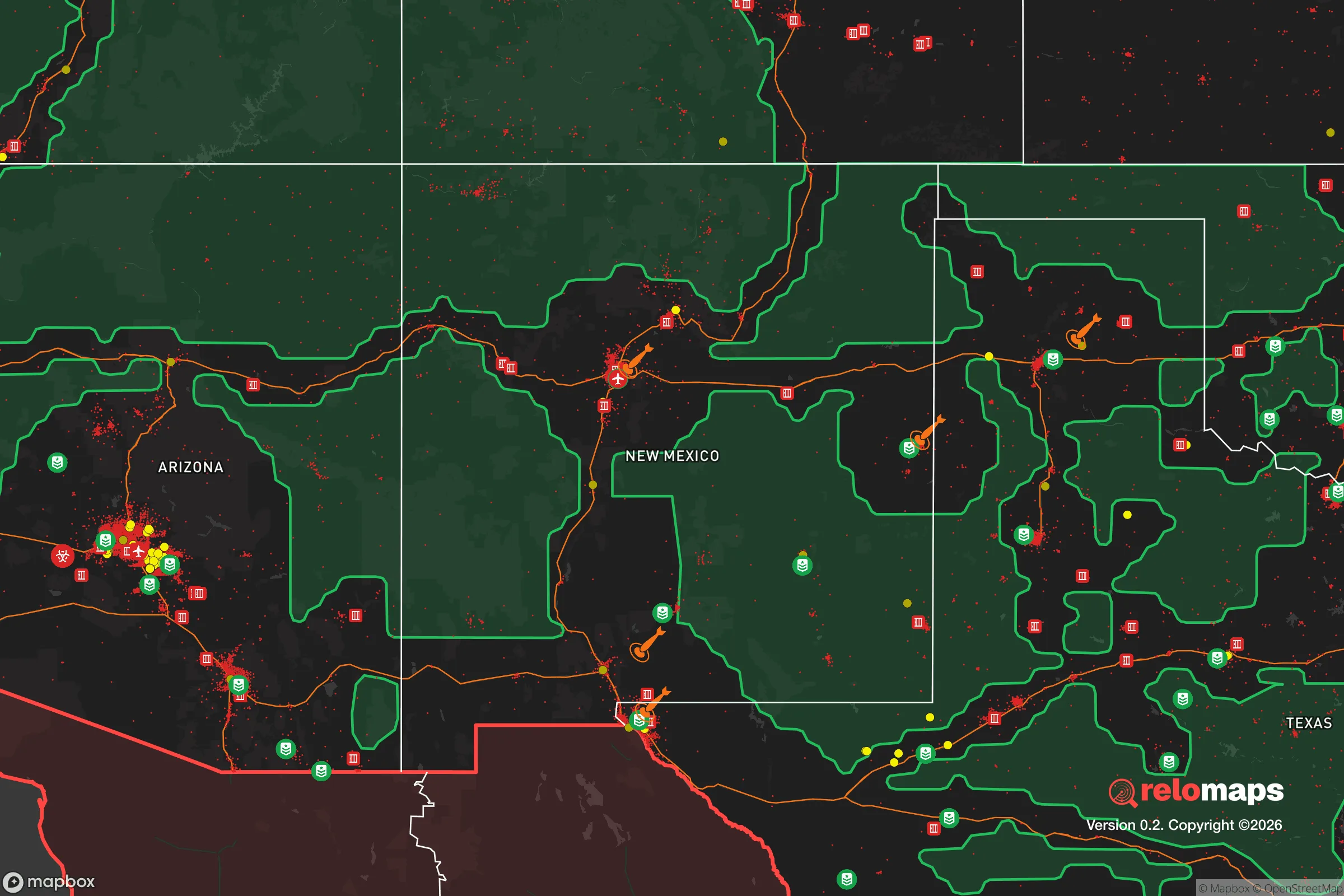


Important Note: For informational purposes only. This does not mean nothing bad ever happens in the green zones. Please use common sense. This is based on public data and modeled with AI. We tried to take a conservative approach but mistakes happen. We update this regularly as new information becomes available.
Solar Generator Recommendations
Backup power matters more here than in safer locations. We've picked three solar generators across budgets and capacity tiers — start with the budget unit if you only need a few essentials, or step up if you want to run a fridge and HVAC for days at a time.

Jackery Portable Power Station Explorer 300
Budget OptionPower on the Go: Weighing only 11 lbs, it's convenient to set up and store with book-sized foldable solar panels

BLUETTI Portable Power Station AC180
Designed for both indoor and outdoor scenarios, AC180 is highly capable as it has a robost capacity and continuous output power.

EF ECOFLOW DELTA Pro Ultra Power Station
Upgraded PickEcoFlow DELTA Pro Ultra is a whole-home energy system designed to grow with your family. Integrated with the Smart Home Panel 2, it scales to meet your evolving energy needs — keeping your home powered, intelligent, and secure through every stage of life.
We earn a commission, at no additional cost to you.
Strategic Assessment Analysis
Roswell, New Mexico, presents a genuinely interesting strategic picture for someone thinking about long-term resilience and getting out of the path of major population centers. Its location in the southeastern part of the state, roughly 200 miles from both Albuquerque and El Paso, puts it far enough from the immediate blast radius of a major city or a high-value military target, yet close enough to a regional hub (El Paso) for serious medical care or supply runs if things stabilize. The area’s historical boom-and-bust cycles, tied to ranching, oil, and the military, have bred a population that is used to self-reliance and isn’t easily spooked, which is a cultural asset you can’t buy. For a relocator looking at the big picture of potential civic unrest or supply chain collapse, Roswell offers a combination of low population density, a semi-arid climate that reduces certain natural disaster risks, and a local economy that still revolves around tangible things like agriculture and defense, not just paper assets.
Geographic position and natural advantages for long-term security
Roswell sits in the Pecos River Valley, which is the single most important natural feature in the region. The Pecos River provides a surface water source that is far more reliable than the ephemeral washes found elsewhere in the state, and the local aquifer—the Roswell Artesian Basin—is a known, if managed, groundwater resource. This is a significant advantage over much of the arid Southwest, where water is the primary limiting factor for any kind of long-term habitation. The surrounding terrain is mostly flat, high desert grassland, which offers good visibility and makes it difficult for any large, disorganized group to approach undetected. The climate is dry, with low humidity that preserves stored goods and reduces the corrosion of equipment, and the area is not prone to the major earthquake risks of the West Coast or the hurricane threats of the Gulf. The elevation, around 3,500 feet, keeps summer temperatures manageable compared to lower desert locations like Phoenix, reducing the strain on cooling systems and water needs. For a prepper, this means a lower baseline of environmental stress, allowing you to focus your resources on other contingencies.
Risks, exposures, and proximity to fallout-relevant landmarks
No strategic analysis is honest without a hard look at the downsides, and Roswell has a few that you need to factor in. The most obvious is the proximity to the WIPP (Waste Isolation Pilot Plant) near Carlsbad, about 75 miles south. This is a deep geological repository for transuranic nuclear waste from the nation's defense programs. While the facility has a solid safety record overall, a major incident—whether from a natural disaster, a terrorist attack, or a catastrophic failure—could render a significant downwind area uninhabitable for a long time. You need to understand the prevailing wind patterns and have a plan for monitoring conditions if you’re within that radius. Second, Roswell is home to the New Mexico Rehabilitation Center and a sizable state prison complex. In a scenario of widespread civil unrest or a breakdown of law and order, a prison with a large inmate population becomes a serious liability. The local police and county sheriff are competent, but they would be quickly overwhelmed if that facility were compromised. Third, while Roswell itself is not a primary target, the Cannon Air Force Base near Clovis (about 100 miles north) and Holloman Air Force Base near Alamogordo (about 100 miles west) are. A conventional or asymmetric attack on either base could create a refugee flow or a no-fly zone that affects the entire region. You are not in the blast zone, but you are in the zone of secondary effects.
Practical resilience for a relocator: food, water, energy, and defensibility
This is where Roswell either works for you or it doesn’t. On the water front, as mentioned, the aquifer is a real asset, but it’s not unlimited. A serious prepper would want a property with a private well and a backup hand pump, not just a connection to the city water system. The city’s water treatment plant is a potential single point of failure. For food, the surrounding agricultural land is mostly used for alfalfa, cotton, and some livestock, not row crops for direct human consumption. You will need to establish your own garden (the growing season is long enough for warm-season crops) and develop relationships with local ranchers for meat and dairy. The local farmers' market and co-ops exist but are small; you cannot rely on them in a crisis. For energy, the area has excellent solar potential—over 280 sunny days per year on average. A robust off-grid solar setup with battery storage is entirely feasible here, and the flat terrain makes wind power a viable secondary option. Natural gas is also available in the region, which can be used for heating and cooking with a simple backup system. Defensibility is a mixed bag. The flat terrain is a double-edged sword: it gives you good lines of sight, but it offers little natural cover. A property on the outskirts, away from main highways, with a good perimeter and a clear field of fire, is ideal. The local population is generally armed and pro-Second Amendment, which means the social environment is not hostile to self-defense preparations. The biggest practical challenge is distance. You are a long way from any major supply hub. If you forget a critical part for your generator or a specific medicine, the drive to El Paso or Lubbock is a half-day commitment. This forces you to be truly self-sufficient, not just "prepared" in a theoretical sense.
The overall strategic picture for Roswell is that of a secondary haven, not a primary fortress. It is not the place to ride out a direct nuclear exchange or a complete societal collapse right next to a major city. But for someone looking to get out of the suburban sprawl, away from the political and social friction of the coasts, and into a community that still values hard work and personal responsibility, it offers a viable path. The risks from WIPP and the prison are real but manageable with proper planning and situational awareness. The water and solar advantages are genuine and hard to find in combination elsewhere in the Southwest. If you are a single individual or a family willing to put in the work to build a resilient property, develop local knowledge, and accept that you will be far from the conveniences of modern urban life, Roswell deserves a serious look. It is not a bug-out location for a weekend; it is a place to build a new, more durable life. The key is to go in with your eyes open, treat the water and energy independence as non-negotiable, and understand that your security will come from your own preparations and your relationships with your neighbors, not from any government or institution.

* Values derived from national, state, county, city and local statistics and may differ in a specific area. Last updated: 2026-05-01T06:11:45.000Z
Narrative content on this page is AI-generated and may contain mistakes. Verify any details that matter before acting on them.
ReloMaps may earn a commission from affiliate links at no extra cost to you.

