
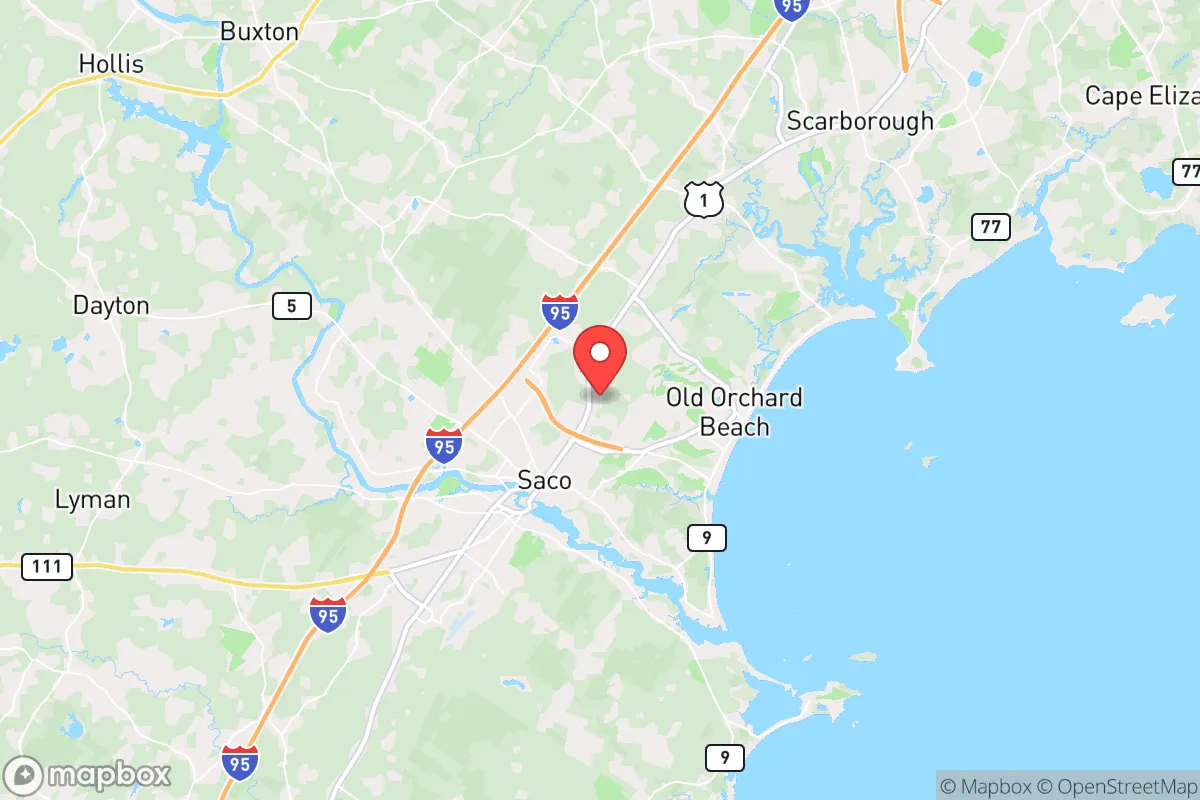
Photo: Wikipedia
Personal Sovereignty in Saco, ME
Viable for self-reliance. Generally workable, though some barriers may limit total independence.
What does Personal Sovereignty tell us?
Personal Sovereignty measures your capacity for self-reliance and independence with minimal government friction. Higher scores mean fewer barriers between you and the way you want to live... but it assumes you have the space you need and good neighbors.
What does this tell us?
Personal Sovereignty measures your capacity for self-reliance and independence with minimal government friction. Higher scores mean fewer barriers between you and the way you want to live... but it assumes you have the space you need and good neighbors.
State Policy
Energy independence: Importer (30% of energy produced in-state)
Personal Liberty
Homesteading

Personal Liberty Analysis
Saco, Maine, presents a complex picture for those prioritizing personal sovereignty. While the city itself operates under a relatively moderate local governance structure, it is fundamentally bound by the laws of Maine, a state with a mixed record on individual freedoms. For the survivalist or prepper, Saco offers a strategic coastal location with access to resources, but it requires a clear-eyed understanding of the state-level regulatory environment that can constrain autonomy. The balance here is between a community that values its New England independence and a state government that increasingly asserts control over personal choices, from taxation to self-defense.
Tax burden and regulatory posture in a high-cost state
Maine’s tax burden is among the highest in the nation, and Saco residents feel this directly. The state imposes a progressive income tax with a top marginal rate of 7.15%, and property taxes in York County are notably high, often exceeding 1.5% of assessed home value annually. For a prepper focused on long-term financial resilience, this means a significant portion of income and property equity is diverted to state coffers. The regulatory posture in Maine is also expansive, particularly around environmental and land-use rules. The Maine Department of Environmental Protection (DEP) has broad authority over activities like well drilling, septic systems, and even minor construction near wetlands, which can complicate off-grid or self-sufficient projects. While Saco’s city government is generally business-friendly compared to Portland, the state-level permitting processes can be slow and costly, creating friction for anyone looking to build a self-reliant homestead or operate a small-scale agricultural enterprise without bureaucratic interference.
Self-defense and gun law specifics in Maine
Maine is often cited as a "shall-issue" state for concealed carry, and it does not require a permit to carry a firearm openly or concealed for residents over 21. This is a strong point for personal sovereignty advocates. However, the landscape is shifting. In 2023, the state passed a "yellow flag" law, which allows law enforcement to temporarily seize firearms from individuals deemed a threat by a mental health professional, and a 72-hour waiting period for most firearm purchases was enacted in 2024. For the prepper, these are clear encroachments on the Second Amendment. Saco itself has no additional local gun ordinances beyond state law, but the city’s proximity to Portland means it is influenced by the more restrictive attitudes of the southern Maine corridor. Magazine capacity remains unrestricted, and there is no state-level registry, but the trend line is concerning. Anyone serious about self-defense should monitor the state legislature closely, as further restrictions on private sales or "assault weapons" are debated annually.
Self-reliance and homesteading viability in Saco
Saco offers a mixed bag for those seeking to live off the land. The city’s zoning is primarily suburban and residential, with most lots in the 0.25 to 1-acre range within the urban growth boundary. True homesteading—raising livestock, maintaining large gardens, or building a fully off-grid dwelling—is largely confined to the more rural fringes, such as the area near the Buxton line or along the Saco River. The city does allow backyard chickens (hens only, no roosters) on lots over 10,000 square feet, and beekeeping is permitted with registration. However, off-grid living is heavily restricted. Maine’s Uniform Building Code and local health codes require connection to municipal water and sewer in most developed areas, and solar panels must comply with grid-tied interconnection standards unless you are on a very remote parcel. Rainwater collection is legal but limited to non-potable uses. For the serious prepper, Saco’s suburban character means you are likely to be within earshot of neighbors, and true self-sufficiency will require a property outside the city limits, likely in a more rural town like Alfred or Lyman.
Personal liberties: parental rights, medical autonomy, speech, and property
On parental rights, Maine has been a battleground. The state mandates comprehensive sex education in public schools, and parents do not have the right to opt their children out of LGBTQ+ inclusive curriculum. This is a significant concern for conservative families who want to control what their children are taught. Medical autonomy is also constrained. Maine has a strict vaccine mandate for school attendance, with only narrow medical exemptions, and the state’s public health infrastructure is heavily centralized. During the COVID-19 pandemic, Maine had some of the longest-lasting emergency orders in New England, including mask and vaccine mandates for healthcare workers. For the prepper, this signals a willingness to override individual medical choices in the name of public health. Free speech is protected under the First Amendment, but the state has a "malicious harassment" statute that can be used to prosecute perceived hate speech, which some view as a chilling effect on political discourse. Property rights are relatively strong in Maine compared to other New England states, but the state’s "public trust doctrine" gives the government broad authority over coastal and riverfront land, limiting what owners can do on their own property near waterways. Eminent domain is used sparingly, but the regulatory burden on land use is high.
Overall, Saco offers a moderate level of personal sovereignty that is heavily mediated by state-level policies. For the conservative prepper, the city’s location provides strategic advantages—access to the coast, a relatively stable local economy, and a community that values self-reliance. However, the tax burden, expanding gun restrictions, and erosion of parental rights are serious red flags. Compared to a place like New Hampshire, where there is no income tax and a stronger culture of individual liberty, Saco falls short. Compared to Massachusetts or New York, it is a clear improvement. The bottom line: Saco is a workable base for someone willing to engage in local politics and navigate state regulations, but it is not a sanctuary for those seeking maximum autonomy. The smart move is to buy land in a more rural part of York County while maintaining a residence in Saco for work and community access, keeping one foot in the system and one foot out.

* Values derived from national, state, county, city and local statistics and may differ in a specific area. Last updated: 2026-05-02T00:21:56.000Z
Narrative content on this page is AI-generated and may contain mistakes. Verify any details that matter before acting on them.
ReloMaps may earn a commission from affiliate links at no extra cost to you.

