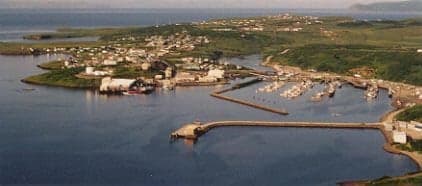
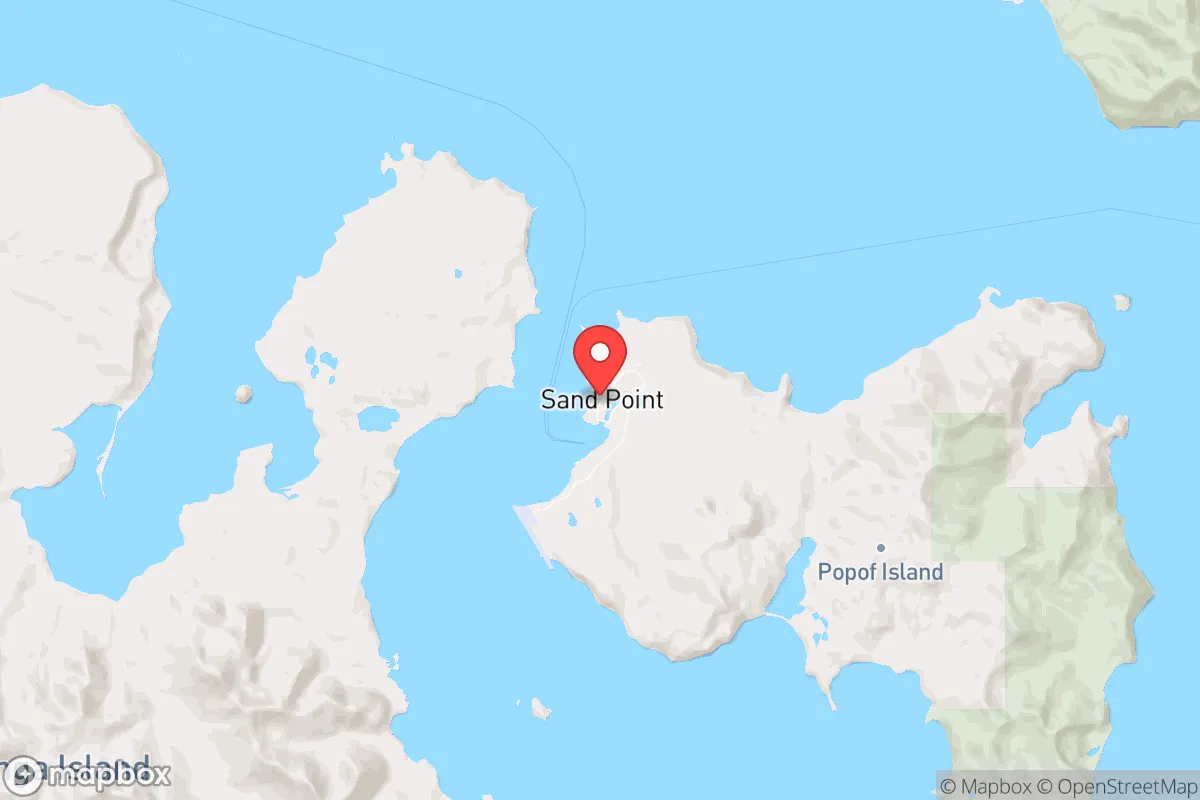
Photo: Wikipedia
Political ClimatePolitical Climate in Sand Point, AK
District shown is the primary district for this city’s centroid. Cities may span multiple districts.
Inherited from parent state — no local data available.
Local Political AnalysisPolitical Analysis of Sand Point, AK
Sand Point, Alaska, has long been a place where folks value their independence and don't take kindly to being told how to live their lives, and that's reflected in its solidly conservative lean. The Cook PVI of R+6 tells you the baseline, but it doesn't capture the deep-seated skepticism of government overreach that runs through the community. For decades, this was a town where you could count on your neighbors to have your back and the government to stay out of your business, but like a lot of places, you can feel the winds shifting, and it's got a lot of us watching closely.
How it compares
When you look at the political map, Sand Point stands out as a conservative anchor in a region that's not all on the same page. Head over to Unalaska, about 200 miles southwest, and you'll find a much more progressive vibe, driven by the big fishing industry and a transient workforce that doesn't always share the local values. King Cove, closer to home, leans more conservative but has a different flavor, more focused on subsistence and tribal politics. Sand Point, though, has historically been a place where the Second Amendment isn't debated, it's assumed, and where the idea of the federal government dictating fishing quotas or land use gets met with a lot of side-eye. The contrast with Anchorage, 700 miles away, is even starker—that city's progressive policies on everything from taxes to social issues feel like a different world entirely.
What this means for residents
For the folks who call Sand Point home, this political climate means a daily life that's more about self-reliance than waiting for a handout. You don't see a lot of government programs here because people prefer to handle things themselves—whether it's fixing a boat engine or helping a neighbor with a broken-down snowmachine. The concern I hear most often is about federal overreach into fishing regulations, which is the lifeblood of the town. When the feds start talking about stricter quotas or marine protected areas, it's not just an inconvenience—it's a direct threat to livelihoods. There's also a growing unease about how progressive ideas from outside are creeping in, especially around land use and environmental rules that feel disconnected from the reality of living off the land and sea. For a resident, this means you're constantly on guard, watching for policies that could undermine the freedom to make your own way.
What daily life is like for families
Raising a family here means your kids grow up with a strong sense of personal responsibility and community, not entitlement. The schools are small, and parents are deeply involved, which keeps outside influences at bay. You won't find the same debates about critical race theory or gender ideology that dominate schools in the Lower 48—here, it's about practical skills and respect for tradition. The downside is that young people often leave for college and don't come back, drawn to cities with more opportunities, but those who stay are the ones who value the freedom and low-key lifestyle. The community is tight-knit, and that means everyone knows your business, but it also means you can count on a helping hand without a government form.
Culturally, Sand Point is defined by its fishing heritage and a no-nonsense attitude that's hard to find elsewhere. The biggest policy distinction is the near-total absence of progressive social programs—there's no public transportation, no bike lanes, no diversity initiatives, and that's how most folks like it. The local government is small and focused on basic services like roads and utilities, not social engineering. Looking ahead, the long-term concern is that as the fishing industry faces more federal pressure and as younger generations get exposed to outside ideas, the conservative foundation could erode. For now, though, Sand Point remains a place where you can still live free, as long as you're willing to work for it and keep an eye on the horizon.

State Political ClimatePolitical Climate in Alaska
State Political AnalysisPolitical Environment in the State
Alaska has long been a unique political outlier—a state where a fierce libertarian streak, resource independence, and a deep distrust of federal overreach have historically produced a reliably Republican lean, but with a populist, anti-establishment edge that can surprise outsiders. Over the last 10-20 years, the state has shifted from a solidly red stronghold (voting for every GOP presidential candidate since 1968 except 1992) to a more volatile swing state, with the 2020 election going to Trump by 10 points, but the 2022 at-large House race being won by a Democrat (Mary Peltola) in a ranked-choice voting upset. The dominant coalition remains conservative on resource development and gun rights, but the influx of remote workers and a growing progressive foothold in Anchorage and Juneau have created a real tension that any newcomer should watch closely.
Urban vs. rural divide
The political map of Alaska is starkly divided between the urban corridor and the vast rural expanse. Anchorage, home to about 40% of the state’s population, is the key battleground—its liberal-leaning Assembly and growing diversity have made it a blue island in a red sea, with precincts in midtown and downtown voting heavily Democratic. Juneau, the capital, is even more progressive, driven by state government employees and a strong environmentalist presence. Fairbanks leans conservative but is more moderate than the Mat-Su Valley. The real red heartland is the Matanuska-Susitna Borough (Wasilla, Palmer, Houston), which votes +30 to +40 points Republican and is the epicenter of the state’s gun culture and anti-regulation sentiment. Rural villages in the Bush (Nome, Bethel, Barrow) tend to vote Democratic due to tribal affiliations and heavy federal subsidies, but their turnout is low. The divide is not just cultural—it’s about who controls the state’s future: urban progressives pushing for carbon taxes and rural conservatives fighting for resource extraction.
Policy environment
Alaska’s policy environment is a mixed bag for a conservative relocating here. On the plus side, there is no state income tax and no state sales tax—a massive freedom advantage. The state’s Permanent Fund Dividend (PFD) pays residents an annual check from oil revenues, which is a direct cash benefit that few other states offer. Property taxes are low, and the state has a constitutional budget reserve that has historically kept spending in check. However, the regulatory posture is increasingly concerning: Governor Mike Dunleavy has pushed for parental rights in education (HB 105, which requires schools to notify parents of curriculum changes), but the state’s education system remains heavily unionized and has seen a recent push for critical race theory and gender ideology in Anchorage’s school district. Healthcare policy is a bright spot—Alaska has a robust telehealth system and a strong private healthcare sector, but Medicaid expansion under the ACA has strained budgets. Election laws are a flashpoint: Alaska’s ranked-choice voting system, passed by ballot initiative in 2020, has been a disaster for conservatives, allowing a Democrat to win a House seat in a state that Trump carried by 10 points. There is an active repeal effort (the 2024 ballot initiative to repeal ranked-choice voting), but it’s a fight that shows how the establishment in Juneau is willing to override the will of the people.
Trajectory & freedom
Alaska is in a precarious position: it is becoming less free in key areas, even as it remains a bastion of personal liberty in others. On gun rights, the state is still a gold standard—constitutional carry is law, no permit needed for concealed carry, and there are no magazine bans or red flag laws. The 2022 legislative session saw a bill to ban “ghost guns” fail, a win for the 2nd Amendment. But on medical autonomy, the state has seen a disturbing trend: the Alaska Supreme Court has ruled that the state constitution protects abortion access, and the legislature has been unable to pass parental notification laws for minors seeking abortions. Parental rights are under assault in Anchorage, where the school board has implemented policies allowing students to change their names and pronouns without parental consent. Property rights remain strong—Alaska has no state-level zoning laws outside of municipalities, and the Homestead Exemption protects up to $72,900 of home equity from creditors. However, the state’s reliance on federal land management (60% of Alaska is federal land) means that the Biden administration’s restrictions on oil drilling in the Arctic National Wildlife Refuge (ANWR) and the Tongass National Forest are a direct attack on the state’s sovereignty. The trajectory is clear: if the left continues to win in Anchorage and Juneau, expect more restrictions on parental rights, more gun control attempts, and a push for carbon taxes that would devastate the economy.
Civil unrest & political movements
Alaska has seen its share of political flashpoints, though they tend to be more localized than in the Lower 48. The 2020 election integrity controversy was muted compared to other states, but the ranked-choice voting system has sparked a major grassroots movement—the Alaska Voter Integrity Project and the Repeal Ranked Choice Voting campaign have been the most visible activist efforts on the right. On the left, the Alaska Environmental Lobby and groups like 350 Alaska have organized protests against oil drilling, particularly in the Arctic, and have successfully pressured the Biden administration to cancel leases. There have been small but vocal protests in Anchorage over police reform and racial justice, but nothing on the scale of Portland or Seattle. Immigration politics are less of a factor here—Alaska has a small foreign-born population (7%), but there is a growing concern about the state’s sanctuary city policies in Anchorage, which has a “welcoming city” ordinance that limits cooperation with ICE. The most visible flashpoint for a new resident would be the constant tension between the resource extraction economy and the environmentalist movement—you’ll see “Save the Arctic” bumper stickers in Juneau and “Drill Baby Drill” flags in Wasilla. There is also a strong secessionist undercurrent in the state, with the Alaska Independence Party still active, though it’s more of a fringe movement than a serious political force.
Projection
Over the next 5-10 years, Alaska is likely to become more politically volatile, not less. The demographic shift is real: remote workers from California and Washington are moving to Anchorage and the Kenai Peninsula, bringing progressive voting habits with them. The state’s population is aging and declining, which means the political power of the Mat-Su Valley and Fairbanks will be diluted as Anchorage grows. The ranked-choice voting system, if it survives the repeal effort, will continue to elect moderate Democrats and RINOs, which will frustrate conservatives. However, the state’s economic dependence on oil and gas means that any serious push for a green energy transition will be met with fierce resistance from the rural and suburban majority. The wildcard is the Permanent Fund Dividend—if the state’s budget continues to be squeezed by declining oil revenues, the PFD could be cut, which would trigger a massive backlash and potentially a populist revolt. A newcomer moving in now should expect to find a state that is still fundamentally conservative on economic and gun issues, but where the cultural battles over education and parental rights are heating up fast. The best bet for a conservative is to settle in the Mat-Su Valley or Fairbanks, where the political climate is more aligned with traditional values, and to get involved in the fight to repeal ranked-choice voting before it’s too late.
For a conservative individual or family considering a move to Alaska, the bottom line is this: you’ll find a state that still respects your right to keep and bear arms, your right to keep more of your paycheck, and your right to live without a state income tax. But you’ll also find a growing progressive machine in Anchorage and Juneau that is pushing for ranked-choice voting, parental notification loopholes, and environmental restrictions that threaten the state’s economic future. The key is to choose your community wisely—Wasilla, Palmer, and Fairbanks are your best bets for a like-minded environment—and to stay engaged in local politics, because the fight for Alaska’s soul is far from over. If you value freedom and self-reliance, this is still one of the best states in the union, but you’ll need to be vigilant to keep it that way.
* Values derived from national, state, county, city and local statistics and may differ in a specific area. Last updated: 2026-04-19T19:35:29.000Z
Narrative content on this page is AI-generated and may contain mistakes. Verify any details that matter before acting on them.
ReloMaps may earn a commission from affiliate links at no extra cost to you.

