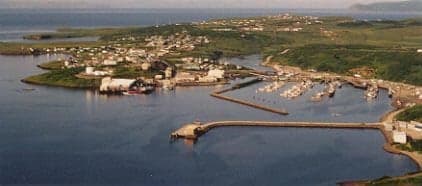
Photo: Wikipedia
Strategic Assessment of Sand Point, AK
Strong survivability profile. Good buffer from population centers, with manageable environmental and tactical risks.
What does the Strategic Assessment tell us?
Our Strategic Assessment grades tactical survivability of an area. Major population centers, military targets, fallout zones, natural disasters, and border exposure all drive risk — lower exposure means a more defensible position in a crisis.
This is heavily inspired by Joel Skousen's Strategic Relocation book. Highly recommended you checkout the book ($)What does this tell us?
Our Strategic Assessment grades tactical survivability of an area. Major population centers, military targets, fallout zones, natural disasters, and border exposure all drive risk — lower exposure means a more defensible position in a crisis.
This is heavily inspired by Joel Skousen's Strategic Relocation book. Highly recommended you checkout the book ($)Strategic Pillars

Key Distances
Regional Safe Places
Below is our recommended "safe zones" in Alaska and the surrounding area based on our strategic heuristics. For most people, it's unrealistic to live in a “safe zone” full-time due to work, family or other personal reasons. They tend to be more rural. However, many of these areas are perfect for second homes and retreat properties that double as a vacation home or even a short-term rental.
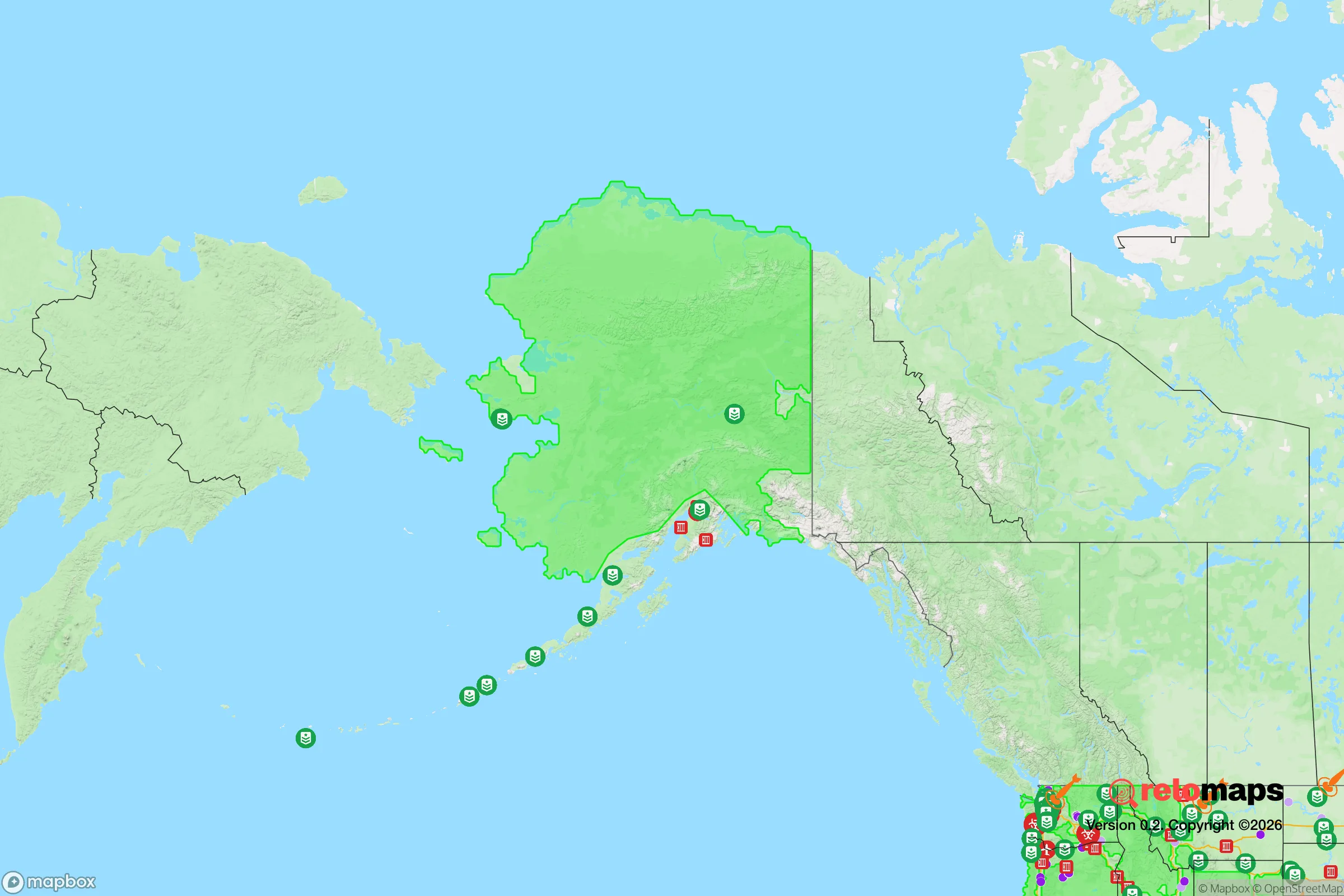
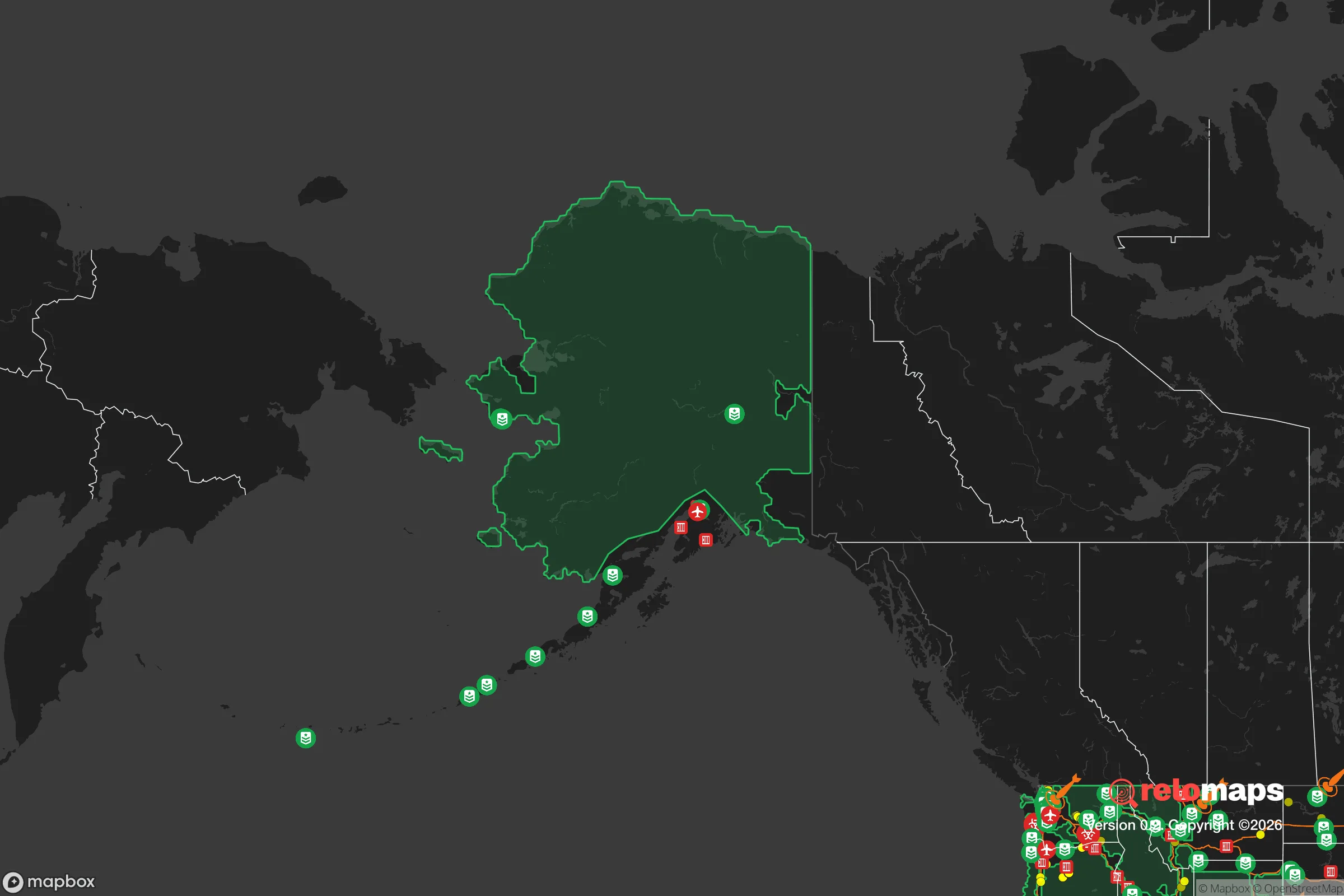


Important Note: For informational purposes only. This does not mean nothing bad ever happens in the green zones. Please use common sense. This is based on public data and modeled with AI. We tried to take a conservative approach but mistakes happen. We update this regularly as new information becomes available.
Solar Generator Recommendations
Backup power matters more here than in safer locations. We've picked three solar generators across budgets and capacity tiers — start with the budget unit if you only need a few essentials, or step up if you want to run a fridge and HVAC for days at a time.

Jackery Portable Power Station Explorer 300
Budget OptionPower on the Go: Weighing only 11 lbs, it's convenient to set up and store with book-sized foldable solar panels

BLUETTI Portable Power Station AC180
Designed for both indoor and outdoor scenarios, AC180 is highly capable as it has a robost capacity and continuous output power.

EF ECOFLOW DELTA Pro Ultra Power Station
Upgraded PickEcoFlow DELTA Pro Ultra is a whole-home energy system designed to grow with your family. Integrated with the Smart Home Panel 2, it scales to meet your evolving energy needs — keeping your home powered, intelligent, and secure through every stage of life.
We earn a commission, at no additional cost to you.
Strategic Assessment Analysis
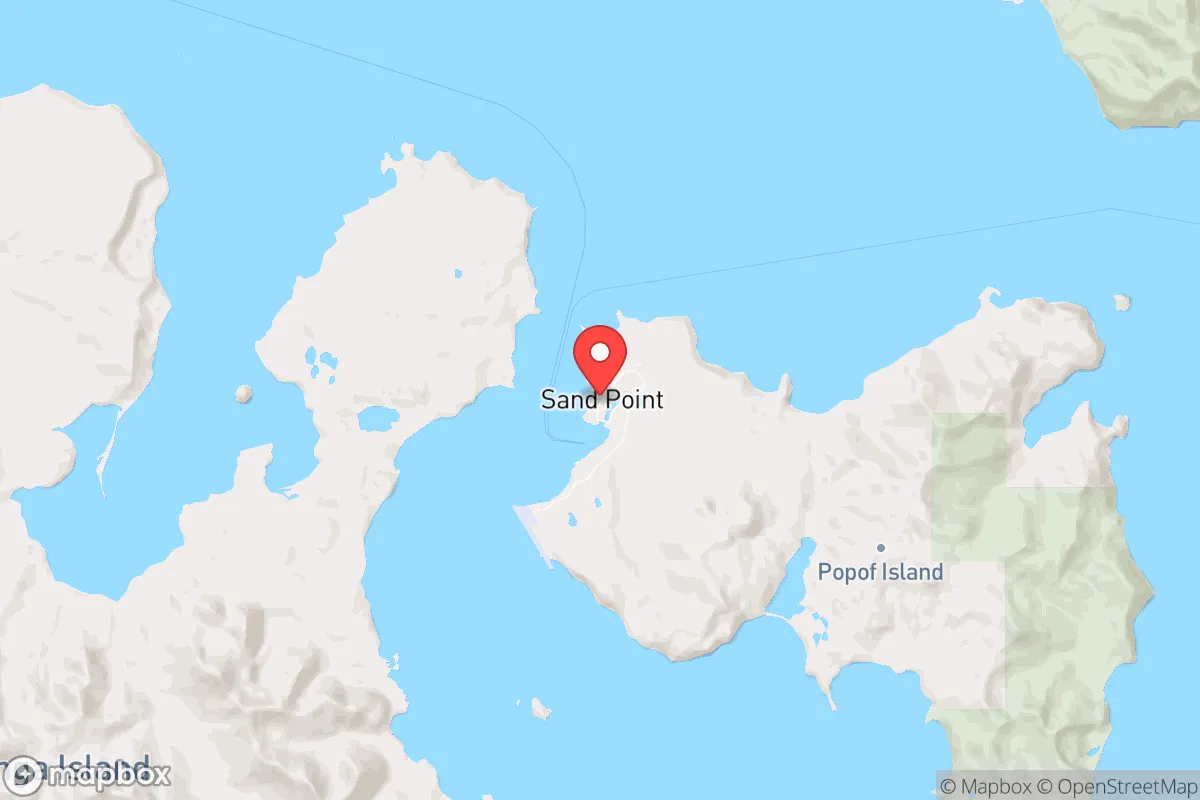
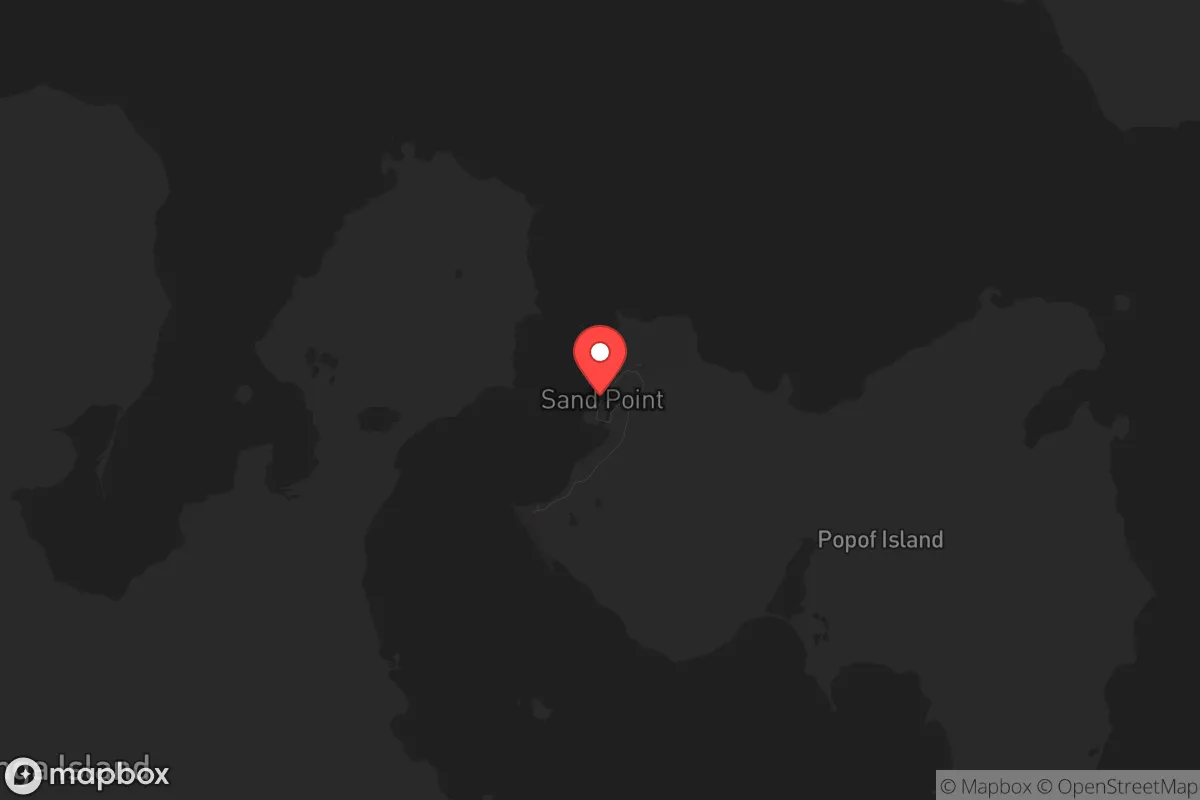
Sand Point, Alaska, is one of those rare places that forces a relocator to rethink what "prepared" actually means. Sitting on Popof Island in the Shumagin Islands, roughly 250 miles southwest of Anchorage and 570 miles from the nearest continental US city, this fishing community of about 1,000 people offers a level of geographic isolation that most survival-minded individuals only dream about. The town's entire existence revolves around the Bering Sea and the Gulf of Alaska, with the Aleutian Chain stretching out like a natural barrier to the west. For someone looking to put serious distance between themselves and the chaos of the Lower 48, Sand Point is about as far as you can get without leaving the country entirely.
Geographic isolation and natural defensive advantages
Sand Point's location is its single greatest strategic asset. The community sits on the northwest side of Popof Island, with the Shumagin Islands providing a natural buffer against the open Pacific. The nearest major population center is Anchorage, but getting there requires either a 90-minute flight on a small plane or a multi-day boat trip across some of the most unforgiving waters in North America. There are no roads connecting Sand Point to anything else — you're on an island, period. This means any potential threat from civil unrest, supply chain collapse, or mass migration events has to cross hundreds of miles of ocean and airspace to reach you. The Bering Sea is not a friendly body of water; it's a natural moat that filters out 99% of the problems that plague mainland communities. The local airport, Sand Point Airport (SDP), is a single 4,000-foot runway that can handle small commuter aircraft and cargo planes, but it's not equipped for large military or commercial traffic. That's a feature, not a bug. The harbor, while functional for the fishing fleet, is exposed to weather and wouldn't support a large-scale naval operation. In practical terms, Sand Point is hard to find, harder to reach, and nearly impossible to threaten with conventional means.
Risks, exposures, and proximity to fallout-relevant landmarks
No place is perfect, and Sand Point has its share of vulnerabilities that a serious prepper needs to understand. The biggest risk is seismic activity. The Aleutian subduction zone runs right under the Shumagin Islands, and this area has produced some of the largest earthquakes in recorded history. The 1964 Good Friday earthquake, a 9.2-magnitude event, generated tsunamis that devastated coastal communities across the region. Sand Point sits at sea level, with most infrastructure within a few hundred feet of the water. A major earthquake followed by a local tsunami would be catastrophic — there's no high ground within walking distance of the harbor, and evacuation routes are limited. The community has a tsunami siren system and designated evacuation zones, but in a worst-case scenario, you'd have minutes, not hours. Volcanic activity is another concern. The Alaska Volcano Observatory monitors several active volcanoes within 200 miles, including Mount Veniaminof and Mount Pavlof. Ashfall events can disrupt air travel and contaminate water supplies for weeks. On the plus side, Sand Point is far from any known nuclear targets. The nearest strategic military assets are Joint Base Elmendorf-Richardson in Anchorage and the missile defense complex at Fort Greely, both over 500 miles away. There are no major population centers, industrial facilities, or government command nodes within a 300-mile radius. In a nuclear exchange scenario, Sand Point would likely be a backwater that nobody bothers to target. The real danger would be fallout drifting from strikes on Anchorage or Russian installations across the Bering Sea, but prevailing winds typically push fallout eastward, away from the Aleutians.
Practical resilience for a relocator: food, water, energy, and defensibility
Self-sufficiency in Sand Point is not optional — it's the baseline for survival. The town has a municipal water system fed by a lake on the island, but it's vulnerable to power outages and seismic disruption. Every serious resident should have a backup plan: rainwater catchment, a hand pump for a well, or at minimum a supply of purification tablets and filters. The power grid is isolated, running on diesel generators that are dependent on fuel deliveries by barge or air. Solar is possible but limited by the region's notorious cloud cover and short winter days. Wind power is more viable — the Aleutians are some of the windiest places on Earth — but small-scale turbine setups require expertise and maintenance that most relocators won't have. Food security is the real challenge. Sand Point is a fishing town, and the Bering Sea is one of the most productive fisheries in the world. Halibut, salmon, cod, and crab are abundant, and anyone with a boat, a rod, or a net can put protein on the table year-round. The local grocery store, the Sand Point Mercantile, stocks basic supplies but prices are astronomical — expect to pay $8 for a gallon of milk and $5 for a loaf of bread when the barge is late. Gardening is possible but limited to short-season crops in raised beds or greenhouses; the growing season is barely 90 days, and the soil is thin and acidic. For a relocator, the play is to stockpile non-perishable staples, invest in fishing gear, and learn to preserve meat through smoking, salting, or canning. Defensibility is excellent. The island's terrain is rugged, with dense alder thickets and steep slopes that make overland movement difficult. The population is small and tight-knit — everyone knows everyone, and strangers are noticed immediately. There's no police department in the traditional sense; law enforcement is handled by the Alaska State Troopers, who are based in Sand Point but often hours away on other calls. The community relies on mutual aid and personal responsibility. A well-prepared relocator with a solid network of trusted neighbors would find this environment far more secure than any suburban subdivision.
The overall strategic picture for Sand Point is one of extreme trade-offs. You get near-total isolation from the problems of the Lower 48 — no riots, no supply chain collapses, no government overreach that can reach you easily. The cost is a harsh, unforgiving environment where a single mistake can kill you, and where modern conveniences are either absent or prohibitively expensive. For a single individual or a family willing to put in the work, learn the local skills, and accept the risks, Sand Point offers a level of security that's almost impossible to find anywhere else in the United States. It's not a place for the faint of heart or the unprepared. But for someone who understands that the world is getting more unstable by the year and wants a genuine off-grid fallback position, this little island in the Aleutians is about as solid as it gets.

* Values derived from national, state, county, city and local statistics and may differ in a specific area. Last updated: 2026-04-19T19:35:29.000Z
Narrative content on this page is AI-generated and may contain mistakes. Verify any details that matter before acting on them.
ReloMaps may earn a commission from affiliate links at no extra cost to you.

