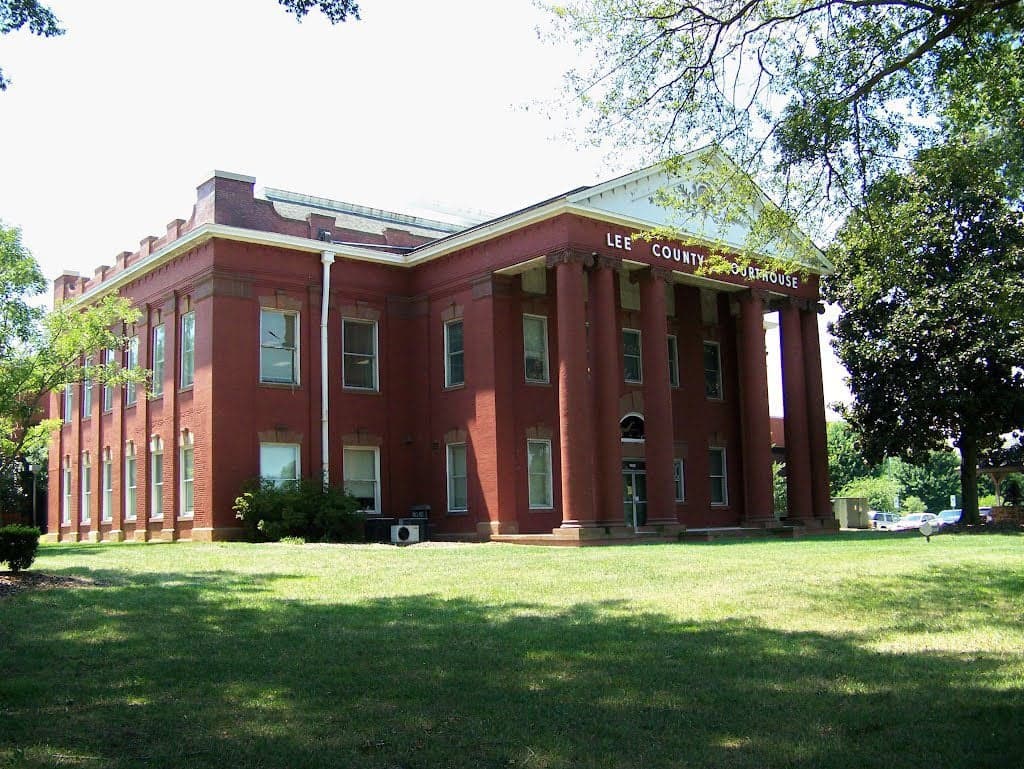
Photo: Wikipedia
Personal Sovereignty in Sanford, NC
Viable for self-reliance. Generally workable, though some barriers may limit total independence.
What does Personal Sovereignty tell us?
Personal Sovereignty measures your capacity for self-reliance and independence with minimal government friction. Higher scores mean fewer barriers between you and the way you want to live... but it assumes you have the space you need and good neighbors.
What does this tell us?
Personal Sovereignty measures your capacity for self-reliance and independence with minimal government friction. Higher scores mean fewer barriers between you and the way you want to live... but it assumes you have the space you need and good neighbors.
State Policy
Energy independence: Importer (15% of energy produced in-state)
Personal Liberty
Homesteading

Personal Liberty Analysis
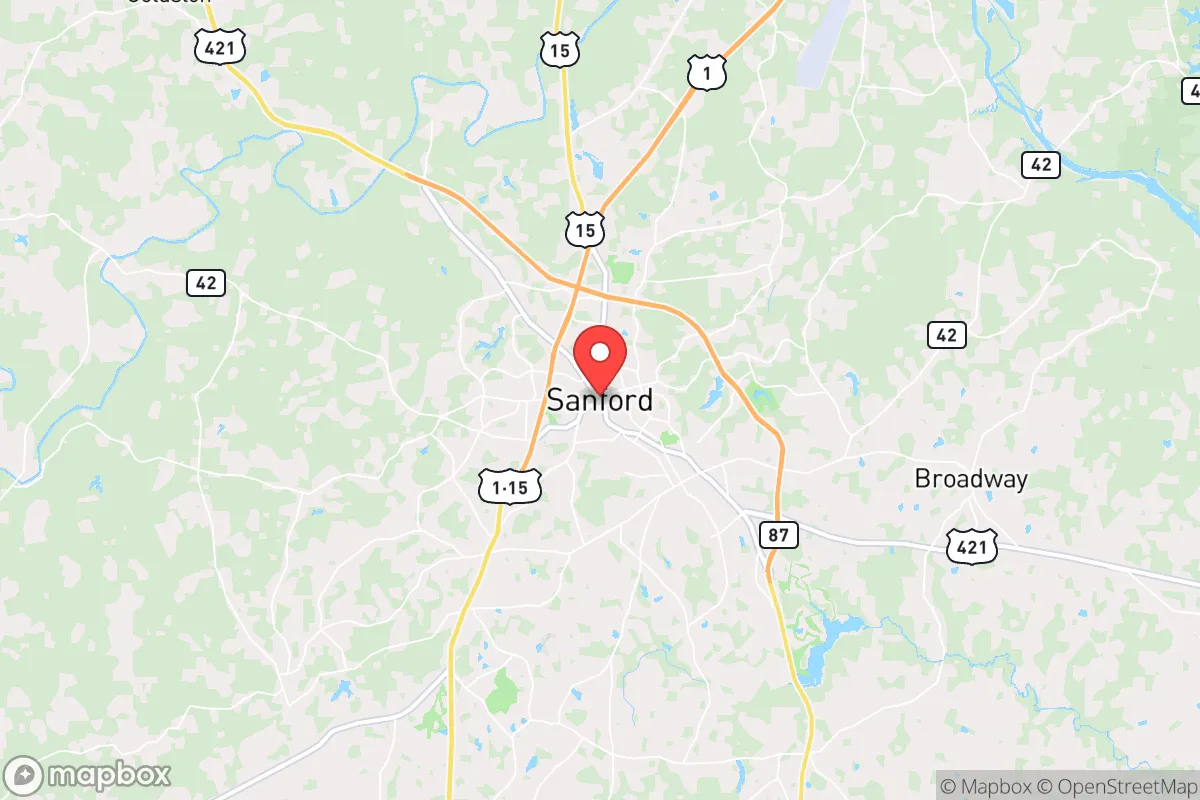
For the individual who values personal sovereignty above all else—the survivalist, the prepper, the parent who refuses to be a ward of the state—Sanford, North Carolina, offers a strategic foothold in a state that has historically resisted the most aggressive forms of federal overreach. Located in Lee County, roughly 40 miles southwest of Raleigh, Sanford sits at a critical inflection point: close enough to urban job markets and supply chains, yet far enough to avoid the worst of municipal regulatory creep. The sovereignty calculus here is not perfect—no place in the Lower 48 is—but the combination of a relatively light state-level footprint, a growing network of like-minded individuals, and a rural-urban fringe geography makes it a serious contender for those prioritizing autonomy. The key is understanding where the state’s constitutional protections end and where local ordinances begin, because in 2026, the battle for personal freedom is fought in county commission meetings and zoning board hearings as much as in courtrooms.
Tax burden and regulatory posture: how North Carolina compares to high-control states
North Carolina’s tax and regulatory environment is a major draw for those fleeing states with aggressive income taxation and business licensing regimes. The state’s flat individual income tax rate, which dropped to 4.5% in 2025 and is scheduled to phase down further, is a deliberate policy choice to attract capital and labor away from high-tax jurisdictions. For a prepper or homesteader, this means more retained earnings for land, supplies, and infrastructure—not funneled into a state bureaucracy that may not share your values. Property taxes in Lee County are moderate, with an effective rate around 0.78% of assessed value, significantly lower than the national average. There is no state-level property tax, and the homestead exemption for seniors and disabled veterans provides additional relief. The regulatory posture is similarly restrained: North Carolina is a right-to-work state, has no state-level OSHA plan for small farms (relying on federal enforcement only), and has resisted adopting California-style environmental permitting for agricultural operations. However, be aware that Lee County has adopted some zoning in the unincorporated areas near Sanford’s expanding suburbs, so a 10-acre parcel outside city limits is not automatically free from land-use restrictions. The rule of thumb: buy outside the extraterritorial jurisdiction (ETJ) of Sanford proper, and you’ll face far fewer hoops for building a workshop, keeping livestock, or installing a rainwater catchment system.
Self-defense and gun law specifics: what the Second Sanctuary movement means here
North Carolina is a “shall-issue” state for concealed carry permits, and in 2023, the legislature passed permitless carry for adults 18 and older who are legally allowed to possess a firearm. This means that as of 2026, you can carry a concealed handgun without a permit, though a permit is still required for reciprocity with other states. Lee County has a strong Second Amendment culture, and the county commission passed a Second Amendment Sanctuary resolution in 2020, signaling that local law enforcement will not enforce federal gun control measures they deem unconstitutional. For the survivalist, this is not just symbolic—it means that if federal red-flag laws or magazine bans are ever enforced in North Carolina, the local sheriff’s office has publicly stated it will not cooperate. The practical effect is that private firearm sales between individuals remain unregulated at the state level, and there are no state-level restrictions on standard-capacity magazines or “assault weapons.” Stand-your-ground laws are on the books, and castle doctrine protections apply to your home, vehicle, and workplace. The only significant limitation is that carrying on private property where the owner has posted a “no guns” sign is a misdemeanor, so know your local businesses. For those building a defensive capability, Sanford’s proximity to multiple gun ranges and training facilities—including the 1,200-acre Deep River Sporting Clays and Shooting School—means you can train without driving hours.
Self-reliance and homesteading viability: lot sizes, zoning, and off-grid feasibility
The viability of a self-reliant lifestyle in Sanford depends almost entirely on whether you buy inside city limits or in the unincorporated county. Inside Sanford proper, lots are typically 0.25 to 0.5 acres, and the city code restricts keeping chickens to a maximum of six hens (no roosters) and prohibits goats, pigs, or cattle. If you want a serious homestead—say, 5 to 20 acres with room for a large garden, a few head of livestock, and a workshop—you need to look at the rural areas of Lee County, particularly near the Deep River or the Moore County line. Zoning in unincorporated Lee County is minimal: agricultural uses are permitted by right on parcels of 3 acres or more, and there are no county-level restrictions on rainwater collection, composting toilets, or solar panel installation. The county does not require building permits for agricultural structures under 600 square feet, which is a significant advantage for those building a pole barn or equipment shed without government oversight. Off-grid feasibility is high: the water table in the area is accessible via shallow wells (typically 50-150 feet), and the sandy loam soil is suitable for septic drain fields. Solar irradiance is adequate for a grid-tied system with battery backup, though net metering policies have become less favorable in recent years. The biggest regulatory hurdle for the serious prepper is the lack of a county-level exemption from state building codes for owner-built homes—North Carolina requires a licensed contractor for electrical and plumbing work, even in rural areas. This is a point of friction for those who want to build entirely with their own hands, but it is not insurmountable with a cooperative local inspector.
Personal liberties: parental rights, medical autonomy, speech, and property protections
North Carolina has become a battleground for parental rights, and the current legal landscape is favorable for those who believe parents have the primary authority over their children’s education and medical decisions. The state’s Parents’ Bill of Rights, passed in 2023, requires school districts to notify parents of any changes in a student’s health or well-being and prohibits instruction on gender identity and sexual orientation in K-4 classrooms. For the conservative parent, this means you have statutory backing to opt your child out of objectionable curriculum and to access all educational records. Medical autonomy is more mixed: while North Carolina has not imposed vaccine mandates for adults, the state does require certain immunizations for school attendance, with only medical and religious exemptions (no philosophical exemption). The COVID-era emergency powers have sunset, but the state legislature has not yet passed a comprehensive ban on future emergency mandates, so this remains a live issue. Speech protections are strong under the state constitution, which has been interpreted more broadly than the First Amendment in some cases, particularly regarding expressive conduct on private property. Property rights are protected by the state’s “quick-take” eminent domain laws, which require compensation before the government takes possession, and Lee County has not engaged in the kind of aggressive condemnation seen in some urban areas. The overall legal environment is one of cautious liberty: the state trusts individuals more than the federal government, but it still reserves the right to regulate in areas like building codes and school health requirements.
In the broader landscape of American personal sovereignty, Sanford occupies a middle tier—better than the coastal blue states where property taxes and regulatory compliance can consume half your income and time, but not as free as the true frontier counties of Idaho or Montana where county sheriffs have explicitly refused to enforce any state or federal gun laws. What Sanford offers is a realistic compromise: a place where you can own land, carry a firearm without a permission slip, keep your children out of indoctrination programs, and build a life that does not depend on government approval for every decision. The threats to that sovereignty are the same as everywhere—federal overreach, corporate consolidation of supply chains, and the slow creep of zoning and environmental regulations—but the local culture and state-level legal framework give you a fighting chance to push back. For the strategic relocator who wants to be within a day’s drive of the coast and the mountains, with a solid job market and a community that still believes in self-reliance, Sanford is a strong candidate. Just buy your land outside the city limits, get to know your county commissioners, and keep your powder dry.

* Values derived from national, state, county, city and local statistics and may differ in a specific area. Last updated: 2026-05-03T20:26:32.000Z
Narrative content on this page is AI-generated and may contain mistakes. Verify any details that matter before acting on them.
ReloMaps may earn a commission from affiliate links at no extra cost to you.

