Photo: Wikipedia
Demographics of Santa Clarita, CA
Affluence Level in Santa Clarita, CA
An upper-middle-class area. Household wealth, education levels, and homeownership run ahead of national benchmarks.
People of Santa Clarita, CA
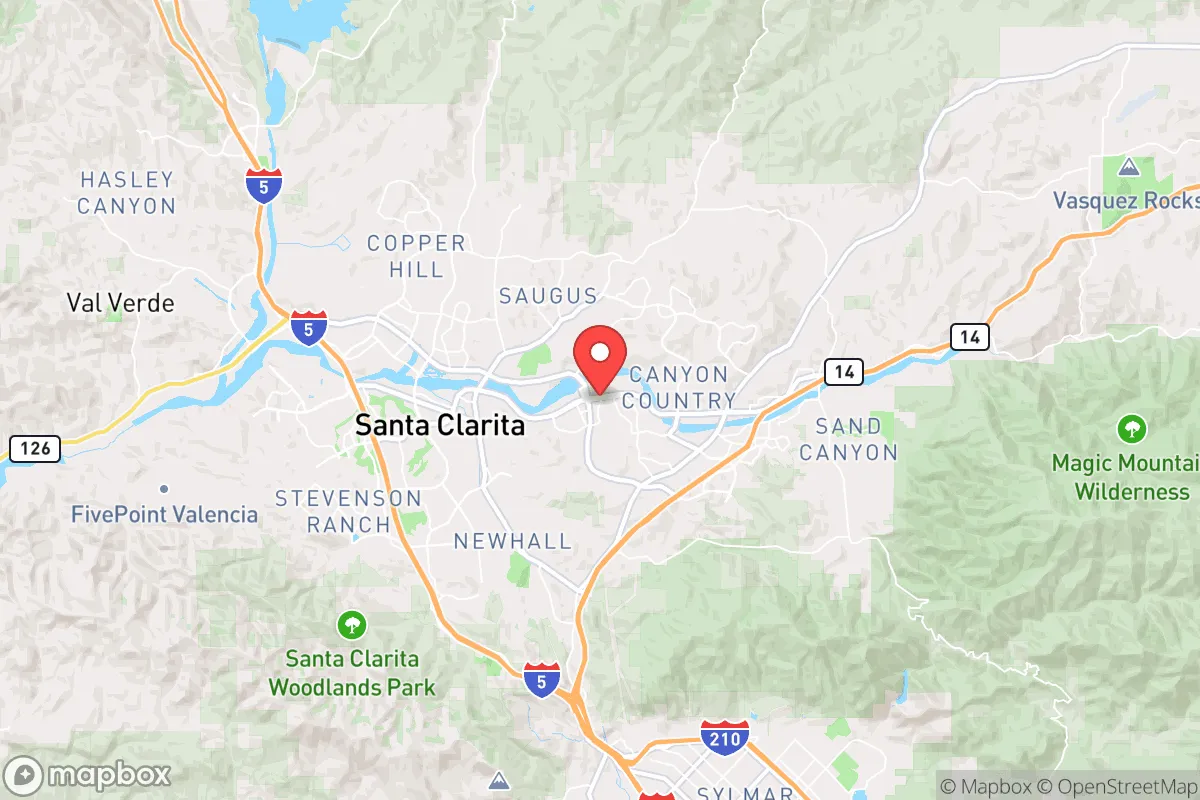
The people of Santa Clarita, California, today form a predominantly White and Hispanic suburban population of 229,021, marked by a higher-than-average college attainment rate of 39.3% and a relatively low foreign-born share of 7.7%. The city’s identity is rooted in its role as a master-planned bedroom community for Los Angeles professionals and entertainment industry workers, with a distinctly family-oriented, car-dependent character. Its neighborhoods range from older, established tracts like Newhall and Saugus to newer, denser developments in Valencia and Stevenson Ranch, reflecting successive waves of settlement that have shaped its current demographic profile.
How the city was settled and grew
Santa Clarita’s population history is almost entirely a 20th- and 21st-century story. The area was originally part of the Rancho San Francisco Mexican land grant, granted to Antonio del Valle in 1839, but sustained settlement did not begin until the arrival of the Southern Pacific Railroad in the 1870s. The first real population wave came with the discovery of gold in Placerita Canyon in 1842, drawing a small, transient mining population, but the area remained sparsely populated ranchland through the early 1900s. The historic core of Newhall, named after railroad executive Henry Newhall, became the first permanent settlement, housing railroad workers, ranchers, and a modest number of Mexican-American families who had worked the land for generations. A second early node, Saugus, grew around the railroad depot and served as a farming and oil-field service community. By 1950, the entire Santa Clarita Valley had fewer than 10,000 residents, and the population was overwhelmingly White, with a small Hispanic minority descended from the original rancho-era families.
Modern era (post-1965)
The modern population explosion began after the 1965 Hart-Cellar Act and the concurrent expansion of the Los Angeles freeway system. The 1970s and 1980s saw the master-planned community of Valencia rise on former ranchland, designed by the Newhall Land and Farming Company to attract middle- and upper-middle-class families fleeing urban Los Angeles. Valencia drew a predominantly White, college-educated population of professionals, many employed in the nearby entertainment industry, aerospace firms, and healthcare. Simultaneously, Canyon Country and Stevenson Ranch absorbed a more diverse mix of domestic migrants, including a growing number of Hispanic families moving from the San Fernando Valley and directly from Mexico and Central America. By 2000, the Hispanic share of Santa Clarita’s population had risen to roughly 25%, concentrated in older neighborhoods like Newhall and parts of Canyon Country, while Valencia remained heavily White. The 1994 Northridge earthquake accelerated out-migration from the San Fernando Valley into Santa Clarita, further diversifying the city’s population. Today, the city’s racial composition stands at 43.3% White, 36.0% Hispanic, 9.1% East/Southeast Asian, 4.2% Black, and 2.1% Indian (subcontinent). The East/Southeast Asian population, largely Chinese, Korean, and Filipino, is concentrated in Valencia and Stevenson Ranch, drawn by high-performing schools and newer housing stock. The Indian subcontinent community, though smaller, has grown notably in the same areas, attracted by tech and engineering jobs in the broader Los Angeles region.
The future
Santa Clarita’s population is trending toward greater diversity, but not toward rapid homogenization. The Hispanic share is projected to continue rising, potentially reaching 40-45% by 2040, driven by both domestic migration from the San Fernando Valley and natural increase among established families. The White share is declining gradually, while East/Southeast Asian and Indian populations are growing modestly, plateauing as housing costs limit further in-migration from abroad. The city is not tribalizing into starkly separate enclaves, but neighborhood-level clustering persists: Valencia and Stevenson Ranch remain disproportionately White and Asian, while Newhall and Canyon Country are increasingly Hispanic. The foreign-born share, at just 7.7%, is low for a California suburb of this size, indicating that most growth comes from domestic relocation rather than international immigration. The next 10-20 years will likely see Santa Clarita become a more Hispanic-majority city, with a stable, well-educated White minority and smaller but visible Asian and Indian communities.
For a conservative-leaning individual or family considering relocation, Santa Clarita is becoming a more diverse, still-family-oriented suburb where neighborhood choice strongly correlates with demographic character. The city’s low crime rates, strong public schools, and conservative-leaning local politics (the city council has been majority Republican for decades) remain consistent draws, but the population base is shifting toward a younger, more Hispanic demographic that may gradually alter the area’s political and cultural landscape. New arrivals should expect a stable, safe environment with a growing Hispanic influence, particularly in the older, more affordable neighborhoods.

* Values derived from national, state, county, city and local statistics and may differ in a specific area. Last updated: 2026-04-24T12:44:37.000Z
Narrative content on this page is AI-generated and may contain mistakes. Verify any details that matter before acting on them.
ReloMaps may earn a commission from affiliate links at no extra cost to you.

