 Popular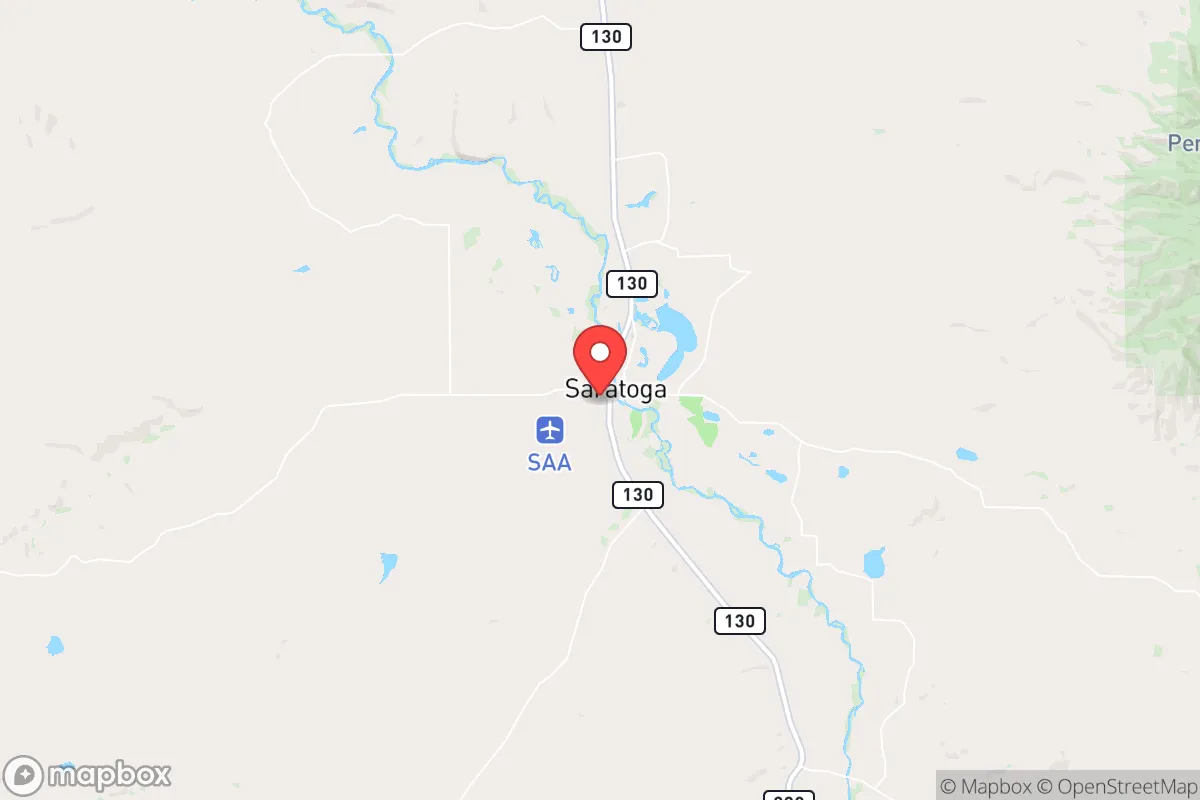
Political ClimatePolitical Climate in Saratoga, WY
District shown is the primary district for this city’s centroid. Cities may span multiple districts.
Inherited from parent state — no local data available.
Local Political AnalysisPolitical Analysis of Saratoga, WY
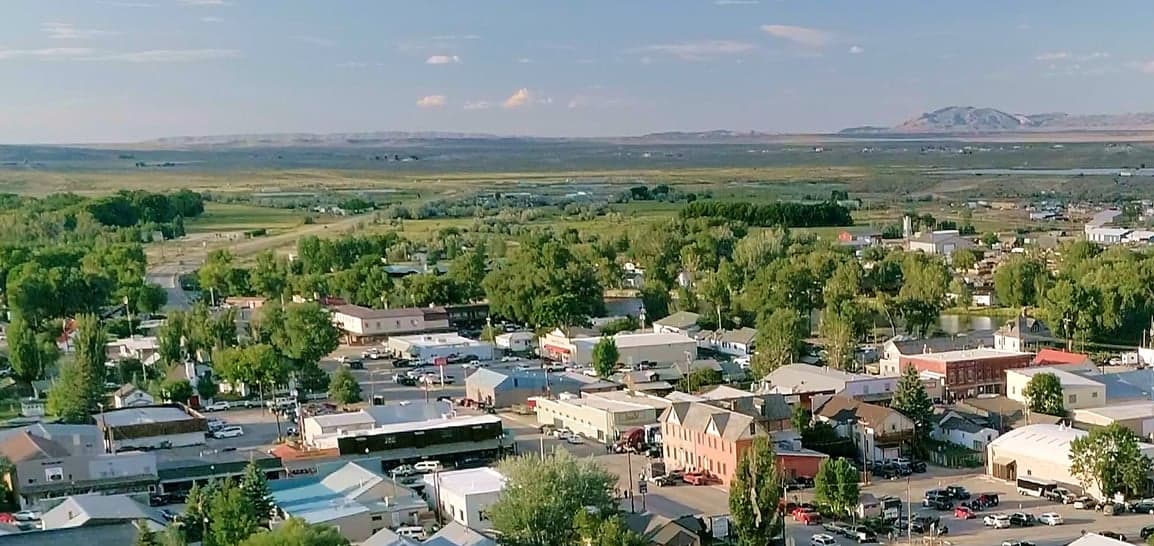
Saratoga, Wyoming, is about as solidly conservative as they come, with a Cook PVI of R+23 that tells you exactly where the political winds blow. This isn't a purple town or a place where you'll find much hand-wringing over the latest progressive trends from the coasts. The local culture is built on self-reliance, private property rights, and a deep skepticism of government overreach—values that have held firm for generations. If you're looking for a place where the political climate hasn't been hijacked by the kind of top-down mandates you see in places like Laramie or even Cheyenne, Saratoga is a breath of fresh mountain air.
How it compares
Drive an hour north to Rawlins, and you'll find a similar conservative bent, but Saratoga feels more insulated from the outside noise. The real contrast is with places like Laramie, home to the University of Wyoming, where you'll see a noticeable shift toward progressive ideology—think more city ordinances, more talk of "equity," and a general acceptance of government stepping into areas it has no business being. Even nearby Steamboat Springs, Colorado, just over the border, has gone full tilt into the kind of regulatory overreach that makes a Saratoga local shake their head. Here, the county commission and local school board are still filled with folks who believe in limited government, not the latest social experiments. The R+23 rating isn't just a number; it reflects a community that votes against the kind of federal overreach that tries to dictate how you run your ranch or what you teach your kids.
What this means for residents
For the people who live here, this political climate means you're largely left alone to live your life. There's no city council trying to ban gas stoves or impose mask mandates years after the pandemic ended. Property taxes are reasonable, and there's a general understanding that the government's job is to keep the roads plowed and the sheriff's office funded, not to micromanage your personal freedoms. The downside is that you won't find much of a progressive push for things like public transit or high-density housing, but for most residents, that's a feature, not a bug. If you're coming from a blue state where every aspect of daily life feels regulated, Saratoga offers a welcome reset—a place where your vote actually means something and where the local government still remembers that it works for you, not the other way around.
Culturally, Saratoga has managed to hold onto its Western independence while still being a welcoming community. The local paper, the Saratoga Sun, still reflects a conservative, common-sense worldview. You won't find the kind of divisive, identity-politics nonsense that plagues bigger towns. The biggest policy fights here are usually about water rights, grazing permits, and keeping the federal government from locking up public lands—issues that directly affect people's livelihoods. Looking ahead, the concern is that the same progressive creep that has infected places like Jackson Hole and Bozeman could eventually find its way here, but for now, Saratoga remains a stronghold for those who value freedom over the latest government program. It's the kind of place where you can still have a honest conversation with your neighbor without worrying about being canceled, and that's worth its weight in gold.

State Political ClimatePolitical Climate in Wyoming
State Political AnalysisPolitical Environment in the State
Wyoming is one of the most reliably Republican states in the nation, with a partisan lean of roughly +25 points in federal elections and a Republican trifecta in state government that has held for decades. The dominant coalition is a mix of rural ranchers, energy-sector workers, and libertarian-leaning conservatives who prioritize limited government and individual sovereignty. Over the past 10-20 years, the state has actually shifted further right, driven by out-migration of liberal-leaning residents from small towns and a steady influx of conservatives fleeing high-tax states like California and Colorado. The 2024 presidential election saw Donald Trump win 71% of the vote, with every county except Teton (Jackson Hole) going red.
Urban vs. rural divide
The political map of Wyoming is starkly divided between a handful of small urban centers and the vast rural expanse. The only reliably blue area is Teton County, anchored by the town of Jackson, where a wealthy, environmentally-focused population drives Democratic votes—Biden won Teton by 18 points in 2020. In contrast, Cheyenne and Casper, the two largest cities, lean Republican but are more moderate than the countryside; Laramie County (Cheyenne) voted +14 R in 2024, while Natrona County (Casper) went +22 R. The real engine of the state's conservatism is the rural and small-town vote. Counties like Sublette (Pinedale), Campbell (Gillette), and Fremont (Lander) routinely deliver 75-85% Republican margins. The divide isn't just about population density—it's about economic base. The energy corridor from Rock Springs to Gillette is deeply conservative, while the tourism-driven Jackson area is the lone progressive outlier. New residents should know that if they want a politically like-minded community, they'll find it almost anywhere outside of Teton County.
Policy environment
Wyoming's policy environment is a model of limited government for conservative relocators. There is no state income tax, and the sales tax is a low 4% (with local options pushing it to 6% in some towns). Property taxes are among the lowest in the nation, with no tax on retirement income. The regulatory posture is aggressively pro-business, especially in energy, agriculture, and mining. Education policy is locally controlled, with school choice options including charter schools and a robust homeschooling community—no state mandates on curriculum content beyond basic standards. Healthcare policy is hands-off: there is no state-level Medicaid expansion beyond the federal baseline, and the state has resisted insurance mandates. Election laws are among the most secure in the country: voter ID is required, same-day registration is not allowed, and mail-in voting is restricted to those with a valid excuse. The state legislature has passed laws to ban ranked-choice voting and prohibit private funding of election administration. For a conservative family, the policy environment is a strong draw—low taxes, minimal bureaucracy, and a government that stays out of your business.
Trajectory & freedom
Wyoming is becoming more free in key areas, particularly around gun rights, parental rights, and medical autonomy. In 2023, the legislature passed a permitless carry law (HB 82), allowing any adult who can legally possess a firearm to carry concealed without a permit. The same session saw the passage of the Parental Rights in Education Act, which requires schools to notify parents of any curriculum involving sexuality or gender identity and prohibits instruction on these topics in K-3. On medical freedom, Wyoming enacted a law in 2024 prohibiting COVID-19 vaccine mandates by private employers and government entities (HB 100). Property rights were strengthened with the passage of a law limiting the use of eminent domain for carbon pipeline projects (SF 34). However, there are concerning trends: the state has seen a push for more centralized control over land use, particularly around wind and solar projects, which some see as a threat to private property rights. The state also maintains a sales tax on groceries, which is a regressive burden. Overall, the trajectory is positive for liberty, but residents must remain vigilant against federal overreach and local zoning creep.
Civil unrest & political movements
Wyoming has a low level of visible civil unrest compared to coastal states, but there are organized movements on both sides. The most prominent conservative activism comes from the Wyoming Liberty Group and local chapters of the Tea Party, which have successfully pushed for tax cuts and gun rights. On the left, the Wyoming Democratic Party is small but active, primarily in Jackson and Laramie, where they organize around climate and public lands issues. Immigration politics are relatively quiet, as the state has a small foreign-born population (under 4%), but there have been flashpoints over sanctuary policies—in 2023, the legislature passed a bill (HB 94) prohibiting sanctuary cities and requiring local law enforcement to cooperate with ICE. Election integrity controversies have been minimal, though the 2020 election saw some grassroots calls for audits, which were largely dismissed by state officials. The most visible political flashpoint is the debate over federal land management—Wyoming is 48% federally owned, and there is a strong "county supremacy" movement in places like Fremont County and Sweetwater County that advocates for local control over federal lands. New residents will notice a general lack of street-level political tension, but the culture is deeply independent and skeptical of outside authority.
Projection
Over the next 5-10 years, Wyoming is likely to become even more conservative, driven by two demographic trends. First, the state is seeing a steady influx of conservatives from high-tax states like California, Colorado, and Washington, who are drawn by low taxes and a libertarian culture. This is most visible in Laramie County (Cheyenne) and Campbell County (Gillette), where new subdivisions are filling up with out-of-state plates. Second, the state's young people are leaving for college and not returning, which skews the electorate older and more conservative. The energy sector will remain a political anchor, but the growth of remote work could bring a new wave of residents to towns like Lander and Buffalo, which are already seeing an influx of libertarian-leaning homesteaders. The risk is that this in-migration could eventually dilute the state's culture if newcomers bring urban political habits, but so far, the self-selection has been strongly conservative. Expect continued legislative action on school choice, property tax relief, and further restrictions on federal land control. A new resident moving in now should expect to find a state that is more conservative in 2035 than it is today, with a growing emphasis on localism and individual rights.
For a conservative single person or family, Wyoming offers a rare combination of low taxes, strong gun rights, parental control in education, and a government that largely stays out of your life. The key practical takeaway is to choose your location carefully: avoid Teton County if you want a politically aligned community, and look to towns like Gillette, Casper, or Cheyenne for a solid conservative base. The state is not without its challenges—harsh winters, limited job diversity outside energy and agriculture, and a growing housing shortage in desirable areas—but for those who value freedom above convenience, Wyoming is one of the last best places in the Union.
* Values derived from national, state, county, city and local statistics and may differ in a specific area. Last updated: 2026-04-21T10:52:40.000Z
Narrative content on this page is AI-generated and may contain mistakes. Verify any details that matter before acting on them.
ReloMaps may earn a commission from affiliate links at no extra cost to you.

