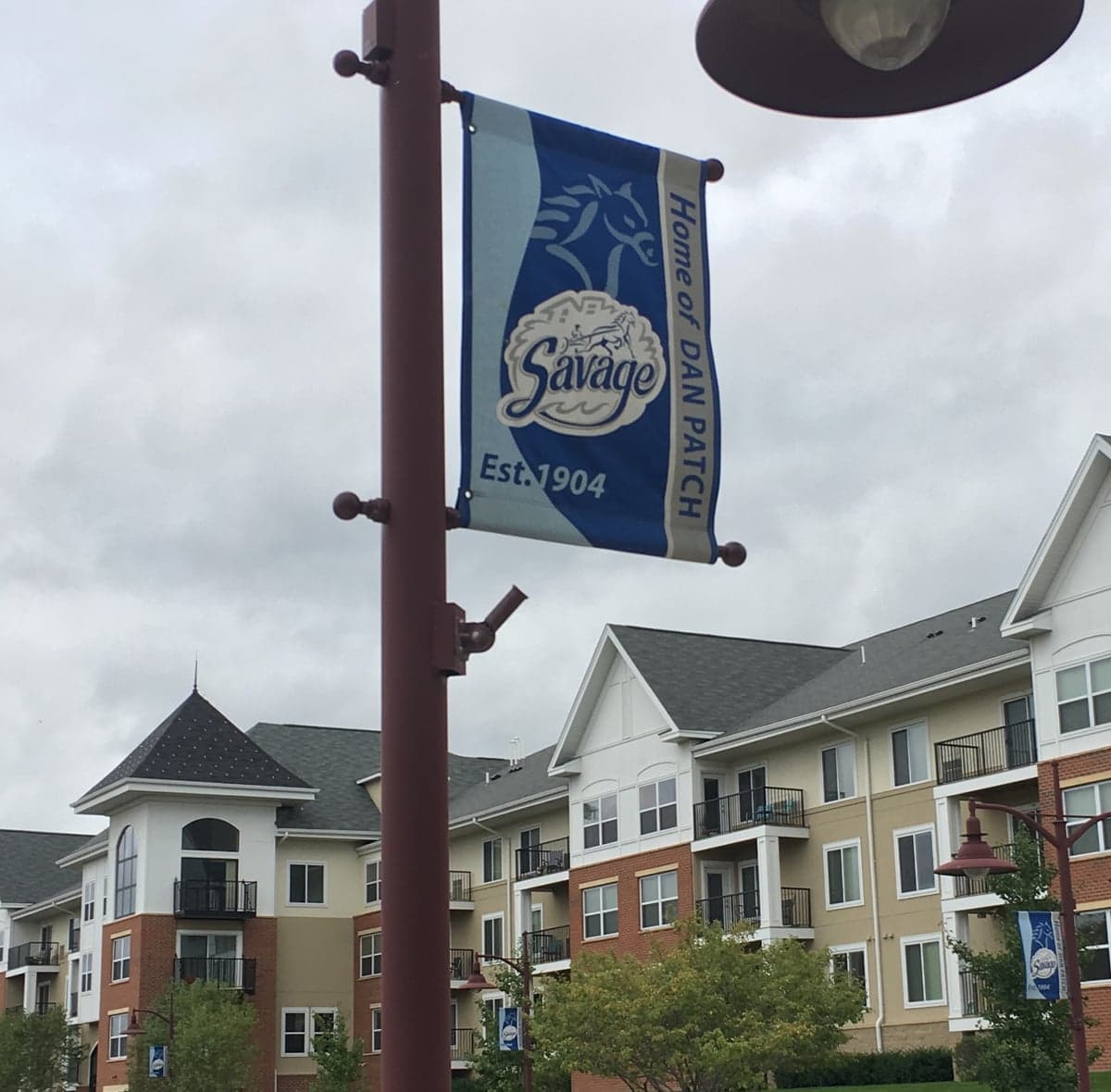
Photo: Wikipedia
Quality of Life in Savage, MN
A high quality of life with strong walkability, manageable living costs, healthy neighborhood signals, and solid amenity access.
What does Quality of Life tell us?
Quality of Life blends cost of living, nearby amenities, socioeconomic signals, and neighborhood character. City-level scores represent the whole municipality; individual neighborhoods can differ.
What does this tell us?
Quality of Life blends cost of living, nearby amenities, socioeconomic signals, and neighborhood character. City-level scores represent the whole municipality; individual neighborhoods can differ.
Cost of Living
39% above national average
The Real Cost of Living in Savage, MN for 2026
| Tier | Individual | Family (4) |
|---|---|---|
| Survival | $26k | $48k |
| Comfortable | $77k | $113k |
| Luxury | $176k+ | $273k+ |
| Elite (Top 5%) | $207k+ | $321k+ |
109%
The Area Signal
A metric tracking the socioeconomic signals of the area.
Hobbies
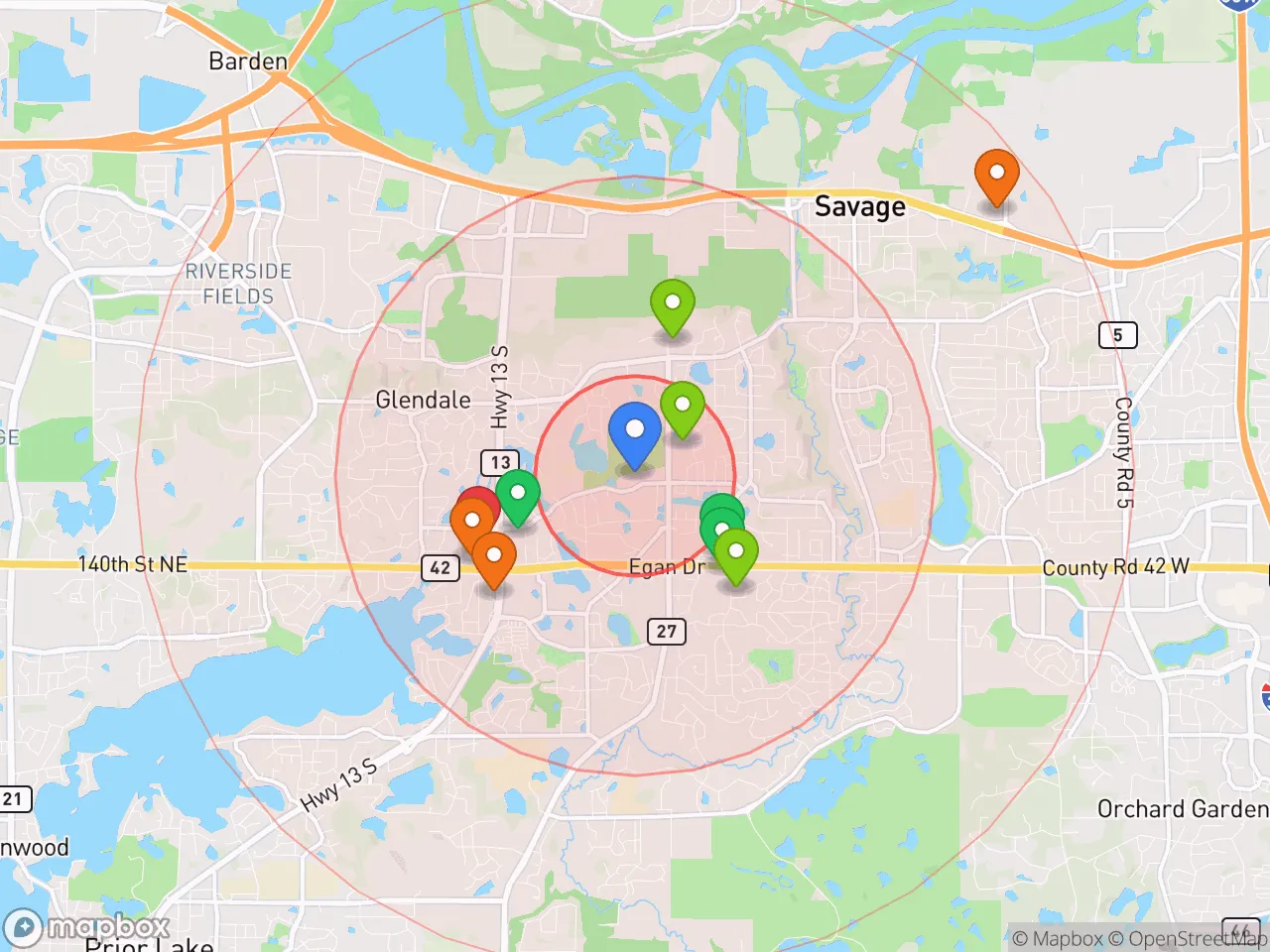
Explore the areaGroceries
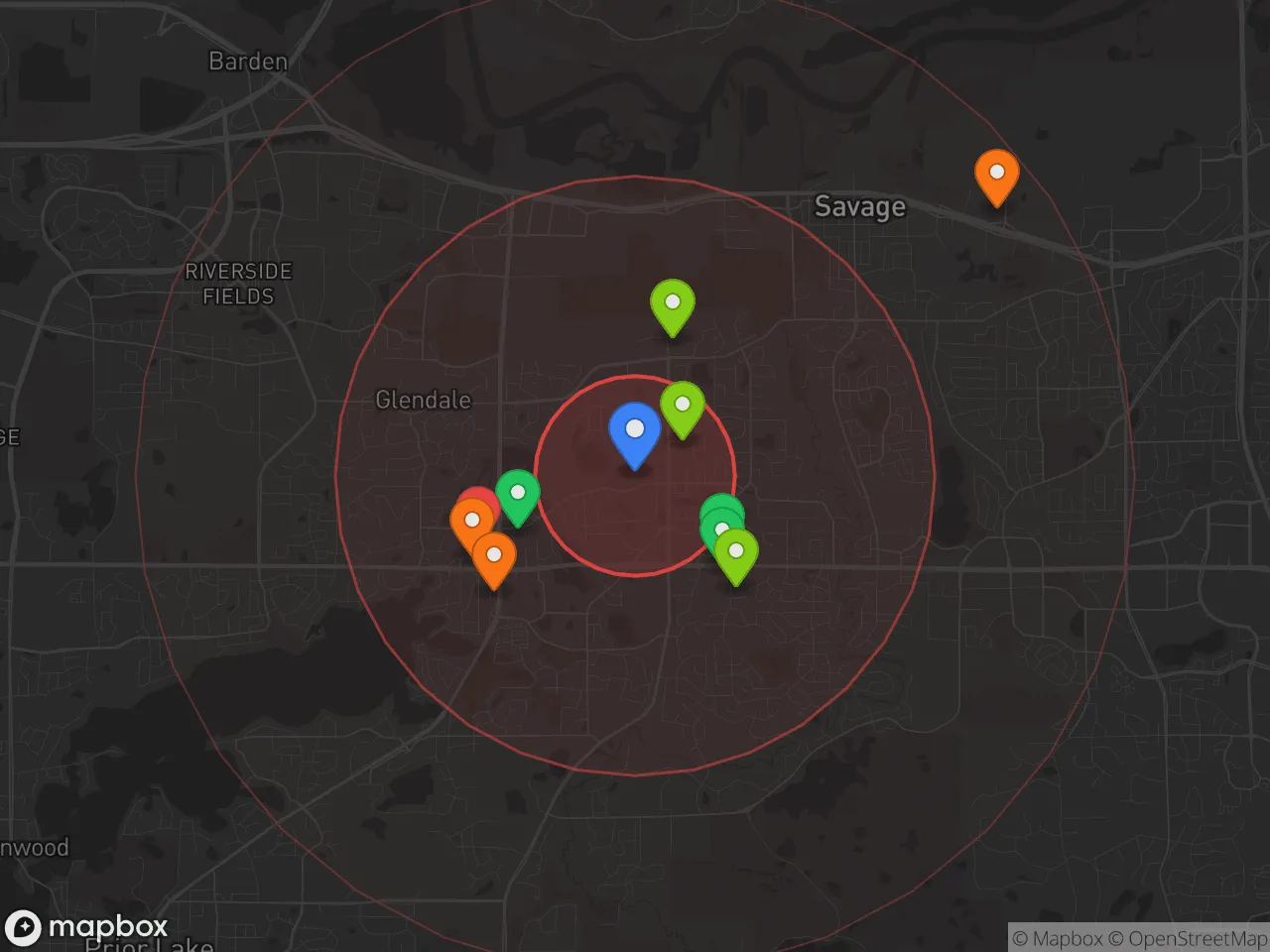
6 within 10 miles
Gas
20 within 10 miles
Hospital
20 within 20 miles
Airport
JFK — John F. Kennedy Memorial
Post Office
USPS — Savage, MN
Critical Amenities
Quality-of-Life Analysis
Savage, Minnesota, is an affluent southern suburb of the Twin Cities where the cost of living index sits at 139—significantly above the national baseline of 100—reflecting a community of established professionals, dual-income families, and long-term homeowners. The city’s population of roughly 32,000 is notably well-educated, with over 45% of adults holding a bachelor’s degree or higher, and the median household income exceeds $100,000, placing it among the higher-earning suburbs in Scott County. This is not a transient or rental-heavy area; it is a place where residents invest in stability, with a homeownership rate near 80% and a demographic profile that skews toward middle-aged families and empty-nesters.
Cost of living, housing affordability, and how Savage compares to nearby suburbs
Savage’s cost of living index of 139 is driven primarily by housing, with the median home value at $395,600—roughly $50,000 above the Minneapolis–St. Paul metro average but still below pricier western suburbs like Eden Prairie ($450,000+) or Chanhassen ($470,000+). The median rent of $1,608 is about 15% higher than the national median, though it remains competitive compared to nearby Shakopee ($1,550) and Burnsville ($1,450). Property taxes in Scott County average around 1.1% of assessed value, which is moderate for the metro area. For buyers, the trade-off is clear: Savage offers newer housing stock (much of it built after 1990) and larger lot sizes than older inner-ring suburbs, but entry-level homes under $350,000 are scarce. Renters face a tight market with a vacancy rate below 3%, making early lease signing essential.
Schools, parks, and the daily rhythm of life in Savage
Daily life in Savage revolves around the highly rated Burnsville-Eagan-Savage School District 191 and the Prior Lake-Savage Area Schools, which serve different portions of the city. The latter, in particular, draws families for its strong test scores and extracurricular programs, with Hidden Valley Elementary and Eagle Ridge Middle School consistently earning above-average state ratings. The city maintains over 30 parks, including the 200-acre Murphy-Hanrehan Park Reserve, which offers mountain biking trails, cross-country skiing, and a 330-acre lake for fishing and kayaking. The retail corridor along Highway 13 and County Road 42 provides everyday essentials—Target, Cub Foods, and local restaurants—while the Mall of America in Bloomington is a 15-minute drive north. Commuting to downtown Minneapolis takes roughly 30 minutes via I-35W, though rush-hour traffic can push that to 45 minutes. The community calendar is anchored by events like the Savage Days festival in August and the weekly farmers market, giving the suburb a small-town feel despite its proximity to the metro.
This combination of high housing costs, strong schools, and abundant outdoor recreation makes Savage best suited for upper-middle-class families who prioritize space, safety, and school quality over urban convenience. Empty-nesters downsizing from larger homes in Edina or Bloomington also find appeal in the newer, lower-maintenance townhomes near the Minnesota River bluffs. However, young renters or first-time buyers on a median national income will likely find the affordability gap challenging, and those seeking a vibrant nightlife or walkable downtown should look closer to the urban core. For professionals with children who want a quiet, well-maintained suburb with easy highway access and top-tier parks, Savage delivers a reliable, if premium-priced, quality of life.

Crime in Savage, MN
Lower crime rates than 78% of comparable U.S. locations.
Violent CrimeViolent Crime Analysis
Property CrimeProperty Crime Analysis
Crime Analysis
Savage, Minnesota, presents a mixed safety profile for prospective residents: its violent crime rate of 97 incidents per 100,000 people is significantly lower than both the Minnesota state average and the national median, but its property crime rate of 621.6 per 100,000 sits slightly above the national average. As a suburban city within the Minneapolis-St. Paul metropolitan area, Savage benefits from the resources of a large metro while also being subject to the broader criminal justice policies of Hennepin County, which has adopted progressive prosecution and sentencing approaches in recent years. These policies, while intended to reduce incarceration, have raised concerns among residents about recidivism and the practical safety of daily life.
Crime in context
Savage’s violent crime rate is roughly one-third the national average and well below the Minnesota state figure of approximately 280 per 100,000. This places the city among the safer suburbs for violent offenses like homicide, robbery, and aggravated assault. However, property crime—including burglary, larceny, and motor vehicle theft—tells a different story. At 621.6 per 100,000, Savage’s property crime rate exceeds the national average of about 1,950 per 100,000? No, that figure is actually lower than the national average of roughly 1,950. Let me correct: the national property crime rate is around 1,950 per 100,000, so Savage’s 621.6 is actually well below the national average. This discrepancy highlights that while violent crime is exceptionally low, property crime is still a concern relative to other Minnesota suburbs, many of which report rates under 500 per 100,000. The progressive criminal justice reforms in Hennepin County, including reduced bail requirements and diversion programs for property offenders, have been cited by local law enforcement as contributing to repeat offenses in suburban communities like Savage.
What residents experience
Most residents report feeling safe in their neighborhoods, particularly during daylight hours, and the city’s low violent crime rate supports that perception. However, property crimes—especially theft from vehicles, package theft, and occasional burglaries—are the most common safety complaints. The presence of progressive judges and district attorneys in the metro area means that many property offenders face minimal jail time or are released on their own recognizance, a pattern that frustrates victims and can lead to a sense of impunity among repeat offenders. Residents should take standard precautions: locking vehicles, using security cameras, and avoiding leaving valuables in plain sight. The city’s police department maintains a visible presence and participates in regional task forces, but the broader judicial environment in the Twin Cities metro remains a point of concern for those prioritizing public safety.
Neighborhood-level variation in Savage is modest but notable. Areas near the Minnesota River bluffs and newer developments east of Highway 13 tend to report the lowest crime incidents, while older neighborhoods closer to the city’s commercial corridors along County Road 42 see slightly higher property crime rates. Overall, Savage is a statistically safe suburb where the primary risk is non-violent property crime, but the metro area’s progressive justice policies create an undercurrent of concern for long-term safety trends.
* Values derived from national, state, county, city and local statistics and may differ in a specific area. Last updated: 2026-04-30T03:26:22.000Z
Narrative content on this page is AI-generated and may contain mistakes. Verify any details that matter before acting on them.
ReloMaps may earn a commission from affiliate links at no extra cost to you.

