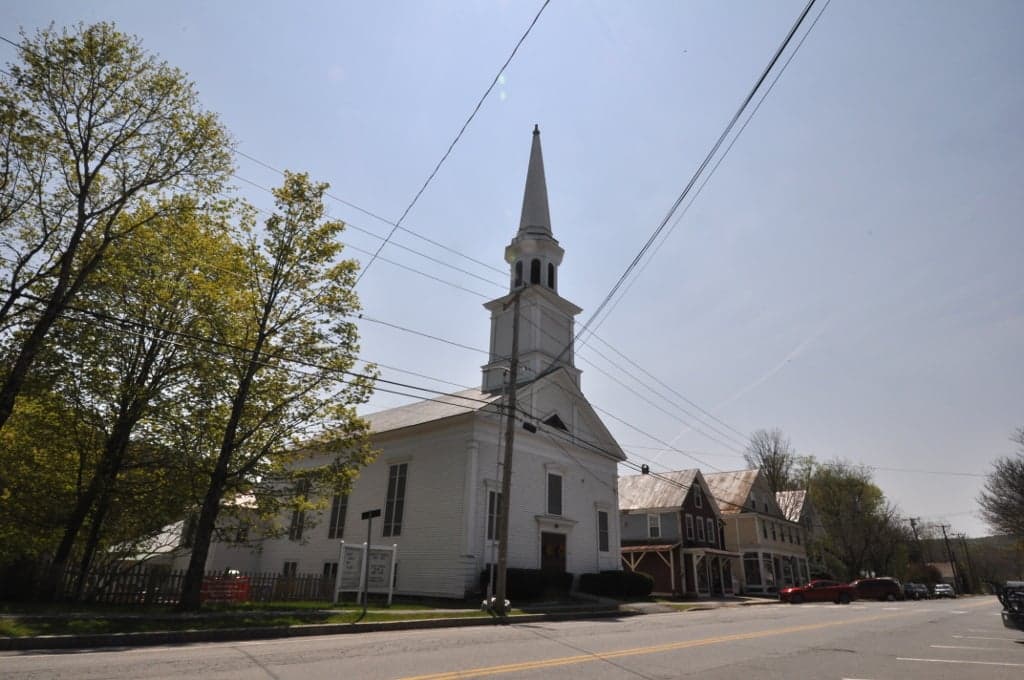
Photo: Wikipedia
Personal Sovereignty in Saxtons River, VT
Moderate friction. Expect trade-offs in some aspect of personal liberty and independence.
What does Personal Sovereignty tell us?
Personal Sovereignty measures your capacity for self-reliance and independence with minimal government friction. Higher scores mean fewer barriers between you and the way you want to live... but it assumes you have the space you need and good neighbors.
What does this tell us?
Personal Sovereignty measures your capacity for self-reliance and independence with minimal government friction. Higher scores mean fewer barriers between you and the way you want to live... but it assumes you have the space you need and good neighbors.
State Policy
Energy independence: Importer (15% of energy produced in-state)
Personal Liberty
Homesteading

Personal Liberty Analysis
Saxtons River, Vermont, offers a mixed bag for those prioritizing personal sovereignty, where the state’s progressive reputation clashes with the town’s rural, hands-off character. While Vermont’s state-level policies often lean toward government intervention in healthcare and education, the day-to-day reality in this small Windham County village is one of significant autonomy—provided you’re willing to navigate the regulatory landscape. For a conservative-leaning individual or family with a survivalist mindset, the key question isn’t whether you can live free here, but how much state overreach you’re prepared to tolerate in exchange for low population density and a strong DIY culture.
Tax burden and regulatory posture in Vermont’s rural towns
Vermont’s tax burden is among the highest in the nation, and Saxtons River is no exception. Property taxes in Windham County average around 1.8% of assessed value, which is steep compared to neighboring New Hampshire’s roughly 1.2% rate. The state income tax is progressive, topping out at 8.75% for high earners, and sales tax is 6%. For a prepper or conservative, this feels like a constant drain on resources that could otherwise go toward self-sufficiency projects. However, the regulatory posture in Saxtons River itself is relatively light. The town has no zoning overlay for most residential properties, meaning you can build a shed, raise chickens, or install a wood stove without much red tape—provided you’re not in the historic district. The state’s Act 250 land-use law can be a headache for larger developments, but for a single-family homestead, it rarely applies. The real burden is the Vermont Department of Health’s oversight on well and septic systems, which can add $5,000–$10,000 to a property purchase if upgrades are required. Overall, the tax bite is real, but the regulatory leash is shorter than in more populated parts of the state.
Self-defense and gun law specifics in a blue state
Vermont’s gun laws are a double-edged sword for the sovereignty-minded. On one hand, the state has constitutional carry—no permit needed to carry a concealed firearm—which is a major plus for self-defense. On the other hand, the legislature has passed several restrictions in recent years that rankle conservatives. Since 2023, Vermont has required universal background checks for all firearm sales, including private transfers, and banned magazines over 15 rounds. The state also has a “red flag” law (Extreme Risk Protection Order) that allows authorities to seize firearms based on a court order, which many preppers view as a slippery slope. Saxtons River is in Windham County, where sheriff’s office policies tend to be more Second Amendment-friendly than in Chittenden County (Burlington area), but you’re still subject to state law. For a survivalist, the practical workaround is to buy what you need before moving in—magazines over 15 rounds are legal to own if acquired before the ban—and to keep a low profile. The local gun culture is strong, with the Saxtons River Sportsmen’s Club offering a range and community, but the legal environment requires vigilance. If you’re coming from a free state like Texas or Montana, these restrictions will feel like an infringement; if you’re from Massachusetts or New York, they’ll feel like a relief.
Self-reliance and homesteading viability in the Saxtons River area
For those looking to live off the land, Saxtons River is a promising but challenging environment. Lot sizes in the village proper are small—typically 0.25 to 1 acre—but just outside town, you can find parcels of 5 to 20 acres for under $100,000. The soil is rocky and acidic, typical of Vermont’s hills, so market gardening requires raised beds or significant amendment. Zoning is minimal: no county-level zoning in Windham County, and the town’s bylaws allow for livestock, poultry, and beekeeping on parcels over 2 acres without a permit. Off-grid feasibility is high, as Vermont has no state law requiring grid connection. You can go solar with battery storage (net metering is available but capped), drill a well, and install a septic system. The catch is the state’s building code, which requires permits for any structure over 200 square feet, and the Vermont Residential Energy Code, which mandates insulation and window standards that can add 10–15% to construction costs. For a prepper, the long winters (November through April) mean you need serious heating capacity—wood stoves are common, but you’ll need to source firewood locally, which runs about $250 per cord. Water is abundant, with the Saxtons River itself providing a backup source if you have a filtration system. The biggest hurdle is the short growing season (Zone 5a, about 120 frost-free days), which limits what you can grow without a greenhouse. Overall, homesteading is viable but requires more capital and labor than in the Midwest or South.
Personal liberties: parental rights, medical autonomy, speech, and property
Personal liberties in Saxtons River are a mixed picture, heavily influenced by state-level policies. On parental rights, Vermont is one of the most progressive states in the country. The state’s Act 1 (2024) codified protections for LGBTQ+ students in schools, including parental notification policies that some conservatives view as undermining family authority. The Vermont Agency of Education mandates comprehensive sex education, and there is no opt-out for specific topics—only for the entire curriculum. Homeschooling is legal but requires annual notification and proof of progress, which is more oversight than in states like Idaho or Alaska. Medical autonomy is similarly constrained: Vermont has a vaccine mandate for school attendance (with medical and religious exemptions, but no philosophical exemption), and the state’s Act 53 (2022) expanded access to gender-affirming care for minors, which is a flashpoint for conservative families. On the positive side, Vermont has no state-level mask or vaccine mandates currently in effect, and the rural nature of Saxtons River means you can largely avoid government contact if you choose. Free speech is protected under the First Amendment, and the town’s small population (under 1,000) means social pressure is more of a factor than legal restrictions. Property rights are strong in terms of use—you can build, hunt, and harvest on your land—but the state’s Act 250 and wetland protection laws can limit development on larger parcels. For a survivalist, the biggest concern is the potential for future state overreach, particularly in health and education, but the current environment allows for a high degree of personal autonomy if you’re willing to stay under the radar.
In the broader context of personal sovereignty, Saxtons River offers a unique trade-off. Compared to the Deep South or the Mountain West, you’ll face higher taxes, more state-level regulation on guns and education, and a shorter growing season. But compared to the Northeast corridor—Massachusetts, New York, Connecticut—it’s a haven of relative freedom, with constitutional carry, minimal zoning, and a strong DIY culture. For a conservative prepper, the calculus comes down to this: if you can stomach the tax burden and the progressive state policies, the day-to-day reality in Saxtons River is one of significant autonomy, where neighbors mind their own business and the government is a distant presence. If you’re looking for a place where you can truly opt out of the system, you’ll find better options in New Hampshire or West Virginia. But if you value the beauty, community, and resilience of rural New England, Saxtons River is a solid, if imperfect, choice for the sovereignty-minded.

* Values derived from national, state, county, city and local statistics and may differ in a specific area. Last updated: 2026-04-30T06:11:38.000Z
Narrative content on this page is AI-generated and may contain mistakes. Verify any details that matter before acting on them.
ReloMaps may earn a commission from affiliate links at no extra cost to you.

