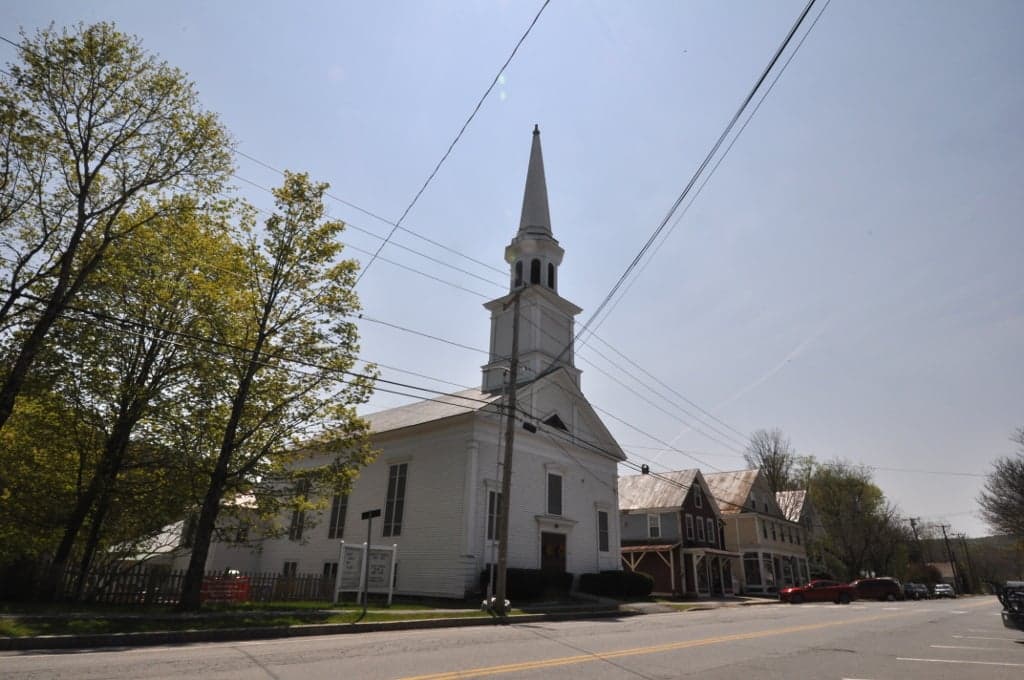
Photo: Wikipedia
Political ClimatePolitical Climate in Saxtons River, VT
District shown is the primary district for this city’s centroid. Cities may span multiple districts.
Inherited from parent state — no local data available.
Local Political AnalysisPolitical Analysis of Saxtons River, VT
Saxtons River, Vermont, leans heavily to the left, with a Cook PVI of D+17 that places it among the most reliably Democratic areas in the state. This wasn't always the case—I remember when folks here voted more on local character than national party lines, but over the last decade or so, the shift has been unmistakable. The town itself is small, but its politics are increasingly driven by the same progressive energy you see in places like Brattleboro or Montpelier, which means a lot of the old-school independence has given way to a more uniform, government-first mindset.
How it compares
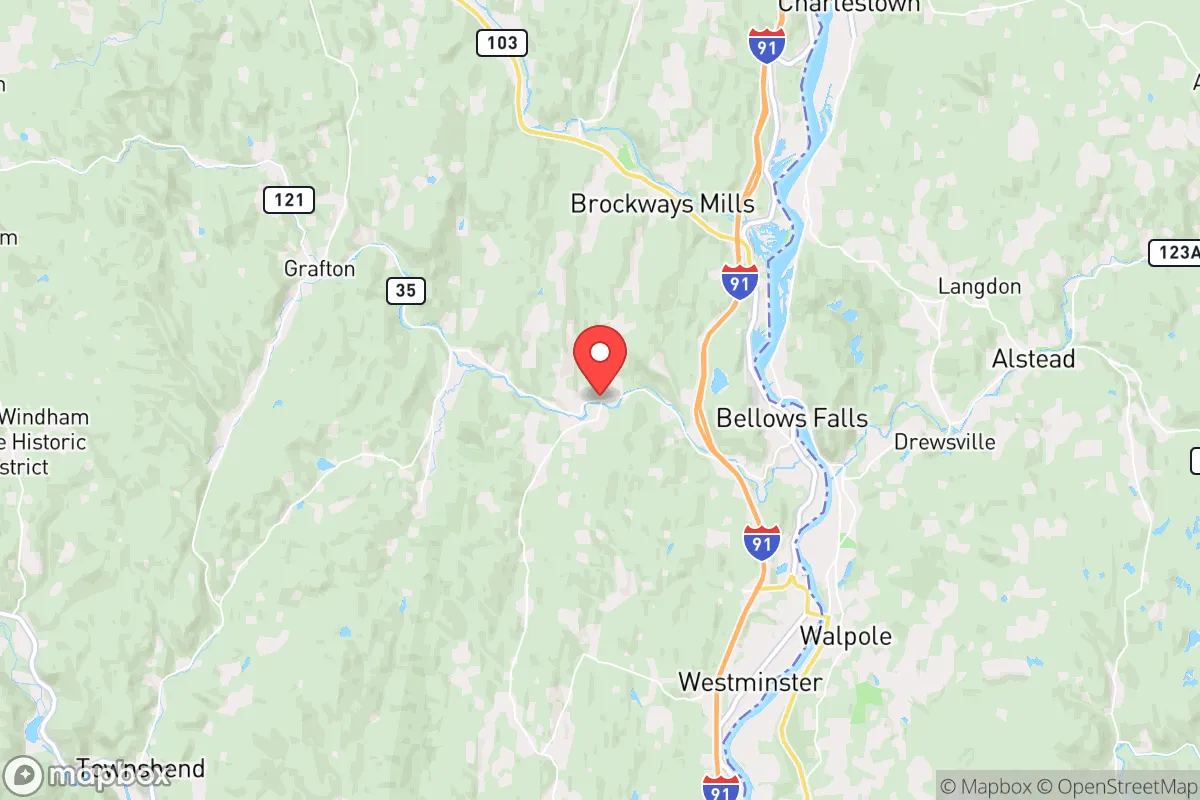
If you drive just a few miles west to Westminster or north to Rockingham, you'll find a more mixed political landscape—still blue, but with a noticeable conservative streak that's all but vanished in Saxtons River. The contrast is sharpest when you compare it to towns like Grafton or Chester, where property rights and local control still carry real weight in town meetings. Here, the local Democratic committee is active and vocal, and it's rare to see a Republican sign in a yard during election season. The D+17 rating isn't just a number; it reflects a community where progressive candidates win by wide margins, and where dissent on issues like school policy or land use is often met with social pressure rather than debate.
What this means for residents
For those of us who value personal freedoms and limited government, living in Saxtons River means watching the town get pulled into state-level mandates that feel increasingly intrusive. The push for stricter environmental regulations, for example, has led to rules on wood-burning stoves and property development that would have been unthinkable twenty years ago. School board meetings are dominated by discussions on equity initiatives and curriculum changes that prioritize ideology over basics, and there's a growing sense that if you don't toe the line, you're labeled as out of touch. It's not that people here are unfriendly—they are—but the political climate can feel stifling if you're not on board with the progressive agenda. Long-term, I worry that this uniformity will drive out the very diversity of thought that made small-town Vermont special.
One cultural distinction worth noting is the town's relationship with the Saxtons River Village Corporation, which handles local water and sewer services. It's a small example, but it shows how even basic utilities are managed with a bureaucratic touch that can frustrate residents who just want to fix a leak without a permit process. The annual Village Meeting is a microcosm of the larger trend: a handful of dedicated progressives show up and push through measures that increase oversight, while the rest of us stay home, tired of fighting. If you're considering a move here, know that the natural beauty and quiet streets are real, but the political atmosphere is increasingly one-size-fits-all, and that's a hard thing to change once it sets in.

State Political ClimatePolitical Climate in Vermont
State Political AnalysisPolitical Environment in the State
Vermont has long been a deep blue state, but its political climate is far more complex than the national headlines suggest. For decades, the state has been dominated by a progressive coalition in Burlington and the Chittenden County metro area, while the rest of the state—especially the Northeast Kingdom and rural southern counties—has held a stubborn, independent-minded conservative streak. Over the last 10-20 years, the statewide lean has shifted from a moderate blue to a solidly progressive one, driven by an influx of out-of-state transplants and a shrinking rural population. If you’re a conservative considering a move here, you need to understand that the state’s politics are a tale of two Vermonts, and the gap is widening.
Urban vs. rural divide
The political map of Vermont is stark. Chittenden County, anchored by Burlington, South Burlington, and Essex, is the engine of the state’s progressive majority. These towns reliably deliver 70-80% of their votes to Democratic and Progressive Party candidates. Burlington itself is a classic college town (University of Vermont) with a strong activist culture, rent control, and a city council that has pushed for police defunding and sanctuary city policies. Drive 30 minutes east to St. Johnsbury in Caledonia County, or south to Rutland in Rutland County, and you’ll find a completely different world. These are working-class towns where Trump won in 2016 and 2020, and where the local economy depends on logging, dairy farming, and small manufacturing. The rural-urban split is so pronounced that the entire Northeast Kingdom (Essex, Orleans, Caledonia counties) voted for Trump in 2020 by margins of 10-20 points, while Chittenden County went for Biden by over 50 points. The suburbs of Colchester and Williston are the battlegrounds—they’ve trended blue in recent cycles, but still have a noticeable conservative minority that shows up for school board and town meeting fights.
Policy environment
Vermont’s policy environment is a mixed bag that leans heavily toward government intervention. The state has the highest combined state and local tax burden in the nation, according to the Tax Foundation, with a progressive income tax that tops out at 8.75% and property taxes that are among the highest per capita. The regulatory posture is aggressive: Vermont has a statewide land-use law (Act 250) that can delay or kill development projects for years, and a renewable energy mandate that has driven up electricity costs. On education, the state passed a universal school meal program and has some of the most permissive transgender student policies in the country, including allowing students to change their gender identity on school records without parental consent. Healthcare is dominated by a single-payer-like system through the Green Mountain Care Board, which sets hospital budgets and has led to long wait times for specialists. Election laws are among the most liberal: Vermont has automatic voter registration, same-day registration, no-excuse absentee voting, and a mail-in ballot system that was made permanent after 2020. For a conservative, the policy environment feels like a slow-motion expansion of state control over your wallet, your property, and your family.
Trajectory & freedom
Vermont is becoming less free by any measure of personal liberty that conservatives care about. The most glaring example is gun rights: in 2023, the legislature passed S.4, a sweeping gun control bill that bans the sale of many semi-automatic firearms, limits magazine capacity to 10 rounds, and raises the purchasing age to 21. This came on top of a 2018 red-flag law (Act 94) that allows police to seize firearms without a criminal conviction. On parental rights, the state passed H.57 in 2024, which codifies “gender-affirming care” as a protected right for minors, overriding parental consent requirements in some cases. Medical autonomy took a hit with the state’s strict COVID-19 vaccine mandates for healthcare workers and school staff, which were among the last in the nation to be lifted. Property rights are under constant pressure from Act 250 and a new “climate superfund” law (H.485) that holds fossil fuel companies liable for past emissions, but also opens the door to future state liability for land use. The trend is clear: the legislature in Montpelier is pushing a progressive agenda that prioritizes collective goals over individual freedom, and there’s no sign of it slowing down.
Civil unrest & political movements
Vermont has a long history of civil unrest, but it’s mostly been on the left. In 2020, Burlington saw weeks of protests and property damage following George Floyd’s death, with the city council later voting to cut the police budget by 30%. The state has a well-organized activist network, including the Vermont Progressive Party and groups like Rights & Democracy, which push for rent control, universal healthcare, and defunding police. On the right, the Vermont Republican Party is small but vocal, with a strong libertarian streak. The “Take Back Vermont” movement of the early 2000s (a response to civil unions) has faded, but there’s a growing “Second Vermont Republic” secessionist sentiment among some rural conservatives who feel ignored by Montpelier. Immigration politics are a flashpoint: Vermont is a sanctuary state, with Burlington and Winooski declaring themselves “sanctuary cities” that limit cooperation with ICE. Election integrity is a live issue here—the state’s all-mail voting system has been criticized by conservatives for lacking voter ID requirements, though no major fraud has been proven. A new resident will notice the political tension most at town meeting day, where school budgets and local ordinances become battlegrounds between progressive newcomers and longtime residents.
Projection
Over the next 5-10 years, Vermont is likely to become more progressive, not less. The demographic trends are clear: the rural, conservative population is aging and shrinking, while Chittenden County and a few other “growth centers” (like Brattleboro and Montpelier) are attracting young, educated, left-leaning transplants from New York, Boston, and California. The 2020 Census showed Vermont’s population grew by only 2.8%, but that growth was almost entirely in Chittenden County and a handful of college towns. The state’s housing crisis—driven by Act 250 and local zoning—is pushing young families out of rural areas and into the suburbs of Burlington, further concentrating progressive power. If you move here now, expect to see the legislature pass a statewide rent control law, a carbon tax, and possibly a single-payer healthcare system within the decade. The only wildcard is a potential backlash from the rural towns that still hold some power in the state senate, but that’s fading fast as redistricting and population loss dilute their influence.
Bottom line for a conservative moving to Vermont: You’ll find a beautiful state with strong communities in the rural areas, but you’ll be swimming against a powerful political tide. Your property taxes will be high, your gun rights will be limited, and your voice on school boards and town meetings will be increasingly drowned out by progressive transplants. If you value personal freedom, low taxes, and a government that stays out of your life, Vermont is a tough sell. But if you’re willing to fight for your values in a small, tight-knit community, places like Newport in the Northeast Kingdom or Bennington in the south still offer a conservative-friendly lifestyle—for now.
* Values derived from national, state, county, city and local statistics and may differ in a specific area. Last updated: 2026-04-30T06:11:38.000Z
Narrative content on this page is AI-generated and may contain mistakes. Verify any details that matter before acting on them.
ReloMaps may earn a commission from affiliate links at no extra cost to you.

